REVIEW · BLOCK PRINTING WORKSHOPS
Hands-on Block Printing Workshop
Book on Viator →Operated by Creatis · Bookable on Viator
This is block printing with real hands-on payoff. In Jaipur, I love how the class teaches Sanganeri the way it was meant to be learned, not as a craft demo. You’ll get step-by-step guidance to layer water-based pigments and create two block-printed stoles to take home. The main thing to consider is that color and pattern choice can feel more limited on busier days or larger groups.
I also really liked the relaxed, patient pace, and the fact that the workshop is run by people who know the craft. Mohit and the team set a calm tone from the start, so you can focus on printing instead of worrying about getting it wrong. One drawback to plan around: you’ll need to manage expectations if you want very specific colors, since the swatches don’t always match the final pigment result exactly.
In This Review
- Key highlights you’ll care about
- Sanganeri block printing in Jaipur: why this class feels real
- Price, time, and getting to Creatis without stress
- Meeting Mohit’s studio: how the class is organized
- Tools and pattern types: Gad, Rekh, and Datte
- Pigments and layering: how your design actually comes together
- What you make: two stoles you keep, plus border work
- The studio vibe at Creatis: calm, helpful, and not pretentious
- Small-group tutoring: who this class suits best
- Should you book this Jaipur block printing workshop?
- FAQ
- How long is the hands-on block printing workshop?
- How many people are in the class?
- What will I create during the workshop?
- What is included in the price?
- Is hotel pickup included?
- Where does the workshop start in Jaipur?
Key highlights you’ll care about
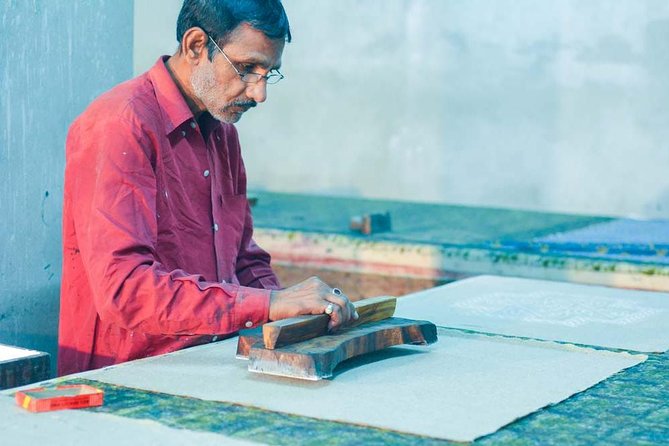
- Small-group tutoring: capped at six for close help, with a relaxed feel that makes learning easier
- Sanganeri focus: learn in the region where this style of block printing developed
- Layering with water-based pigments: practice building designs through multiple color passes
- Tool-to-pattern basics: understand Gad (ground), Rekh (outline), and Datte (filler) styles
- Two stoles you keep: finish work includes machine-embroidered borders
- Calm studio setting at Creatis: you work in a real textile operation environment, not a showy classroom
Sanganeri block printing in Jaipur: why this class feels real
Sanganeri block printing is everywhere in India, but it is different when you actually run the process yourself. This workshop takes place in Jaipur and centers on the local style that grew in the area centuries ago. The result is a class that feels grounded, practical, and worth your time even if you only have a couple hours in the city.
What I’d call the heart of the experience is the teaching method. You start with the idea of how patterns are built, then you print in layers using pigments. You’re not just coloring inside lines; you’re learning how the system works—blocks, placement, color order, and clean transfers.
The other big reason it works: the workshop is set up for a slow, calm pace. People mention the studio vibe as chill and welcoming, with staff who are patient even if it’s your first time printing. That matters because block printing is one of those crafts where getting one step right makes the rest way easier.
You can also read our reviews of more tours and experiences in Jaipur

Price, time, and getting to Creatis without stress
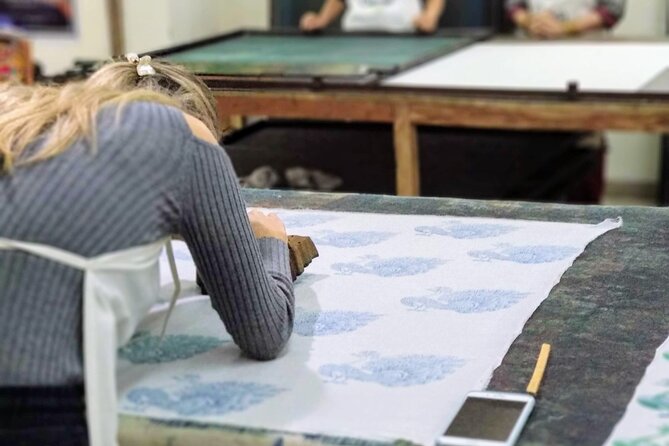
This class runs about 2 hours (approx.) and costs $25.16 per person. For a hands-on workshop where you make keepable items, the price feels fair—especially because all taxes are included, along with GST. You’re also not paying extra for the “privilege” of learning; it’s built into the ticket.
You’ll handle your own way to the studio since there’s no hotel pickup. The start point is at Creatis, A12 Sudarshanpura RIICO, behind Tata Motors Service Center, in Industrial Area, Sudarshanpura, Bais Godam, Jaipur, Rajasthan 302006. It’s also noted as near public transportation, which is a plus if you don’t want to pay for a private ride twice.
Timing tip: because this is a short workshop, plan your day so you don’t arrive rushed. Jaipur traffic can be spicy. If you’re even slightly late, the session doesn’t really stretch to compensate, since the goal is two hours of making and finishing.
Meeting Mohit’s studio: how the class is organized
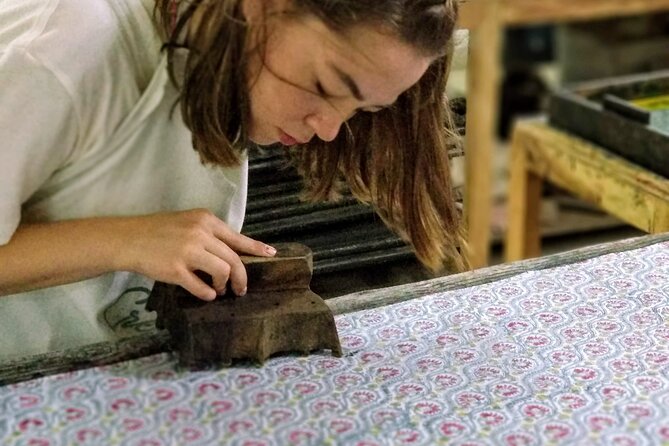
The workshop is run by the Creatis team, and Mohit is a name that comes up again and again. The staff stays close while you’re printing and helps with both technique and choices. That’s a big deal for a beginner, because block printing looks easy until you try aligning patterns and keeping edges crisp.
Class size is designed to stay personal. The experience is described as capped at six people for relaxed, individualized tutoring. There’s also a stated maximum of 15 travelers, so if the schedule ever swells, the instructor time and choice of colors can become harder to manage evenly. Still, most of the vibe is reported as calm and spacious, so you should expect a comfortable working environment.
Dress code is smart casual. You’ll likely do fine-motor work at a table and handle pigments, so wear something you don’t mind getting stained by accident. (Even careful hands can make small messes when you’re learning.)
Tools and pattern types: Gad, Rekh, and Datte
One of the most useful parts of this class is that it doesn’t treat block printing like magic. You get an overview of the history and cultural significance, and then you move into the practical side: the tools, materials, and the way Sanganeri designs are categorized.
You’ll learn about three core block styles:
- Gad (Ground): the base filling that creates the overall coverage
- Rekh (Outline): the lines that define shape and structure
- Datte (Filler): the small details that add texture and rhythm
This matters because it changes how you pick a design. If you understand which parts are outlines and which parts are ground layers, you can predict how the print will look after each pass. In other words, you stop guessing. You start building.
If you’ve only ever seen finished printed fabric, this is the section that turns a flat pattern into a process. It also helps you communicate with the instructor when you want your print to look more defined or more airy.
Pigments and layering: how your design actually comes together
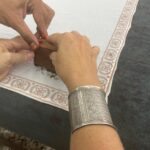
The main action is learning to layer a motif or all-over design using water-based pigments. This is where your experience shifts from concept to real craft work. Water-based pigments can be forgiving in some ways, but getting clean layers still requires patience and accuracy.
Here’s how to think about it as you work:
- Each block pass adds information—ground, outline, or filler.
- Layer order affects readability. Thin lines on the wrong pass can get muddy.
- Placement is everything. Even small misalignment changes the whole look.
One helpful detail from a past participant: the studio provides a test piece so you can practice where to place each block. That’s smart for beginners. You can eye the alignment before you commit to your final stoles, and if something feels off, you have a chance to adjust.
Color choice is part of the fun. You can experiment with mixing and matching colors to create dynamic patterns. At the same time, be aware that the colors you pick from swatches may not match the final result exactly. If you’re picky, take your test piece seriously and ask to adjust if the first attempt isn’t what you hoped for.
Also, don’t underestimate how satisfying it is to see the design build up one color at a time. People describe it as hands-on and fun, and that fits: it’s an activity where you actively shape the outcome, not just watch.





What you make: two stoles you keep, plus border work
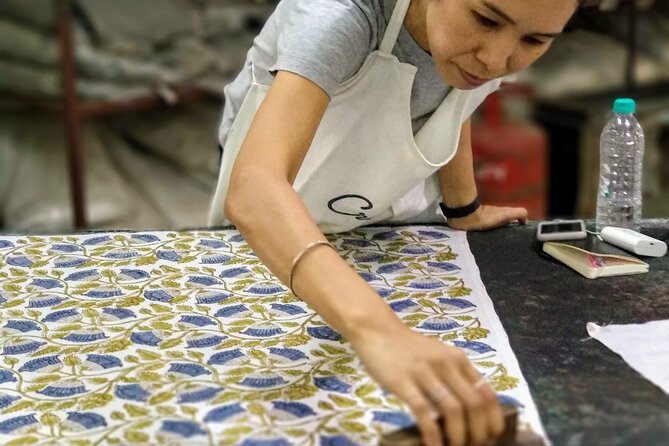
By the end, you take home two block-printed stoles. That is a meaningful souvenir because it’s not just a single printed item. You’ll get to go through the process enough times to feel the rhythm of printing and layering.
The workshop includes design selection options. You choose from intricate designs inspired by Sanganeri prints, using designs from the studio fabric collection. The class is aimed at beginners, but you still get some creative control, from design choice to pigment layering.
One finishing element makes your stoles look more polished than a plain print: the borders are machine-embroidered. That detail is worth paying attention to, because it gives you that finished, wearable look without you having to learn embroidery mechanics from scratch.
Practical bonus: some people have successfully printed on clothing they brought with them. The data doesn’t promise it for every session, but if you want to personalize further, you can ask the team during your class when you’re deciding what you’re printing.
The studio vibe at Creatis: calm, helpful, and not pretentious
If you’re craving a break from Jaipur’s sensory overload, this type of workshop can be perfect. Descriptions of the studio emphasize that it’s tucked away, calm, and connected to an actual textile business operation. That makes the environment feel normal, not staged.
The best praise is consistency: staff are warm, helpful, and patient. In one case, someone arrived sick (unrelated to the class), and the team stayed accommodating and caring. That tells me the group dynamic is thoughtful and that the instructors know how to slow down if something goes off track.
From a learner’s perspective, what you want is a team that can correct without making you feel embarrassed. Many comments underline that the tutors guide you step by step, and that they help you choose colors and how to print.
And yes, there’s a realistic note here: block printing is harder than it looks. You’ll probably feel that during the first steps, especially with alignment. But the workshop format is built for you to land the print by the end, even if you start with shaky hands.
Small-group tutoring: who this class suits best
This workshop is aimed at adults (minimum age is 18). Dress code is smart casual, and you only need moderate physical fitness. Translation: you’re sitting/standing for a short period, working at a table, and staying focused, not doing anything strenuous.
You’ll likely enjoy it most if:
- you want a creative break in Jaipur that isn’t just sightseeing
- you like making something you’ll actually use (stoles are easy to pack and wear)
- you want a guided craft lesson where you control design choices
- you appreciate process learning: how artisans think, not just the final product
If you’re traveling with teens or mixed groups, double-check the schedule and group composition. There’s an example of a larger group session that made it harder to choose colors and made some patterns too simple for that particular group. That doesn’t mean the workshop is bad. It just means the best experience comes with the small-group setup.
Should you book this Jaipur block printing workshop?
I’d book this if you want a hands-on souvenir with a real skill behind it. The best value here is the combination of Sanganeri-specific learning, a calm studio atmosphere, and the fact that you take home two stoles rather than a tiny sample.
I’d think twice if your goal is highly specific color matches. The pigment result can differ from swatches, and on busier days you might not get the exact palette you want. If you’re okay working with the materials in front of you and trusting the test piece step, you’ll be in a good spot.
If you want a craft experience that feels authentic and genuinely relaxing, this is an easy yes for Jaipur.
FAQ
How long is the hands-on block printing workshop?
It runs for about 2 hours (approx.).
How many people are in the class?
It’s described as capped at six people for personalized tutoring, and the overall maximum is 15 travelers.
What will I create during the workshop?
You’ll create two stoles using Sanganeri block printing and take them home.
What is included in the price?
The price includes all taxes, fees, and handling charges, including GST.
Is hotel pickup included?
No, hotel pickup is not included.
Where does the workshop start in Jaipur?
The meeting point is Creatis, A12 Sudarshanpura RIICO, behind Tata Motors Service Center, Industrial Area, Sudarshanpura, Bais Godam, Jaipur, Rajasthan 302006.