REVIEW · PRIVATE CITY SIGHTSEEING TOURS
Jaipur: Private Full Day Sightseeing Tour By Car with Guide
Book on GetYourGuide →Operated by Rajasthan Tour Driver · Bookable on GetYourGuide
Jaipur is best seen with a local storyteller. This full-day private tour strings together the city’s top sights through the Pink City in an air-conditioned private car with a UNESCO sites focus and a professional guide. I love the hands-on explanations at each stop, and I love how the day stays comfortable even in heat-heavy traffic. One watch-out: entry tickets and meals are not included, and a few stops are fairly short photo windows.
What makes this outing work is the pacing. You get an organized loop (Hawa Mahal → Amber Fort → stepwell → optional Jal Mahal → City Palace → Jantar Mantar → Gaitor Ki Chhatriyan) with pickup from wherever you’re staying in Jaipur. I also like that you’re not stuck in a big group setup; it’s a private group, and the guide can work in English, French, Italian, or Spanish.
If you’re price-shopping, this also looks like a bargain at $4.88 per person—but only if you understand what’s extra. Entry tickets and lunch aren’t built in, so you’ll want to budget those separately and carry a bit of cash just to stay smooth.
In This Review
- Key things to notice before you go
- How a private A/C car makes Jaipur feel doable
- Hawa Mahal: the iconic wind palace (and what to look for)
- Amber Fort: Hindu-Muslim architecture on a hilltop
- Panna Meena ka Kund stepwell: the water system you can still read
- Jal Mahal on Man Sagar Lake: quick, calm, and very photogenic
- Workshop time and Jaipur craft shopping without pressure
- City Palace: royal spaces, design details, and authority in stone
- Jantar Mantar: the stone observatory that turns time into geometry
- Gaitor Ki Chhatriyan: royal cenotaphs and a quieter spiritual tone
- Lunch, ticket reality, and how to manage heat
- Who should book this Jaipur private full-day tour
- Value check: why $4.88 can be a real deal
- Should you book this Jaipur private full-day tour?
- FAQ
- How long is the Jaipur private full-day sightseeing tour?
- What’s included in the price?
- What is not included?
- Is Jal Mahal included?
- How much guidance do I get at each site?
- What languages are available for the guide?
- Can I get pickup from anywhere in Jaipur?
- What should I bring for the tour?
Key things to notice before you go
- Dedicated A/C car + professional guide: you’re not figuring out logistics between far-flung monuments.
- Amber Fort and the stepwell together: one is royal showmanship, the other is clever water engineering.
- Jantar Mantar as a science stop: the guide turns stone instruments into real context.
- Jal Mahal is optional and brief: it’s a great view moment, not a long linger unless you ask.
- A workshop + market time: you see how Jaipur crafts are made, then you get 30 minutes to shop.
- Strong transport scores: transport quality is consistently rated highly, which matters in Jaipur traffic.
How a private A/C car makes Jaipur feel doable
Jaipur can be a stamina test if you’re bouncing between monuments on your own. This tour’s biggest advantage is simple: you sit back while a driver handles route planning, parking, and the stop-and-go realities of the city. It also includes parking fees and fuel, so you’re not hunting for the next payment point while you’re trying to look at a fort.
Your guide is part of the value. Guides such as Rohit, Gaurav, Raj, Ashwani, and Gajender Singh Rathore are repeatedly praised for turning monuments into stories you can actually remember. That means less time guessing what you’re seeing and more time understanding why it’s here.
The tour runs about 8 hours, so it’s designed for a full day without feeling like you’re sprinting all the time. The flow is built around multiple iconic stops, but you still get a private setup where you can ask for a little extra time at the places you care about most.
You can also read our reviews of more guided tours in Jaipur

Hawa Mahal: the iconic wind palace (and what to look for)
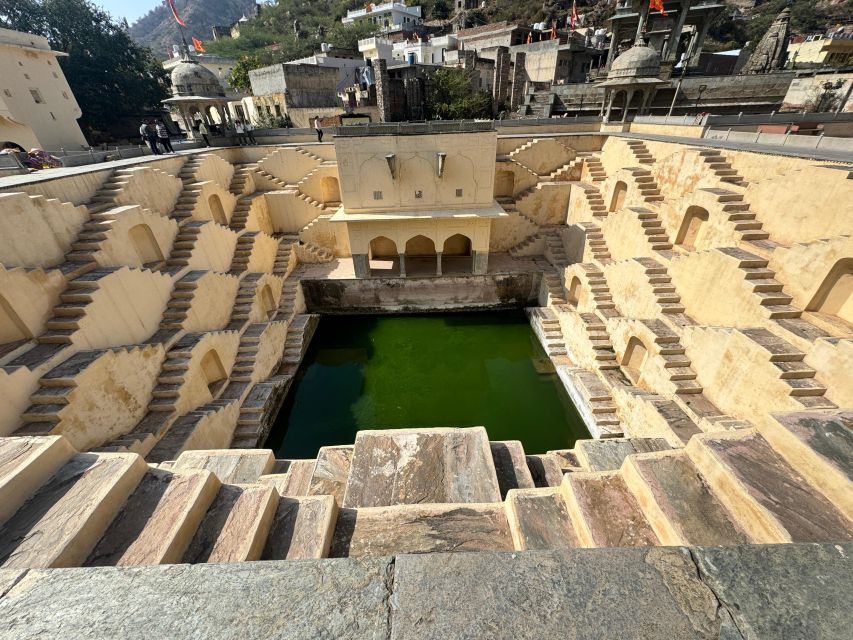
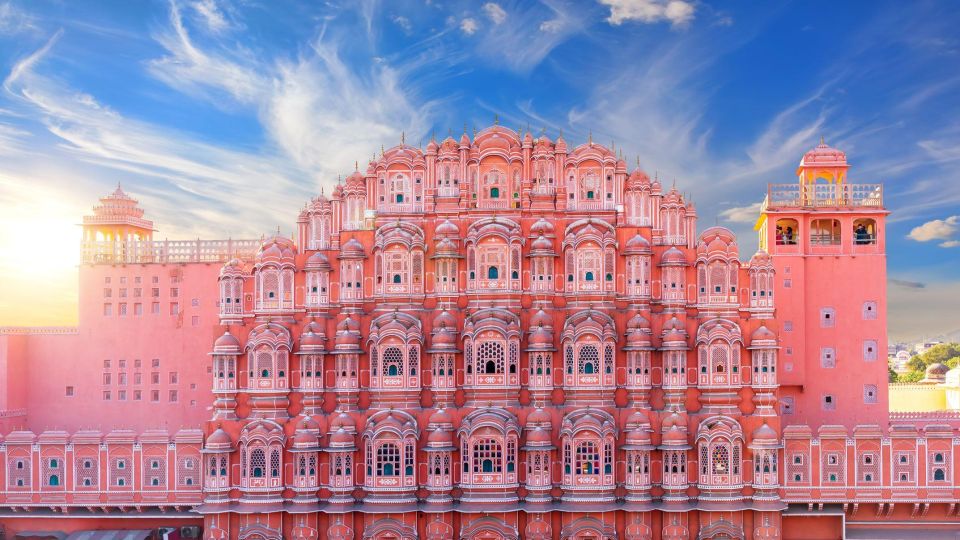
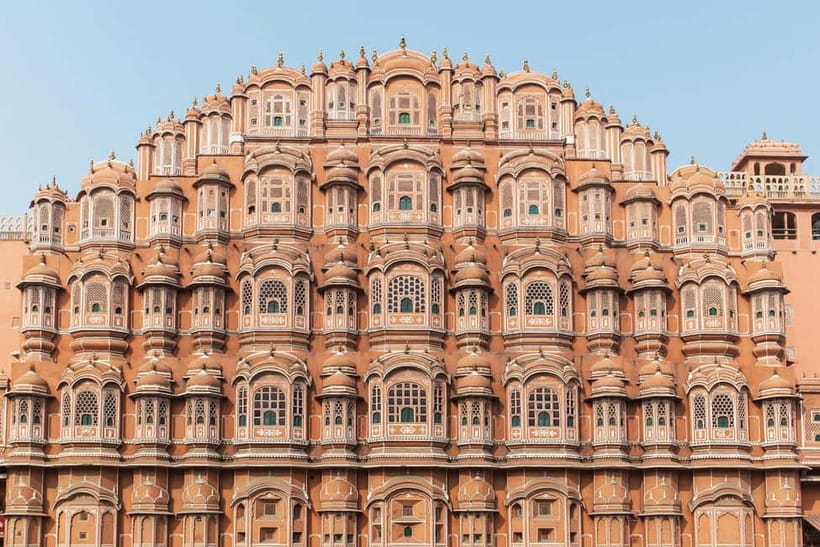
Most people come to Hawa Mahal for pictures—and you’ll get those tiered views. The Palace of Winds was designed by Sawai Pratap Singh, and it’s famous for its tiered arches and latticework screens. Even on a brief visit, the guide can help you read the architecture as something meant for daily life, not just display.
This stop is listed as a photo stop plus visit time with a guided component. In practice, think of it as a quick orientation moment. You’ll see why Jaipur looks the way it does from street level, and you’ll start to understand the city’s blend of courtly design and everyday function.
Practical tip: go with sunglasses and sunscreen ready. Open façades and big light make it easy to burn even when you think you’re moving quickly.
Amber Fort: Hindu-Muslim architecture on a hilltop
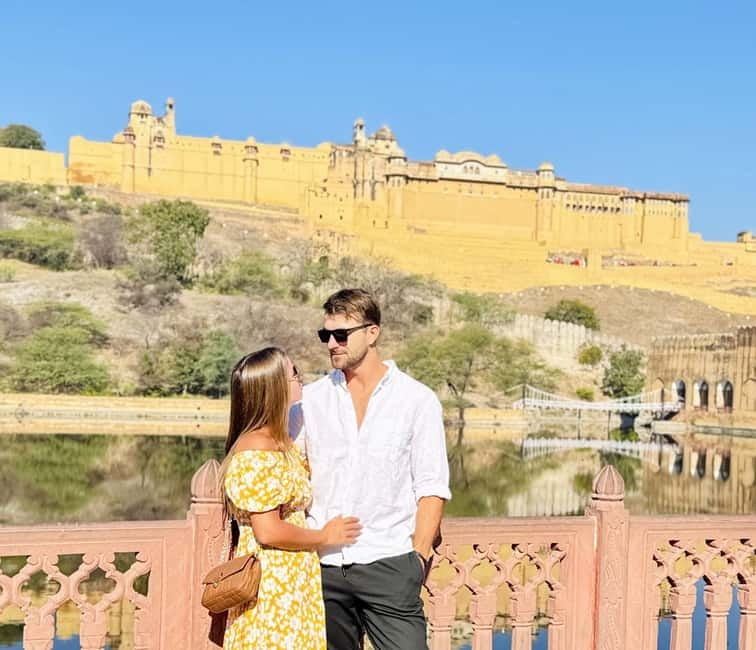
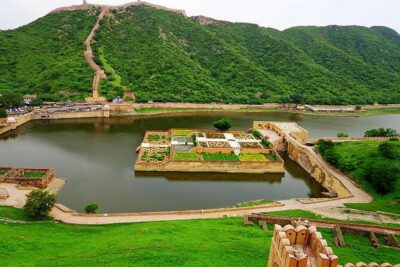
Amber Fort is where Jaipur turns from colorful city walls into something you can feel. The fort sits on rugged hills outside the city and is known for a blend of Hindu and Muslim architectural influences. You’ll be there long enough to walk and look rather than just pose at the entrance.
Your visit runs around 2 hours, which is plenty to absorb the main courtyards and viewpoints if you’re not rushing. A good guide will point out design logic: how the fort controls sightlines, how materials and colors show status, and how spaces were made for royalty.
If you’ve seen photos of glittering interiors in Jaipur, this is where those images often originate. Your guide can also guide you toward details like decorative halls and key gates. If you’re short on time inside, ask to prioritize the views from courtyards first—those are the easiest parts to miss if you spend too long indoors.
One more angle: Amber Fort is on a hill, so plan for uneven footing. Sports shoes are worth it here.
Panna Meena ka Kund stepwell: the water system you can still read
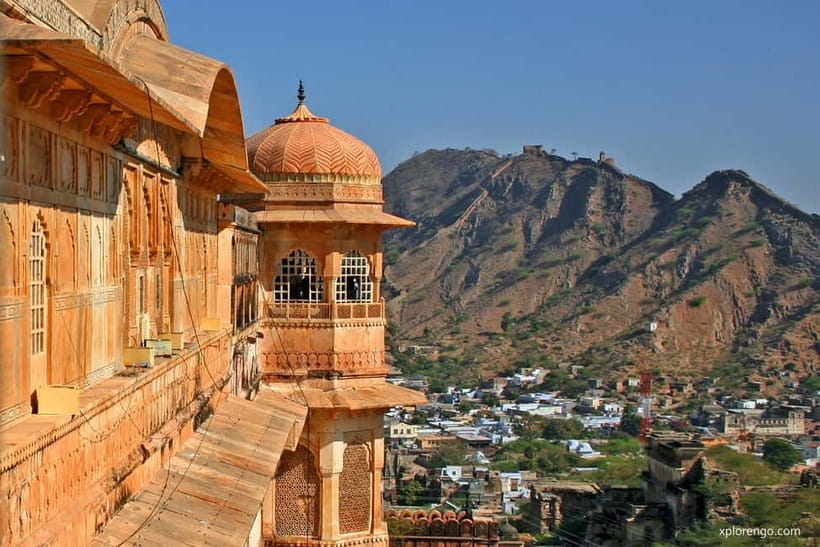
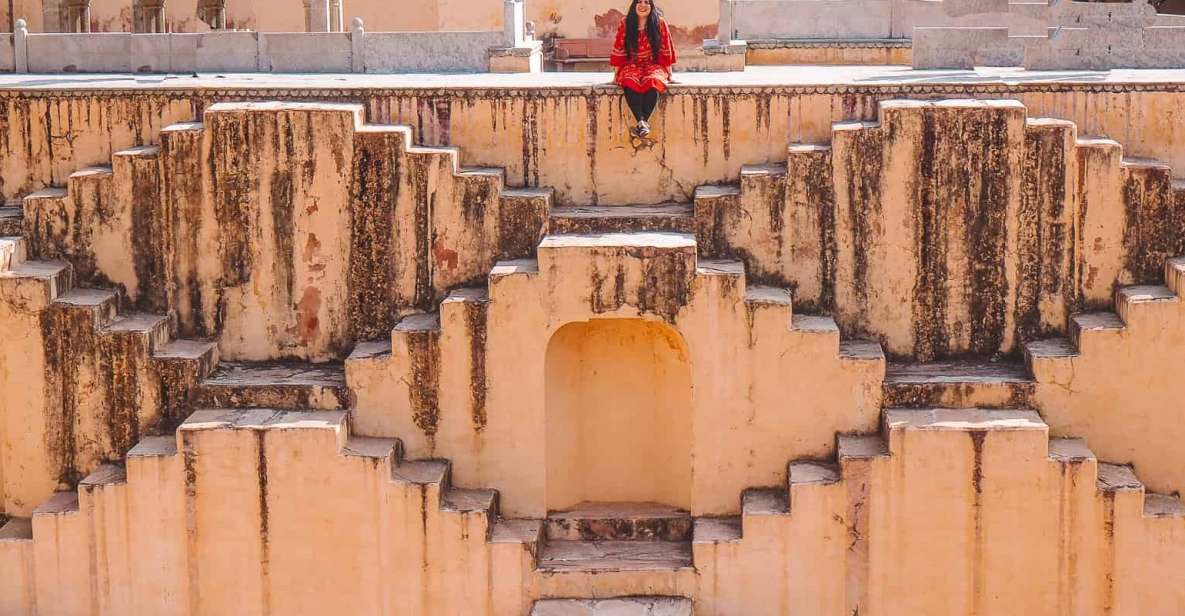
After the grandeur of Amber Fort, Panna Meena ka Kund feels like a left turn—in a good way. This is a historic stepwell with symmetrical stairways and a rainwater catchment design. It’s a 16th-century structure, and the beauty is in how it’s engineered to work.
Your time here is about 30 minutes. That’s long enough to take in the geometry and understand how people would use it in different seasons. A guide’s explanation helps you notice what’s functional versus what’s purely decorative.
If you like architecture that makes sense, this is your mental palate cleanser. You’ll come away thinking about Jaipur as a place where practical engineering was treated as important art.
Jal Mahal on Man Sagar Lake: quick, calm, and very photogenic
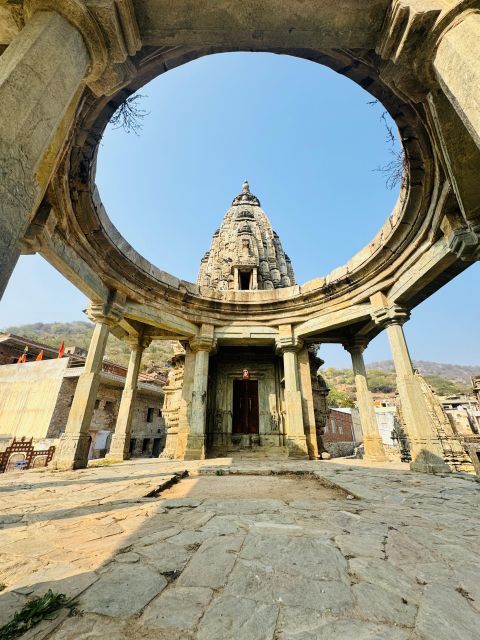
Jal Mahal, the Water Palace, sits in Man Sagar Lake and is known for its striking red sandstone structure. It dates back to the 18th century, and it’s one of those places you visit for mood and views more than long exploration.
Time at Jal Mahal is listed as short—around 20 minutes as an optional stop, and up to 30 minutes depending on the exact flow of your day. Either way, the goal is to look, breathe for a moment, and grab photos with the water and palace lined up.
The main thing to manage is expectations. This isn’t a hands-on palace tour in the way Amber Fort is. It’s a viewpoint moment. If you want more time here, ask early so you can adjust the day’s pace while you still have flexibility.
You can also read our reviews of more private tours in Jaipur






Workshop time and Jaipur craft shopping without pressure

Jaipur is famous for crafts, but it helps to see what you’re buying and why it costs what it costs. This tour includes a short workshop visit (around 10–15 minutes) designed to teach you about traditional arts and crafts. You’ll hear about things like Jaipur hand block printing and cutting rough stones.
The best part: it’s described as educational, with no pressure to buy. That matters because craft stops can turn sour fast when you feel pushed. Here, you can learn, ask questions, and walk away.
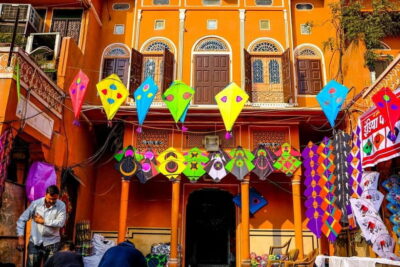
Then you get about 30 minutes in a shopping and arts-crafts market area. That’s enough time to browse jewelry, fabrics, and other souvenirs without feeling trapped in a slow maze. In the day’s discussions and shop time, you may also hear about higher-end textiles and items like cashmere—just remember you’re in a market, so compare before you decide.
Practical tip: keep your wallet organized. If you want souvenirs, set a budget before you arrive—Jaipur makes it easy to get carried away.
City Palace: royal spaces, design details, and authority in stone

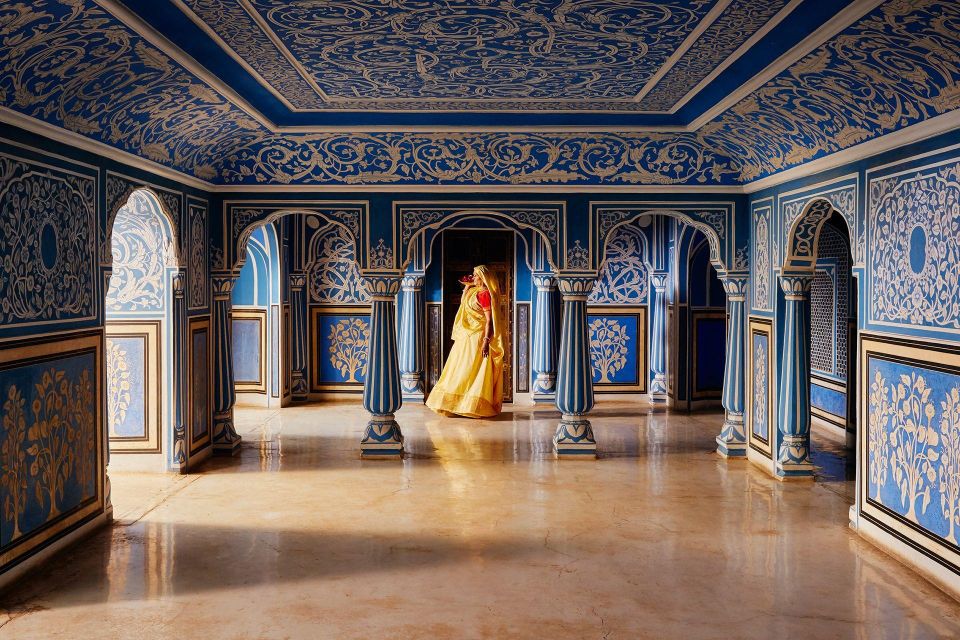
City Palace is one of those stops where you can feel the “seat of power” idea even before you read the plaques. The palace complex is connected to the Maharaja’s court and was built by Maharaja Jai Singh. It also houses the erstwhile royal family, so it’s not just a museum shell.
Your guided visit here lasts about 1 to 1.5 hours, which is a comfortable chunk of time. You’ll have a photo stop moment, then a walkthrough with your guide explaining how the palace layout reflects authority and the monarchy’s relationship to the city.
This is also a good stop for people who like history without getting stuck in lecture mode. When a guide is good, you’ll connect architecture to daily life: where decisions were made, how spaces were arranged, and why certain elements were built to impress.
Jantar Mantar: the stone observatory that turns time into geometry
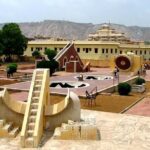
Jantar Mantar is not just another monument. It’s a UNESCO World Heritage site made for astronomy, built on instruments designed by Sawai Jai Singh. The complex includes nineteen astronomical instruments, and it’s known for the world’s largest stone sundial.
Your visit here is about 1 hour. That’s the right amount of time if you want a clear explanation without feeling overloaded. A strong guide will help you see how the instruments measure the sky and how the setup connects to ancient scientific practice.
If you’re thinking, this sounds a little nerdy, don’t worry. Jaipur’s science here is visual. Once you understand one or two key instruments, the rest becomes easier to track—and you’ll start noticing how the measurements work.
Gaitor Ki Chhatriyan: royal cenotaphs and a quieter spiritual tone
Royal Gaitor Tumbas (Gaitor Ki Chhatriyan) is where Jaipur slows down again. This 18th-century complex has intricate carvings and dedicated temples, and it’s also a pilgrimage spot for Hindu devotees.
Your time is about 1 hour, which is good because this is a place you should walk at a gentler pace. If Amber Fort is performance and Jantar Mantar is science, Gaitor is about symbolism and sacred space.
A guide’s interpretation matters here. You’ll see the carvings, but you also want to understand how the site functions spiritually, not just aesthetically. It gives your day a sense of balance.
Lunch, ticket reality, and how to manage heat
Lunch is listed as optional with about 1 hour at a local restaurant. Meals are not included, so you’ll need to pay there. I recommend using lunch as a reset: hydrate, eat something filling, and give your eyes a break from bright stone and lattices.
Entry tickets are also not included. That means you should plan to pay at each ticket point rather than assuming your guide has everything covered. One practical note: some people find it easiest to carry cash for quick entry lines, especially when routes change.
Timing is your friend. Start early if you can, because Jaipur light and crowds can get intense as the day advances. This tour is designed as an all-day circuit, so if your pickup time is early, you’ll likely get more comfortable conditions for the hilltop areas.
And yes, wear sunscreen. Even if you think you’re only walking part of the day, Jaipur sun bounces off stone and it adds up.
Who should book this Jaipur private full-day tour
This is a great fit if you want the highlights without spending your vacation doing logistics math. It works well for:
- First-time Jaipur visitors who want the strongest monuments in one day
- Couples and families who prefer a calm, private setup rather than big-group scheduling
- People who like guided context, especially at Amber Fort, City Palace, and Jantar Mantar
- Anyone who wants safe, comfortable transportation while still seeing a lot
It might be less ideal if you want long, independent wandering at every site. A few stops are brief by design (especially photo-focused ones), so if you crave deep exploration of just one or two monuments, you might want a more specialized tour instead.
Value check: why $4.88 can be a real deal
At $4.88 per person, the pricing looks almost too good—until you compare what’s included. You’re getting hotel pickup and drop-off, transport in an A/C sedan or SUV, a professional authorized guide, parking fees, and fuel. That alone can cost a lot more if you hire it separately in Jaipur.
The extras are the part you should budget: entry tickets and meals. If those become expensive for you, the value shrinks a bit. Still, the structure is strong: you’re buying time saved, stress reduced, and explanations delivered by someone who knows how the monuments connect.
Transport quality is another value signal. The information says about 95% of reviewers gave perfect scores for transport. In a city where traffic and routing can be unpredictable, that matters.
Should you book this Jaipur private full-day tour?
Book it if you want a high-hit-rate day: Amber Fort, stepwell engineering, Jal Mahal views, royal City Palace, and the astronomy of Jantar Mantar, all handled with an A/C car and a guide. It’s also a smart pick for travelers who want to learn quickly, ask questions, and not waste daylight figuring out where to go next.
Pass or rethink if you’re planning to skip most guided explanation, already know Jaipur inside out, or you want a slower pace with lots of time inside each monument. In that case, you’d likely be happier with a smaller set of sites and more free wandering time.
If you do book, bring your ID, sunscreen, sunglasses, and comfortable shoes—and tell your guide early which places matter most. That’s where a private tour starts to feel like it’s built for you.
FAQ
How long is the Jaipur private full-day sightseeing tour?
The tour duration is 8 hours.
What’s included in the price?
Hotel pickup and drop-off, air-conditioned transportation (sedan/SUV/van depending on group size), a professional authorized guide, parking fees, and fuel.
What is not included?
Entry tickets and meals are not included.
Is Jal Mahal included?
Jal Mahal is listed as an optional stop, with a short visit time.
How much guidance do I get at each site?
The tour includes guided visits and photo stops at major locations like Hawa Mahal, Amber Fort, City Palace, and Jantar Mantar.
What languages are available for the guide?
The guide is available in English, French, Italian, and Spanish.
Can I get pickup from anywhere in Jaipur?
Yes. Pickup is flexible from your desired location in Jaipur, including hotels, airport, railway station, or another preferred spot.
What should I bring for the tour?
Bring your passport or ID card, sunglasses, a camera, sunscreen, and sports shoes.