REVIEW · 4-DAY EXPERIENCES
Golden Triangle & Ranthambore: 4-Day Private Tour from Delhi
Book on Viator →Operated by Maria Tours · Bookable on Viator
Four days, and you hit India’s big icons. You get a private air-conditioned car plus a sunrise Taj Mahal experience that makes the classic Golden Triangle feel efficient, not frantic, with Ranthambore added for tiger-spotting. The main thing to consider: monument entrances and lunch aren’t included, so you’ll want to budget a bit more once you arrive.
What I like most about this style of tour is the structure: pickup in Delhi NCR, guided time in each major city, and road travel handled by a driver instead of you doing the logistics. You also get a naturalist in Ranthambore (English-speaking), and the pace leaves room to ask questions and get good photos rather than just rushing from gate to gate.
In This Review
- Key Things I’d Pay Attention To
- Delhi First Look: Gurudwara Calm, Mughal Power, Old Delhi Motion
- Agra With a Clock: Sunrise Taj Mahal and the Three-Stop Mughal Circuit
- Ranthambore Safari Day: A Tiger Chance With Real Naturalist Guidance
- Jaipur in One Day: Jaigarh Fort Views, Jal Mahal Calm, and the Big Four
- Price and Value: What $215 Really Buys (Private Car, Hotels, and Safari)
- Guides Who Make the Stops Click: From Nasir to Maahi
- Timing Shifts: When the Order Changes on Thursdays and Some Mondays
- Who This Tour Fits Best (and Who Might Feel Tight-Scheduled)
- Should You Book It?
- FAQ
- What cities does the 4-day tour cover?
- Where do pickup and drop-off happen?
- Is transportation private?
- Are guides included?
- Is the Ranthambore safari private?
- Are hotel rooms included?
- Are monument entrance tickets included?
- How long is the Ranthambore safari?
- Does the schedule change if my tour starts on Thursday or Monday?
- Can I cancel for a full refund?
Key Things I’d Pay Attention To

- Sunrise Taj Mahal timing so you’re there before the crowds build
- Private guides in Delhi, Agra, and Jaipur with different local expertise each city
- Ranthambore safari with an English-speaking naturalist and shared canter access
- Tiger sightings aren’t guaranteed, but you’re given multiple chances through the park’s zones
- Monument entries aren’t included, even though sightseeing is guided
- Departure-day route changes, so your overnight stops can shift on Thursdays and some Mondays
Delhi First Look: Gurudwara Calm, Mughal Power, Old Delhi Motion
Day 1 starts with a flexible pickup window between 7:00 AM and 11:00 AM from Delhi, Noida, Gurugram, Faridabad, or Ghaziabad. That matters because it lets you start your trip without doing the awkward early-morning scramble to meet a group at a fixed time.
You begin at Gurudwara Bangla Sahib, a peaceful Sikh temple with a golden dome and a well-known langar setup (their large kitchen). From there, you head to Jama Masjid, one of Shah Jahan’s major 17th-century Mughal mosques. The guide helps you understand what you’re looking at—big courtyards, Mughal design details, and the site’s role in Delhi’s religious life—even though admission is not included for monuments.
Then comes one of the most fun parts: a traditional tuk-tuk ride through Old Delhi’s tight lanes, followed by a walk in Khari Baoli, Asia’s largest wholesale spice market. This isn’t just a photo stop. The guide’s explanation turns the stacks of turmeric, cardamom, and red chilies into context: how spices work in Indian cooking and how this market shapes daily life.
You’ll also pass major landmarks around New Delhi—Red Fort (built 1639–1648), the Tomb of the Unknown Soldier with names of 13,300 Indian army servicemen from World War I, and the Parliament House and Rashtrapati Bhavan (President House). Even when you’re not going inside those places, it’s useful to connect the dots between Mughal rule, British-era symbolism, and modern governance.
You end with Connaught Place for a recommended restaurant break, then wrap the day with Humayun’s Tomb, a UNESCO World Heritage Site and often described as India’s first garden-tomb. It’s a strong transition point: you start the trip with religious calm, then you move through imperial power, then finish with a monument built around ordered beauty.
Practical drawback: Day 1 is full. If you’re sensitive to crowds and noise, give yourself permission to slow down during the Old Delhi segments and use tuk-tuk time to rest your feet.
You can also read our reviews of more private tours in Jaipur


Agra With a Clock: Sunrise Taj Mahal and the Three-Stop Mughal Circuit
After a drive to Agra, the next morning is built around the Taj Mahal at sunrise. This is the right choice. Morning light softens the marble, and earlier access usually means fewer people blocking your view of those main domes and the long reflecting pool perspective. You get a guided visit inside the UNESCO site, and you’ll also learn how the Taj fits into Shah Jahan’s vision.
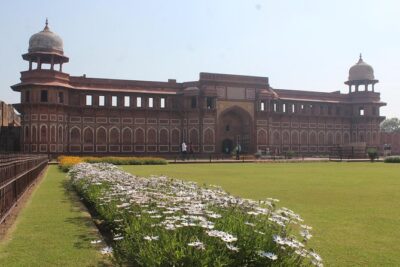
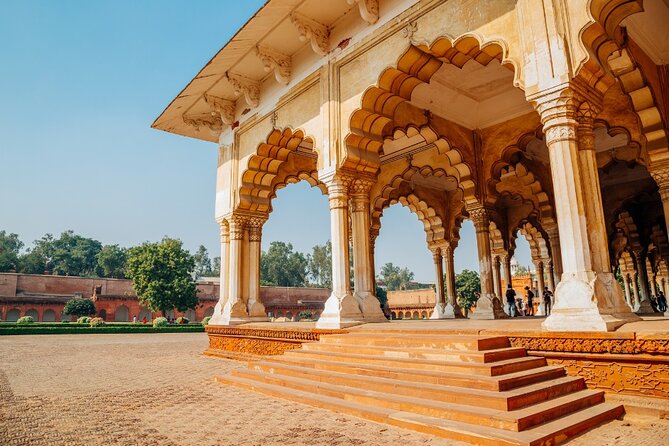
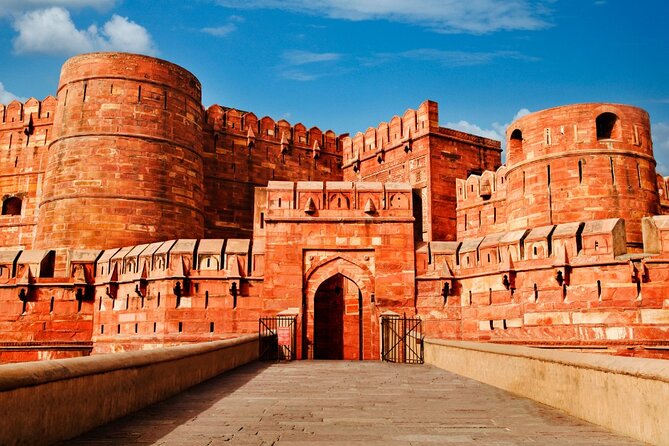
From there, you move to Agra Fort, another UNESCO site and former residence of Mughal emperors. Forts are about scale and power, so even a relatively short visit helps if your guide points out what sections were meant for daily life versus defense.
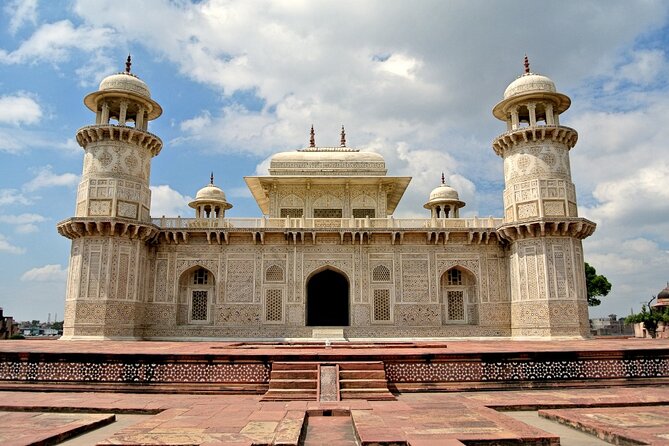
Next is Itmad-ud-Daula, often called the Baby Taj. The key here is not that it’s smaller—it’s that it shows the refinement of Mughal marble work and design details. The short stop time works well because it encourages you to look closely, rather than rushing through everything.
One more important detail: monument entrance tickets are not included, even though the experience is guided. So if you care about the exact sights you’ll prioritize, it’s smart to confirm entry costs before you go deeper into the day so you aren’t surprised at the ticket counter.
Ranthambore Safari Day: A Tiger Chance With Real Naturalist Guidance
Day 3 is where the tour shifts from monuments to wildlife. You rise early and head into Ranthambore National Park for a jungle safari aboard a shared jeep or canter (the tour uses shared canter in the included details). You’re out for about 2 to 3 hours, with a trained naturalist leading the experience in English.
Here’s the value of adding a naturalist: you stop treating the trip like a generic drive and start reading the park like a living system. The naturalist helps you notice tracks, movement, and the kinds of habitats where tigers prefer to show up.
Now the part you have to be honest about: tiger spotting is not guaranteed. Tigers can potentially be spotted in any of the zones, since they roam throughout the park, and each zone offers a chance—mostly down to luck. Still, the tour’s structure gives you access through the park’s proper channels, rather than trying to figure it out on your own.
After the safari, you move toward Jaipur and check in at your hotel. You won’t be doing major sightseeing that afternoon, and that’s a good thing. After two intense days of walking and driving, this is the recovery space—showers, a change of clothes, and time to reset before Jaipur’s fort-and-palace schedule.
Jaipur in One Day: Jaigarh Fort Views, Jal Mahal Calm, and the Big Four

Jaipur’s sightseeing day is compact but well chosen. You start with Jaigarh Fort, a hilltop fortress built in 1726 by Maharaja Jai Singh II to protect Amber Fort below. The fort is known for the world’s largest wheeled cannon (that alone helps you understand why this was a strategic stronghold, not just a scenic spot).
From the fort, you head to Jal Mahal, a palace-like structure set in Man Sagar Lake. The appeal is the contradiction: you’re looking at an old royal building placed on a calm water setting, but it’s also tied to Jaipur’s planning around forts, lakes, and resources. You’ll get a short visit time, which is about right—Jal Mahal is a place to see from the right angles and then move on.
Next is City Palace, established in 1721 and now housing the Maharaja Sawai Man Singh II Museum. City Palace helps you connect Jaipur’s royal identity to the city’s layout. Even if you’re not a museum person, it’s a useful anchor after the fort views.
Then comes Jantar Mantar, a UNESCO World Heritage astronomical observatory built in 1734 by Sawai Jai Singh II. This stop is surprisingly satisfying because it turns science into something you can walk through and look at without needing a textbook. Your guide’s job is key here: they help you connect what the instruments represent and why people built this in the 1700s.
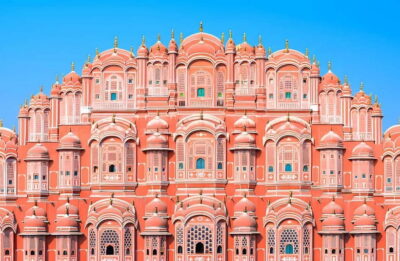
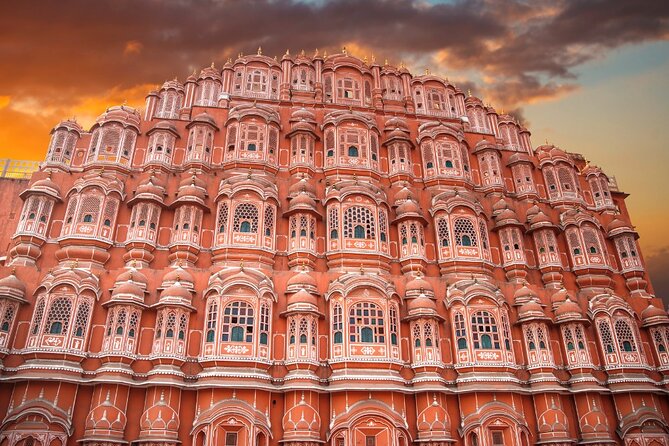
You finish with Hawa Mahal (Palace of Wind), the red and pink sandstone façade known for its small windows and latticework. You don’t need much time here—15 minutes can be enough if you focus on the architecture rather than trying to do everything in a rush.
Finally, there’s time for lunch at a multicuisine restaurant, but remember: lunch is not included in the price. Then you drive back toward Delhi, with drop-off options in Delhi NCR.
Price and Value: What $215 Really Buys (Private Car, Hotels, and Safari)

At $215 per person, this tour is best understood as a bundle of time-saving services. You’re paying for:
- a private, air-conditioned car for sightseeing and transfers
- private live tour guides in Delhi, Agra, and Jaipur
- accommodation with breakfast included
- safari access in Ranthambore with an English-speaking naturalist
- parking fees, tolls, fuel, and taxes handled
The reason this can feel like good value is simple: doing the Golden Triangle plus Ranthambore on your own usually means stacking multiple costs—private drivers, hotel bookings, separate guiding, and safari logistics. Here, those pieces are assembled so you’re not spending your vacation time negotiating or figuring out timing.
The catch is what’s not included:
- monument entrance tickets
- lunch
- tips and gratuities
So if you’re budgeting tightly, add an allowance for entrances and lunch. If you don’t want to think about money once you arrive, then you might prefer a package that includes entrances—this one does not.
Also, room setup is generally twin-sharing, and triple-sharing can apply depending on group size. If you need two rooms for three people, the data says there’s an extra charge for a second room, so it’s worth checking that early if space matters.
You can also read our reviews of more tours and experiences in Jaipur





Guides Who Make the Stops Click: From Nasir to Maahi

One big reason people rate this tour so highly is not the monuments alone—it’s the guidance. The guides named in the experiences you provided repeatedly show up as patient, detail-oriented, and willing to match the group’s pace.
In Agra, names like Nasir, Sadiq, Arham, and Amaan appear in strong reviews for explaining Taj Mahal and Agra sites clearly, including how to frame great photos. Some guides are specifically praised for being helpful with families and kids, and for keeping the pace calm rather than turning Agra into a checklist.
In Jaipur, guides such as Brajesh Sain are praised for adjusting to needs and providing strong local history context. There are also mentions of excellent English for smoother communication, which matters a lot in places like Jantar Mantar and the fort architecture where you’ll get more out of a live explanation.
If you want to maximize value from your guide, do this: ask for the best photo angles before you enter each main section, and ask what detail you should look for first. It turns a “nice view” into something you’ll actually remember.
Timing Shifts: When the Order Changes on Thursdays and Some Mondays
This tour isn’t always identical day-to-day. There are notes about how the sequence and overnights can change depending on the start day.
For Thursday starts, the order can swap so that you might move through Jaipur and Ranthambore differently than on other days, and your overnight stops can shift. For Monday starts during July, August, or September, there’s also a different arrangement where overnights and the timing of the Ranthambore safari can change.
Why you should care: this affects how much driving you do at night versus daytime, and it can change how “full” each day feels. If your main goal is a specific order—like Taj sunrise first—then it’s smart to confirm the exact schedule for your departure date before you finalize.
Who This Tour Fits Best (and Who Might Feel Tight-Scheduled)
This is a solid match if you want a first-time-friendly Golden Triangle route without managing transport or hunting for guides. It also works well if you care about having context at major sites: Delhi’s Mughal architecture, Agra’s marble story, and Jaipur’s forts and science monuments.
It’s also a good choice for families, based on guide feedback that mentions patience and working around kids’ energy levels.
Where it might feel less ideal:
- If you dislike road travel, the day-to-day driving between Delhi, Agra, Ranthambore, and Jaipur can feel like the main character.
- If you hate ticket budgeting surprises, you’ll need to pay for monument entrances since they aren’t included.
Should You Book It?
Yes, if you want a private, structured way to connect Delhi + Agra + Jaipur + Ranthambore in 4 days without handling the moving parts yourself. The sunrise Taj Mahal timing, the guided explanations, the breakfast-included hotels, and the Ranthambore naturalist add up to a lot of convenience for the money.
Hold off or ask extra questions if you:
- expect monument entrances and lunch to be fully included (they aren’t),
- need a very lightweight schedule with minimal driving,
- or have zero tolerance for the fact that tiger sightings depend on conditions and luck.
If you’re comfortable budgeting for entrances and you’re excited by the idea of getting context and timing right, this is the kind of tour that saves your energy for the parts you’ll actually remember.
FAQ
What cities does the 4-day tour cover?
It covers Delhi NCR, Agra, Ranthambore National Park, and Jaipur.
Where do pickup and drop-off happen?
Pickup and drop-off are offered from anywhere in Delhi NCR.
Is transportation private?
Yes. You have a private air-conditioned car for all sightseeing and transfers.
Are guides included?
Yes. You get a private live tour guide in Delhi, Agra, and Jaipur. In Ranthambore, you also get a naturalist guide in English.
Is the Ranthambore safari private?
No. The safari uses a shared jeep or canter (the included details specify shared canter).
Are hotel rooms included?
Yes. Accommodation with breakfast is included.
Are monument entrance tickets included?
No. Monument entrances are not included.
How long is the Ranthambore safari?
It’s described as about 2 to 3 hours, with a few-hour block listed for the safari.
Does the schedule change if my tour starts on Thursday or Monday?
Yes. If the tour starts on a Thursday, the overnight stops and order can change. If it starts on a Monday during July, August, or September, the order and overnight stops can also change.
Can I cancel for a full refund?
Yes. You can cancel up to 24 hours in advance for a full refund, and cancellations within 24 hours aren’t refunded.