REVIEW · 3-DAY EXPERIENCES
3 Days: Private Guided Tour Of Jaipur & Agra With Drop At Delhi
Book on Viator →Operated by Unseen Tours and Travels · Bookable on Viator
Three days of palaces, mausoleums, and a smooth private route. This Jaipur-to-Agra experience strings together the big names with local guides, AC transport, and a real cultural meal that goes beyond sightseeing. You also get an end-of-trip drop in Delhi at your hotel or airport.
What I like most is the private format paired with local guides in Jaipur, Fatehpur Sikri, and Agra. That matters because you’re not just collecting photos; you’re getting the context for what you’re seeing, from fort layouts to Mughal-era details.
One thing to plan for: monument entry tickets are extra and paid directly on the ground. So if you’re budgeting tightly, factor those fees in ahead of time, and expect some timing to flex with traffic since transfers are approximate.
In This Review
- Key highlights worth knowing
- First Stop: Jaipur’s forts, palaces, and timekeeping
- Practical note for Day 1
- Day 2: Step well geometry, red-sandstone Mughal drama, and the Taj
- Why Day 2 feels like two tours in one
- Day 3: Two Agra tombs and a Mughal stronghold
- The “private” advantage on the last day
- Accommodation, comfort, and what the included meal adds
- Guides and transport: why this setup works
- Price and value: what you’re really paying for
- Who this tour fits best
- Tips to get the most from your three days
- Should you book this private Jaipur and Agra tour?
- FAQ
- What is the price of the 3-day private guided tour?
- How long is the tour?
- What places are included in the tour?
- Are monument entry fees included?
- What is included in the tour price besides guiding?
- Is this a private tour?
- Where will you be dropped off at the end?
- Can I cancel for a full refund?
Key highlights worth knowing
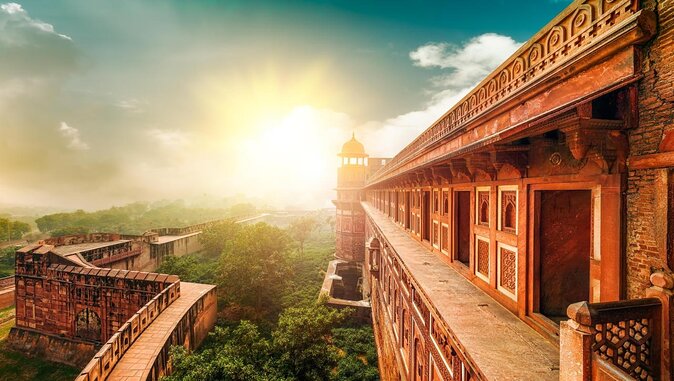
- Traditional dinner with a local family in Jaipur that feels personal, not staged
- Two nights of accommodation included (3-star to 5-star options)
- AC vehicle + driver for the long Jaipur-to-Agra day
- Local guides in Jaipur, Fatehpur Sikri, and Agra to explain the stops
- Drop-off in Delhi at your chosen hotel or the airport
First Stop: Jaipur’s forts, palaces, and timekeeping
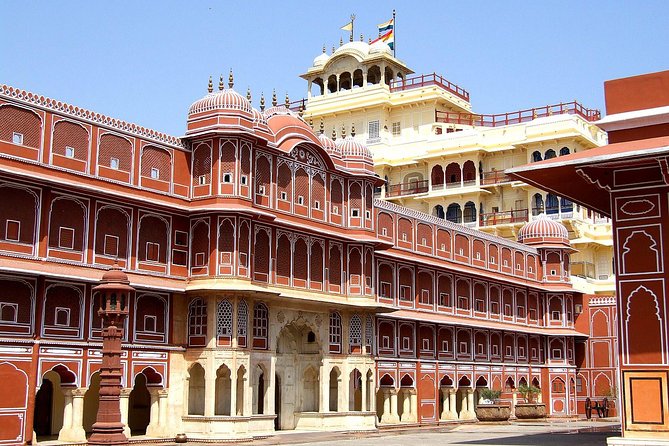
Jaipur is one of those places where every turn feels like you’ve stepped into a postcard, but the best part is learning how the city was planned and built. On Day 1, you start with Amer (Amer Fort), which sits high above the city. The fort’s hilltop setting is a big part of why it looks so dramatic from different angles, and it helps you understand how power was designed to feel untouchable.
Amer Fort is also one of the easiest places to get your bearings fast. The fort is the principal tourist attraction in Jaipur, and you’ll spend about an hour and a half there. Entry isn’t included, so you’ll want to be ready to pay the monument ticket directly. If you’re sensitive to sun or heat, this is the day to think about timing and water.
Next up is Jal Mahal, the palace sitting in the middle of Man Sagar Lake. It’s only about a 15-minute stop, but don’t underestimate it. A quick pause here helps break up the heavier fort-and-palace feeling from earlier, and it gives you a different look at Jaipur’s royal architecture—one that’s tied to water and landscape rather than just walls.
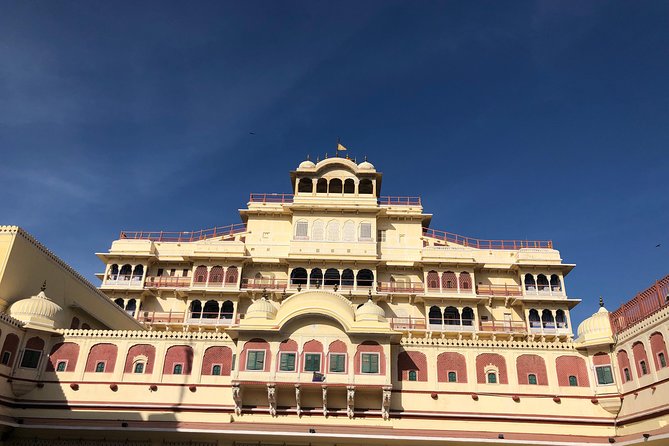
Then you move into the City Palace area. This is where Jaipur’s royal court relocated from Amber, starting in 1727. You’ll have about an hour inside this complex, which makes it a good match for people who want both iconic sights and some breathing room. City Palace entry isn’t included, so again, keep a little cash buffer for tickets.
After that comes Jantar Mantar, the UNESCO World Heritage site with astronomical instruments built by Sawai Jai Singh II. This is a very different kind of attraction. Instead of a building you just look at, you see functional science—like the world’s largest stone sundial. You’ll spend about 40 minutes here. If you like history that has a practical edge, this stop is a keeper.
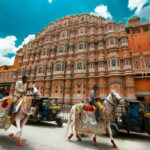
Finally, you’ll see Hawa Mahal, the Palace of Wind. It’s a quick 15-minute stop, but it’s also one of Jaipur’s most recognizable silhouettes: red and pink sandstone, designed to extend toward the women’s chambers. Even in a short visit, you can get the basic idea of why it was built the way it was—so you can imagine how people would experience the city from inside.
You can also read our reviews of more guided tours in Jaipur

Practical note for Day 1
Monument entry fees are not included. The stops are priced as experiences with guiding and transport, so tickets are paid on-site. You’ll also be in an air-conditioned vehicle between stops, which helps on warmer days when you’re covering several sites.
Day 2: Step well geometry, red-sandstone Mughal drama, and the Taj
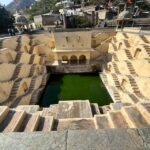
Day 2 is the day that turns from Jaipur into Mughal icons. You start with Chand Baori in Abhaneri, famous for its step well and the Harshat Mata Temple nearby. Even if you only have about 15 minutes, the geometry hits immediately. Step wells aren’t just pretty; they were built for survival in hot climates. In a short stop, you can still appreciate the scale and repetition that make it so visually striking.
From there, you head to Fatehpur Sikri, a site that’s less about one single landmark and more about a whole cluster of red sandstone buildings. You’ll spend about 1 hour 30 minutes there, and that amount of time is ideal because Fatehpur Sikri has several named highlights you can spot while your guide explains what each one was used for.
Key features you’ll likely see include Buland Darwaza, the entrance to Jama Masjid mosque, and the marble Tomb of Salim Chishti. There’s also Diwan-E-Khas, known for its carved central pillar, plus Jodha Bai Palace, which mixes Hindu and Mughal styles. Overlooking the site is the Panch Mahal, a five-story structure. Even when you don’t go deep into every detail, having a local guide makes the layout much easier to understand.
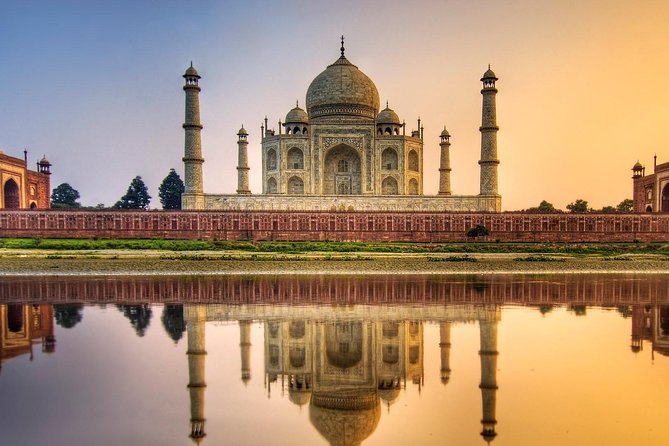
Then it’s on to the Taj Mahal in Agra. You’ll have about an hour and a half for it. This is the big one: an ivory-white marble mausoleum on the south bank of the Yamuna, commissioned in 1632 by Shah Jahan for Mumtaz Mahal, and also containing Shah Jahan’s tomb. The Taj Mahal is one of those sights where the facts matter as much as the visuals. Knowing the purpose behind it helps you look past the obvious postcard views and notice the design choices you otherwise might miss.
As always, Taj Mahal entry isn’t included and is paid directly. Planning-wise, it helps to remember that Day 2 includes multiple major sites, so it’s smart to keep your priorities clear: if you’re mainly there for the Taj, don’t get stuck spending extra time in Fatehpur Sikri beyond what your guide’s schedule allows.
Why Day 2 feels like two tours in one
Chand Baori gives you a local Rajasthan lens—water engineering and temple culture. Fatehpur Sikri and the Taj shift you into Mughal-era power and aesthetics. That contrast is part of what makes the day memorable, because you don’t repeat the same architectural style back-to-back.
Day 3: Two Agra tombs and a Mughal stronghold
On Day 3, you stay focused on Agra. First is Itmad-ud-Daula, a Mughal mausoleum often described as a jewel box, sometimes called Bachcha Taj. It’s about a 40-minute visit. This stop is perfect if you like seeing the Taj from another angle—because it helps you understand the stylistic evolution that leads to the Taj Mahal, without the crowds and time pressure you may feel at the main attraction.
Next is Agra Fort, which you’ll spend around 30 minutes on. This fortress was the main residence of Mughal emperors until 1638, when the capital shifted from Agra to Delhi. You’ll also learn that before the British takeover, the last Indian rulers to occupy it were the Marathas. Even with a shorter visit, the fort context makes the Taj-area story more complete. The mausoleum is one kind of monument; the fort is power you can feel in your bones.
You can also read our reviews of more private tours in Jaipur






The “private” advantage on the last day
Because this is a private guided tour for your group, the pace feels controlled. You’re not sharing time slots with random strangers trying to sprint from one photo spot to another. It makes a difference on Day 3, when your energy is lower and the last thing you want is to feel rushed.
Accommodation, comfort, and what the included meal adds
Two nights of accommodation are included, and the hotel level can be selected across 3-star, 4-star, or 5-star options. That’s a big part of the value math, since you’re not just paying for sightseeing. You’re also paying for your sleep setup while you’re moving between cities.
Breakfast is included for two mornings, and you also get bottled water. Between those small inclusions and the AC vehicle, the tour is designed to keep you comfortable through travel and longer site days.
The standout cultural touch is the traditional dinner with a local family in Jaipur. This isn’t just a meal stop labeled as authentic. In one highlight from recent experience, the tour’s owner extended an invitation to dinner with his family, which is exactly the kind of behind-the-scenes moment that turns a typical tour into something warmer. You get to see daily life from the inside rather than just eating in a restaurant and heading out.
Guides and transport: why this setup works
You’ll have local guides in Jaipur, Fatehpur Sikri, and Agra, plus an included driver and air-conditioned vehicle with pickup and drop-off. This structure is what makes the schedule feel doable. It also means you’re not relying on guesswork for the “why” behind each stop.
The driver also matters more than you’d think. In at least one recent experience, the timing included protest activity, and the driver helped manage the day appropriately. That’s not something you can eliminate everywhere in India, but it’s the reason having a reliable driver and a team who handles practical routing matters.
Also, your final drop is in Delhi—either at the hotel of your choice or at the airport. That’s a useful feature if you’re mixing this trip with onward travel.
Price and value: what you’re really paying for
At $187 per person for three days, this is priced as a private tour with several meaningful inclusions: two nights of accommodation, two breakfasts, one traditional dinner with an Indian family, AC vehicle and driver, bottled water, hotel pickup and drop-off, and local guides for multiple key sites.
The main thing you don’t get for that price is monument entry. That’s common for tours like this: guides and transport are covered, but tickets are paid directly for the sights. So the actual total depends on which monuments you choose to enter and any ticket variations on the ground.
Still, compared with booking everything separately—hotel, intercity transport, and paying for guiding—this format can be good value if you want a straightforward plan and less decision fatigue. You know what you’re doing each day, you know you’ll have a guide, and you won’t be piecing together transport between far-flung locations.
Who this tour fits best
This tour is a good fit if you want:
- A private experience with a driver and guided explanation at major sites
- A clear three-day route across Jaipur, Fatehpur Sikri, and Agra
- Included lodging and meals so you’re not doing logistics math every hour
It may be less ideal if:
- You dislike paying separate monument tickets
- You prefer highly flexible stops with lots of free wandering time
- You want no structure at all—because the schedule does include defined stops and durations for each attraction
Tips to get the most from your three days
Keep these practical points in mind:
- Expect to pay monument entry fees directly at stops; plan your budget for that.
- Bring sun protection and stay hydrated—your water is included, but you’ll still want to manage heat.
- Wear comfortable walking shoes. Forts, palace complexes, and mausoleums are real walking days.
- Keep your schedule for Day 2 in mind. Fatehpur Sikri and the Taj are both major sites, so don’t plan additional activities that could stress timing.
- If road conditions change due to traffic or public disruptions, trust the driver’s route decisions. The tour is built to handle real-world movement.
Should you book this private Jaipur and Agra tour?
If you want a guided, no-stress route with two nights of lodging, AC transport, and a memorable dinner that connects you to a local family, this is a solid pick. The value is strongest when you want guidance at the major monuments and you don’t want to coordinate hotels and transit on your own.
I’d book it if your priorities are the big classics—Amer Fort, City Palace, Jantar Mantar, Hawa Mahal, Fatehpur Sikri, the Taj Mahal, plus supporting stops like Itmad-ud-Daula and Agra Fort—and you’re comfortable budgeting for monument entry tickets. If that extra ticket cost is a dealbreaker for you, then you’ll want to price tickets first or choose a version where entry is included.
Either way, for a first-time route across the Golden Triangle’s Rajasthan and Agra highlights, this private setup is an efficient way to see a lot without feeling like you’re just being rushed from one site to the next.
FAQ
What is the price of the 3-day private guided tour?
The tour costs $187.00 per person.
How long is the tour?
It runs for 3 days (approx.).
What places are included in the tour?
You’ll visit Jaipur (Amer Palace, Jal Mahal, City Palace, Jantar Mantar, Hawa Mahal), Fatehpur Sikri (including Buland Darwaza and Jama Masjid area highlights), Agra (Taj Mahal, Itmad-ud-Daula, and Agra Fort), plus a stop at Chand Baori (step well).
Are monument entry fees included?
No. Monument entry fees are not included and are payable directly.
What is included in the tour price besides guiding?
You get two nights of accommodation (based on the selected option), breakfast for 2 days, one traditional dinner with a local family in Jaipur, AC vehicle and driver, local guides at Jaipur, Fatehpur Sikri, and Agra, bottled water, and hotel pickup and drop-off.
Is this a private tour?
Yes. Only your group will participate.
Where will you be dropped off at the end?
You’ll be dropped off in Delhi, either at the hotel of your choice or at the airport.
Can I cancel for a full refund?
You can cancel up to 3 days in advance of the experience for a full refund, and cancellations made less than 3 days before the start time are not refundable.