REVIEW · PRIVATE CITY SIGHTSEEING TOURS
Private Full Day Jaipur Sightseeing Tour By Tuk Tuk
Book on Viator →Operated by Namaste Jaipur Tours · Bookable on Viator
A tuk-tuk day in Jaipur feels like a shortcut. I like the private pace (no waiting on strangers, no haggling with drivers) and the way the route hits the big names without wasting time in traffic. The main thing to watch: key monuments have entrance fees not included, so your budget can jump if you add tickets on-site.
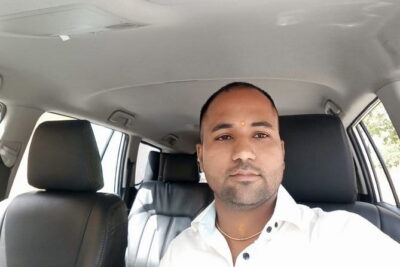
I also love how the best guides turn the ride into a living lesson. Some guides I’ve seen referenced—Khalid, Shabir/Shabbir, and even Soni Ji—were praised for clear English, smart adjustments to interests, and practical safety tips (including awareness around busy crowds). One possible downside is that you might be taken to textile or jewelry workshops as part of the day, so you’ll want to set expectations early if you’d rather skip shopping.
At about $5.14 per person for the tour itself, the value is mostly in transportation + driver time + included fuel and parking. Once you add estimated monument tickets and meals (not included), you’ll get a more honest total. For first-time visitors who want a one-day overview, this format often lands well—just go in with a clear plan for tickets and any shopping stops.
In This Review
- Key highlights to know before you go
- Why a private tuk-tuk works so well in Jaipur
- Pickup, timing, and how the day actually moves
- Stop 1 in Jaipur: setting your bearings before the sights
- Stop 2: Amer (Amber Fort) without the hassle
- Stop 3: Panna Meena ka Kund, the stepwell that steals the show
- Stop 4: Jal Mahal, the Water Palace on the lake
- Stop 5: City Palace, where styles mix
- Stop 6: Jantar Mantar, Jaipur’s giant stone sky tools
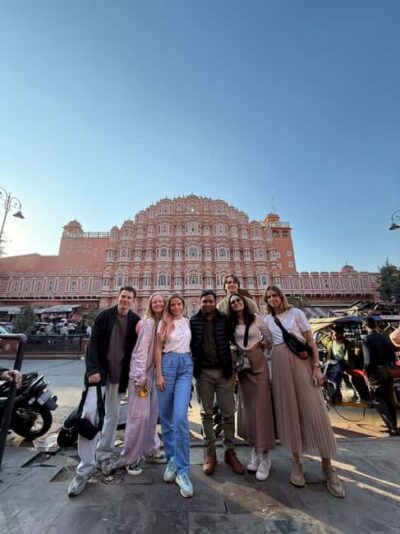
- Stop 7: Hawa Mahal, the Palace of Wind
- Stop 8: Gaitore Ki Chhatriyan, royal crematorium cenotaphs
- Price and what to budget in real terms
- Guide quality is the secret ingredient (and why it matters)
- Shopping stops: how to avoid commission pressure
- Tips to make your tuk-tuk day smoother
- Should you book this private tuk-tuk Jaipur tour?
- FAQ
- Is pickup and drop-off included?
- Is this a private tour?
- What’s included in the tour price?
- Are entrance fees included for all stops?
- How long is the tour?
- Do I need tickets for meals?
- Can children join?
- Can I cancel and get a full refund?
Key highlights to know before you go
- Private tuk-tuk convenience: pickup and drop-off from where you choose, plus a driver who handles the driving
- Time efficiency in traffic: you bounce between Jaipur’s sights without searching for taxis or negotiating
- Real architecture stops: Amber Fort, City Palace, Jantar Mantar, and Hawa Mahal are built for camera time and context
- Structured variety: stepwell + lake palace + observatory + royal cenotaphs in one full day
- Entrance fees are mixed: some stops are free/low-ticket while others are not included
- Shopping pressure is possible: some drivers may suggest workshops; you can steer the day with clear limits
Why a private tuk-tuk works so well in Jaipur
Jaipur can be a lot even for confident travelers. Roads are busy, distances feel longer than they look, and finding the right vehicle can turn into a mini project. This tour solves that with a private tuk-tuk and pickup/drop-off from your hotel or any spot you request.
The tuk-tuk format also changes how you experience the city. You’re moving close to street life, and you’re less boxed into a car window view. That matters at places like Hawa Mahal, where the streets around Old City landmarks can feel like part of the attraction. It’s also the sort of day that suits solo travelers well—people reported feeling comfortable and safe with their driver navigating the chaos.
The trade-off is comfort. One review specifically noted the lack of air conditioning as a consideration. If you’re visiting in peak heat and are sensitive to that, you’ll want to plan accordingly (sun protection, water, and a steady rhythm with frequent breaks).
You can also read our reviews of more private tours in Jaipur


Pickup, timing, and how the day actually moves
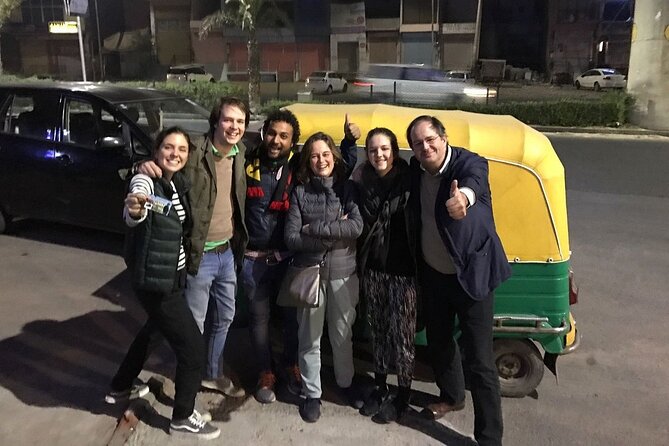
The day typically starts in the morning—around 9:30 am—with the driver meeting you at your hotel. The whole experience runs about 8.5 hours, ending back at your hotel in Jaipur.
In real life, Jaipur timing can be flexible. Some reviews praised drivers for arriving early and communicating well. Others mentioned a later start (for example, beginning around 9:30 instead of 9:00). Don’t panic about a small shift, but do keep your expectations realistic: traffic happens, and your driver’s route decisions will affect timing.
A practical benefit: since this is private, you’re not locked into a rigid group schedule. Guides described adjusting the plan to your interests—one driver was noted as making time for street food, while another emphasized letting you explore at your pace and returning when you’re ready. If you’re the type who hates being rushed, that flexibility is a big value.
Also, fuel and parking are included, and bottled water is provided. That’s not just a small detail in hot Rajasthan—it reduces the number of stops and cash moments you have to manage during the day.
Stop 1 in Jaipur: setting your bearings before the sights

You begin with a short meet-and-go at your hotel pickup point. Even with a packed itinerary, those first minutes matter. Your driver sets expectations for the route, handles quick coordination, and gets you out into traffic when the city is still manageable.
This is also where you can quickly confirm priorities: do you want more time at forts and palaces, or do you prefer observatories and geometry? Some guides earned praise specifically for listening and steering the day without making it feel awkward.
Stop 2: Amer (Amber Fort) without the hassle
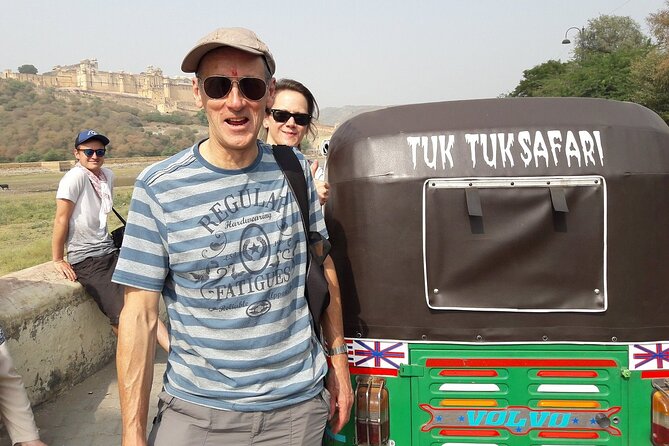
Amer is the first major big-name stop, and it’s easy to see why. This area is known for its forts and palaces, and it’s one of the most iconic viewpoints on the Jaipur circuit.
Why it works first: Amber/Amer is a high-impact sight, and if you reach it in the morning, you’re more likely to enjoy the experience at a calmer pace than later in the day. It’s also a good anchor point for your day’s theme. Once you see Amber Fort, you’ll better understand how the rest of Jaipur’s royal architecture fits together.
Possible drawback: the fort area can be busy at peak times, and you’ll want to wear good walking shoes. Also, the main attraction here is time-based; plan to take your time for photos and details rather than rushing through.
Stop 3: Panna Meena ka Kund, the stepwell that steals the show
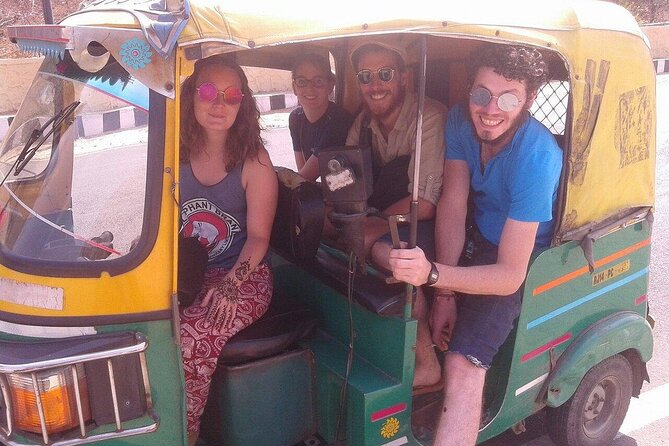
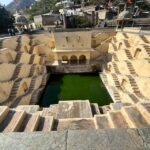
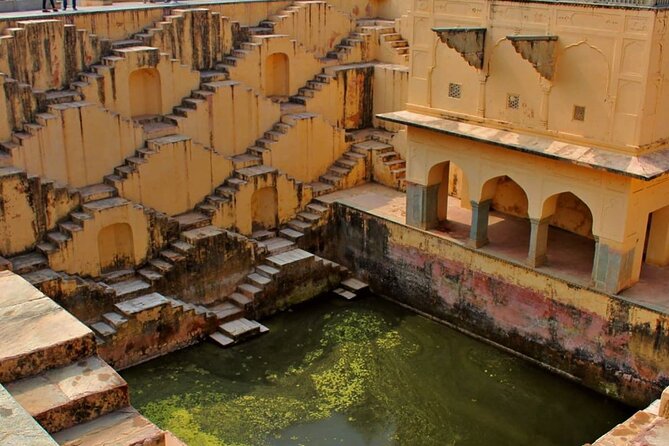
After Amer, you head to Panna Meena ka Kund, an eight-story, 200-foot-deep stepwell with 1,800 symmetrical steps. It’s from the 16th century, and the layout is part of what makes it memorable.
This stop is different from the royal palace and monument cycle. A stepwell is practical infrastructure turned into architecture, and it rewards slower looking—especially if you like repeating patterns and symmetry. The short time here can feel quick, but it’s still long enough to appreciate the scale and take photos from different angles.
If you enjoy off-the-main-track places, this is one of the best moments to do it. It breaks up the day so you don’t feel like you’re only checking boxes.
You can also read our reviews of more tours and experiences in Jaipur




Stop 4: Jal Mahal, the Water Palace on the lake
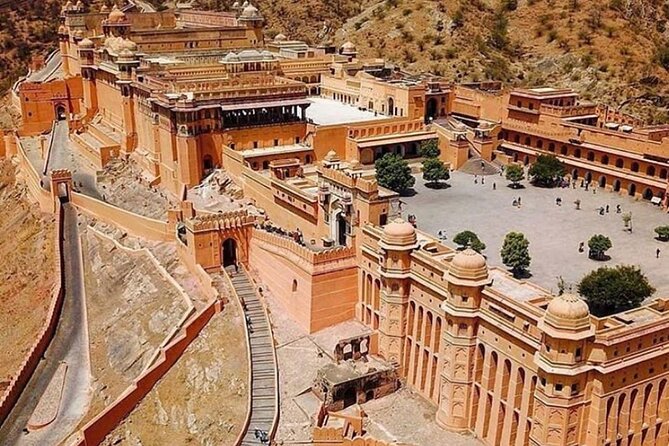
Next comes Jal Mahal, often called the Water Palace. It sits on Man Sagar Lake, and the stop is usually timed for a quick scenic look and photos.
What makes it interesting: it’s a classic example of Rajput architecture placed in a landscape setting. It also gives you a visual palate change after the stair-step geometry of the stepwell.
The practical catch: this stop is relatively short, so don’t plan on a long photo session unless your driver has flexibility. If you’re serious about pictures, mention it early.
Stop 5: City Palace, where styles mix
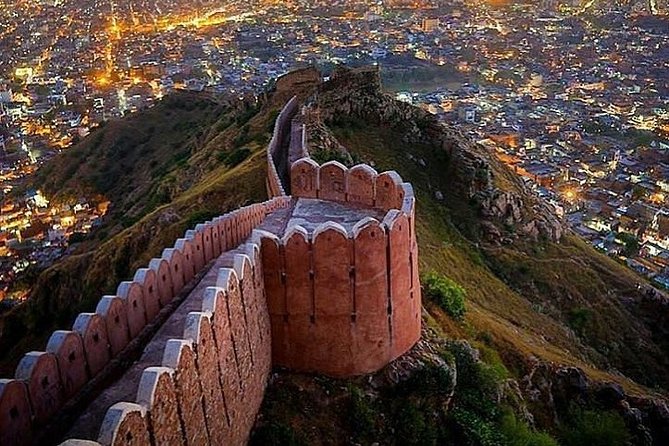
Then you move into the old city area for City Palace of Jaipur. This is described as a fusion of Rajasthani and Mughal styles, and that cross-influence shows up in the way the complex looks and feels.
You’ll typically get around two hours here. That’s enough to explore at a comfortable pace, especially if you focus on key sections rather than trying to see everything.
Entrance fees are not included for this stop, and that’s where your budget planning matters. If you want to prioritize your ticket spending, City Palace is usually worth being in the ticket-buying list because it’s a centerpiece.
Stop 6: Jantar Mantar, Jaipur’s giant stone sky tools
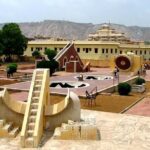
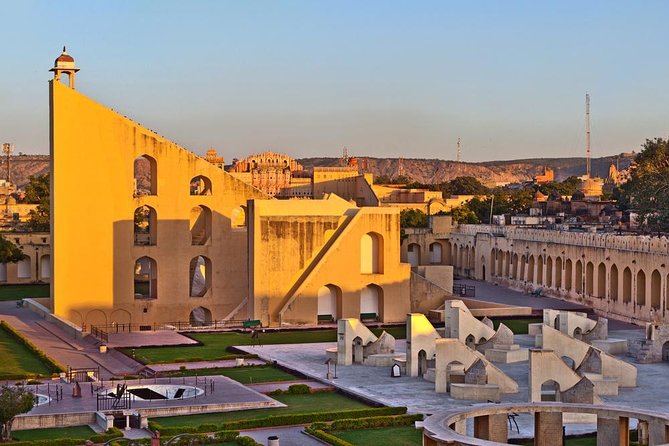
After City Palace, you head to Jantar Mantar—an observatory famous for its significant, well-preserved fixed monumental instruments.
This stop can be a highlight if you like science and design without getting lost in long explanations. Even if you’re not a math person, the scale and precision of the structures pull you in. And because you’re there in person, it feels more real than any photo.
This is another stop where entrance fees are not included. Also, some reviews mention losing cell signal around an observatory stop and that their driver handled it responsibly. Translation: keep your map offline, save your pickup contact, and don’t assume you’ll have perfect connectivity at every site.
Stop 7: Hawa Mahal, the Palace of Wind
Next up is Hawa Mahal (Palace of Wind). It was built in 1799 for royal ladies to watch processions while staying unseen.
This is one of those sights that looks like a postcard even before you fully understand it. The real payoff is seeing how the building’s design supports the idea of watching the street below. The architecture makes the story make sense.
Entrance fees are not included here as well. If you’re ticket sensitive, decide your must-do list in advance. Hawa Mahal is often a top priority for many first-timers.
Stop 8: Gaitore Ki Chhatriyan, royal crematorium cenotaphs
The final sightseeing stop is Gaitore Ki Chhatriyan (Gatore Cenotaphs). This area served as the royal crematorium grounds for Jaipur’s rulers.
It’s a different mood from the palace stops. Instead of royal power expressed through crowds and ceremonies, you see remembrance expressed through architecture. It’s a quieter, reflective finish that can make the whole day feel less like a checklist.
Entrance fees are listed as included for this stop, so it’s one of the places where your wallet gets a small break.
Price and what to budget in real terms
The tour price shown is $5.14 per person, and that’s attractive—especially for a private vehicle. But the real value calculation is what’s included vs. what you’ll pay separately.
Included:
- private tuk-tuk for the day
- hotel/airport/railway station pickup and drop-off
- fuel, parking charges, tolls/taxes
- bottled water
Not included:
- monument entrance fees (the estimated cost given is $21 per person)
- meals
So, the true cost for many people becomes tour price + roughly estimated ticket amount + meals. If you’re careful about which paid sites you commit to, you can keep spending controlled. If you want to enter everything on the route, expect the ticket line item to matter.
Also consider value beyond cost. Reviews consistently praise drivers who guided the day efficiently, drove safely in traffic, and made you feel comfortable enough to enjoy the schedule. That’s hard to price but easy to feel.
Guide quality is the secret ingredient (and why it matters)
This tour’s structure can only do so much. The difference is the driver/guide you get.
Many names came up with strong feedback: Khalid, Shabir/Shabbir, Soni Ji, and others like Babloo, Mohsin, Ali, Anis Ahmed, Imran, Raja, and Sawee. The common themes were:
- good English and clear explanations
- smart pacing (not running you out the door)
- flexibility, including tailoring interests like street food
- safety habits in busy areas (including watchfulness for pickpockets)
- communication and arriving on time
- extra care gestures like providing water during the day, and in one case, free lassi
One review also praised a guide for being connected enough to help when cell signal disappeared. That’s not glamorous, but it’s the kind of competence that keeps your day smooth.
Still, no guide is perfect every time. One lower-rated experience mentioned requesting one guide name but receiving a different driver and experiencing a late start. If guide assignment is important to you, you can message ahead with your preferences and be ready to adapt.
Shopping stops: how to avoid commission pressure
Here’s the part you should treat like a planning task, not a surprise. One review warned that tuk-tuk drivers may take you to textile and jewelry places on commission, and that pressure to buy can happen even if it’s described as optional.
At the same time, other reviews said their driver steered them toward local shops while avoiding tourist traps, and some guides were flexible without pushing purchases.
So what should you do?
- Tell your driver up front that you’re not interested in forced shopping.
- Use clear language: you want sight-seeing time, not workshop stops.
- If a stop feels shop-heavy, you can request adjustments since it’s a private tour.
If shopping is your thing, great. If it isn’t, plan to set boundaries early. This is the easiest way to protect your enjoyment.
Tips to make your tuk-tuk day smoother
A few small steps make a big difference in Jaipur.
- Wear sun-ready clothing and comfortable shoes. You’ll be walking through palace and fort areas.
- Keep a light bag. Busy sights and steps aren’t the moment for rummaging.
- Bring cash for entrances. Monument fees aren’t included, and the tour provides a practical estimate rather than covering everything.
- Have water on hand even though bottled water is provided. Jaipur heat can be sneaky.
- Decide your ticket priorities. If you want to control costs, pick the paid sites that matter most to you.
- If you care about comfort, consider whether you need an air-conditioned option since at least one review flagged this.
Should you book this private tuk-tuk Jaipur tour?
Book it if:
- you want a private way to see top Jaipur sights without negotiating rides all day
- you’re on a one-day schedule and want a tight route with smart time use
- you like the idea of having a driver who can explain what you’re seeing and adjust pacing
- you’re comfortable paying some monument entrance fees separately
Skip or reconsider if:
- you strongly dislike shopping stops or want to avoid any workshop-style detours
- you need air conditioning for comfort in hot weather
- you prefer to build your day from scratch at your own stops and ticket pace
If you go in prepared—tickets budgeted, boundaries set on shopping, and a comfortable outfit chosen—you’ll likely get a fun, efficient orientation to Jaipur that feels made for real travel, not just sightseeing.
FAQ
Is pickup and drop-off included?
Yes. Hotel/airport/railway station pickup and drop-off in Jaipur are included, and your driver will meet you at your chosen location.
Is this a private tour?
Yes. It’s private, meaning only your group participates.
What’s included in the tour price?
The tour includes a private tuk-tuk vehicle, fuel, parking charges, toll taxes and interstate taxes, and bottled water.
Are entrance fees included for all stops?
No. Monument entrance fees are not included overall (with an estimated cost per person provided). Some stops list tickets as free, while others do not include admission fees.
How long is the tour?
The duration is approximately 8 hours 30 minutes.
Do I need tickets for meals?
Meals are not included, so you’ll need to plan for lunch and snacks.
Can children join?
Children must be accompanied by an adult.
Can I cancel and get a full refund?
Yes. Free cancellation is available up to 24 hours in advance for a full refund.