REVIEW · PRIVATE CITY SIGHTSEEING TOURS
Jaipur Sightseeing Tuk-Tuk Tour
Book on Viator →Operated by Unique Jaipur Tour · Bookable on Viator
A full day in a tuk-tuk beats a checklist. I like how this tour keeps things simple: you get pickup, bottled water, and an English-speaking driver who maps the day around Jaipur’s biggest hits. You also get a smooth mix of monuments, calmer stops, and then a shopping block where you can actually look at what Jaipur does best.
Two things I really liked were the chance to see landmarks such as Jantar Mantar (with its famous stone sundial) and Amber without juggling tickets, taxis, and directions all day. I also appreciate that the driver doesn’t lock you into a rigid feel—you can set preferences, and that makes the day feel more personal.
The main catch to plan for is the money after the tour price. Monument entrance fees and camera fees are not included, and the add-ons can make your final total jump quickly if you stop for everything.
In This Review
- Key highlights worth your attention
- The value behind a very low starting price
- How the pickup day actually feels in Jaipur streets
- Stop-by-stop: what each landmark is really for
- Mandir Shree Sitaram Ji and the quiet start
- Tripolia Gate: where the City Palace story begins
- Jantar Mantar: the UNESCO site you can understand fast
- City Palace: courtyards and separate gardens
- Hawa Mahal: latticework and breeze logic
- Royal Gaitor Tumbas: carved memorials and a calmer pause
- Jal Mahal: the water palace viewpoint
- Panna Meena ka Kund: stepwell geometry you can spot instantly
- Amer: the big finale with Hindu and Muslim design mix
- The shopping block: what to actually look for in Jaipur
- Lunch plans and driver recommendations
- Optional: learning to drive a tuk-tuk
- Price and what it may cost in real life
- Who this tuk-tuk Jaipur day suits best
- Should you book this Jaipur Sightseeing Tuk-Tuk Tour?
- FAQ
- What’s included in the Jaipur tuk-tuk tour?
- Is this tour private or shared?
- How long is the tour?
- Do I pay for monument entrance fees during the tour?
- Is a guide included?
- What about meals—are they included?
- Is shopping part of the tour?
- Can I learn to drive a tuk-tuk?
- What if the weather is bad?
- What’s the cancellation policy?
Key highlights worth your attention
- Hotel pickup and drop so you don’t waste the day arranging rides
- English-speaking private driver who can explain what you’re seeing
- Jantar Mantar + City Palace + Hawa Mahal in one long, logical route
- Amer and the stepwell Panna Meena ka Kund for a more layered side of Jaipur
- A dedicated shopping window for gems, silver jewelry, bangles, textiles, and blue pottery
- Optional tuk-tuk driving lesson at the end if you want a hands-on souvenir
The value behind a very low starting price
This tour is priced low, and that matters. The practical way to think about it: the base cost covers transport, the driver, and the day plan, while the sites themselves cost extra.
Included basics are strong for the money. You’ll get pickup and drop from the hotel (or airport/rail/bus station), bottled water, fuel and parking, and a private tuk-tuk with an English-speaking driver. There’s also complimentary masala tea or coffee during the day. For many people, that reduces stress more than any single “wow” sight.
Just keep your expectations set on the cost split. Entrance fees are listed as INR 2500 per head (and camera fees are also excluded). If you want photos everywhere, visit every site, and add lunch, budget beyond the headline price.
You can also read our reviews of more tours and experiences in Jaipur.

How the pickup day actually feels in Jaipur streets
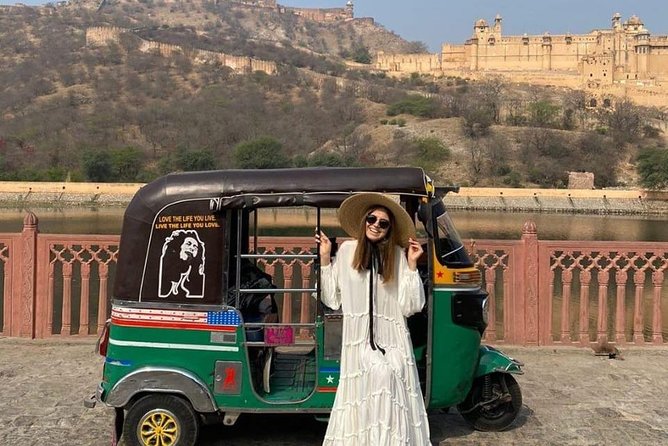
The tour runs about 8 hours, and the day is built to stay moving. That’s the right approach if you only have one day and you want the main landmarks plus a bit more.
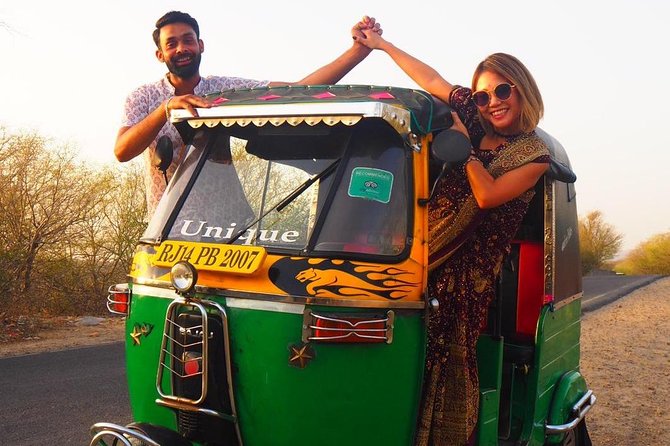
Your driver meets you at your hotel and handles routing in the tuk-tuk. This matters because Jaipur traffic and road layouts can wear people down fast. In a tuk-tuk, you also get a more direct street-level experience—less “sealed car window” and more real city rhythm.
One practical note from the experience details: if you’re on the taller side, the seating can feel tight. It’s manageable, but it’s smart to plan how you’ll sit before you set off.
Stop-by-stop: what each landmark is really for
This day is paced with short photo windows and longer blocks where you’ll want time to wander. Here’s what each stop is best at.
Mandir Shree Sitaram Ji and the quiet start
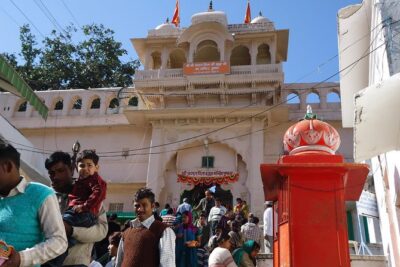
You begin at Mandir Shree Sitaram Ji near Choti Chaupad. The temple is dedicated to Lord Rama and Sita, and even without deep technical explanation, you’ll feel why places like this have held attention for centuries. It’s a free admission stop and a good “warm-up” before the bigger, more tour-heavy sites.
Time is about 15 minutes, so treat it as a gentle introduction. You’ll see charm in the architecture and the spiritual focus, then move on before your energy dips.
Tripolia Gate: where the City Palace story begins
Next up is Tripolia Gate, the main entrance to the City Palace area and reserved for the royal family. That royal detail changes how you look at the gate. It’s not just a wall you pass—it’s a boundary point that signals power, access, and design.
Again, it’s about 15 minutes with free admission, which works because you’re heading into the heart of the palace complex next.




Jantar Mantar: the UNESCO site you can understand fast
Jantar Mantar (Jaipur) is the headliner for a lot of people, and for good reason. The monument includes the largest stone sundial in the world, and it’s a UNESCO World Heritage site. You don’t need a big background to enjoy it—this is one of those places where the shapes explain themselves once you’re there.
Plan for about 45 minutes. Admission isn’t included, so decide how seriously you want to photograph and how long you want to linger. If you like science-in-stone, you’ll enjoy this stop more than most.
City Palace: courtyards and separate gardens
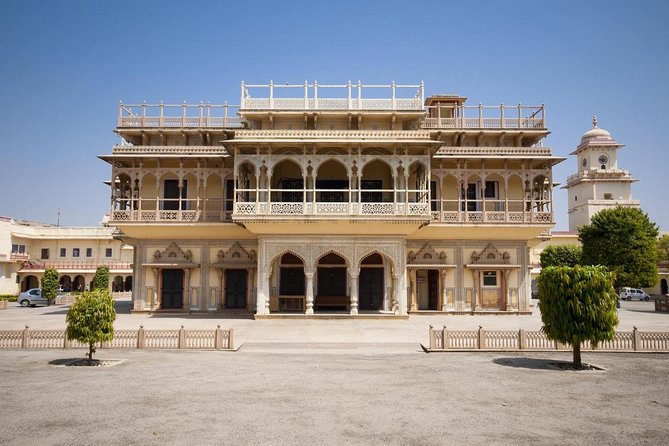
Then comes the City Palace. The layout matters here: the palace includes separated gardens and courtyards across a large area. That spacing is one reason this can feel more breathable than some other palace stops.
You’ll get about 2 hours, which is a good amount of time to move at a comfortable pace without rushing. Admission isn’t included, so expect to pay if you want full access.
Hawa Mahal: latticework and breeze logic
Hawa Mahal, also known as the Palace of Breeze, is one of Jaipur’s most recognizable sights. The building was planned so the royal household could visit a spot that citizens could also use. The curved latticework is the star feature, and it’s worth slowing down for a few angles.
Time is about 45 minutes. Admission isn’t included. If you’re visiting mainly for photos, you’ll still want a little time to reposition for the best views through the lattice.
Royal Gaitor Tumbas: carved memorials and a calmer pause
If you want a break from crowds, Royal Gaitor Tumbas is a good one. The tombs sit near Nahargarh Fort and include intricately carved marble and sandstone cenotaphs honoring Jaipur’s former rulers.
You’ll spend about 45 minutes. Admission isn’t included. This stop is more about atmosphere and architecture than about quick sightseeing, so it’s a nice balance after the busy, iconic landmarks.
Jal Mahal: the water palace viewpoint
Next is Jal Mahal, the water palace in the middle of Man Sagar Lake. The building is tied to Rajput culture, and it was renovated and enlarged in the 18th century. Even on a short stop, it’s the kind of place where the setting does a lot of the work.
You’ll get about 15 minutes, and admission isn’t included. Treat it as a short scenic break, then head toward the stepwell and Amer side of town.
Panna Meena ka Kund: stepwell geometry you can spot instantly
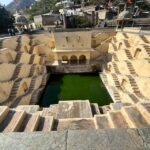
Panna Meena ka Kund is a standout if you like architecture that feels practical. It’s a 16th-century stepwell in Amer with symmetrical, crisscross steps and arched niches. It served as a water reservoir and community gathering space, which gives the structure a real human purpose.
This is about 30 minutes and admission is free. Because it’s visually structured, you’ll likely understand what you’re looking at quickly—plus it’s an easy place to take photos without feeling rushed.
Amer: the big finale with Hindu and Muslim design mix
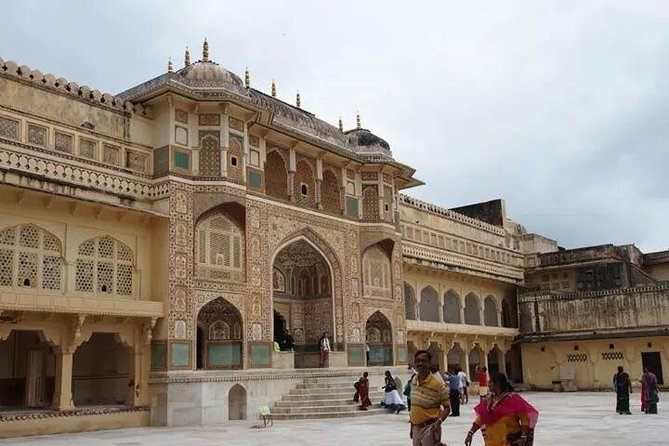
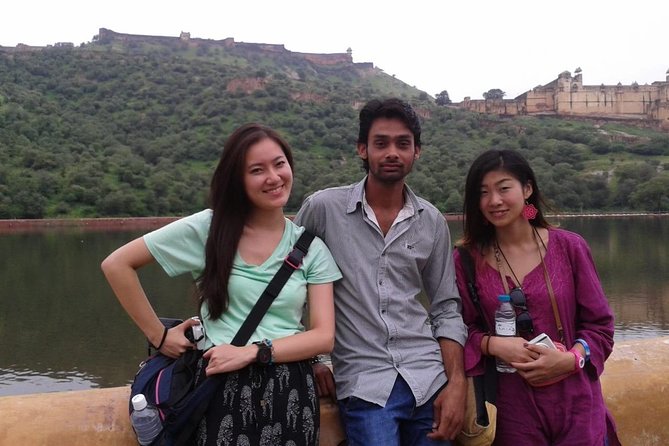
Finish with Amer (Amber), one of Jaipur’s most impressive destinations. It sits on hills outside town and combines red sandstone and white marble, blending Hindu and Muslim architectural styles.
You’ll have about 2 hours here. Admission is listed as free in the provided details for this stop, which helps. Amer is also the point where the day’s “big effort” pays off—this is where you’ll want comfortable shoes and a camera ready, because the views and details can pull you in.
The shopping block: what to actually look for in Jaipur
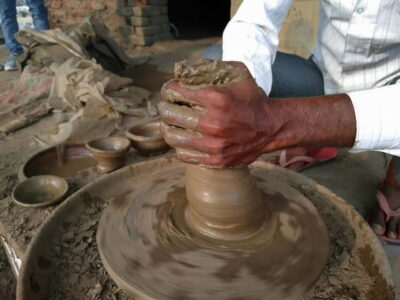
After the monument route, you get an afternoon shopping window. This isn’t just “walk past stores.” It’s time to browse items Jaipur is known for: gemstones, silver jewelry, bangles, clothes, blue pottery, and textiles.
This part is where your driver and your preferences can matter. If you like chatting and comparing materials, you’ll get more out of the hours than someone who just wants a quick souvenir.
One extra practical note from the experience details: entrance and site fees can run expensive, so treat shopping as flexible. If you want to control spending, set a budget for gemstones and silver jewelry before you start negotiating.
Lunch plans and driver recommendations
Meals are not included, and the suggested meal budget is INR 1000–1500 per head for a good, hygienic restaurant. In a day packed with stops, that budget range matters because the wrong spot can feel like a waste of time.
Your driver may recommend a lunch restaurant, and the idea is that you should be able to find something that fits your appetite. It’s a useful perk because choosing where to eat on the fly can take energy you’d rather spend on the sights.
Optional: learning to drive a tuk-tuk
If you want something more playful than photos, the tour includes an option to learn how to drive a tuk-tuk. It happens later in the day with a tuk-tuk expert. This isn’t for everyone, but if you like hands-on travel, it turns the day into a story you can retell.
Price and what it may cost in real life
Let’s be honest: a tour starting around $5 sounds almost too good. But the listed entrance fees and meal costs are where your spending usually lands.
Here’s the pricing reality you can plan around:
- Included: private tuk-tuk with an English-speaking driver, hotel/airport/rail/bus pickup and drop, bottled water, fuel/parking, and masala tea/coffee.
- Not included: monument entrance fees and camera fees (listed as INR 2500 per head), tips for the driver, and meal expenses (INR 1000–1500 per head).
- Optional: guide available on request for INR 1000.
So the best value angle is clear: if you’re flexible on the number of paid entries or you mainly want the big landmarks, you’re likely to feel the bargain. If you plan to photograph everything inside multiple ticketed locations and add lunch plus a guide, the “cheap” starting price becomes less dramatic.
Who this tuk-tuk Jaipur day suits best
This is a great fit if:
- You want a private full day with a driver who can handle navigation
- You want the major sights without doing separate transportation planning
- You like a mix of landmarks and quieter architecture stops
- You want shopping time at the end of the sightseeing circuit
It might be less ideal if:
- You hate paying additional entrance fees and camera fees
- You prefer slow travel with long, unstructured wandering
- You need lots of time inside museums or palaces beyond the set stop durations
Should you book this Jaipur Sightseeing Tuk-Tuk Tour?
I’d book it if you want one strong day that hits Jaipur’s most famous landmarks plus Amer and the stepwell, all from the comfort of a private tuk-tuk with pickup and drop. The included tea/coffee, bottled water, and English-speaking driver make the day smoother than the “figure it out yourself” approach.
Skip it only if entrance fees are a dealbreaker for you or if you’re expecting everything to be included at the headline price. If you’re okay planning for tickets and you want a fun, street-level day, this is a smart, practical way to see Jaipur.
FAQ
What’s included in the Jaipur tuk-tuk tour?
The tour includes hotel/airport/railway station/bus station pickup and drop, bottled water, fuel and parking charges, a private tuk-tuk with an English-speaking driver, and complimentary masala tea or coffee.
Is this tour private or shared?
It’s a private tour/activity, meaning only your group participates.
How long is the tour?
The duration is approximately 8 hours.
Do I pay for monument entrance fees during the tour?
No. Monument entrance fees and camera fees are not included, and they’re listed as INR 2500 per head.
Is a guide included?
A guide is available on request for INR 1000, but it is not included automatically.
What about meals—are they included?
Meals are not included. The listed meal expense is INR 1000–1500 per head for a good hygienic restaurant.
Is shopping part of the tour?
Yes. You’ll have an afternoon shopping period with access to items like gemstones, silver jewelry, bangles, clothes, blue pottery, and textiles.
Can I learn to drive a tuk-tuk?
Yes. If you want to, a tuk-tuk expert can teach you how to drive at the end of the tour.
What if the weather is bad?
The tour requires good weather. If it’s canceled due to poor weather, you’ll be offered a different date or a full refund.
What’s the cancellation policy?
You can cancel for a full refund up to 24 hours in advance. If you cancel less than 24 hours before the start time, the amount paid is not refunded.