REVIEW · GUIDED
Private Temple Tour in Jaipur w/ Guide, Transportation & Sites
Book on Viator →Operated by Om Ananda Travel · Bookable on Viator
Jaipur’s temples tell a full story. This private tour strings together Shiva, Vishnu-Lakshmi, and Ganesha worship with practical explanations of puja and aarti, plus time for spiritual questions (and a chance for chakra or astrology readings). I love the way the guide turns each stop into a real lesson, not just a photo stop, and I love that you’ll see Jaipur’s temple life in more than one neighborhood.
The only drawback is it’s a 7 to 8 hour day with no breakfast, so you’ll want an early meal, comfortable shoes, and sun protection for an extended outing.
In This Review
- Key points to know before you go
- A private Jaipur temple circuit built around worship, not a checklist
- Meet the guide and use the questions to shape your day
- What you’ll likely notice during the tour
- Tarkeshwar Mahadev Temple: a calm Shiva start in the Aravalli Hills
- Birla Mandir (Vishnu and Lakshmi) and Moti Dungari (Ganesha) in one smooth stretch
- Galtaji Temple: where myths meet stone and long time on site
- Royal Gaitor Tumbas and Garh Ganesh Mandir in Nahargarh: royalty plus devotion
- Pink City side-street temples and Tripolia Bazar chai and shopping
- Price and value: what $27.21 per group really buys you
- Practical tips for a smoother temple day in Jaipur
- Should you book this private Jaipur temple tour?
- FAQ
- How long is the private temple tour in Jaipur?
- How many people are in a group?
- Does the tour include pickup and transportation?
- Is bottled water provided?
- Are admission tickets included?
- Is breakfast included?
- What kind of ticket do I receive?
- Can I ask spiritual questions during the tour?
- Is the tour good for religious/spiritual curiosity about yoga?
- What’s the cancellation policy and are there weather requirements?
Key points to know before you go
- Private guide + transportation: You’re not sharing a bus, and you’re moving efficiently between temples and viewpoints.
- Temple variety with religious context: Shiva, Vishnu-Lakshmi, and Ganesha stops each come with explanations of worship practices.
- Time for questions: If you want to ask about deities, mythology, or the spiritual roots of yoga, this tour is set up for that.
- Aravalli Hill viewpoints: Several stops sit in or around the Aravalli Hills, so expect scenery and a little walking/climbing.
- Pink City side streets: You get beyond the biggest sights with a guide-led look at smaller heritage shrines.
- Bazaars at the end: Tripolia Bazar wraps things up with chai and shopping options like flower and spice markets.
A private Jaipur temple circuit built around worship, not a checklist
This is the kind of tour that works best when you care about meaning. Instead of treating temples like timed stops, the day is designed around how Hindus worship: what people do during puja, what aarti looks like, and why different deities matter within the broader belief system. You also get a link to the origins of yoga and the spiritual ideas tied to Rajasthan and ancient India.
The format is also reader-friendly: it’s private (your group only), with transportation included and bottled water provided. That matters in Jaipur because distances add up, and temple days can feel long when you’re juggling transit on your own.
One more plus: the tour includes a mobile ticket and confirmation at booking, and you can count on the tour ending back at the meeting point. It’s a straightforward setup if you want a spiritual-focused day without extra logistics.
You can also read our reviews of more guided tours in Jaipur

Meet the guide and use the questions to shape your day
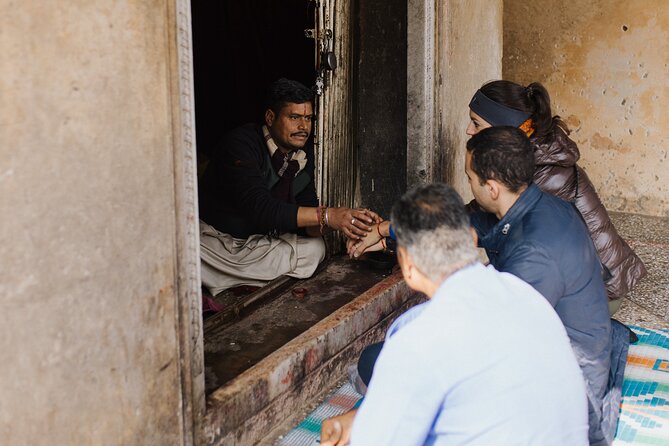
The standout feature here is the guide’s role. You’re not just receiving facts; you’re being invited to ask things. The tour description specifically mentions directing spiritual questions to the guide, and it also highlights an opportunity for chakra and astrological sign readings. Even if you skip the reading parts, you still get a guided explanation of worship practices and the deities you encounter.
If your guide is someone like Krishna (one guide connected to this experience), the approach can lean toward showing places that feel personal to your interests—like spending time at Galtaji and the royal cenotaph area rather than racing only through the most famous temples. That adaptability is what turns a religious circuit into a memorable story you can carry home.
What you’ll likely notice during the tour
- The explanations tend to be practical: what’s happening at the altar, how worship works, and how the different deities connect.
- You’ll get time at each stop that’s long enough to actually observe and ask questions, not just stand at a doorway.
- The day’s flow balances temple time with a final “normal life” moment in markets, so it doesn’t feel too heavy for a full day.
Tarkeshwar Mahadev Temple: a calm Shiva start in the Aravalli Hills
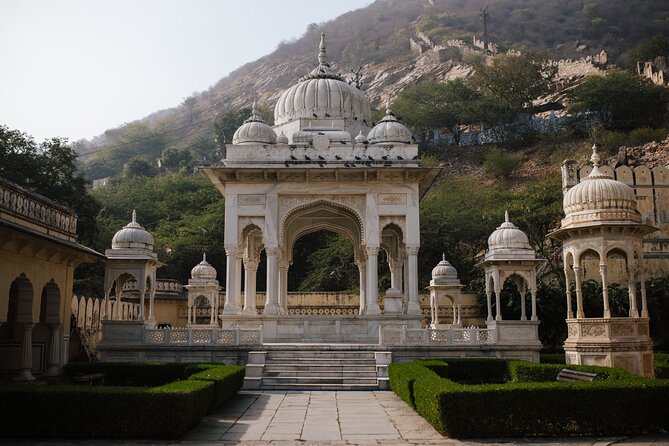
You begin at Tarkeshwar Mahadev Temple, dedicated to Lord Shiva. It’s a good first stop because the setting (in and around the Aravalli Hills) naturally slows your pace. The tour allots about 20 minutes here, which is enough time to settle in, watch what’s going on, and catch the basic spiritual context your guide is building for the rest of the day.
Why this stop works well
Shiva is one of the most widely recognized deities in Hinduism, but the value of starting here is that you can frame everything else you’ll see afterward. If the guide explains worship routines early, you’ll understand what you’re looking at when you move through the Vishnu-Lakshmi and Ganesha temples later.
A small consideration
Because it’s early in the circuit, it’s easy to assume you’ll have plenty of time later. You won’t. Take a moment to ask any “big picture” questions first, especially if you’re interested in yoga origins or why temples are arranged the way they are.
Birla Mandir (Vishnu and Lakshmi) and Moti Dungari (Ganesha) in one smooth stretch
After Shiva, the day shifts into Lord Vishnu and Goddess Lakshmi worship at Birla Mandir. It’s scheduled for about 30 minutes, which is a workable amount of time for quiet observation and guided explanation.
Birla Mandir is one of the stops that helps you understand how Hindu worship can be both orderly and personal. Vishnu and Lakshmi represent themes people connect with in daily life—devotion, protection, and blessing—so this is a meaningful pivot from the Shiva-focused start.
Then you head to Moti Dungari Temple, dedicated to Lord Ganesha, perched on a hill in Jaipur. You’ll have about 20 minutes here, and the time is short enough that you’ll want to move purposefully. The hilltop setting also means you’ll likely enjoy wider views, which makes the spiritual stop feel like a break for your eyes as well as your brain.
What I like about this pairing
You get two different “entry points” into devotion without the day feeling repetitive. Vishnu-Lakshmi teaches one angle of belief, then Ganesha gives another. And because each stop is dedicated to a specific deity, your guide can explain symbolism more clearly.
Practical tip
If you’re not used to climbing small areas in temple settings, wear shoes with decent grip. The tour includes several hill-adjacent or elevated stops, and comfort saves time later.
You can also read our reviews of more private tours in Jaipur






Galtaji Temple: where myths meet stone and long time on site
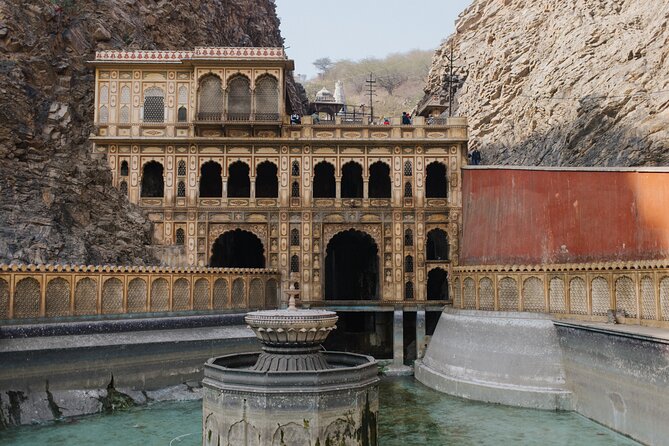
Galtaji Temple is one of the longer stops on the tour—about 1 hour 20 minutes. The setting is tied to the Aravalli Hills, and the tour description emphasizes that the temple complex is carved into rugged terrain. That tells you what to expect: this is not a “stand in a courtyard and move on” stop.
Here’s where the guide’s storytelling really matters. When a place is shaped into the landscape, you’ll often understand religious meaning through the physical layout. Even if you’ve visited other temples in India, Galtaji tends to feel different because the site blends myth, worship, and the reality of stone and steps.
Why you should take your time here
A longer stop like this is your chance to actually slow down and watch how people approach prayer. If the guide offers a chance to ask deeper questions, Galtaji is a good place to do it—because the setting supports a more reflective mood.
Small drawback to plan for
If you’re sensitive to heat or fatigue, Galtaji’s extended time can be tiring. Bring water (you’ll have bottled water from the tour) and pace your breathing. This is also the kind of stop where you may want to pause for viewpoints rather than rushing straight through.
Royal Gaitor Tumbas and Garh Ganesh Mandir in Nahargarh: royalty plus devotion
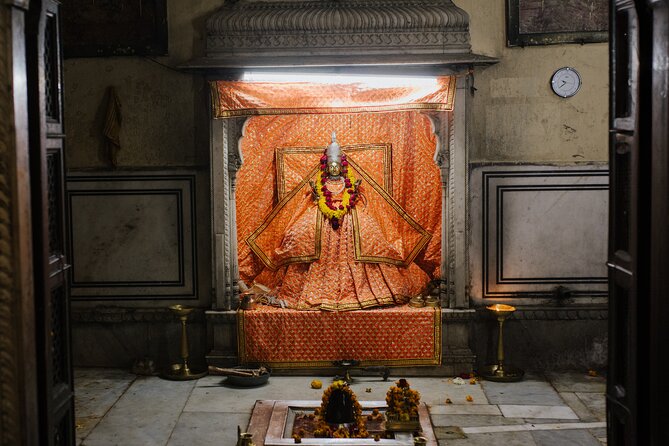
Next up is Royal Gaitor Tumbas, about 40 minutes. This is described as the final resting place for royalty, and the feel is different from a working temple. Here you’re stepping into a space where architecture and remembrance matter, and the guide can help connect the site to Rajasthan’s royal story.
One of the more specific references connected to this tour is Maharaja Ki Chhatri. If that name comes up during your visit, it’s worth pausing for a moment. Cenotaph areas often feel quiet and visual—less about active ritual in the moment, more about honoring people and place. Even if you’re not a history buff, that shift in atmosphere can be refreshing after active temple worship.
Then you go to Garh Ganesh Mandir in Nahargarh, dedicated to Lord Ganesh. You’ll have about 1 hour here, and the tour highlights the sanctuary’s setting in the hills and its elevated feel.
Why this stop is a nice payoff
By the time you reach Garh Ganesh Mandir, you’ve already seen Shiva, Vishnu-Lakshmi, and a first Ganesha stop at Moti Dungari. This temple gives you a second Ganesha experience with a different vibe and a different place in the landscape. It’s a chance to compare how devotion adapts to the environment.
Consideration
Longer hill stops mean more time outdoors. If the weather turns hot or windy, you’ll feel it. This tour notes that it requires good weather, so when conditions are favorable, you’ll enjoy the viewpoints more.
Pink City side-street temples and Tripolia Bazar chai and shopping
After the temples, you shift into the human layer of Jaipur: streets, smaller shrines, and market life. The tour includes time for exploring hidden or lesser-visited temples scattered along side streets in the Pink City. Your guide shows heritage temples such as Shri Radha Gopinat (the name appears in the tour description in that form).
This is also where you get to see how devotion fits into everyday movement. In many cities, temples become tourist scenery. In Jaipur’s side streets, the worship rhythm can feel closer to what locals actually do—especially when your guide explains what you’re seeing as you walk.
Finally, you end at Tripolia Bazar with quiet contemplation and chai, plus shopping time. The tour description points out flower and spice markets at Choti Chopad. That’s a satisfying finish because it adds sensory variety at the exact moment you might start craving something familiar and casual after hours of spiritual sites.
What I like about this ending
It helps you translate the day into something you can take home: tastes, scents, and small purchases. It’s also practical. You’ll likely be hungry by then, and chai plus market time is a natural “cool down” before you return.
Price and value: what $27.21 per group really buys you
The price is listed as $27.21 per group for up to 4 people, with the tour lasting about 7 to 8 hours. On paper, that sounds like a budget-friendly temple day. In practice, the value comes from what’s included.
You get:
- Private transportation
- Bottled water
- Admission tickets listed as free for the stops
- A guide built for worship context and questions
So your money is mostly going toward guided meaning plus the convenience of door-to-hub movement. If you tried to replicate this on your own, you’d spend time coordinating transport and losing the interpretive parts that make temples click.
One thing to consider
The tour does not include breakfast. Since you’re out for most of the day, breakfast (or an early snack plan) matters more than you might expect. This isn’t a “grab a meal anytime” situation; it’s a structured day.
Practical tips for a smoother temple day in Jaipur
Here are a few smart, low-drama choices that make temple circuits easier—especially when you’re going from shrine to shrine across hills and city streets.
- Wear shoes you don’t mind using on uneven stone or steps. You’ll visit places in hilly areas, and comfort is real currency.
- Bring sun protection and consider light layers. The day is long, and temple settings often involve standing still.
- Plan your pace for a 7 to 8 hour outing. Even when each stop is timed, you’ll still be moving between them.
- Drink the bottled water early. Don’t wait until you feel thirsty.
- Ask questions when they matter. If you want context about deities, mythology, or yoga origins, ask at the first or middle temple rather than saving everything for the end.
- Respectful dress helps. You’ll be in religious spaces, and covering shoulders and legs is a safe baseline.
Also, because the tour is private, you can generally adjust your timing with your guide if something takes longer than expected. Use that flexibility.
Should you book this private Jaipur temple tour?
Book it if you want Jaipur’s temples to mean something to you. This is a strong fit when you like guided religious explanation, want time for questions, and prefer seeing multiple styles of sacred spaces—from Shiva and Vishnu-Lakshmi worship to a Ganesha-focused hill temple, then into royal cenotaph territory and finally market life.
Skip it or think twice if you’re expecting short stops only, or if you hate long outdoor days with no breakfast. A temple-heavy day is still a temple-heavy day, even when it’s interesting.
If you’re comfortable planning an early meal and wearing sturdy shoes, this tour is one of those “I’ll remember this later” days because it’s built around understanding, not just checking off names.
FAQ
How long is the private temple tour in Jaipur?
The tour runs about 7 to 8 hours.
How many people are in a group?
It’s a private tour/activity, and the price is listed per group up to 4 people.
Does the tour include pickup and transportation?
Yes. Pickup is offered, and private transportation is included.
Is bottled water provided?
Yes, bottled water is included.
Are admission tickets included?
Admission tickets are listed as free for the stops in the itinerary.
Is breakfast included?
No. Breakfast is not included.
What kind of ticket do I receive?
You’ll get a mobile ticket.
Can I ask spiritual questions during the tour?
Yes. The tour description says you can direct spiritual questions to the guide in addition to tour information.
Is the tour good for religious/spiritual curiosity about yoga?
Yes. The tour is described as suitable for people who want an in-depth look at the spiritual heart of Jaipur, including the origins of yoga and Hindu religious heritage.
What’s the cancellation policy and are there weather requirements?
Free cancellation is offered up to 24 hours in advance for a full refund. The experience requires good weather, and if it’s canceled due to poor weather, you’ll be offered a different date or a full refund. A minimum number of travelers may also apply.