A tiny tuk tuk, a big Jaipur day. This private full-day circuit strings together the city’s best-known landmarks while you roll through the colourful, chaotic Pink City streets at your own pace. You get the convenience of pickup and a driver who can shape the day around your interests, not just a rigid checklist. Private transport plus a sensible mix of palaces, temples, and old-world science make it a fun way to see Jaipur in one go.
I especially like the flexibility: you’re not stuck waiting in a big group, and you can spend a little more time where you care most. I also like that the tour is set up to be easy logistics-wise, with bottled water and parking/fuel handled so you don’t get hit with surprise add-ons during the ride.
One drawback: monument and site entry fees are not included (listed as approx. 50 USD per person), so your day budget can jump once you’re standing at the ticket counters. If you only want quick photo stops, you’ll feel this less; if you want to actually go inside more places, plan ahead.
In This Review
- Key highlights that make this Jaipur day tour work
- Why a private tuk tuk loop makes sense in Jaipur
- Albert Hall Museum: a quick dose of Jaipur’s grand architecture
- Hawa Mahal: 30 minutes to understand the Palace of Winds
- City Palace: the royal residence and administrative center you can actually roam
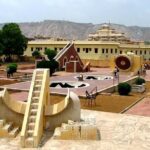
- Jantar Mantar: stone tools for measuring the sky
- Jagat Shiromani Ji Temple: the long calm stop (and why it’s worth it)
- Jal Mahal: a palace-in-the-lake moment from the shore
- Monkey Temple: short visit, real-life animals, and a safety mindset
- Private driver logistics: what you’re really paying for
- Price and value: $7 makes sense only with entrance tickets in mind
- What the best guides seem to do: cleanliness, English, and flexibility
- Who this day tour is best for
- Should you book this Jaipur full-day tuk tuk tour?
- FAQ
- How long is the Jaipur private tuk tuk full-day tour?
- What is included in the tour price?
- Are monument entrance fees included?
- What sights will we visit during the day?
- Is pickup from my hotel included?
- Does the tour end at the pickup point?
- Is Monkey Temple free to enter?
- Do we pay extra for fuel and parking during the tour?
- Is this tour really private?
- Do weather conditions affect the tour?
Key highlights that make this Jaipur day tour work
- Private tuk tuk + driver: You control the pace and you stay together.
- Pick-up and drop-off around Jaipur: hotel/airport/railway station service keeps the day simple.
- Icon mix in one loop: Hawa Mahal, City Palace, Jantar Mantar, temple time, plus Jal Mahal and Monkey Temple.
- Bottled water and no extra basics: fuel, parking, and other basics aren’t charged separately.
- Long, calm temple stop: Jagat Shiromani Ji Temple is scheduled for a slower, quieter break.
- Free Monkey Temple entry: one of the stops won’t cost you an extra ticket.
Why a private tuk tuk loop makes sense in Jaipur
Jaipur can be a traffic puzzle if you’re on your own. This tour sidesteps that by putting a driver and a tuk tuk in charge of moving you between major sights, while you focus on looking, photographing, and deciding what to linger over. The big idea is simple: see the classics without losing half the day to transport.
A private setup also changes the vibe. Instead of rushing because a group is waiting, you can slow down for a viewpoint, take extra time at City Palace, or just sit and watch life outside the walls. It’s a comfortable way to experience how Jaipur feels day-to-day: historic facades right beside everyday streets.
And yes, the tuk tuk adds character. Even if you’ve seen pictures of Hawa Mahal and City Palace, experiencing them from the street—through the Pink City’s tight lanes and busy corners—is a very different kind of memory.
You can also read our reviews of more private tours in Jaipur


Albert Hall Museum: a quick dose of Jaipur’s grand architecture
Your day starts with Albert Hall Museum for about 30 minutes. The museum building is described as an architectural marvel starting in 1876, so even if you’re not deep into museum time, you’ll get that sense of Jaipur stepping into modern-era grandeur. Think of it as the tone-setter for the rest of the day.
The practical side: entry tickets aren’t included, and the stop is short. So this works best if you want exterior impact, a fast look inside (if you choose), and then you’re ready to move on.
A potential consideration: if you hate rushing or museums normally eat your time, you might feel the 30-minute limit. Use it strategically—check what you’re most interested in before you head in, so you’re not wandering when the clock is ticking.
Hawa Mahal: 30 minutes to understand the Palace of Winds
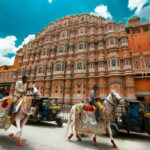
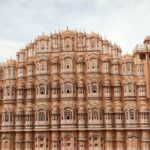
Next comes Hawa Mahal (Palace of Winds) for about 30 minutes. This is one of those places where the famous facade is the main event, and the timing fits that reality: enough time to take photos, soak in the design, and get your bearings.
Because admission isn’t included, you’ll want to decide in advance whether you’re aiming for quick viewing or also paying to go deeper. Either way, this stop is valuable because it teaches you how Jaipur’s identity lives in architecture: ornate surfaces, window-like patterns, and a building that looks like it was made for both sun and story.
One small tip from how these kinds of visits tend to go: if you want the best photos, plan to arrive with your camera ready and your angles in mind. Thirty minutes disappears fast once you start chasing the perfect shot.
City Palace: the royal residence and administrative center you can actually roam
City Palace gets the longest indoor-style block after Jantar Mantar: about 1 hour 30 minutes. This is not just one building. It’s described as a royal residence and an ancient administrative centre, with highlights including entry gates and palace sections such as Mubarak Mahal, Chandra Mahal, and the Maharani Palace.
That matters because it helps you read the place. You’re not only looking at beauty; you’re understanding why it was powerful—this was where the city’s leadership expressed itself through spaces built for rule.
With entry fees not included, City Palace is where your budget can start to feel real. But it’s also where you get the most payoff for paying. The time you’re given is long enough to see major sections without turning it into a marathon.
If you’re traveling with a mixed group—some history lovers, some just want photos—this is usually the best compromise stop: there’s enough variety to keep everyone interested.
Jantar Mantar: stone tools for measuring the sky
Then you head to Jantar Mantar, Jaipur, for about 1 hour. This site is an astronomical observation point from the early 18th century, built by Rajput ruler Sawai Jai Singh. The emphasis here is on the 19 astrological instruments you can see in stone—designed for tracking celestial patterns.
This stop is great if you like the idea that science used to look different. You’ll see how measurement, astronomy, and craftsmanship blended. Even if you don’t go deep into explanations, just walking around the instruments gives you that wow moment: people once built systems you could stand inside of.
One consideration: it can be harder to appreciate if you’re not in the mood for slow observation. If you prefer quick photos, you might want to use your hour to identify the few signature instruments you want to focus on—so you don’t feel you’re paying for time you didn’t use well.
You can also read our reviews of more tours and experiences in Jaipur



Jagat Shiromani Ji Temple: the long calm stop (and why it’s worth it)
Your day includes a longer break at Jagat Shiromani Ji Temple, scheduled for about 3 hours. This is the calm chapter of the trip. The temple is described as serene—good for sitting with your own thoughts and feeling spiritual—and the architecture is often the kind that photographers like.
The key practical note is weather and light. The guidance points out that if you want to view the temple in full sunshine, morning may be preferable. That’s an easy way to improve the experience without changing the plan: go in expecting this to be a slower stop, and use daylight to your advantage.
Why I like this inclusion: most Jaipur days are all sprinting. This makes room to breathe, slow down, and switch modes—from royal landmarks to a place of stillness.
The only caution is timing. Three hours can feel long if your travel style is only quick stops. If you know you’ll want movement, ask your driver to help pace it—time for a walk-through, time to sit, then back out for the next view.
Jal Mahal: a palace-in-the-lake moment from the shore
At Jal Mahal, you’ll get about 30 minutes. It’s described as a palace in the center of Man Sagar Lake, with four stories submerged under water and a five-story structure overall. From the shore, you glimpse it as a floating presence—part palace, part reflection, depending on the light.
This is one of the best kinds of quick stops: you don’t need a full visit to feel it. The value is the contrast—royal architecture placed in a lake setting—and that’s exactly the kind of picture that works even if you’re tired.
Budget note: admission isn’t included here either, but the time block suggests you’re mainly soaking in the view rather than doing an extended indoor experience. If that matches your expectations, you’ll feel the stop hits the mark.
Monkey Temple: short visit, real-life animals, and a safety mindset
The last active cultural stop is Monkey Temple, around 10 km east of Jaipur near an Aravalli Hills mountain pass. The visit is about 30 minutes, and entry is free.
The big attraction is the monkeys living freely in the jungle and coming to seek food on their own. You may be able to feed them because of how they behave in the area. The temple setting also gives you that nature-meets-heritage vibe.
The practical consideration is simple: treat this as a wildlife interaction, not a petting zoo. Keep your hands close to yourself, hold items carefully, and don’t assume the monkeys will act calmly all the time. Your driver can help you stay aware so it’s fun, not stressful.
This stop tends to work best for people who like quick, playful moments and don’t mind that nature is in charge.
Private driver logistics: what you’re really paying for
This tour includes private transportation, a driver, bottled water, and fuel surcharge. It also includes pickup and drop-off from Jaipur Hotel/Airport/Railway Station, plus parking fees. There’s a clear note that there are no extra charges for fuel, parking, or other basics.
That’s important because it changes the meaning of the price. A very low advertised price often just covers the vehicle. Here, the setup covers more of the trip friction—so you’re paying for an organized day, not just a ride.
It’s also listed as a private tour/activity, meaning only your group participates. That matters for comfort, especially if you have kids, you want to move at your own speed, or you prefer to ask questions without waiting for everyone to catch up.
The tour duration is listed as 7 to 8 hours. That’s a full day, but it’s not jam-packed with nonstop deep visits. The schedule mixes quick landmark time (like Hawa Mahal and Jal Mahal) with the longer temple stop.
Price and value: $7 makes sense only with entrance tickets in mind
The advertised price is $7, but monument entrance fees are not included (approx. 50 USD per person). The math, practically, is this: transport and driver time are the low-ticket part; sightseeing admissions are the variable cost part.
So how do you decide if it’s a good value?
- If you want to see the big exteriors and spend less time inside ticketed areas, you’ll likely feel the value more strongly.
- If you plan to enter multiple sites fully, your entrance fees will dominate the total cost, and you’ll judge the value based on how smoothly the day runs and how well your driver manages the route.
The best way to think of it: you’re buying a problem-free day that gets you between Jaipur’s most famous places, with comfort and basic costs handled. If you hate dealing with transport logistics or you want a single, organized circuit, this setup fits that need.
And when you see how highly recommended the experience is—100% recommending it with strong ratings—the bigger takeaway is consistency: people liked the cleanliness, the safety focus, and the flexibility of the driver guiding the day.
What the best guides seem to do: cleanliness, English, and flexibility
Even without knowing your exact driver in advance, the pattern in past experiences is consistent. A guide named Amin shows up as a standout example: a driver with excellent English, who is flexible about adjusting the route to your destination list and preferences, and who keeps the ride feeling safe.
Guests also highlight practical details like a super clean, tidy tuk tuk, and a willingness to adapt for different travelers—including people traveling alone or with family. The vibe you’re aiming for is not rigid tourism. It’s a driver who helps you steer the day.
If you care about trust and comfort, this is a big reason to consider booking. In a place like Jaipur, your day can swing based on your driver’s attitude and how calm they keep things.
Who this day tour is best for
This tour is a strong match if:
- You want to see the big Jaipur highlights in one day without juggling buses, apps, or too many taxis.
- You prefer the freedom of a private setup over a fixed group schedule.
- You like a mix of landmarks and a calmer temple pause.
- You’re comfortable paying entrance fees on top of the transport cost.
It’s also a good option for families, because the pace is broken into manageable chunks (30 minutes here, 1.5 hours there), and the longer temple stop is a chance to sit and reset.
Should you book this Jaipur full-day tuk tuk tour?
I’d book it if you want a simple, private way to hit the key Jaipur sights and you don’t want the day to turn into logistics. The combination of pickup, parking/fuel handled, and a private tuk tuk circuit is exactly what makes a “one-day Jaipur” plan feel doable.
I’d hesitate only if you’re very budget-tight on entrances and you know you won’t want to pay to enter several sites. In that case, you can still enjoy the external views, but you should expect your total cost to rise once you start adding ticketed sites.
If you want a smooth, well-paced day through Jaipur’s main monuments—with room for calm and a driver who’s willing to adjust—this is a smart booking.
FAQ
How long is the Jaipur private tuk tuk full-day tour?
The duration is listed as about 7 to 8 hours.
What is included in the tour price?
Included are private transportation, bottled water, fuel surcharge, pickup and drop-off from Jaipur Hotel/Airport/Railway Station, and parking fees.
Are monument entrance fees included?
No. Monument entrance fees are not included, and they’re listed as approximately 50 USD per person.
What sights will we visit during the day?
Stops include Albert Hall Museum, Hawa Mahal (Palace of Winds), City Palace of Jaipur, Jantar Mantar, Jagat Shiromani Ji Temple, Jal Mahal, and Monkey Temple.
Is pickup from my hotel included?
Yes, pickup and drop-off are offered from Jaipur hotel/airport/railway station.
Does the tour end at the pickup point?
The activity ends back at the meeting point.
Is Monkey Temple free to enter?
Monkey Temple is listed as free admission.
Do we pay extra for fuel and parking during the tour?
No. The tour states it does not take any extra fee for fuel, parking, or other basics.
Is this tour really private?
Yes. It’s listed as a private tour/activity, so only your group participates.
Do weather conditions affect the tour?
The experience requires good weather. If it’s canceled due to poor weather, you’ll be offered a different date or a full refund.