REVIEW · TUK-TUK TOURS
Private Tuk-Tuk Tour of Jaipur with Guide
Book on Viator →Operated by Reliable India Tours · Bookable on Viator
Jaipur has a way of slipping into your camera roll fast, and a private tuk-tuk makes the city feel easy from the start. I like that you get a true one-day sweep with hotel pickup and drop-off, so you spend less time figuring out transport and more time seeing the sights. I also enjoy how the tour is built around big-picture history, not just photo stops.
One thing to plan for: the major monument entry fees are not included, so the day can cost more once you add the combined ticket price per person, plus food, drinks, and tips.
In This Review
- Quick Hits Before You Ride
- Why Jaipur Looks Better from a Private Tuk-Tuk
- Price and What You’ll Pay On Top of $8.99
- Pickup, Timing, and the Real Meaning of an 8-Hour Day
- How the Day Flows: The Route Makes Sense
- Hawa Mahal: The Palace of Breeze and City-Watching
- Jantar Mantar: Stone Instruments That Track the Sky
- City Palace: Royal Residence and a Window Into Jaipur’s Design
- Jal Mahal: The Water Palace, Brief and Worth It
- Royal Gaitor Tumbas: Carvings and Quiet History
- Amer (Amber) Fort Area: The Big Fort Moment Outside the City
- Panna Meena ka Kund Stepwell: 200 Feet of Symmetry
- Jaipur’s Art, Textiles, Rugs, and Gems (How to Use Your Guide)
- What Makes This Tour Work So Well
- Who Should Book This Private Tuk-Tuk Tour
- Tips to Get the Most Out of Your Guide and Driver
- Should You Book This Tour?
- FAQ
- What is the price for this private tuk-tuk tour?
- How long is the Jaipur private tuk-tuk tour?
- Does the tour include hotel pickup and drop-off?
- What languages are available for the guide/driver?
- Are entrance fees included?
- What if weather is poor on the day of the tour?
Quick Hits Before You Ride
- Private for up to 3 people, with your own guide/driver so the pace is yours
- Hotel pickup and drop-off mean you start and end without logistical hassle
- English, French, or German speaking guide options so explanations land better
- Fuel, parking, and other charges included, which keeps the day’s budget clearer
- A smart route that mixes iconic palaces with astronomy and stepwell stops
Why Jaipur Looks Better from a Private Tuk-Tuk
If you’ve ever tried to “do Jaipur in one day” on your own, you know the problem: distances, traffic, and timing pile up quickly. This private tuk-tuk setup helps you avoid that stress. You’re not negotiating rides between stops, and you’re not stuck waiting around while someone else figures out the next move.
The big value here is control. You can settle into a rhythm: brief photo moment, quick explanation, then move on. The tour is private, so your driver and guide can adjust the flow to how your group feels, instead of herding everyone through the day.
And yes, you’ll still do real sightseeing. But the tuk-tuk format helps you make those stops feel more like a day with a local route than a checklist. That matters in Jaipur, where the architecture changes every few blocks and the city is constantly visually active.
You can also read our reviews of more guided tours in Jaipur

Price and What You’ll Pay On Top of $8.99
The price is listed as $8.99 per group for up to 3. Fuel surcharge, parking fees, and GST are included, which is the kind of detail that helps keep surprises down.
Here’s what to watch: entrance fees are not included. The tour notes a combined entry ticket for Jaipur’s popular tourist monuments of $25.00 per person. That means your final total depends on group size and who’s paying.
Also budget for:
- tips/gratuities (not included)
- food and drinks (not included)
- any extra purchases like souvenir photos
Even with those add-ons, this can still be good value if you want a full-day route without worrying about transport between major sights. Where it becomes less of a bargain is if you’re someone who only wants one or two top attractions. In that case, you might not need an 8-hour private sweep.
Pickup, Timing, and the Real Meaning of an 8-Hour Day
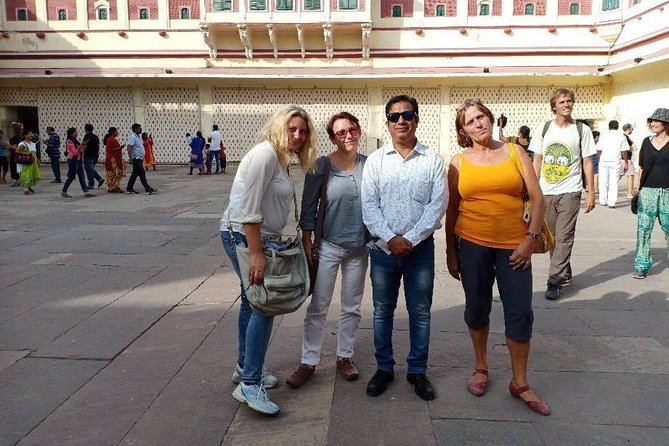
This runs about 8 hours and includes hotel/airport/railway station pickup and drop-off. For most first-time visitors, that’s a practical length: long enough to see the big names, short enough that you’re not surviving a full marathon of sightseeing.
Your tour also requires good weather. If conditions are poor, the experience can be moved to another date or you can get a full refund. That matters because Jaipur days can shift fast—sun, clouds, or heat can change how enjoyable outdoor stops feel.
Practical advice: wear comfortable shoes even though it’s a tuk-tuk day. Several stops are time boxed and you’ll still need to walk, climb steps, or stand for viewpoints. If you’re sensitive to heat, plan to pace yourself at the “long explanation” stops and save energy for the forts and stepwell areas.
How the Day Flows: The Route Makes Sense
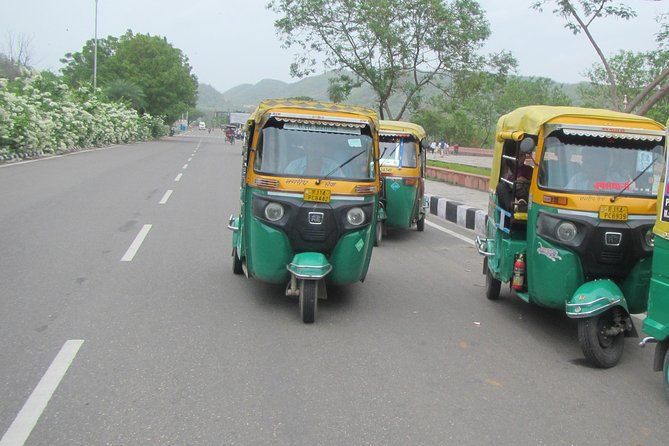
The itinerary is designed like a sensible arc: start with a landmark you can’t miss, move into the city’s science-and-power zone, then work toward lake views and older tombs, and finally go out to Amer and a classic stepwell.
That order helps you reduce backtracking. It also keeps the day from feeling random. You’ll get a storyline: royal power and architecture first, then astronomy, then ceremonial spaces and water, and then the larger hilltop fort atmosphere.
And because it’s private, your guide can help you connect the dots between places. That’s a huge difference compared with jumping between sights by yourself and hoping you’ll remember what you read in one museum pamphlet.
Hawa Mahal: The Palace of Breeze and City-Watching
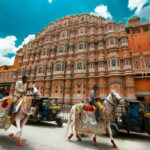
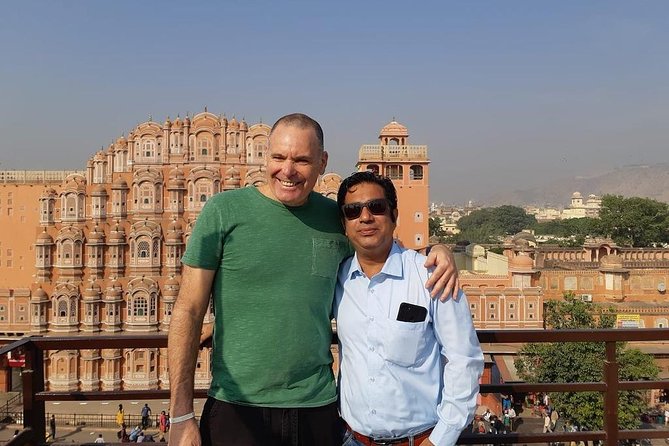
You start at Hawa Mahal, a famous landmark of Jaipur. It was built by Sawai Pratap Singh and was planned for the royal household to look at everyday life in the city. I love that detail because it turns the building from a pretty façade into a social device. It’s not only architecture; it’s how royalty observed the world below.
You’ll spend about 1 hour here. Admission isn’t included, so expect to pay separately for entry if you choose to go in.
Practical notes:
- Arrive with sun protection. Even with a guide, you’ll likely spend time near viewpoints and façades.
- If you’re not entering every building, use that hour for photos plus the explanation about why this design exists.
This is one of those places where the “why” makes the photo more satisfying.
You can also read our reviews of more private tours in Jaipur






Jantar Mantar: Stone Instruments That Track the Sky
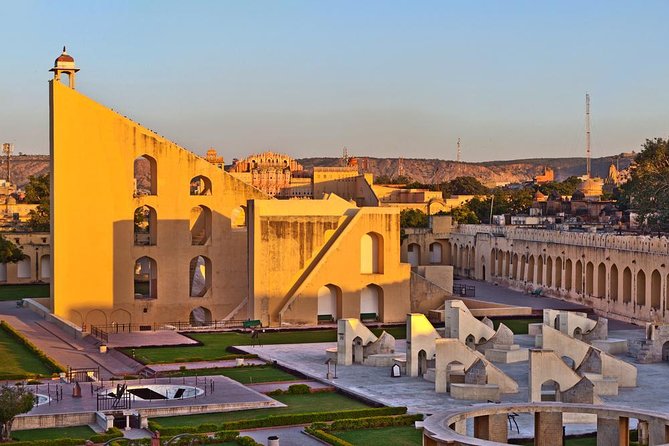
Next comes Jantar Mantar, Jaipur’s group of nineteen architectural astronomical instruments built by the Rajput king Sawai Jai Singh. It includes the world’s largest stone sundial, and it’s recognized by UNESCO.
You’ll get about 1 hour. Admission isn’t included, so factor that into your entrance-ticket decision.
This stop is powerful when you have a guide who can explain how these instruments work in plain language. Even if you don’t become a sky-science person, you’ll leave understanding that this was state-of-the-art observational technology in its era.
The practical value: Jantar Mantar is one of the best places in Jaipur for getting context fast. After the explanation, the city stops feel connected, not just separate monuments.
City Palace: Royal Residence and a Window Into Jaipur’s Design
City Palace is a longer stop at about 2 hours. It’s tied directly to how Jaipur was shaped by Maharaja Jai Singh, noted for his work as an astronomer. You’ll see the palace complex that includes the home of the erstwhile royal family.
Admission isn’t included here either. If you’re paying for the combined entry ticket, this is one of the reasons it can be worth it.
What I like about City Palace as a “middle stop” is pacing. After the science at Jantar Mantar, you shift into power, governance, and how a royal household lived in the urban fabric. It’s easier to understand Jaipur as a designed city once you see how the palace connects to the whole story.
If you’re short on energy, this is still a place where you can prioritize the most important areas and not feel like you’re missing everything. Just make sure your guide knows what you care about most: architecture, daily royal life, or the city’s planning.
Jal Mahal: The Water Palace, Brief and Worth It

Jal Mahal is next, with a quick stop of about 15 minutes. It’s the water palace set in Man Sagar Lake. The structure is an example of Rajput culture, and the palace and lake setting are the whole point.
Admission is free per the itinerary details, and in this case, you’re mostly experiencing the exterior view and the atmosphere.
This is one of those stops that’s easy to skip—if you’re trying to squeeze every second. But I think it works because it gives you a visual break. After forts and palaces, it’s a different kind of beauty: reflections, open water, and that classic “Jaipur postcard” feeling.
If you’re sensitive to heat, use this as a short rest moment. If you love photos, ask your guide for the best time to frame it from where you can access safely.
Royal Gaitor Tumbas: Carvings and Quiet History
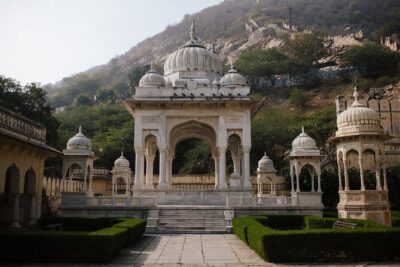
Royal Gaitor Tumbas is a 45-minute stop built during the 18th century, known for intricate carvings along the walls. The complex includes temples dedicated to various deities.
Admission isn’t included. This site isn’t usually the first thing people plan in Jaipur, which is exactly why I enjoy it. It gives you a slightly calmer, more detailed experience than some of the bigger headline stops.
Practical takeaway: you’ll get more meaning here if you slow down and look at the carvings instead of just taking wide shots. A good guide can point out what you should focus on so the time feels well spent.
If you have limited energy, you can still enjoy Gaitor without rushing, because the carvings are there to reward even shorter attention.
Amer (Amber) Fort Area: The Big Fort Moment Outside the City
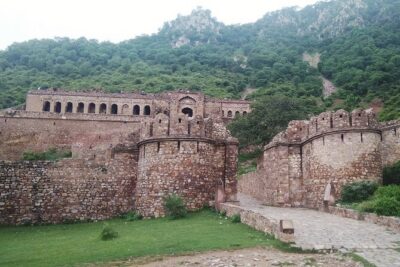
Then you head to Amer, about 11 km from Jaipur. This is one of the day’s anchor stops, with about 2 hours allocated. Amer is known for its grand fort and palace on rugged hills, and the architecture reflects a fusion of Hindu and Muslim styles.
Admission is listed as free in the itinerary details, which is a welcome bonus if you’ve been tracking costs.
What makes Amer special in a day like this is the shift in mood. You go from the flat-city feel to a hilltop sense of grandeur. Even if you’ve seen fort photos before, being there in person changes the scale.
Practical advice:
- Wear shoes that won’t fight you on uneven surfaces.
- Plan for walking time even if the stop is “only” two hours.
- If it’s hot, rely on your guide to pace the slow viewing points and keep you moving when needed.
This is the place that often makes people remember a Jaipur day long after the names fade.
Panna Meena ka Kund Stepwell: 200 Feet of Symmetry
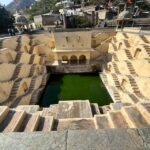
Panna Meena ka Kund is a 30-minute stop and one of the most surprising entries on the route. It’s a 16th-century stepwell, about 200 feet deep, with 1,800 symmetrical steps. The site served as a water reservoir and also worked as a social hub, and it features impressive craftsmanship.
Admission is free per the itinerary details.
If you love details, this is where the day earns its keep. Jaipur is famous for palaces and forts, but stepwells show another side: water management, community life, and how engineering can also become art.
Practical notes:
- You might want to spend a few extra minutes looking down and then back up. The geometry is part of the story.
- Keep your phone ready, but don’t rush. The symmetry changes the moment you change your position.
It’s a great contrast stop after Amer, because it’s quieter and more grounded in daily-life purpose.
Jaipur’s Art, Textiles, Rugs, and Gems (How to Use Your Guide)
One thing I really like about a private guide is that you can connect sightseeing to what Jaipur is known for. This tour’s experience includes a strong history and culture angle, and it’s also a good day to notice Jaipur’s specialties like Indian art, textiles, rugs, and gems.
The key is how you use that. If you’re interested in shopping, ask your guide to point out what’s worth your time, what to look for, and what questions to ask sellers. If you’re not shopping, you can still benefit by understanding what you’re seeing when you pass market areas or craft-related displays.
I’d treat this as a sightseeing day first, and shopping as optional add-ons based on how your energy holds up.
What Makes This Tour Work So Well
The highest-praise aspects of this experience are clear in the way the day is delivered: the driver is great at keeping things moving, and the guide does a strong job explaining history and culture. When that combo works, you feel taken care of without feeling controlled.
A private tour also means you’re not stuck with a pace that was set for someone else’s preferences. If your group likes photos, you’ll have the time for it. If you want more context, your guide can steer the conversation that way.
And the route hits a solid set of Jaipur essentials: Hawa Mahal, Jantar Mantar, City Palace, Jal Mahal, Royal Gaitor Tumbas, Amer, and Panna Meena ka Kund. That mix is ideal for first-timers because it covers different themes—royal observation, astronomy, royal power, water design, tomb architecture, and fort life.
Who Should Book This Private Tuk-Tuk Tour
This is a great fit if:
- you’re visiting Jaipur for the first time and want one efficient day
- you prefer a private guide/driver rather than group tours
- you want cultural and historical context alongside the big names
- you’re traveling in a group of up to 3 and want a better-per-person deal than solo touring
It may not be ideal if:
- you only want to see one or two major attractions
- you hate outdoor walking in heat (you’ll still be outside at several stops)
- you’re trying to keep the whole day under a strict single-price budget, since entrance fees and food/tips add up
Tips to Get the Most Out of Your Guide and Driver
A private day goes better when you communicate early. Here are a few practical things that help:
- Choose the language that lets you actually understand the explanations. English, French, or German is offered, so pick what you’ll enjoy.
- Wear comfortable shoes and plan for short walks at every stop.
- Bring sun protection and water habits in mind, even though bottled water is included.
- If you care about shopping for textiles, rugs, or gems, say so at the start. Your guide can help you connect what you see to what Jaipur is known for.
- If admission fees are a concern, ask your guide how the combined entry ticket is likely to affect your plan so you can decide calmly.
Should You Book This Tour?
I think it’s worth booking if you want a well-paced full-day Jaipur experience with minimal stress. The private tuk-tuk format, hotel pickup and drop-off, and the fact that fuel and parking are handled make it easier to trust the day will run smoothly.
I’d only hesitate if you’re budget-tight and don’t want to add entrance fees on top, or if you’re the type who wants lots of free time to wander without a structured route. For most people doing Jaipur in one day, this route gives you the right mix of landmarks and less-obvious details.
If your goal is to see the headline sights with real context—and do it in a way that feels taken care of—this private tour is a strong choice.
FAQ
What is the price for this private tuk-tuk tour?
It’s priced at $8.99 per group (up to 3 people). Fuel surcharge, parking fees, and GST are included.
How long is the Jaipur private tuk-tuk tour?
The duration is approximately 8 hours.
Does the tour include hotel pickup and drop-off?
Yes. Hotel/airport/railway station pickup and drop-off are included.
What languages are available for the guide/driver?
You can choose an English, French, or German speaking driver and guide.
Are entrance fees included?
No. Entrance fees are not included. The tour lists combined entry fees for Jaipur’s popular tourist monuments at $25.00 per person.
What if weather is poor on the day of the tour?
The experience requires good weather. If it’s canceled due to poor weather, you’ll be offered a different date or a full refund.