REVIEW · JAIPUR
Explore Jaipur Like Never Before
Book on Viator →Operated by Sair with Shristi · Bookable on Viator
One landmark word: Pink. This 3-hour Jaipur walk turns the usual sights into a city-works lesson, with storytelling that connects history, science, logic, and art to what you see on the street. You start at Hawa Mahal, then move through the Pink City, craft lanes at Tripolia Bazar, and finish at Jalebi Chowk.
I especially like how the tour frames Jaipur with more than royal poses and fort photos. You get the city’s “how it operates” angle, so the landmarks feel less like background and more like clues to everyday life.
My only drawback is simple: it’s a walking tour through busy old-city streets. Plan for time on your feet and keep your pace realistic, especially if you’re sensitive to crowds.
In This Review
- Key Highlights at a Glance
- Hawa Mahal: Palace of Wind Seen Through Street-Level Logic
- Pink City Walk: Terracotta Pink and the City’s Real Color
- Tripolia Bazar: Craft Lanes Instead of One Big Tourist Market
- Jalebi Chowk: Royal Living, Soldiers, and a Spiritual Thread
- How the 3-Hour Route Feels Balanced (and Why It Works)
- Price and Value: $39.69 for Free Admissions and a Small Group
- Who This Jaipur Walk Is Best For
- Practical Tips for a Smoother Walk
- Should You Book This Tour?
- FAQ
- How long is the Jaipur experience?
- What is the price per person?
- Where does the tour start?
- Where does the tour end?
- Are there admission tickets required at the stops?
- How many travelers are in the group?
- What kind of ticket do I need?
- Is free cancellation available?
- Is a service animal allowed?
Key Highlights at a Glance
- Shristi’s show-not-tell guidance: energetic, passionate narration that makes the sights click fast
- Pink City detail that surprises: you’re pointed toward Terracotta Pink, not the glossy postcard version
- Hawa Mahal seen with a new lens: the royal window gets explained in a more logical, human way
- Tripolia Bazar craft lanes: silver making, stone cutting, and block-print by-lanes in a tight route
- Jalebi Chowk stories: royal living, soldiers, and a spiritual thread tied to the place
- Small group size (max 7): easier questions, better pace, and less “herd” energy
Hawa Mahal: Palace of Wind Seen Through Street-Level Logic
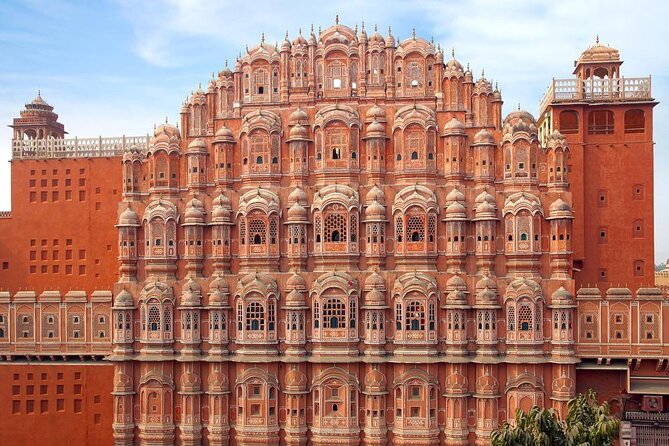
Hawa Mahal is one of those Jaipur landmarks you think you already know. You know the famous silhouette, you know the royal window idea—then the tour reframes it through explanation that feels more practical and human.
Here, the focus isn’t just on what it looks like. You’ll hear about the royal window as a different perspective, including the guide’s angle on being an Indian woman and how that changes what you notice in the same structure. That matters because it turns a postcard icon into something you can actually interpret.
A practical plus: this stop is short. With about 30 minutes here, you don’t get trapped in long viewing time, and you can keep your energy for what comes next.
What to watch for: while you’re there, pay attention to how the building looks from the street and how the “wind” idea connects to the broader theme of Jaipur design. Even without technical details, the tour’s logic helps you stop treating the palace like a photo prop.
You can also read our reviews of more tours and experiences in Jaipur.


Pink City Walk: Terracotta Pink and the City’s Real Color

The biggest “wait, what?” moment of the experience is the Pink City. The tour doesn’t treat the color as a simple fact. Instead, you’re guided toward the idea that what you’re seeing is closer to Terracotta Pink than the expected bright, artificial pink.
That shift changes how you walk. You start noticing the texture, the way the color sits in the streets, and how Jaipur’s look comes from materials and light as much as from decoration. It’s a small correction, but it’s the kind that makes you feel like you learned something real, not just collected a photo.
You’ll spend about 1 hour on this section, and the guide builds in stories that connect what you see to how the city lives and thinks. The description leans on logical, thoughtful explanations—history and art ideas, but also the practical “how this place operates” angle. When guides do that, the city stops being a set of monuments and becomes a living system.
A smart way to enjoy this stop: don’t speed through it. Let the guide’s narration set the pace, then look up, then look down. In old-city streets, the details catch your eye in layers, and the tour is built to help you catch those layers.
Tripolia Bazar: Craft Lanes Instead of One Big Tourist Market
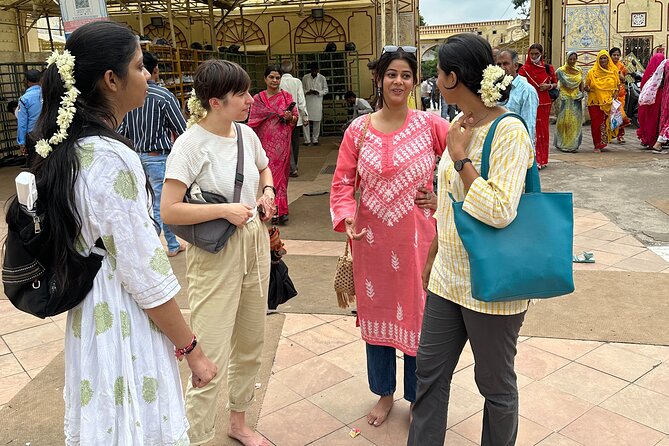
Markets in Jaipur can feel like a blur if you wander on your own. Here, the tour gives you structure: you move into the by-lanes and follow a route that’s about craft, not just shopping.
You’ll spend about 45 minutes at Tripolia Bazar, and the emphasis is on specific lanes such as:
- Silver making by-lane
- Stone cutting by-lane
- Block-printing by-lane
That’s a big deal for value. A random market walk might give you sensory overload and one or two good souvenirs. This one gives you context for what you’re seeing, so you understand why certain streets feel different. The craft focus also makes the time pass faster because you’re not just “passing stalls,” you’re connecting the lane to a process.
What I like about this part is how it supports the tour’s bigger promise: you learn the city’s logic. Jaipur isn’t only “pink buildings and forts.” It’s also the hands that make the look, the workshops that keep it going, and the patterns of commerce that help the city keep its identity.
If you want to shop, you’ll likely find more confidence here. You’ll know what lane to look for and why. Just keep your expectations grounded: this is a working market vibe, so it won’t feel like a tidy museum.
Jalebi Chowk: Royal Living, Soldiers, and a Spiritual Thread
Jalebi Chowk sounds like a food-adjacent name, and the tour uses that kind of familiarity as a doorway into deeper meaning. This stop is about story—how royal families and soldiers connected to the place, and how spirituality shows up in the way people remember those lives.
You’ll spend about 45 minutes here, and the guide explains the landmark through bonding, royal living, and those linked stories tied to soldiers and court life. The effect is that the square stops being just another intersection and becomes a memory space.
Even if you’re not a history buff, this is one of the most emotionally readable stops on the route. The tour’s approach (history + logic + art + thought process) helps you see why people return to certain spaces again and again. Places like this become anchors in the city’s identity, and that’s what you’re being trained to notice.
Tip for this stop: slow down your photos. Listen first, then look. The stories make the visuals feel purposeful rather than random.
How the 3-Hour Route Feels Balanced (and Why It Works)

The tour is built for momentum. In about 3 hours, you cover four focused areas: Hawa Mahal (about 30 minutes), Pink City (about 1 hour), Tripolia Bazar (about 45 minutes), and Jalebi Chowk (about 45 minutes). That pacing keeps the experience from turning into a long slog.
This matters for you because Jaipur can easily overwhelm your senses if you try to do everything alone. This route gives you a tight sequence, so you’re not constantly recalculating where to go next or what you’re looking at.
Also, it’s priced in a way that makes sense for what you get. The stops are listed as admission ticket free, so the cost is mostly paying for interpretation and guidance rather than building entry fees.
One more element that supports the feel-good factor: the group size is limited to a maximum of 7 travelers. That small cap means you’re more likely to get questions answered and less likely to feel like you’re in a moving line.




Price and Value: $39.69 for Free Admissions and a Small Group
At $39.69 per person for about 3 hours, the value comes from three things: guidance quality, smart stop selection, and the fact that you’re not paying extra entry fees for these specific parts.
Here’s how I think about it if you’re deciding whether it’s worth your time:
- You’re paying for a guide to explain the city’s logic and design choices, not just to point out buildings.
- You get free admission at each stop on the route, so the price stays clean.
- The group stays small (max 7), which can be the difference between a lively conversation and a silent walking shuffle.
The guide matters. The experience is provided by Sair with Shristi, and Shristi’s style is described as enthusiastic and passionate, with storytelling that brings history and sights to life. In practice, that means you’re likely to remember details, not just locations.
If you’re the type who likes to understand what you’re seeing—how it works, why it looks the way it looks—this price fits the style of the tour.
Who This Jaipur Walk Is Best For

This tour is a great fit if you:
- Want a walk-first way to experience Jaipur instead of only fort-and-palace time
- Like explanations that connect history + logic + art, not just dates and names
- Prefer a small group where you can actually pay attention
- Enjoy markets, especially when the route is aimed at craft lanes like silver making, stone cutting, and block-printing
It may be less ideal if you:
- Want a strictly flexible itinerary with lots of free time to roam anywhere you want
- Don’t like walking through crowded streets
- Expect a tour focused only on tickets, museum halls, or indoor stops (this route is street-centered)
Practical Tips for a Smoother Walk
A few common-sense moves make this kind of Jaipur route much better.
- Wear comfortable shoes. You’re walking between four stops in a tight time window.
- Keep water and a small snack plan in mind. Old-city browsing can stretch your appetite.
- Bring a light layer. Even when the day feels warm, mornings and shaded streets can shift the temperature.
- Use your phone wisely for photos, but don’t let it steal the moment. The tour’s value is in the narration connecting the visuals.
The tour also notes it’s near public transportation, which is handy if you want to pair it with other sightseeing later. And it uses a mobile ticket, so you won’t be scrambling for paperwork.
Should You Book This Tour?
If you want Jaipur in a way that’s more than “look and move,” I’d book it. The strongest reason is the approach: you’re guided to see Terracotta Pink, to understand Hawa Mahal through a more logical lens, to experience Tripolia Bazar via craft by-lanes, and to end at Jalebi Chowk with stories that connect royal life, soldiers, and spirituality.
The second reason is the guide’s energy. With Shristi leading and the small group size keeping things personal, the tour feels built for attention, not just attendance.
I’d pass if your priority is quiet, minimal walking, or if you want a free-roam market shopping spree with zero structure. Otherwise, this is a smart, cost-effective way to get your bearings fast and leave with stories that actually stick.
FAQ
How long is the Jaipur experience?
It lasts about 3 hours.
What is the price per person?
The price is $39.69 per person.
Where does the tour start?
It starts at Tripolia Gate, Tripolia Bazar, Badi Choupad, J.D.A. Market, Pink City, Jaipur, Rajasthan 302002, India.
Where does the tour end?
The activity ends back at the meeting point.
Are there admission tickets required at the stops?
The stops listed are shown as admission ticket free.
How many travelers are in the group?
The tour has a maximum of 7 travelers.
What kind of ticket do I need?
You’ll receive a mobile ticket.
Is free cancellation available?
Yes, free cancellation is available up to 24 hours in advance for a full refund.
Is a service animal allowed?
Yes, service animals are allowed.