REVIEW · GOLDEN TRIANGLE TOURS
Golden Triangle Tours
Book on Viator →Operated by Raj India Tours · Bookable on Viator
Golden Triangle Tours turns the big names of India into a tight, do-able route. You’ll hit Delhi monuments, the Taj Mahal, and the key sights of Jaipur, all with private attention and pickup options. I also like how the operator, Raj India Tours, positions the trip as adjustable to your time and budget.
What I liked most: you get a clear plan day to day, and it’s not one-size-fits-all. In the accounts I saw, Raj was very responsive on WhatsApp and drivers were repeatedly described as punctual and careful, which matters when you’re trying to enjoy the sights instead of wrestling traffic. Depending on your pairing, you may even have an English-speaking guide such as Nikhileshh, with drivers like Sunda, Jitendra, Himmat, or Arvind.
One thing to consider up front: entrance fees are not included for many major stops. Several days list attractions as admission not included, so plan for extra ticket costs on top of the $343 price.
In This Review
- Key highlights that make this Golden Triangle work
- What you actually get for $343 in a private Golden Triangle
- New Delhi Day 1: a hotel night that sets your pace
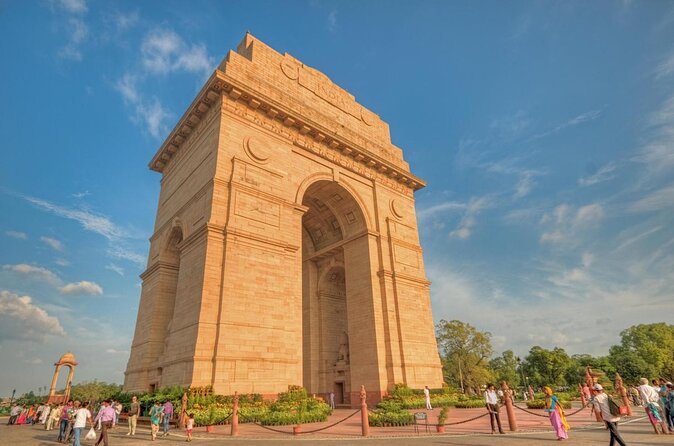
- Delhi in one day: Qutub Minar, Humayun’s Tomb, Red Fort, Lotus Temple, Jama Masjid
- Taj Mahal and Agra Fort: why this itinerary uses two different viewpoints
- Fatehpur Sikri and Chand Baori: swap palace drama for everyday geometry
- Amber Fort to Hawa Mahal area: Jaipur’s highlights in a tight loop
- Pickup, private scheduling, and guide quality: what changes your day
- Timing, walking pace, and weather reality
- Should you book this Golden Triangle Tour?
- FAQ
- Is this a private tour?
- How long is the Golden Triangle tour?
- Is pickup included?
- Do I need at least two people to book?
- Are entrance tickets included?
- What if I need to cancel or the weather is bad?
Key highlights that make this Golden Triangle work
- Private group only: your party stays together and only your group participates
- Pickup offered with coordination after booking (helpful for Delhi and Agra logistics)
- A smart mix of must-sees and viewpoint breaks like Mehtab Bagh for Taj-area photos
- Some entries are marked free (Lotus Temple, Jama Masjid, Fatehpur Sikri, Jal Mahal), so you won’t pay for every stop
- English guide support is possible, with examples like Nikhileshh mentioned in guidance accounts
What you actually get for $343 in a private Golden Triangle
At $343 for about 6 days, this tour sits in the mid-range for a private Golden Triangle style experience. The value comes from the structure: you’re not just buying tickets for monuments, you’re buying transportation and guided pacing across Delhi → Agra → Jaipur. It’s also “private tour/activity,” meaning you’re not shared with strangers, which keeps the schedule easier to manage.
One practical detail: you’ll be given a mobile ticket, which usually means less paper chasing on arrival. And because pickup is offered, you’re less likely to start each day scrambling for your own transport out of the hotel area.
The itinerary timing is built around short, focused stops rather than long lingering. Many listed segments are around 30–90 minutes per attraction. That can feel fast, but for first-timers it’s often the right trade: you see the icons without burning your entire week in lines and transit.
You can also read our reviews of more tours and experiences in Jaipur.


New Delhi Day 1: a hotel night that sets your pace
Day 1 is centered on New Delhi with time in a hotel (12 hours listed) and an admission ticket noted as free. This is useful because Delhi can be intense on arrival—heat, noise, and traffic can wear you down fast. A hotel-based start helps you reset before you tackle the heavy-hitter sights the next day.
Because the next day stacks several monuments, I like having at least one calmer day foundation. You’re essentially giving yourself a buffer so you can enjoy walking and photos rather than feeling rushed from minute one.
Delhi in one day: Qutub Minar, Humayun’s Tomb, Red Fort, Lotus Temple, Jama Masjid
This is your big Delhi day, and it’s packed. You start with Qutub Minar, where an English-speaking guide meets you and takes you into the tour. Qutub Minar is iconic for its height and style, and it’s the kind of stop where having a guide can help you understand what you’re looking at in a way a quick photo can’t.
Next you’ll head to Humayun’s Tomb, described as the final resting place of Emperor Humayun and noted as the first garden tomb in the Indian subcontinent. That “garden tomb” idea matters because it changes how you view the site: you’re not only looking at stone and domes, you’re noticing layout and symmetry.
Then comes Red Fort (Lal Qila) in Old Delhi. The fort served as a Mughal residence, and that gives you a different lens than modern fortifications. It’s a good stop if you like architecture with real political backstory, but keep your expectations practical: you’ll likely do this as a structured walk-through rather than an all-afternoon dig.
After the Mughal-heavy stretch, the day lightens in tone with two major religious sites. Lotus Temple is listed as admission free, and its flowerlike design makes it a visual pause from the forts. Then you’ll visit Jama Masjid, one of Delhi’s largest mosques, also listed as admission free.
One drawback to know: several of these Delhi entries are marked admission not included. So even if the tour is good value for private transport and guidance, your Delhi day may include extra ticket spending for Qutub Minar, Humayun’s Tomb, and Red Fort.
Taj Mahal and Agra Fort: why this itinerary uses two different viewpoints
Day 3 is the emotional center of the Golden Triangle. You’ll start with the Taj Mahal, with a guide picking you up from the hotel for the city tour. The Taj Mahal is the obvious reason for the trip, but what makes this itinerary more useful is what comes right after.
Next is Agra Fort, where you’ll have about an hour. The fort adds the “how empire worked” layer. It’s not just pretty walls; it’s a place that helps you understand the scale of power behind the monument you came to see.
Then you finish with Mehtab Bagh, the riverside garden view area. This matters because it gives you a second-angle Taj moment rather than a single front-facing experience. Even if you don’t spend long there (30 minutes listed), it’s the kind of stop that often makes the difference between I saw it and I remember it.
Admissions for Taj Mahal, Agra Fort, and Mehtab Bagh are marked as not included in the itinerary, so budget for tickets on this day.
Fatehpur Sikri and Chand Baori: swap palace drama for everyday geometry
On Day 4, you move out from Agra region sights into a different style of wow.
Fatehpur Sikri is scheduled for about two hours and is listed as admission free. This is a strong choice in the middle of the trip because it feels like a full mini-world: red sandstone buildings clustered at the center, and the famous Buland Darwaza gate (noted as the entrance to the Jama Masjid mosque) gives you a sense of scale right away. If you like Mughal-era ambition, this is one of your best “big picture” stops.
Then you head to Chand Baori (Stepwell) for about 30 minutes. This is the contrast stop—less palace, more geometry. A stepwell also works well in heat because it often feels cooler and shaded as you descend (though you’ll still want comfortable shoes). The itinerary notes it as one of the deepest and largest stepwells in India, and that’s the kind of claim you can feel with your own eyes once you’re there.
Chand Baori is listed as admission not included, so again, tickets may be part of your day even when one major attraction (Fatehpur Sikri) is marked free.




Amber Fort to Hawa Mahal area: Jaipur’s highlights in a tight loop
Day 5 is your Jaipur monuments day, and it’s designed like a greatest-hits circuit.
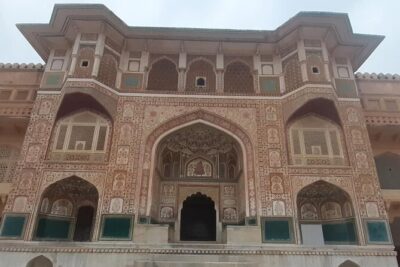
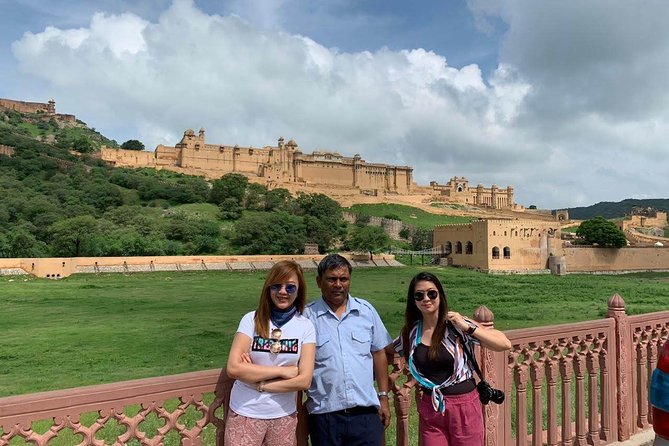
You’ll start at Amber Fort (Amer Fort). Expect about 1.5 hours. Amber Fort is one of the big Jaipur “don’t miss” stops, and it’s the kind of site where you benefit from having someone explain what you’re seeing as you move through rooms and courtyards. The itinerary marks admission not included here, so this is another likely ticket cost.
Next is a short, clever break with Jal Mahal (the palace in the middle of Man Sagar Lake). You only have about 10 minutes and it’s listed as admission free. That brevity is intentional: you get the famous lake-palace sight without turning your day into a long stop. It also helps you regroup before the more time-consuming interiors.
Then you’ll visit the City Palace of Jaipur, scheduled for about 1.5 hours. This is where you’ll likely slow down more—compared with forts and stepwells, palaces give you a direct look at how royal spaces were organized. Admissions are marked not included.
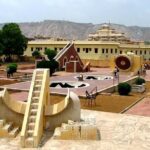
After that, you’ll hit Jantar Mantar, around 30 minutes. It’s described as a collection of astronomical instruments built by Sawai Jai Singh II, completed in 1734, and noted for the world’s largest stone sundial. Even if you’re not a science person, it’s still rewarding because you can feel how people used instruments to measure the sky in everyday ways.
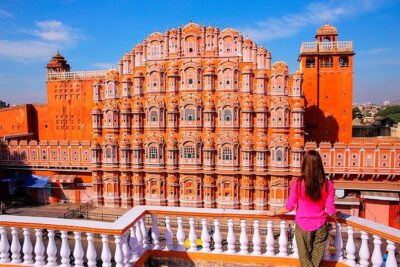
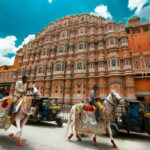
The itinerary also mentions Hawa Mahal, the palace made of red and pink sandstone along the City Palace edge, connected to women’s chambers. No time block is listed in the same way as other stops, so you might experience it as a quick architectural visit or a photo-focused segment rather than a long indoor stop.
Many Jaipur entries are marked admission not included (Amber Fort, City Palace, Jantar Mantar), while Jal Mahal is marked free. That split makes budgeting easier: plan for the “ticket stops” and treat the free ones as welcome breaks.
Pickup, private scheduling, and guide quality: what changes your day
This is a private tour, so you’re not waiting on anyone else’s pace. That sounds like a small difference, but it matters in India where traffic and arrival times can swing. A private schedule also means your guide can adjust if you want more time at a viewpoint or you’re trying to reduce walking.
The best accounts also describe the team as proactive about safety and timing. Drivers such as Sunda and Jitendra are repeatedly described as punctual and careful, with people feeling safe in the car. If you’re someone who gets stressed in heavy traffic, that reassurance is real value.
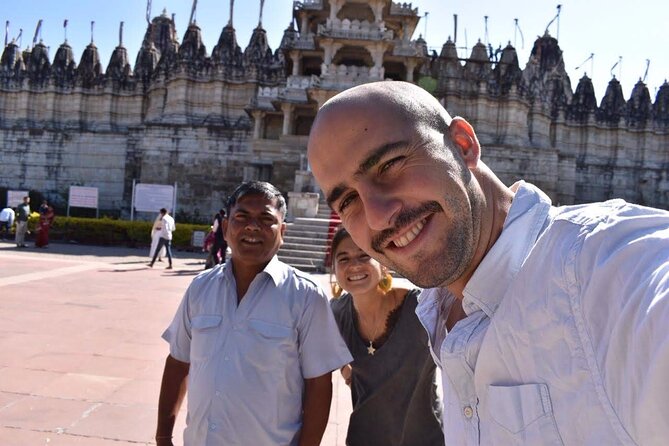
On the guide side, you’re not stuck with silence or translation-only explanations. For example, English guide Nikhileshh is mentioned as knowledgeable and attentive in guidance accounts. Even if your guide isn’t the same person, the key takeaway is that the tour is set up so you can understand what you’re seeing rather than just being transported between locations.
Timing, walking pace, and weather reality
This itinerary includes a lot of outdoor time: tombs, forts, wells, and open courtyards. The experience info also says it requires good weather, and if weather is poor, you’ll be offered a different date or a full refund.
Also note the health guidance: it’s not recommended for travelers with heart problems. That doesn’t mean it’s extreme hiking, but it does suggest there’s enough walking and sightseeing intensity that you should take the restriction seriously.
In practical terms, I’d plan for:
- comfortable shoes you can trust on uneven surfaces
- sun protection and water habits, especially between Delhi and Agra days
- a flexible mindset on schedule, since historic sites can have variable crowds and timing
Should you book this Golden Triangle Tour?
If you want a structured, private Delhi–Agra–Jaipur loop with pickup and English-speaking guidance options, I think this is a solid way to spend 6 days. The biggest strength is the flow: Delhi icons on Day 2, the Taj Mahal plus a second Taj viewpoint on Day 3, then Fatehpur Sikri and Jaipur’s monument circuit.
But book with open eyes on cost. Because many attractions are listed as admission not included, your total out-of-pocket will likely be higher than just the $343 price. If you’re the kind of person who hates surprise expenses, ask the coordinator early which tickets you should expect to pay yourself.
My quick rule: choose this tour if you value private pacing and clear coverage more than wandering randomly. Skip it (or request a tighter custom plan) if you want a slow, museum-style vacation with lots of long stops at fewer places.
FAQ
Is this a private tour?
Yes. It’s listed as a private tour/activity, meaning only your group participates.
How long is the Golden Triangle tour?
The duration is approximately 6 days.
Is pickup included?
Pickup is offered, and you’ll coordinate details after booking.
Do I need at least two people to book?
Yes. The tour requires a minimum of 2 Pax.
Are entrance tickets included?
Not always. Some stops are marked admission ticket free (for example Lotus Temple, Jama Masjid, Fatehpur Sikri, and Jal Mahal), while many major sites are marked admission ticket not included (for example Qutub Minar, Humayun’s Tomb, Red Fort, Taj Mahal, Agra Fort, Amber Fort, City Palace, and Jantar Mantar).
What if I need to cancel or the weather is bad?
You can cancel up to 3 days in advance for a full refund. The experience also requires good weather, and if it’s canceled due to poor weather, you’ll be offered a different date or a full refund.