REVIEW · AMBER FORT & CITY PALACE TOURS
Jaipur: City Palace Museum – Direct Official Ticket
Book on GetYourGuide →Operated by City Palace Museum, Jaipur · Bookable on GetYourGuide
Seven courtyards, one official ticket.
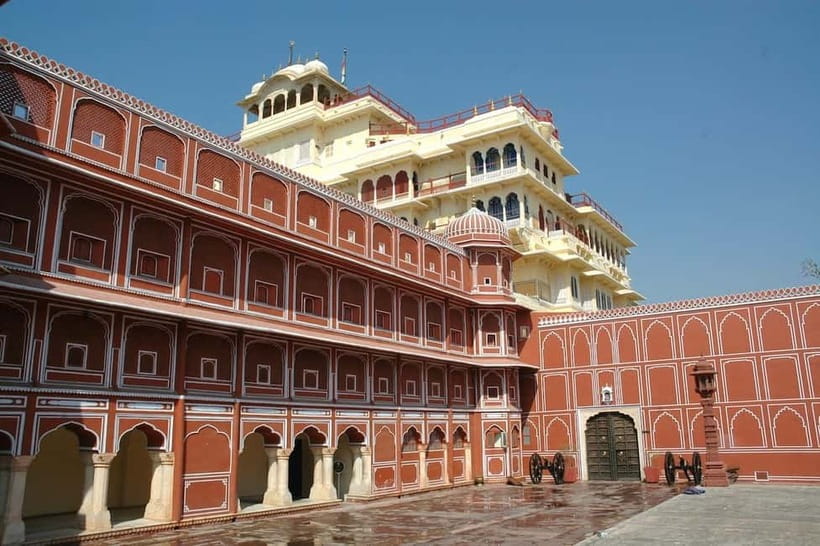
This City Palace Museum admission is a straightforward way to see Jaipur’s former administrative heart, with seven interconnected courtyards you can explore under a single ticket, plus the MSMS II Museum highlights inside the complex. I especially like that your entry is issued directly for this palace experience, which tends to remove a lot of guesswork when you’re in a busy city. One possible drawback: a small number of recent bookings reported ticket trouble and maintenance/cleanliness issues, so plan a little buffer time and keep a screenshot/photo of your booking.
You’ll start in the palace’s decorated gateway area at Pritam Niwas Chowk, then move through key spaces like Diwan-e-Khas and the public audience hall Diwan-e-Aam. I also like how the stops cover more than “pretty rooms”—you get silver ceremonial urns, a major textile collection, a serious arms-and-armor gallery, and displays of royal transportation. The main consideration is simple: it’s a palace walk, so wear comfortable shoes and expect plenty of stair-and-courtyard wandering in warm weather.
In This Review
- Key Points to Know Before You Go
- Your City Palace Entrance: Official Ticket and Where You Start
- Pritam Niwas Chowk: The Decorated Gate Start That Sets the Tone
- Sarvato Bhadra (Diwan-e-Khas): Ceremonial Power and the Silver Gangajalis
- Sabha Niwas (Diwan-e-Aam): Where the Maharaja Met the Public
- Mubarak Mahal (Textile Collection): The 1902 Guest-House Chapter
- Sileh-Khana: Arms and Armour That Feels Almost Modern
- Painting & Photography Gallery: Maps and Historic Photos for Context
- Rath-Khana: Royal Transports Spanning Three Centuries
- MSMS II Museum: Why This Courtyard-Based Museum Approach Works
- Practical Tips for a Comfortable 1-Day Palace Walk
- What This Experience Is Best For (and Who Might Want to Skip It)
- Should You Book This City Palace Ticket?
- FAQ
- Where do I enter for the ticketing counter?
- How long is the ticket valid?
- What’s included with this admission?
- Is flash photography allowed?
- Are professional cameras permitted?
- Is the experience wheelchair accessible?
Key Points to Know Before You Go
- Official City Palace-issued entry: your ticket is linked directly to the palace site, which helps you avoid third-party confusion.
- Seven courtyards in one admission: you can follow the palace’s layout at your own pace.
- MSMS II Museum coverage: the museum area includes four courtyards, making it a time-saver if you want the core highlights.
- Diwan-e-Khas and Diwan-e-Aam stops: you’ll see both high-level ceremonial space and the public-facing audience hall.
- Sileh-Khana arms and armor gallery: this is the most “physical history” stop on the route.
- Rath-Khana royal vehicles display: a clear view of how rulers celebrated power through transport.
Your City Palace Entrance: Official Ticket and Where You Start
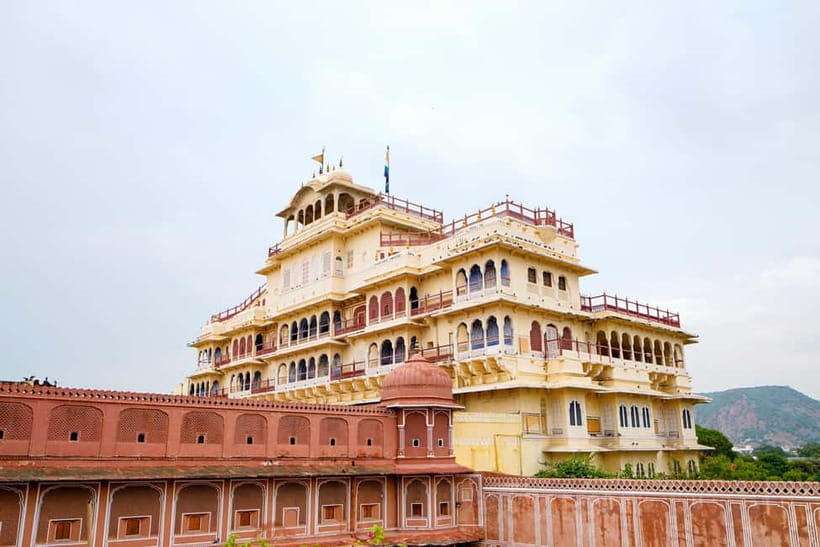
If you want the simplest possible way into Jaipur’s City Palace, this direct admission is a smart choice. The price is $16 per person, and you get access to the City Palace courtyards and galleries plus platform booking fees. It’s valid for 1 day, and you’ll want to check starting times so you don’t arrive at a weird edge-of-day moment.
For meeting up, enter the gate to the ticketing counter near Baradari Restaurant. That matters because City Palace is a large site and you’ll lose time if you follow landmarks that don’t match the ticket desk you actually need.
One small planning note: the museum route includes multiple galleries and courtyards, so treat this as a slow, comfortable walk rather than a “hit everything in 30 minutes” mission. You’ll get more out of it if you pause in the courtyards and let the palace layout make sense.
You can also read our reviews of more tours and experiences in Jaipur



Pritam Niwas Chowk: The Decorated Gate Start That Sets the Tone
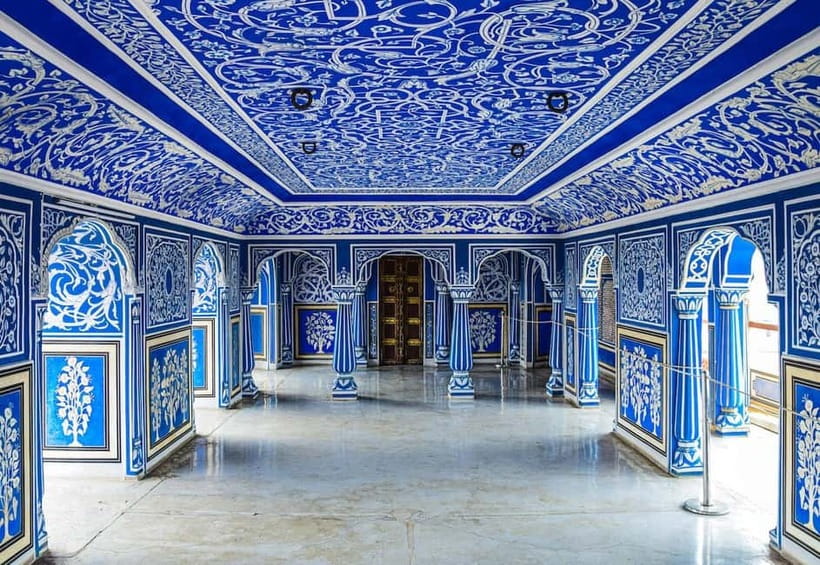
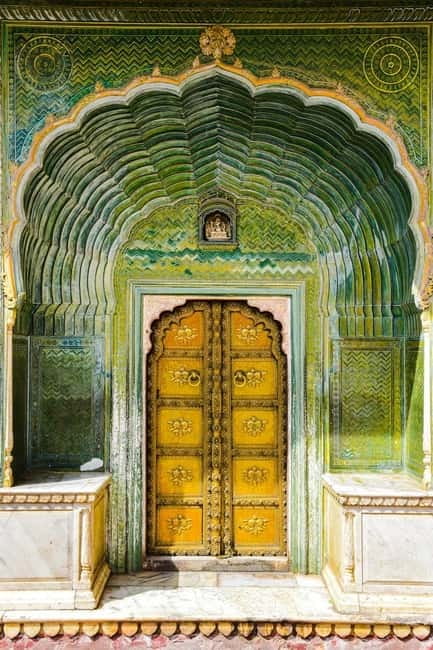
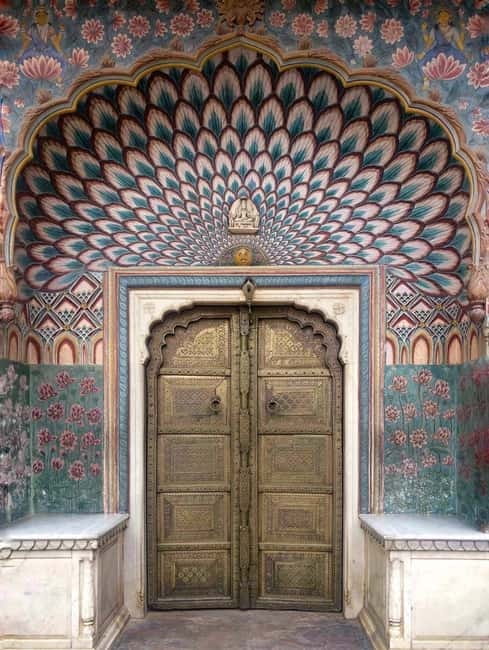
Your visit starts at Pritam Niwas Chowk, where you’ll see four magnificently decorated gates (deories) representing four deities. This is one of those “first 2 minutes” areas where the palace tells you how ceremonial the whole place is. Even if you don’t know the religious symbolism right away, the design cues are clear: this was built to impress visitors and signal status.
What I like about starting here is that it gives you a visual baseline. Once you’ve walked past the deories, the rest of the palace makes more sense: courtyards aren’t random open space—they’re the palace’s organizing rooms.
Practical tip: give yourself time to look up and not only straight ahead. Palace gateways often have details around the frames and arches that you’ll miss if you only focus on what’s in front of you.
Sarvato Bhadra (Diwan-e-Khas): Ceremonial Power and the Silver Gangajalis
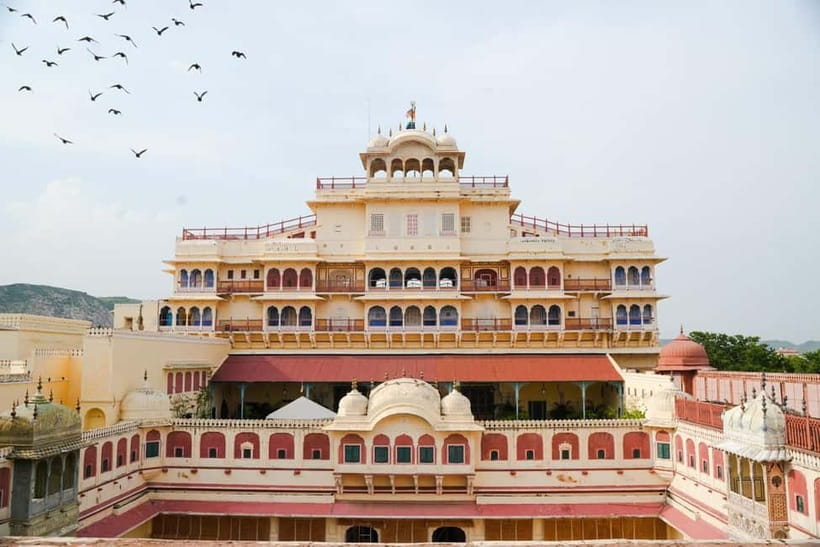
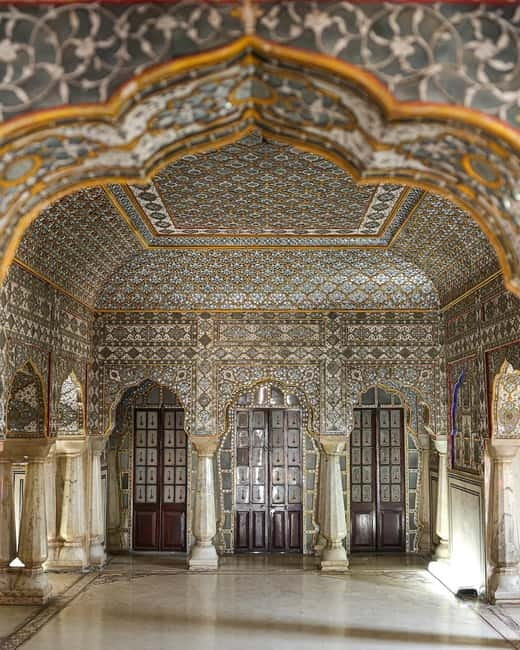
Next comes Sarvato Bhadra, also called Diwan-e-Khas. This space played host to religious and cultural celebrations, and it’s the kind of room where the architecture is part of the message: this wasn’t just administration; it was performance.
As you enter this courtyard area, don’t miss the Gangajalis—two gigantic silver urns. Even if you’re not the type who reads every label, these stand out quickly, and they anchor your understanding of the palace’s ceremonial role.
A good way to approach this part is to slow down in front of the courtyard layout. You’re seeing how the palace stages movement: where you stand changes what you feel the space is designed to communicate.
Sabha Niwas (Diwan-e-Aam): Where the Maharaja Met the Public
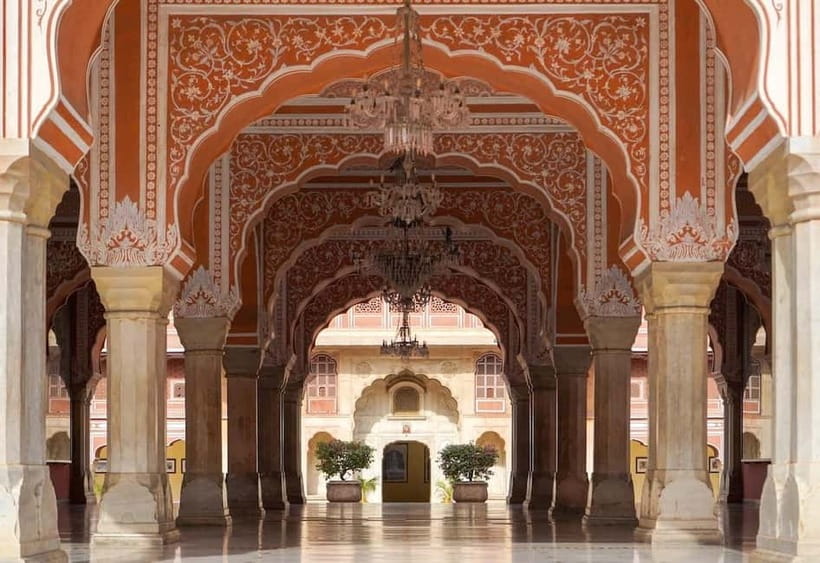
After the ceremonial Diwan-e-Khas area, you’ll head to Sabha Niwas, also known as Diwan-e-Aam. This is the hall where the Maharaja would hear from his public and greet foreign dignitaries.
I like this stop because it shifts the story. The earlier courtyards feel like a formal stage; Diwan-e-Aam feels more like governance and contact. It’s a reminder that even inside palace walls, rulers had to interact with real people, not only dignitaries.
If you’re the kind of visitor who likes to connect rooms to daily function, this is where you’ll feel the palace’s purpose more clearly.
Mubarak Mahal (Textile Collection): The 1902 Guest-House Chapter
Then go to Mubarak Mahal. Built in 1902 as a guest house for foreign dignitaries, it now houses the textile collection.
This is a valuable contrast in the route. You’re moving from governance and ceremonial spaces into a more cultural and material-history setting. Textiles are a strong way to understand court life because they connect to trade, identity, and how people displayed power through cloth, pattern, and craft.
Two ways to make this stop pay off:
- Look for display context on what’s being shown (where the textiles fit in the story of the palace).
- Don’t rush it. If you’re into design, fabric textures, and historic costume culture, you’ll probably spend more time here than you expected.
You can also read our reviews of more city tours in Jaipur




Sileh-Khana: Arms and Armour That Feels Almost Modern
Next is Sileh-Khana, a gallery that houses a vast and unparalleled collection of arms and armor.
This is one of the most straightforward “wow” categories in the whole palace route, because metal objects have weight, shape, and intent. You don’t need a long explanation to understand why court weaponry mattered: it signals defense, authority, and the technical side of historic military power.
If you’re short on time, this is one of the places I’d prioritize because it’s a complete category on its own. If you’re not normally into weapons, it can still be worth it—just focus on craftsmanship and design rather than trying to identify every piece.
Painting & Photography Gallery: Maps and Historic Photos for Context
From arms, the route shifts to the Painting & Photography Gallery, featuring paintings, maps, and historic photographs.
This stop works well if you want more than objects. Maps and old photos add context: they help you understand how Jaipur and the palace related to wider geography and how the site looked in earlier periods. If you like visual storytelling, this gallery tends to reward attention.
Practical note: photography is allowed, but flash photography may be restricted in certain areas. If you want to avoid awkward moments, keep your flash off as you move through indoor-looking spaces.
Rath-Khana: Royal Transports Spanning Three Centuries
The last major gallery-style stop is Rath-Khana, featuring important royal transports spanning three centuries. The name literally points you to transport—so you’re not just seeing decorative objects. You’re seeing how rulers moved, traveled, and staged public life.
This is a great final stop because it ties together many palace themes:
- ceremonial behavior (how authority traveled),
- technology and design (how vehicles were built),
- and time (the span of centuries shown in the display).
If you find yourself thinking about power in more than one form, this is where it clicks. Historic transport isn’t just transportation; it’s a moving symbol.
MSMS II Museum: Why This Courtyard-Based Museum Approach Works
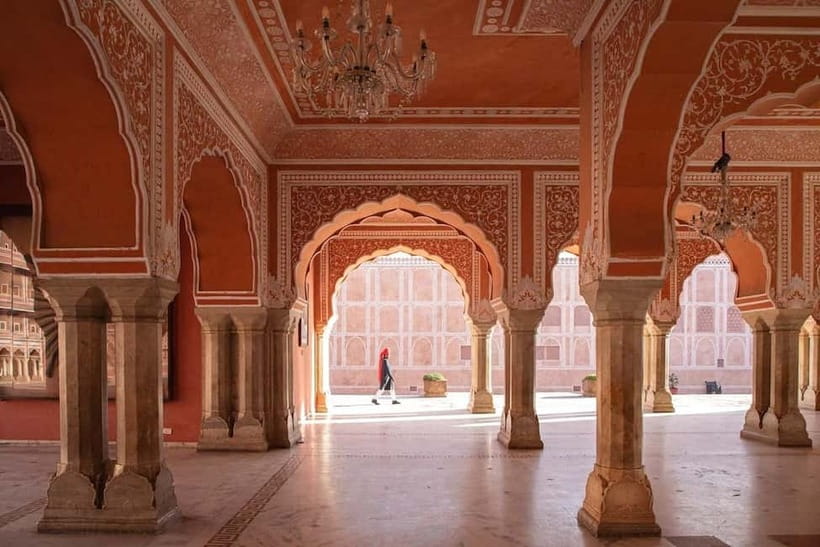
A key part of your ticket experience is MSMS II Museum, which is home to four of the City Palace courtyards. That courtyard-based format is actually one of the smartest ways to organize a palace museum, because it preserves the original spatial logic instead of turning everything into disconnected rooms.
What you’ll likely notice is that this museum area doesn’t feel like a random add-on. It feels like a structured way to see a chunk of the palace’s interior “bones.” If you’re trying to manage time in Jaipur, this approach helps you hit the most meaningful palace spaces without getting lost.
A simple strategy: use the courtyard transitions as your rhythm. Don’t try to rush from label to label. Instead, treat each courtyard as its own scene, then connect the scenes as you move onward.
Practical Tips for a Comfortable 1-Day Palace Walk
You’re looking at a full-day experience in a large heritage site, so small choices help a lot.
- Wear comfortable shoes. The palace has lots of walking and you’ll be on uneven-feeling historic surfaces in places.
- Carry water, especially in hot weather. There’s no benefit to pushing through dehydration just to get one more gallery.
- Respect photography rules. Photography is allowed, but flash photography may be restricted in certain areas, and professional cameras are not allowed.
- Mind what you bring. Pets aren’t allowed (assistance dogs are allowed). Alcohol and drugs are also not allowed. If you’re traveling with gear, keep it simple so you don’t run into entry issues.
About the pace: I suggest building in “pause time” after you enter each major area. Courtyards give you visual breaks, and that makes the whole circuit easier on your legs.
One more thing: since your ticket is issued directly for the City Palace experience, it’s worth arriving a bit calm and ready. A small number of recent booking issues have been reported, so it helps to take a screenshot of your confirmation and keep it handy on your phone.
What This Experience Is Best For (and Who Might Want to Skip It)
This ticket fits best if you want:
- a self-paced way to explore City Palace’s core spaces,
- the courtyard-to-gallery flow (courtyards, then rooms with collections),
- and a mix of cultural material (textiles) plus “serious collections” like arms and royal transport.
You might not love it as much if you:
- want a fully guided storytelling experience (this is access to courtyards and galleries, not described as a guided tour here),
- dislike walking-heavy attractions,
- or strongly rely on professional photo gear, since professional cameras aren’t allowed.
Should You Book This City Palace Ticket?
Book it if you want a clean, direct entry into one of Jaipur’s most important heritage complexes, and you like your palace visits structured around real spaces: courtyards, audience halls, and themed galleries. At $16, the value is strongest when you plan to actually use the whole circuit—Pritam Niwas Chowk to Rath-Khana—rather than just taking a quick walk-through.
Skip or rethink if your priority is a low-risk, zero-surprises experience and you’re the type who can’t handle ticket desk friction. A small recent booking report mentioned a ticket problem and poor condition/cleanliness, which is a reminder to arrive early and stay flexible.
FAQ
Where do I enter for the ticketing counter?
Enter the gate to the ticketing counter near Baradari Restaurant.
How long is the ticket valid?
The ticket is valid for 1 day.
What’s included with this admission?
You get access to City Palace courtyards and galleries, plus platform booking fees.
Is flash photography allowed?
Photography is allowed, but flash photography may be restricted in certain areas.
Are professional cameras permitted?
No—professional cameras are not allowed.
Is the experience wheelchair accessible?
Yes, it is wheelchair accessible.