REVIEW · AMBER FORT & CITY PALACE TOURS
Jaipur Guided City Tour: City Palace, Jantar, Hawa & Jal Mahal
Book on Viator →Operated by Keeper Landwey · Bookable on Viator
Jaipur works best when you don’t waste time. This guided loop hits the Pink City’s biggest landmarks in about 5 hours, with door-to-door hotel or airport transfer and an A/C ride so you can stay focused on the sites.
I really like that you get a local guide with you for the day, so the places make sense fast instead of feeling like stops on a checklist. The other plus is the mix of paid-and-free sights: City Palace and Jantar Mantar are ticket stops, while Hawa Mahal and Jal Mahal are easier add-ons. One thing to consider is the schedule: it’s efficient, so you’ll be moving between locations and spending most of the day on-site rather than lingering.
In This Review
- Key points to know before you go
- A 5-hour Pink City loop with door-to-door comfort
- City Palace: royal residence turned museum spaces
- Jantar Mantar: Jaipur’s giant stone time machine
- Hawa Mahal and the 953 jharokhas photo stop
- Jal Mahal over Man Sagar Lake: the palace that appears to float
- Guides and drivers: what makes the day work
- Price and what you actually get for $29
- Who should book this Jaipur guided city tour
- Should you book this Jaipur guided city tour?
- FAQ
- How long is the Jaipur guided city tour?
- Do you include hotel or airport transfers?
- Is this tour private or shared?
- What start times are available?
- Which monuments are included, and are tickets needed?
- Should I carry photo ID for monument entry?
- Is air-conditioned transport and bottled water included?
- How does cancellation work if plans change?
Key points to know before you go
- Hotel/airport transfers included, so taxis are optional, not required
- Local guide stays with you through the main sightseeing stops
- A/C private car and bottled water for a more comfortable day
- Top monuments in one loop: City Palace, Jantar Mantar, Hawa Mahal, Jal Mahal
- Tickets depend on package choice, but Hawa Mahal and Jal Mahal are free-entry stops
- Good for families and solo visitors when you want flexibility and clear explanations
A 5-hour Pink City loop with door-to-door comfort
The biggest practical win here is the logistics. You’re picked up from your hotel, the airport, or another address in Jaipur, and you’re dropped back at a location you choose. Start times run from 8:00 AM to 2:00 PM, which is handy if you’re arriving late, have a flight later, or just don’t want a 6:30 AM wake-up.
You also ride in an air-conditioned vehicle, not a crowded public option. That matters in Jaipur, especially if you’re doing this as part of a busy itinerary. Bottled mineral water is provided, and the tour is private for your group, so you’re not squeezed between strangers or forced to keep the same pace as everyone else. Vehicle size scales with group size (sedan for 1–2 people, wagon for 3–5, van for 6–12, and a bus for bigger groups), which usually helps the day feel smoother.
Because it’s private, you can ask for small adjustments. If you want to tighten the route, slow down for photos, or change the order slightly, this tour is designed to be flexible. That’s a real benefit when you’re traveling with a parent who doesn’t love long walks, or when you have a hard deadline like an airport run.
You can also read our reviews of more guided tours in Jaipur

City Palace: royal residence turned museum spaces
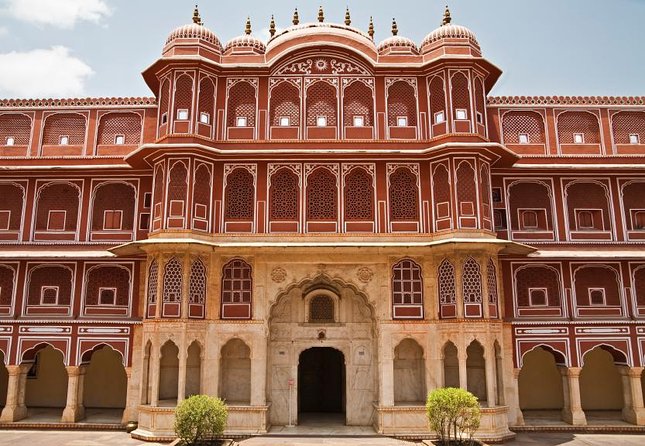
City Palace is the kind of stop that’s worth doing with a guide. The complex was the former royal residence of the Maharaja of Jaipur, and part of it still houses the royal family. The rest has been converted into a museum, so you get the palace story in real space rather than through pictures alone.
In this tour flow, you’ll spend about an hour here, with admission included for the City Palace stop when the ticket option is chosen. That time is usually enough to understand the layout and get the key ideas—how the royal residence evolved into something visitors can explore.
One detail worth flagging: City Palace has extras that some guides may recommend paying for. In particular, there’s mention of the Blue Room that you may be able to add by paying a little extra. If that’s on your must-see list, ask before you arrive so you can budget and avoid feeling rushed at the ticket counter.
If you’re the type who likes architecture and family stories, City Palace tends to land well. It’s not just one building—it’s a complex. The guide’s job is to help you connect the dots quickly so you leave with more than photos.
Jantar Mantar: Jaipur’s giant stone time machine
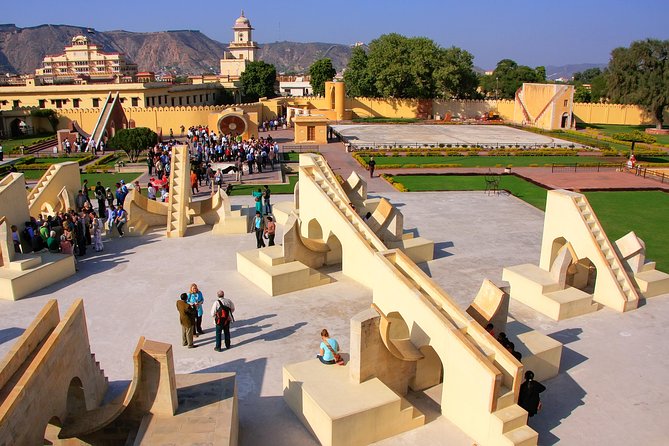
Next up is Jantar Mantar, an 18th-century observatory built by Maharaja Sawai Jai Singh II. It’s a UNESCO World Heritage site, and the site is famous for the world’s largest stone sundial, plus a collection of giant instruments.
You’ll typically have about an hour here, with admission included for this stop when you select the tickets-inclusive package. This is one of those places where reading explanations on your own can be frustrating, because the meaning isn’t always obvious from a quick glance. With a good guide, the instruments become a story: why they were built, how the design works, and what you’re actually looking at when you stand in front of a massive stone feature.
A practical tip: wear shoes you trust. Even if the tour keeps you moving efficiently, you’ll still be standing, walking between instruments, and taking time to look closely. Also, ask questions when something clicks. One of the most common reasons people love Jantar Mantar with a guide is that the explanations are tailored to what you want to know.
If you’re short on time in Jaipur, Jantar Mantar is an excellent use of that time. It’s compact, iconic, and it gives you a different side of Jaipur—science and observation alongside palaces and courtyards.
Hawa Mahal and the 953 jharokhas photo stop
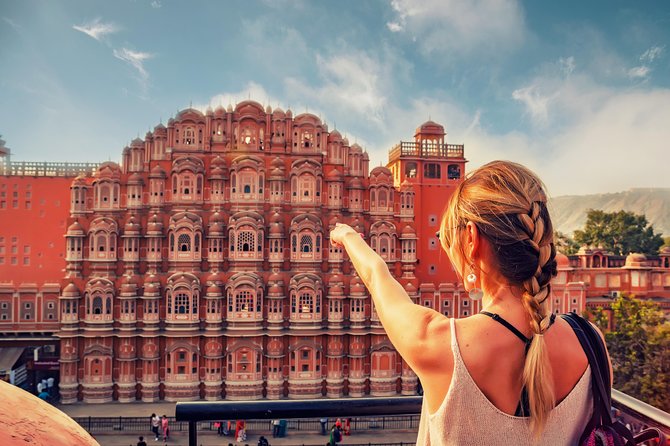
Hawa Mahal—the Palace of Wind—is one of the most recognizable silhouettes in Jaipur. It was built in 1799 from red and pink sandstone and designed as a five-story façade with 953 tiny windows, called jharokhas. The idea was that royal women could observe life in the street while staying behind the screens.
In this tour, Hawa Mahal is a shorter stop, around 30 minutes, and entry is free. That timing makes sense because the main value here is exterior viewing and quick learning: why the building is shaped the way it is, what the windows were for, and how the architecture fits into daily life in a royal setting.
If you want the best photos, don’t just treat it like a backdrop. Use the 30 minutes to understand the façade first, then step back and shoot from angles that show the full front. The guide can help with where to stand for photos that show both the details and the overall structure.
Also, since it’s a short stop, you can keep momentum for the next location without feeling like the day runs on one monument too long.
Jal Mahal over Man Sagar Lake: the palace that appears to float
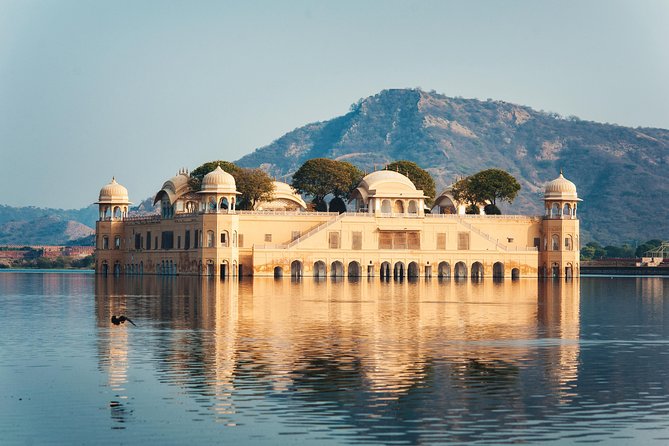
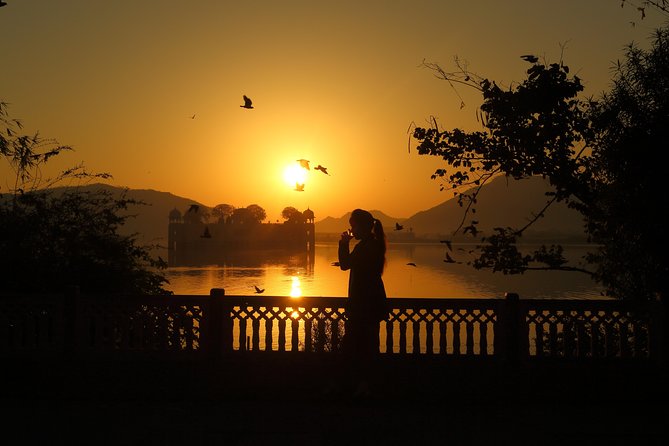
Then comes Jal Mahal, a serene palace in the middle of Man Sagar Lake. It dates to the 17th century and is built in classic Rajput style. The structure is partially submerged, which creates that famous effect of a palace floating on the water.
This stop runs about 30 minutes and is also free-entry. The payoff here is the visual mood. Jal Mahal is the “pause” in the itinerary after the heavier palace-and-instrument stops. It’s a good place to slow down, take a few photos, and let the day breathe a little.
Because Jal Mahal is about the lake setting, it helps to go into the stop with a camera mindset. Look for viewpoints that give you the strongest sense of the structure’s relationship to the water. If you’ve been sweating your way through palace interiors, this one often feels like a reset—more scenery, less museum pacing.
You can also read our reviews of more city tours in Jaipur





Guides and drivers: what makes the day work
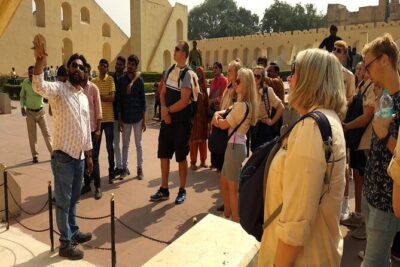
The tour stands or falls on the people running it. The information here includes private local professional guides and a private driver with the day’s transportation. Based on what’s been praised, guides tend to do two things extremely well: explain what you’re seeing in clear language and adapt to your questions and pacing.
You’ll see specific guide names mentioned often—Brajesh, Kishore/Kishoor, Saqlain (Sanju), and Brijesh—along with drivers such as Ram Singh, Ramsingh, Santosh, Somesh, Dushyant, Yunis, Pradeep, Rajesh, and Balbeer. The common thread is helpfulness: good English, attentive guiding, and the calm competence that matters when you’re in traffic and trying to hit multiple monuments.
There are also practical signals that this tour avoids the annoying parts of some sightseeing days. One theme that shows up in the feedback is that the day follows the itinerary without detours into unnecessary shops. Another is that the guide helps with photos rather than just counting time and moving on. If you’re the sort of person who wants good pictures of landmarks and also wants the story behind them, this style helps a lot.
If you’re traveling with kids, you’ll want to think about space in the vehicle. One tip that came up: if you’re bringing kids, book them as adults so the group size and vehicle space match what you actually need. That’s the kind of small planning detail that prevents a squeezed ride later.
If someone in your group has mobility limits, this tour can still work because the guide can handle pacing and take regular breaks. You’ll be safer and happier when you’re not trying to muscle through long walks just to keep a strict itinerary.
Price and what you actually get for $29
At $29 per person, the headline number can look almost too low for a private, guided, ticket-including city loop. The value is in what’s packed in: pickup and drop-off within Jaipur, private air-conditioned transportation, a local guide, bottled mineral water, and all taxes and fees.
Here’s the more useful way to think about it: you’re paying for organization. You’re not hunting taxis between monuments, guessing ticket rules, or trying to translate signage while stuck in line. Instead, you get guided context at the major stops and a smooth sequence through the central Jaipur highlights.
Tickets are a key variable. The tour includes monument tickets when you choose the option that includes tickets (sometimes described as Chauffeur with Guide + Tickets or All Inclusive). City Palace and Jantar Mantar are ticket stops in the itinerary. Hawa Mahal and Jal Mahal are free-entry stops in the itinerary, which helps keep costs predictable.
Then there’s the meal option. If you pick the All Inclusive package, a meal is included. If you don’t, plan for lunch on your own.
What’s not included is tips and gratuities. That’s normal in India, but it’s still worth planning for so you don’t feel caught off guard at the end of the day.
One minor caution about price: there are comments that the cost can feel higher than it should for some people. That usually comes down to personal expectations: if you’re only interested in quick photos, a guided private tour can feel like more than you need. But if you want the context and the logistics support, $29 starts to look like a smart trade for your time.
Who should book this Jaipur guided city tour
This tour is a strong match when you want a focused introduction to Jaipur without spending your whole day commuting. It’s also a good fit for people who like learning—City Palace as a royal residence and museum, Jantar Mantar as a UNESCO observatory, Hawa Mahal as architecture with a social purpose, and Jal Mahal as the scenic break.
It also suits anyone who wants clear structure. Because it’s private, you can ask questions and keep your pace. If you’re short on time—say you have only a half-day before your next stop—this 5-hour loop is built for that reality.
Where you might rethink booking is if you want a slow, wander-around day. This itinerary is efficient. You’ll see the main hits, but you’re not coming for a deep multi-hour museum day or hours of market wandering. If your style is “stay longer, ask fewer questions,” you may prefer a more open-ended plan.
Should you book this Jaipur guided city tour?
I think you should book it if your priority is value through structure: hotel or airport pickup, A/C comfort, a guide who helps you understand what you’re looking at, and a route that covers the most famous landmarks in a half-day window. It’s especially worth it if this is your first time in Jaipur and you want to feel oriented fast.
I’d skip or modify it if you know you want lots of extra shopping stops, long interior time in museums, or a slower pace. Since the stops are timed, you’ll get the best experience if you’re okay with moving from place to place and using your time wisely.
Before you go, one smart checklist: confirm whether your chosen package includes monument tickets, carry a valid photo ID on your phone for entry, and decide if the Blue Room at City Palace is something you want to add.
FAQ
How long is the Jaipur guided city tour?
The tour runs about 5 hours (approx.), depending on timing and your chosen start time.
Do you include hotel or airport transfers?
Yes. Round-trip transfers to and from Jaipur (hotel or airport pickup and drop-off) are included.
Is this tour private or shared?
It’s private. Only your group participates.
What start times are available?
You can choose a preferred start time between 8:00 AM and 2:00 PM.
Which monuments are included, and are tickets needed?
The tour includes City Palace and Jantar Mantar (ticket stops) plus Hawa Mahal and Jal Mahal (free-entry stops on the itinerary). Monument tickets are included if you select the tickets-inclusive package option.
Should I carry photo ID for monument entry?
Yes. You’re asked to carry all travelers valid photo ID (in your mobile) for monument entry.
Is air-conditioned transport and bottled water included?
Yes. You’ll travel in a private, air-conditioned car, and bottled mineral water is provided during the journey.
How does cancellation work if plans change?
You can cancel for a full refund up to 24 hours before the experience’s start time. If you cancel less than 24 hours before, the amount paid isn’t refunded.