REVIEW · CITY TOURS
Jaipur: Private Full-Day City Tour By Tuk-Tuk with Pick-Up
Book on GetYourGuide →Operated by Janu Private Tours · Bookable on GetYourGuide
Jaipur clicks into place fast. A private tuk-tuk with hotel pickup at 8:30 AM helps you hit the key sights without spending time hunting for transport.
I like that the route mixes the big postcard moments with calmer cultural stops, including Amber Fort and Gaitor Ki Chhatriyan. One possible drawback: there’s a moderate amount of walking, and this tour isn’t suitable for heart problems or wheelchair users.
In This Review
- Key highlights to know before you go
- Private tuk-tuk logistics: comfort, control, and value
- Hawa Mahal at first light: photos, orientation, and easy walking
- Jantar Mantar and City Palace: two stops where Jaipur explains itself
- Royal Gaitor Ki Chhatriyan: the restful break most people skip
- Jal Mahal and Man Sagar Lake: what the postcard view doesn’t tell you
- Amber Fort on the hill: your big anchor stop
- Shopping time that fits the day: jewelry, textiles, and blue pottery
- Price and what you truly get for about $12
- Best-fit travelers and key limitations (so you don’t regret it)
- Should you book this Jaipur tuk-tuk day tour?
- FAQ
- What time is hotel pickup in Jaipur?
- How long is the tour?
- What language is the driver?
- What’s included in the price?
- Are monument entrance fees included?
- Do I need to bring passport or ID?
- Is there a dress code?
- Is there walking involved?
- Is this tour wheelchair-friendly?
- Can I cancel and get a refund?
Key highlights to know before you go

- Hotel-to-hotel convenience with pickup and drop by tuk-tuk
- Morning-first sightseeing for Hawa Mahal and quick photos
- Real variety in the route: observatory, palace complex, lake views, fort time
- A calmer pause at Gaitor Ki Chhatriyan outside the main city walls
- Amber Fort as the day’s anchor on the hill outside Jaipur
- Built-in shopping time for gemstones, silver jewelry, bangles, textiles, and blue pottery
Private tuk-tuk logistics: comfort, control, and value
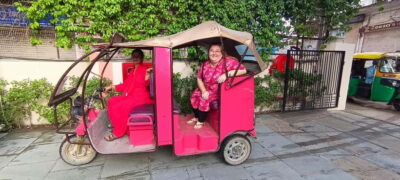
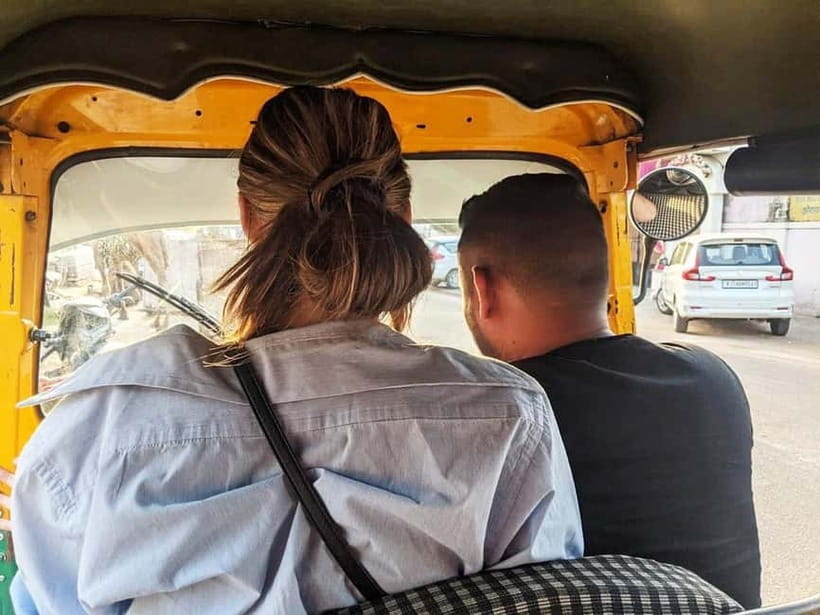
A private tuk-tuk day in Jaipur is all about pace and practicality. You get a door-to-door pickup, you stay in a single vehicle through the day, and you don’t waste energy on figuring out how to hop between major landmarks.
The drive is the comfort part. You’ll be in a small vehicle that’s meant for city navigation, so you can move through crowded streets and reach stops without long waits. English support is part of the setup, and the way it works in practice can be very smooth—especially if your driver keeps things organized and on time.
For extra peace of mind, the experience includes bottled water, plus fuel, parking, tolls, and government taxes (GST). That matters in India because small add-ons can creep in. Here, you can plan around what’s included and what isn’t, instead of guessing.
One more real-world note: in at least one booking, adding a guide led to travel in a car rather than a tuk-tuk. If you like lots of context and commentary, you may appreciate the guide option, even if the vehicle changes.
You can also read our reviews of more city tours in Jaipur

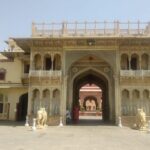
Hawa Mahal at first light: photos, orientation, and easy walking
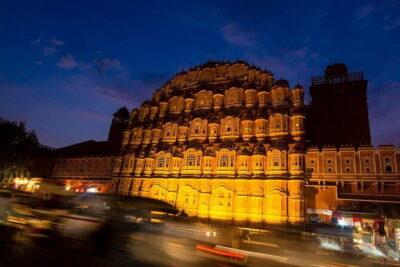
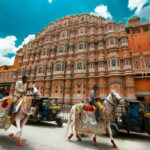
Your day starts in the morning with a straightforward plan: you roll into Jaipur and make Hawa Mahal one of the first stops. It’s a great choice early, because the area is easier to work with before the day fully heats up and crowds tighten up.
At Hawa Mahal, expect a photo stop plus some sightseeing and a self-guided walk for about 30 minutes. That time window is realistic: enough to admire the famous facade details, get a few angles, and move on without turning the morning into a long slog.
Dress matters here. Jaipur is a sightseeing city, but temples and palace areas can have clothing rules. Think smart casual, and skip short shorts or sleeveless tops when you’re around religious spaces.
If you’re the type who likes to get your bearings fast, starting with Hawa Mahal helps. It’s an immediate visual landmark, so the rest of the day feels connected rather than random errands between places.
Jantar Mantar and City Palace: two stops where Jaipur explains itself
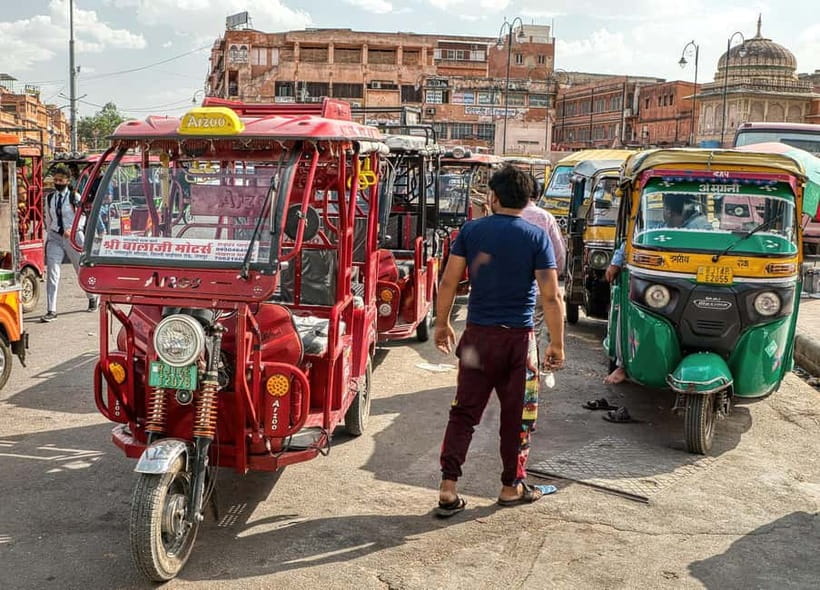
After Hawa Mahal, the route turns to Jantar Mantar, Jaipur’s famous observatory. You get another photo stop and about 30 minutes for sightseeing and walking. This is the kind of place where you don’t need to be a science person to enjoy it—you just need curiosity and a little time to look slowly.
The observatory stands out because it’s practical design turned into architecture. The structures are meant for measuring the sky, and when you’re there, you start seeing how carefully the builders worked. It gives you a different side of Jaipur: not only royal glamour, but also calculation and precision.
Then you move to City Palace, where you’ll spend about two hours. That longer slot is important. City Palace isn’t one single photo moment. It’s a palace complex, so you benefit from the extra time to roam, pause, and take in how the city’s royal power was organized in space.
A good strategy in palace complexes is to pick a few things to focus on: views from courtyards, the layout feel, and the way different sections relate to each other. With about two hours, you can do that without rushing, and you can still be ready for the next stops later in the day.
Royal Gaitor Ki Chhatriyan: the restful break most people skip
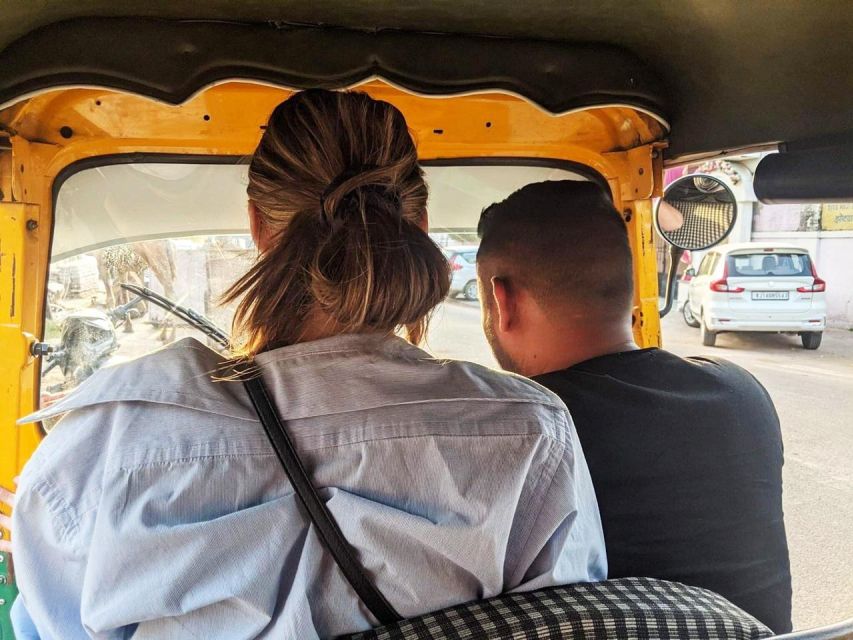
One of the smarter choices on the route is Gaitor Ki Chhatriyan. This is a historic cenotaph area just outside the city walls under the Nahargarh hills. It’s the kind of stop that feels calmer than the major monuments, and it’s a nice contrast when you’ve been moving from landmark to landmark.
You get roughly 30 minutes here. That’s enough to walk around, take photos, and appreciate the atmosphere without turning it into a long detour. You’ll likely feel the difference quickly: the vibe is quieter, and the setting under the hills helps it feel like a breather from the more intense sightseeing zones.
If you’re tired of constant crowds, this is the part of the day that can reset your energy. It also adds depth to your Jaipur story because cenotaphs and royal memorials show another side of how power and memory were handled.
Jal Mahal and Man Sagar Lake: what the postcard view doesn’t tell you
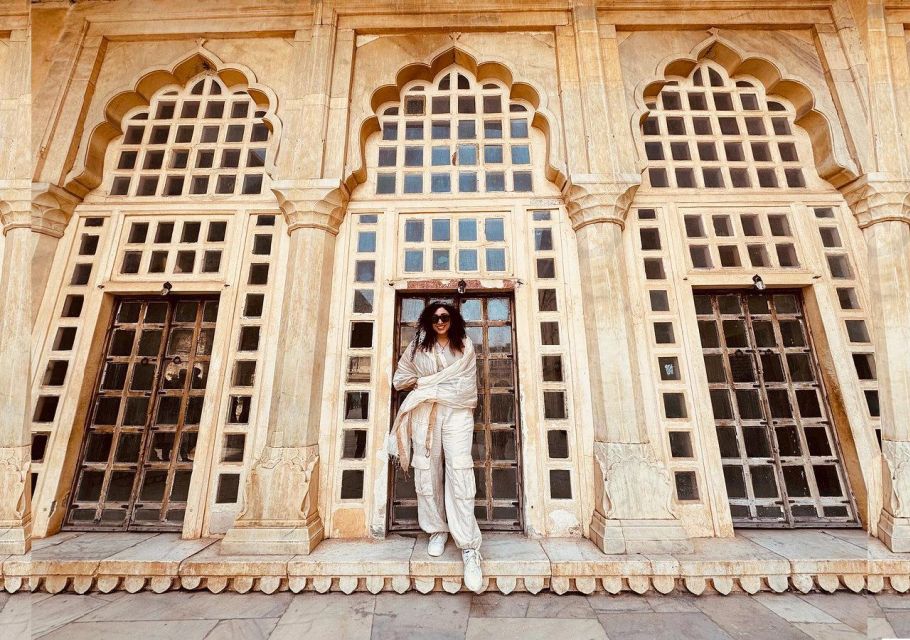
Then comes a classic Jaipur scene: Jal Mahal, the palace in the middle of Man Sagar Lake. You’ll get a photo stop and about 30 minutes for sightseeing and walking.
Here’s the practical tip: lake-side viewing is visual, so don’t plan on a super long visit expecting full inside access. What matters is the outside look and the setting—how the palace sits above the waterline and how the lake frames the view.
In hot months, the water scene can feel refreshing even when you’re standing around in the sun. Bring water, take breaks, and don’t overpack your expectations. The value of Jal Mahal is the image and the pause it provides in the afternoon schedule.
This stop also helps break up the day before Amber Fort. By the time you head toward the fort area, you’ve had a mix of architecture, city layout, and a scenic reset—so the fort feels like a satisfying finish instead of another checkmark.
You can also read our reviews of more private tours in Jaipur






Amber Fort on the hill: your big anchor stop
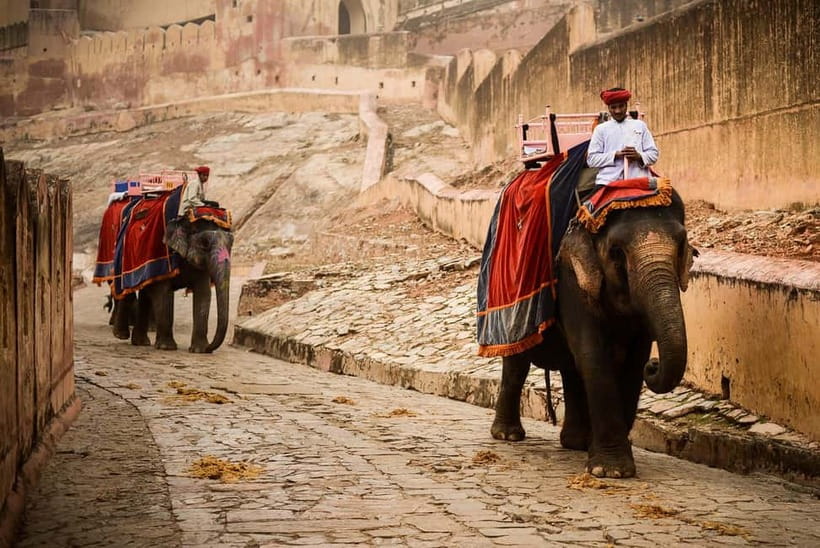
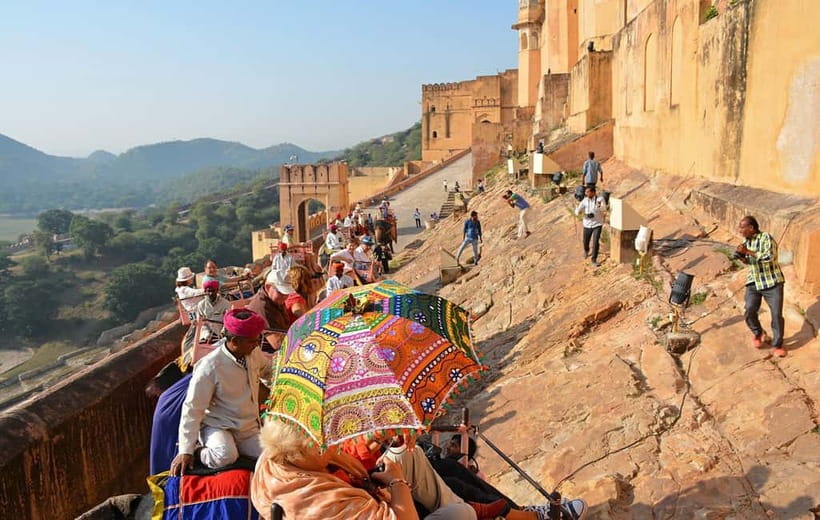
Every Jaipur day tour needs an anchor, and Amber Fort is the obvious one. It sits on rugged hills outside the city, which means you’re heading away from flat street-level touring. You get about two hours here, plus photo stop time and self-guided walking.
This is where comfortable shoes earn their keep. You’ll be on uneven surfaces and stairs, and you’ll want to keep your feet happy. Also remember the dress code: smart casual is safest, and for temple areas inside the fort zone, avoid clothing that feels too revealing.
Amber Fort rewards patience. Instead of trying to see everything in a sprint, slow down for a handful of viewpoints and keep your eyes open for fort design details and court atmospheres. Two hours is a sweet spot for a self-guided visit: enough time to enjoy it without feeling like you missed half of it.
If you’re sensitive to walking or stairs, plan your pace. This is the segment where you’ll feel the effort the most. The overall tour isn’t marketed for people with heart problems, and the fort area is a big reason why.
Shopping time that fits the day: jewelry, textiles, and blue pottery
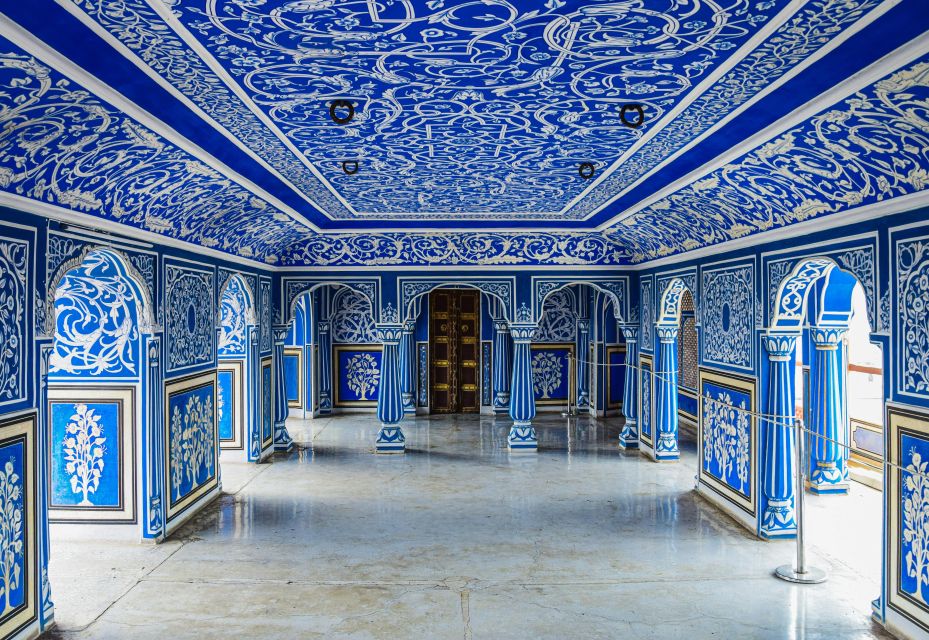
Later, the tour builds in time for shopping in Jaipur. This is not a hard-sell market crawl—it’s an afternoon window where you can browse at your speed and focus on items you actually care about.
Expect an assortment that’s very Jaipur: gemstones, silver jewelry, bangles, clothes, blue pottery, and textiles. If you’re shopping for gifts, this is a practical moment because you’re already in the right city for it, with a driver to get you back.
A good way to use this time is to decide on one category first. Pick either jewelry, textiles, or ceramics, and treat the rest as bonus browsing. Otherwise, it’s easy to drift and end up overwhelmed.
Also, double-check what you can carry comfortably. The tour has luggage limits, so buying something bulky can turn into a hassle. Think smaller, lighter purchases during this window.
Price and what you truly get for about $12
At around $12 per person for an 8-hour private tour, the value comes from what’s included. You’re paying for transportation with hotel pickup and drop, plus bottled water and the operational costs that often get tacked on later—fuel, parking, tolls, interstate taxes, and GST.
What’s not included is also crucial. Monument entrance fees, camera fees, and any national park entrance fees are extra if applicable. If you’re budgeting, assume you’ll pay at least some fees at the major sites like City Palace and Amber Fort. Bring cash or a card and keep that in mind so you don’t feel surprised mid-day.
In other words: the $12 price mostly covers getting you between the highlights with a professional driver and a tight schedule. It’s a smart deal if you want a one-day greatest-hits sampler and you’d rather spend your attention on sightseeing than on logistics.
And you’re not locked into a group pace. Private transport means you can slow down at one place and speed through another without negotiating with strangers.
Best-fit travelers and key limitations (so you don’t regret it)
This tour is built for people who like seeing multiple landmark types in one day: palace architecture, observatory science, lake scenery, and fort life. If you enjoy walking with a purpose and you’re comfortable with stair steps at Amber Fort, you’ll likely find it satisfying.
It isn’t a fit for everyone. It’s not suitable for wheelchair users, and it’s also listed as not suitable for people with heart problems. That’s not a small note; it’s a real warning sign for the physical demands of fort terrain and uneven ground.
There are also luggage rules. You can bring a maximum of one carry-on bag, and oversized or excessive luggage may face restrictions. Large bags and luggage aren’t the goal here, because the vehicle is designed for light day touring.
If you travel with pets, the answer is also no—pets aren’t allowed. And if you’re traveling with children, they must be accompanied by an adult.
Finally, keep an eye on your clothing choices. Smart casual is requested, and short shorts or sleeveless tops aren’t recommended at temples.
Should you book this Jaipur tuk-tuk day tour?
Book it if you want a simple, private way to hit Jaipur’s main icons—Hawa Mahal, Jantar Mantar, City Palace, Jal Mahal, and Amber Fort—without turning your trip into a transportation puzzle. I especially like that the day includes both big visuals and at least one calmer historic stop like Gaitor Ki Chhatriyan.
Skip it or choose another option if you need wheelchair access or if stair-and-walking demands are a concern for your health. Also factor in that entrance and camera fees aren’t included, so budget a bit extra once you arrive.
If you get a driver who keeps things punctual and offers practical tips—some past drivers (like Imran) are praised for being on time and guiding you through the day—you can turn this into an efficient, fun Jaipur highlight day rather than a rushed checklist.
FAQ
What time is hotel pickup in Jaipur?
Pickup is at 8:30 AM.
How long is the tour?
The duration is 8 hours.
What language is the driver?
The driver provides English-language support.
What’s included in the price?
Hotel/airport/railway station/bus station pickup and drop by tuk-tuk, bottled water, fuel/parking/tolls, and all government taxes (GST) are included.
Are monument entrance fees included?
No. Monument entrance fees and camera fees are not included.
Do I need to bring passport or ID?
Yes. A valid passport is required on the day of travel, and you should bring your passport or ID card.
Is there a dress code?
Smart casual is requested. Short shorts or sleeveless tops are not recommended in the temple.
Is there walking involved?
Yes. A moderate amount of walking is involved, so comfortable shoes are recommended.
Is this tour wheelchair-friendly?
No. It is not suitable for wheelchair users.
Can I cancel and get a refund?
Yes. Free cancellation is available up to 24 hours in advance for a full refund.