REVIEW · CITY TOURS
Jaipur City Tour by Tuk-Tuk
Book on Viator →Operated by Jaipur City Tour Travels · Bookable on Viator
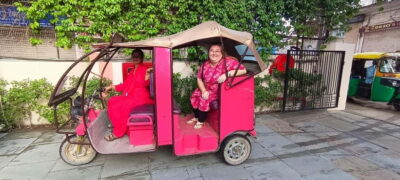
A tuk-tuk day in Jaipur feels fast and fun. This tour strings together major forts, palaces, and observatories with a relaxed ride, plus optional storytelling from local driver-guides.
I love two things most: you get roundtrip hotel/airport pickup and drop so you’re not wrestling with taxis, and you’re on a private auto-rickshaw that makes short stops feel easy. One thing to consider is that several top sights have entrance tickets not included unless you select that option, so plan a little extra for admissions.
You’ll also want to dress for Jaipur weather and sun, because your stops range from hilltop views to exposed museum time. The route works well for a full day, but the pace is still city pace—so if you hate crowds or long lines, choose your arrival timing wisely.
In This Review
- Key highlights to know before you go
- Why Jaipur’s best stops fit in one tuk-tuk day
- Amer Fort: the hilltop start that sets the tone
- Panna Meena ka Kund: a quick stepwell break that feels calming
- Jal Mahal: the lake-palace view stop that works in 15 minutes
- Royal Gaitor Tumbas and Jantar Mantar: where the past gets specific
- City Palace and Hawa Mahal: the heart of the Pink City
- Albert Hall Museum: the cultural bookend
- Price and tickets: where $6.80 really lands
- The guide quality factor: Shamshu and Salim set the tone
- Best times and practical comfort tips for your 8-hour route
- Who this tuk-tuk tour is for (and who might skip it)
- Should you book the Jaipur City Tour by Tuk-Tuk?
- FAQ
- How long is the Jaipur City Tour by Tuk-Tuk?
- What does the tour cost?
- Is the tour private or shared?
- Do I get hotel pickup and drop-off?
- Is a guide included?
- Are monument entrance tickets included?
- Does the tour include meals?
- Do I need to worry about transportation once I’m picked up?
- Will I get a ticket after booking?
- Is cancellation allowed if the weather is poor?
Key highlights to know before you go
- Hotel/airport pickup and drop within city limits keeps your day simple
- Private tuk-tuk means your route and timing stay flexible
- Amer + stepwell + lake palace gives you variety in a single loop
- Jantar Mantar and City Palace add big “wow” for anyone into history and design
- Guide-driver names like Shamshu and Salim show you’ll get local context and confidence
- Entrance tickets are optional, not automatically included for every monument
Why Jaipur’s best stops fit in one tuk-tuk day
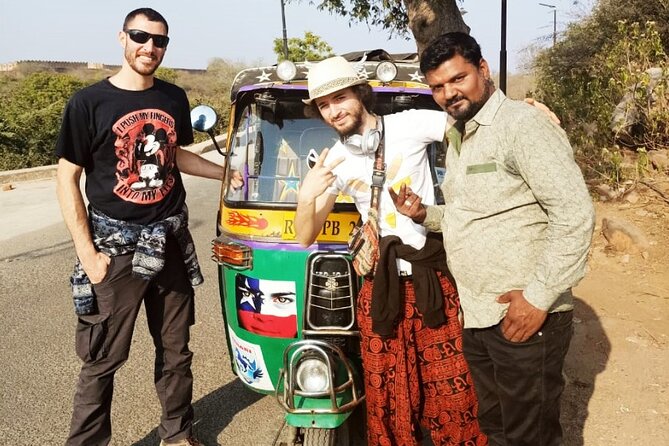
Jaipur can feel huge once you’re on the ground, but this tour organizes it like a single circuit. You start with hotel/airport pickup and spend roughly eight hours bouncing between Amer, the Pink City core, and major landmarks without spending your day negotiating rides.
The best part is how the tuk-tuk changes the mood. You’re close to the street, you get little bursts of city life as you pass through, and your driver can turn the day into a story instead of a checklist. In the helpful way local guides like Shamshu describe what you’re seeing, you start to understand why each building looks the way it does—especially once forts and palaces start sharing common design ideas.
The other practical win: some stops are free entry (like Amer and a few others on the route). Then, for the paid sights, you’re not stuck guessing what’s next. That means you can pace your budget instead of being surprised at each gate.
You can also read our reviews of more city tours in Jaipur

Amer Fort: the hilltop start that sets the tone

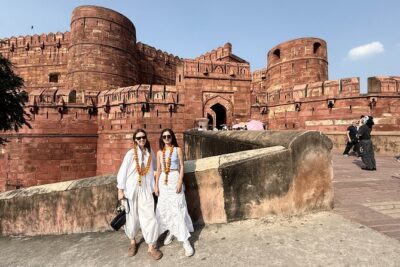
Amer is the big opening act. It’s about 11 kilometers from Jaipur city, and the tour allots around two hours for Amer Fort with free admission tickets listed for this stop. You go up to the Aravalli hills, and the architecture is the kind you feel right away—strong lines, layered spaces, and a palace-fort vibe that makes everything else make more sense later.
What I like about starting here: it establishes the city’s power story early. Then, when you move through stepwells, observatories, and palace courtyards later, you’re not just looking—you’re seeing patterns in how rulers planned space, water, and view corridors.
A small consideration: Amer is a longer stop. If you’re sensitive to walking uphill or to sun, wear real sunscreen and comfortable shoes, and plan water breaks. The tour gives you time, but it’s still a fort on a hill.
Panna Meena ka Kund: a quick stepwell break that feels calming

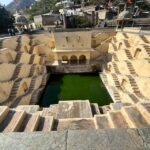
Next comes Panna Meena ka Kund, a 16th-century stepwell and one of those places you can pause and actually breathe. You’ll have about 30 minutes, and this stop is listed as free admission.
Why it’s worth your time: stepwells are more than a photo stop. They were designed for water access and used the geometry of steps to create a structure that’s both practical and visually striking. The symmetry and repetition make it easier to focus, especially when Jaipur’s main sights can feel busy back-to-back.
This is also a good mental reset. After forts and palaces, a calm water structure gives your brain a breather—so when the day shifts back to grand buildings, you’re still fresh.
Jal Mahal: the lake-palace view stop that works in 15 minutes
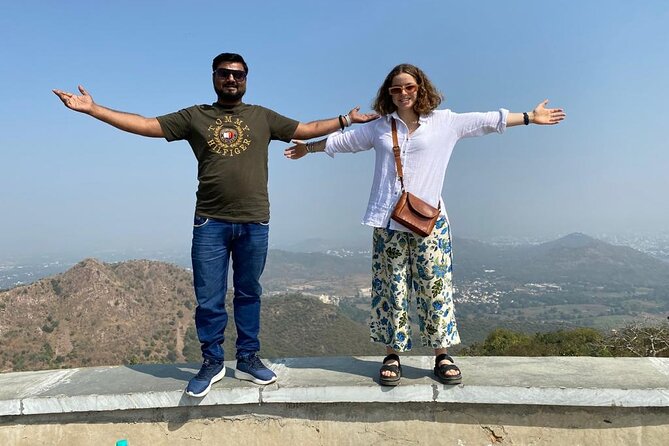
Then you get a quick hit of scenery at Jal Mahal on Man Sagar Lake. The tour schedules about 15 minutes and lists free admission.
You’re not spending hours here, and that’s okay. Jal Mahal’s value is the framing: a palace-like silhouette sitting in a lake setting, with Rajputana-style design influences. Even in a short stop, you can usually find a decent angle to take in how the building sits in the landscape.
Practical tip: because it’s a view stop, your best photos depend on light and weather that day. If the sky is clear, you’ll likely get sharper reflections and contrast. If not, just enjoy it as a pause rather than chasing perfect pictures.
Royal Gaitor Tumbas and Jantar Mantar: where the past gets specific
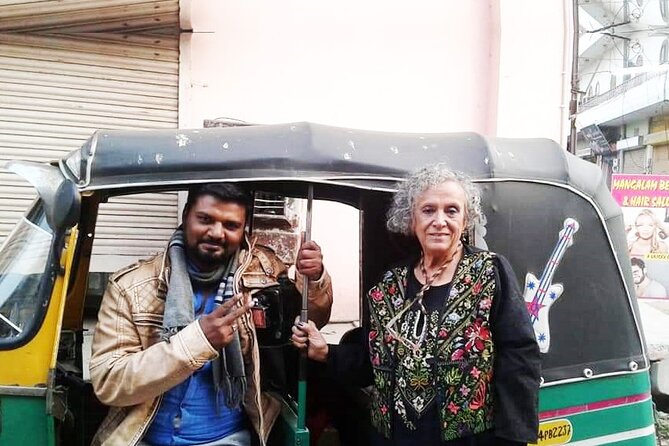
After the lake scene, the tour shifts into deeper “place meaning.” Royal Gaitor Tumbas is allotted about 45 minutes. Admission here is not included by default.
Gaitor connects to the Kacchhawa dynasty, which ruled Jaipur from 1727 AD to 1947 AD. You’re looking at tombs and mausoleums that were preserved and maintained, so it feels less like a ruin and more like a landmark with a continuing cultural presence. It’s a quieter stop than the big palace buildings, and that contrast is actually good for your pacing.
Then you move to Jantar Mantar (about 45 minutes), the Jaipur astronomical observatory built in 1729 by Sawai Jai Singh II. Again, admission is not included. This is one of those places where design is science. The structures look like sculpture until you understand they were built to measure and observe.
If you have a driver who’s willing to explain what you’re seeing, you’ll get more out of those instruments. The tone from drivers like Salim, who are confident and know good local stops and pricing, can make this part feel less technical and more understandable.




City Palace and Hawa Mahal: the heart of the Pink City
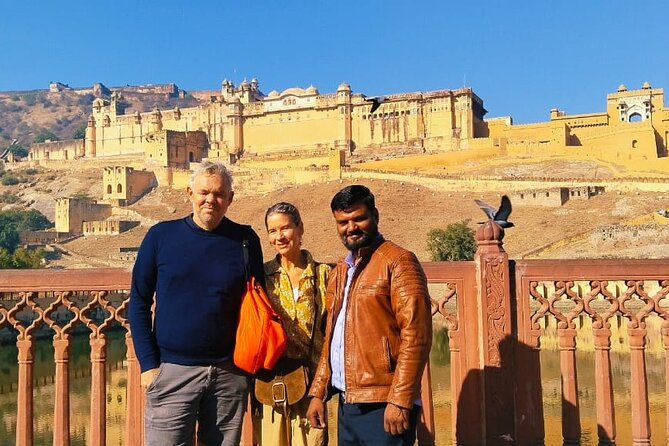
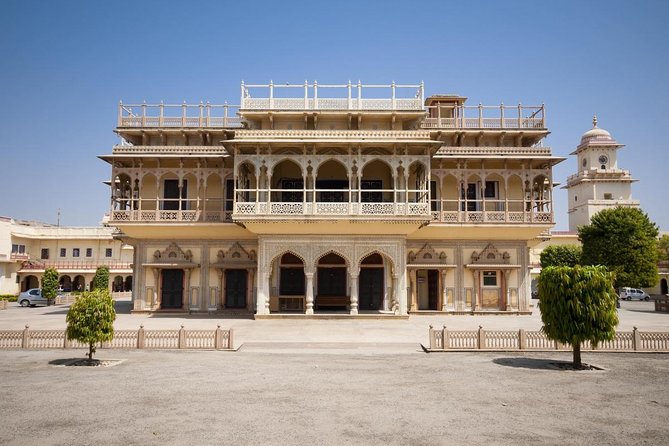
Now you’re in the historic core. City Palace is scheduled for about two hours, and admission is not included. The building is described as a stunning blend of Rajput and Mughal architecture, and it’s right in the heart of Jaipur’s Pink City area. This is the stop where you’ll notice both grandeur and practical court-life planning in the layout.
If you like architecture that tells you who held power and how they lived, spend your time slowly here. Don’t rush the inner viewpoints, and don’t just snap quick exteriors. This stop is the payoff for the story your day has been building since Amer.
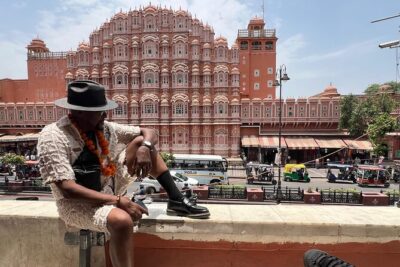
Then comes Hawa Mahal—the Palace of Breeze—about 45 minutes. Admission is not included. You’ll see the iconic pink sandstone façade with white limewash motifs and the honeycomb-like screen design that’s meant to catch and manage airflow. The design also gives visitors a reason to look closely: it’s not one flat wall; it’s a pattern that changes the feel depending on your angle.
A useful way to experience it: treat Hawa Mahal as both a photo and a design lesson. If you come out thinking only about photos, you miss the point of why it’s such a signature façade.
Albert Hall Museum: the cultural bookend
To close the day, you visit Albert Hall Museum for about one hour. Admission is not included.
The museum’s strength is breadth. You’ll see artifacts ranging across paintings and jewelry, carpets, ivory sculptures, stone works in crystal, and coins tied to periods such as the Gupta, Kushan, Delhi Sultanate, and Mughal eras. That range makes it a good final stop because it connects monuments you just saw with the objects and crafts that carried cultural ideas forward.
If you’re short on energy near the end of the day, you can still get value by picking a few sections to focus on rather than trying to see everything. One focused hour in a museum is often more satisfying than trying to race through.
Price and tickets: where $6.80 really lands
The headline price—$6.80 per person—is surprisingly low for a full-day plan that includes private tuk-tuk, pickup and drop within city limits, fuel, parking fees, and taxes. For your money, you’re paying for transport plus time-saving organization.
The main thing that can change your total cost is monument entry. On the route, some stops are marked as admission ticket free (like Amer, Panna Meena ka Kund, and Jal Mahal). Other major sites—Royal Gaitor Tumbas, Jantar Mantar, City Palace, Hawa Mahal, and Albert Hall Museum—are listed as not included unless you select an option for entrance tickets.
So here’s the smart way to think about value: if you want a low-friction day with fewer payments at gates, pick the entrance-ticket option if offered. If you’d rather manage costs on your own, you can still do it, but set aside budget for multiple paid admissions.
Also, you’ll often benefit from group discounts, and confirmation is sent at booking with a mobile ticket included. That matters because it reduces the hassle of figuring out where to be and when.
The guide quality factor: Shamshu and Salim set the tone
In Jaipur, the difference between a “saw it” day and a “got it” day is often the person in the seat. The tour’s format can give you that, especially with driver-guides who explain context and keep your day flowing.
Two names stand out in the experience description: Shamshu and Salim. With Shamshu, the vibe is relaxed and story-driven—more follow-and-learn than sprint-and-snap. With Salim, the emphasis is on confidence, plus practical guidance like knowing good places and having smart local address knowledge, including confidence around quality and pricing.
You don’t need a script to enjoy this tour, but you do need someone who understands how to move between stops without wasting time. The tuk-tuk format makes that easier, and the driver’s local skill becomes part of your sightseeing.
Best times and practical comfort tips for your 8-hour route
This is an outdoor-heavy day with a mix of hilltop and open-view stops. The tour also notes that it requires good weather, so if conditions are rough, you may be offered another date or a full refund.
For comfort, keep it simple:
- Wear breathable clothes, and plan for sun exposure at exposed viewpoints like Amer and Hawa Mahal.
- Use comfortable shoes you trust for uneven surfaces and indoor floors at forts/palaces/museums.
- If meals aren’t included, plan where you’ll eat so you’re not hungry when you reach City Palace or the museum.
One more useful thought: because the tour is private and group-sized to your party, you can ask your driver to shape your pace around your energy level. The stops have time windows, but you can still decide how quickly you move inside each site.
Who this tuk-tuk tour is for (and who might skip it)
This tour is a great match if you want big-name Jaipur monuments in one day and you value transport that’s already planned. It works well for couples, small families, and solo travelers who want a local driver instead of driving and parking on your own.
It’s also ideal if you like the idea of learning as you go—especially if your driver gives context rather than just pointing. The names Shamshu and Salim are a good sign that the human part of this experience matters.
You might consider skipping (or adjusting) if you strongly prefer spending lots of time inside each paid attraction. Since several key sites have admissions not included by default, you’ll likely want to choose your priorities and budget accordingly.
Should you book the Jaipur City Tour by Tuk-Tuk?
Book it if you want a low-stress, full-day loop that covers Amer, the Pink City highlights, major architecture, and a museum finish—without spending your day on logistics. The pickup/drop, private tuk-tuk, and inclusion of fuel/parking/taxes make the value feel real.
Hold off if you hate paying multiple monument entries on top of the base price. In that case, check whether the entrance-ticket option is available for the sights that matter most to you.
If you like a day that balances iconic landmarks with manageable pacing, this is a very sensible way to see Jaipur in one go—especially with a driver who’s confident, friendly, and willing to talk through what you’re looking at.
FAQ
How long is the Jaipur City Tour by Tuk-Tuk?
The tour runs about 8 hours (approx.), with time at each stop such as Amer (about 2 hours) and City Palace (about 2 hours).
What does the tour cost?
The price is listed as $6.80 per person.
Is the tour private or shared?
It’s a private tour/activity, meaning only your group participates.
Do I get hotel pickup and drop-off?
Yes. The tour includes hotel/airport pickup and drop (within city limits).
Is a guide included?
A tour guide is an option available.
Are monument entrance tickets included?
Some stops are listed as admission ticket free, while several others are listed as not included. There’s also an option to select monument entrance tickets.
Does the tour include meals?
No. Meals are not included.
Do I need to worry about transportation once I’m picked up?
No. The tour provides the private tuk-tuk and covers fuel charge and parking fees, so you mainly focus on visiting.
Will I get a ticket after booking?
Yes. You get a mobile ticket, and confirmation is received at booking.
Is cancellation allowed if the weather is poor?
The experience requires good weather. If it’s canceled due to poor weather, you’ll be offered a different date or a full refund, and free cancellation is available up to 24 hours in advance.