REVIEW · AMBER FORT & CITY PALACE TOURS
Jaipur Rickshaw Tour Jantar Mantar City Palace
Book on Viator →Operated by City Palace Jaipur Guide · Bookable on Viator
Jaipur’s architecture tells stories fast. This private tour lets you see three big hitters in one run: the City Palace, the honeycombed facade of Hawa Mahal, and the UNESCO-listed stone “time” instruments of Jantar Mantar with a local expert guiding the meaning as you go. I like the practical setup for a smoother day, including pickup by air-conditioned vehicle, and I especially like that the guide helps you focus on what matters instead of wandering room to room. The main thing to plan around: entrance tickets aren’t included in the base price, and the experience runs best with good weather.
Because it’s private, the pace is yours. You can take photos, ask questions in English, Spanish, or Hindi, and you won’t get swept into someone else’s schedule. The day can run from about 3 hours up to a full 20 hours, so build your plans loosely and don’t stack other commitments right after your tour ends at the meeting point.
In This Review
- Key highlights to know before you go
- The value play: $20 and what that includes (and what it doesn’t)
- City Palace of Jaipur: walking from gateways to royal courtyards
- Hawa Mahal at street level: what those 953 windows really mean
- Jantar Mantar: the stone observatory where shadows do the work
- The flow of a private half-day to full-day: how to pace yourself
- Why a local expert changes the whole experience
- Logistics you can rely on: pickup, parking, and mobile tickets
- Who this tour suits best (and who should skip it)
- Should you book this Jaipur City Palace, Hawa Mahal, and Jantar Mantar tour?
- FAQ
- How much does the tour cost?
- Is pickup included?
- Is this tour private?
- Are entrance tickets included?
- What are the visiting hours?
- What languages are available for the guided tour?
- What happens if weather is poor?
- Can I cancel for free?
Key highlights to know before you go

- Private, guided routing across City Palace, Hawa Mahal, and Jantar Mantar
- Hawa Mahal’s 953 jharokhas get explained beyond the postcard view
- Jantar Mantar as a UNESCO World Heritage Site, where shadows and measurements are the point
- Pickup and drop-off by air-conditioned vehicle, plus parking fees handled
- Mobile ticket and confirmation at booking for easier arrival
The value play: $20 and what that includes (and what it doesn’t)
The advertised price is $20.00 per person, and the experience includes private transportation and parking fees. That matters in Jaipur, where moving between major sights can eat time if you’re trying to figure out logistics on your own. You also get a local guide, which is the real engine of the day: you’re not just checking boxes, you’re learning what you’re looking at as you look at it.
What’s not included is the entrance ticket. The listing notes an entrance fee of $20.00 per booking, and it also says entry ticket assistance may be available. Translation for your planning: think of this as a guided “how to see it” tour, with museum and monument access costs handled separately. If you’re trying to keep the total spend down, factor that add-on in from the start.
Finally, this is a “good weather” experience. If conditions are poor, you should expect a different date or a full refund. If you’re traveling during monsoon season or you’re hitting Jaipur during unpredictable swings, keep your day flexible.
You can also read our reviews of more city tours in Jaipur


City Palace of Jaipur: walking from gateways to royal courtyards
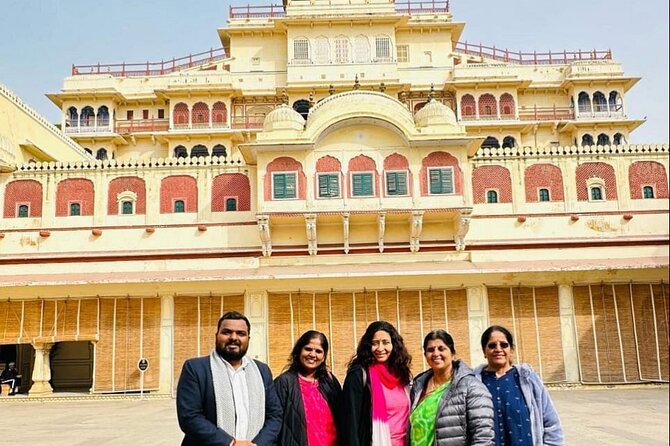
Your tour starts at the City Palace area (Gangori Bazaar / J.D.A. Market / Kanwar Nagar). City Palace is where Jaipur’s royal identity feels most physical: you move through grand gateways into courtyards and palace spaces where the whole complex reads like a living museum.
What I like about this stop is that the guide helps you interpret the complex instead of treating it like a checklist. The itinerary specifically calls out Mubarak Mahal, including its role connected to royal costumes, plus the general idea of museums and grand courtyards. In practice, that means you should expect your time to be spent on the areas most likely to make sense with context.
Time note: the City Palace stop is listed at about 1 hour. If you’re the type who wants extra time inside museums, you might feel rushed unless the rest of the day has room to stretch. On the flip side, if your goal is to see the main sights without turning the day into a marathon, an hour with a focused guide can be the right rhythm.
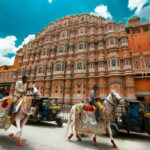
Hawa Mahal at street level: what those 953 windows really mean
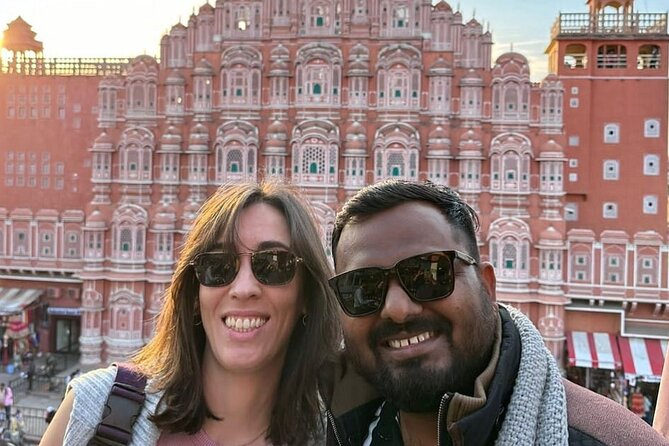
Then you head to Hawa Mahal, the famous Palace of Wind. Yes, it’s one of India’s most photographed facades, and yes, it’s dramatic from the outside. But the itinerary gives you a detail that’s more useful than it sounds: Hawa Mahal has 953 intricate jharokhas, and the guide’s job is to help you understand the building beyond the silhouette.
Here’s what that means for your visit. You can stand there taking photos for a long time, but without context, it’s easy to miss what makes the place tick. With a guide, you’re more likely to notice patterns and design logic tied to how the palace was used. The description also notes that Hawa Mahal was designed for royal ladies to observe street life discreetly, which is the key idea to carry while you look at the lattice windows.
The Hawa Mahal stop is also listed at about 1 hour, and that’s probably the right amount of time if you want photos plus explanation. If you’re arriving with heat fatigue, this is still a strong stop because the exterior is the star and you’re not locked into a long indoor schedule.
One practical consideration: Hawa Mahal is extremely photo-friendly, so you may want to time your shots for quieter moments within your guide’s plan. If you care about getting clean angles, ask your guide where to position yourself while you’re there.
Jantar Mantar: the stone observatory where shadows do the work
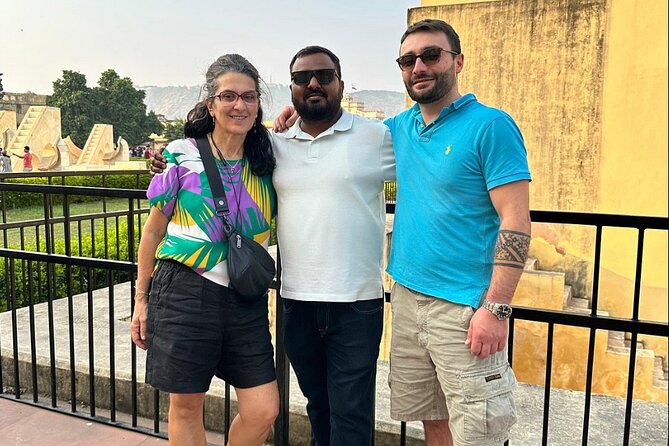
Your third major stop is Jantar Mantar, described as the world’s largest stone observatory and also a UNESCO World Heritage Site. This is where Jaipur gets its science identity, and the guided angle is a big part of why Jantar Mantar is worth doing with someone local.
The tour description emphasizes a core concept: time is measured by shadows. That may sound abstract until you’re standing in the space and someone explains how the instruments relate to the light and movement around you. With a guide, you’re not just looking at stones; you’re learning what each instrument is intended to measure and why the geometry matters.
Jantar Mantar is also listed at about 1 hour. If you’re a curious person who likes to connect what you see to how it works, that hour can feel satisfying rather than quick. If you’re more in sightseeing mode and less in explanation mode, you can still enjoy it because the instruments are visually strong and easy to photograph—but the value rises sharply with the guide’s narration.
The flow of a private half-day to full-day: how to pace yourself
One unusual detail here is the duration: 3 to 20 hours (approx.) That’s a huge range, and it’s not random. It likely reflects differences in how long you linger at each site, how much time you spend inside museums, and whether you choose to slow down for photos and questions.
In real terms, plan for a longer window than you think you need. Even if the itinerary lists each stop at roughly an hour, you’ll still have travel time between places, plus time to handle anything related to entry. Your tour includes private transportation, which helps keep that from turning into a time sink.
If you like structure but still want freedom, you’ll likely enjoy this. It’s private, you get a local expert, and you’re not trapped in a large group pace. But if your schedule is tight, ask yourself whether you can handle flexibility. A tour that can run longer than a typical half-day is great only if you can absorb the extra time.




Why a local expert changes the whole experience

The consistently praised element across feedback is simple: the guide. The guide is described as helpful and knowledgeable, and people also highlight that the team was on time and communicated in advance with questions. That combination matters more than it sounds.
At these three sites, the challenge isn’t seeing them. The challenge is understanding them while you’re there. City Palace works best when you know why specific areas matter. Hawa Mahal becomes more than a facade when you understand its function and design intent. Jantar Mantar clicks when someone ties the instruments to shadow timing rather than treating it like a random sculpture park.
So if you’re someone who likes “why this exists” answers, this tour design is a good match. If you’re more of a wander-and-photo person, you’ll still enjoy it, but you’ll get more from the day by asking your guide questions instead of keeping it quiet.
Logistics you can rely on: pickup, parking, and mobile tickets
This is a private tour/activity, meaning only your group participates. That’s a major comfort factor. You’re less likely to feel rushed, and your guide can adjust the order or pace if you want more time at one stop.
Your tour also includes private transportation and parking fees, which is one of those unglamorous benefits that saves real time. You’re not doing the mental math of where to park, how to re-find your vehicle, or how to get back to the start.
The tour uses a mobile ticket, and the meeting point is clearly listed in the City Palace area. The activity ends back at that meeting point, which keeps the day from turning into an awkward end-of-tour navigation problem.
Who this tour suits best (and who should skip it)

This is a strong fit if you’re a history and architecture fan, or if you want a photography day with context. City Palace, Hawa Mahal, and Jantar Mantar are different styles of Jaipur at once—royal residence, decorative facade, and scientific instruments. A guided private route helps you connect the dots quickly.
It also fits well if you want a manageable plan. Each stop is about an hour, so you’re not committing to a full-day museum slog. And because most travelers can participate, it’s broadly workable for couples, solo visitors, and small groups.
You might not love it if you only want an ultra-flexible “do everything at your own pace” day. The stops are structured, and the value depends on the guide’s ability to add meaning in limited time.
Should you book this Jaipur City Palace, Hawa Mahal, and Jantar Mantar tour?
I’d book it if you want three top Jaipur sights handled in a way that stays readable, not chaotic. The price is reasonable for a private guided day, and the guide quality is the part that keeps showing up in feedback. If you care about understanding what you’re seeing—especially at Jantar Mantar and the 953 jharokhas of Hawa Mahal—this tour is designed to help you get more out of your photos and your walking.
I’d think twice if you’re trying to squeeze Jaipur into a very tight schedule, or if you dislike spending extra on entrance fees. Also, keep an eye on weather; this experience favors conditions that let you enjoy the outdoors without stress.
If you’re flexible and you want your day to feel guided rather than random, this is a smart way to do Jaipur’s big three.
FAQ
How much does the tour cost?
The tour price is listed as $20.00 per person.
Is pickup included?
Pickup is offered, and the tour includes air-conditioned vehicle transportation for hotel pickup and drop-off.
Is this tour private?
Yes. It’s a private tour/activity, so only your group participates.
Are entrance tickets included?
No. Entrance is listed as not included, with an entrance fee shown as $20.00 per booking. Assistance with entry tickets may be available.
What are the visiting hours?
The activity opening hours are listed as 9:30 AM to 5:00 PM, Monday through Sunday.
What languages are available for the guided tour?
The tour is available in English, Spanish, and Hindi.
What happens if weather is poor?
This experience requires good weather. If it’s canceled due to poor weather, you’ll be offered a different date or a full refund.
Can I cancel for free?
Yes. Free cancellation is offered, with cancellation possible up to 24 hours in advance for a full refund.