REVIEW · AMBER FORT & CITY PALACE TOURS
Jaipur Tour with Monkey Temple and Block Print Experience
Book on Viator →Operated by Jaipur Tour And Travel · Bookable on Viator
Jaipur in one long, well-paced morning. I like how this route mixes markets, monuments, and hands-on crafts without turning your day into a sprint. You’ll start with the Flower Market, then work your way through major landmarks, a stop at the hilltop Monkey Temple, and a block printing session.
Two things I’d put near the top: the comfort of a private AC vehicle with an English-speaking driver (many people specifically mention Samir or Naseeb), and the chance to see block printing techniques up close at Ramgarhmode.
One thing to consider: several major sights are marked as admission not included (like City Palace, Hawa Mahal, Royal Gaitor Tumbas, and the Monkey Temple), so you may need extra cash or to choose an option that includes tickets.
In This Review
- Key highlights worth planning around
- How this Jaipur route works in real life
- Flower Market: what you’ll see (and how to enjoy it)
- City Palace and Hawa Mahal: quick hits for major Jaipur photos
- Royal Gaitor Tumbas, Jal Mahal, and Panna Meena ka Kund
- Amer (2 hours): a UNESCO site without a whole-day commitment
- Ramgarhmode block printing: seeing the craft up close
- Galtaji Monkey Temple: sacred springs and the real monkey factor
- Price and logistics: is $16.99 really good value?
- Driver quality matters more than you think here
- Who this tour fits best (and who should consider alternatives)
- Should you book this Jaipur tour?
- FAQ
- How long is the Jaipur tour?
- Is hotel or airport pickup and drop-off included?
- Is this a private tour?
- Does the tour include block printing?
- Do you visit the Monkey Temple?
- Are monument entrance fees included?
- Are meals included?
- Do I get a mobile ticket and are group discounts available?
Key highlights worth planning around
- Flower Market first thing gives you real sights, smells, and photo angles before the day gets busy
- City Palace + Hawa Mahal are quick hits that still deliver big “Jaipur look”
- Panna Meena ka Kund stepwell is a smart break from forts and palaces
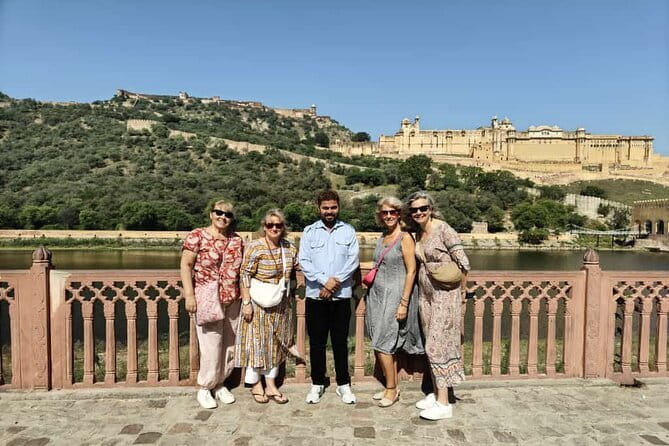
- Amer in about 2 hours lets you see the UNESCO-listed fort area without committing to a full day
- Ramgarhmode block printing adds a craft stop that’s more than a photo stop
- Galtaji Monkey Temple brings spiritual sites and live monkey activity to the same day
How this Jaipur route works in real life

This is an easy way to get your bearings in Jaipur. Instead of picking one giant monument and waiting in line for hours, you get a stack of stops that feel connected: markets → royal landmarks → quieter monuments → Amer → craft → Galtaji. The timing is designed for seeing a lot, with short to medium visits at most places.
The big practical advantage is transportation. You’re in a private AC vehicle with pickup and drop-off, plus bottled water, fuel, parking, and taxes handled. That matters in Jaipur, because distance adds up fast and streets can be slow. With an English-speaking driver, you can ask questions on the go and get context while you move.
Keep expectations realistic: this is not a “slow travel” itinerary. Some sites are short stops, and some are pass-by/photo points (like Jal Mahal). If you’re the type who wants to linger inside every building, plan to pay for extra time on your own later.
You can also read our reviews of more tours and experiences in Jaipur.
Flower Market: what you’ll see (and how to enjoy it)
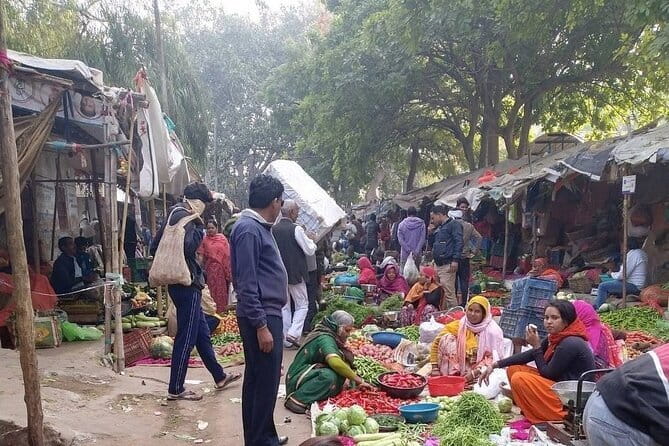
The morning Flower Market is the kind of stop that resets your senses. You’ll walk through stalls where fresh blooms are traded in a way that feels local and immediate. Even if you’re not shopping, you’ll still get a lot out of the sensory input—color, scent, and the simple fact that this is day-to-day life.
To enjoy this stop the most, keep your camera ready but don’t block sellers while you shoot. In markets like this, a few steps off to the side makes you more comfortable and keeps the flow going for everyone.
This is also a good start time for photos. The market gets you color early, and then the rest of the day shifts into palaces, temples, and stonework—so your brain doesn’t feel like it’s repeating the same visual theme for 8 hours straight.
City Palace and Hawa Mahal: quick hits for major Jaipur photos
After the market, the tour pivots to two of Jaipur’s signature names.
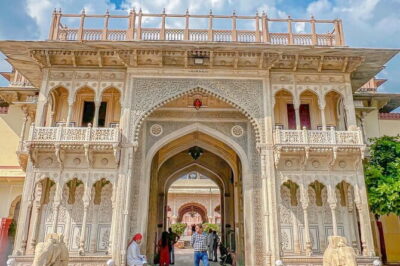
At City Palace, you get a classic mix of Rajput and Mughal architecture, with courtyards, royal halls, and museum collections. The main value here is orientation: once you see City Palace, you understand why Jaipur looks the way it does—formal, designed, and built for display.
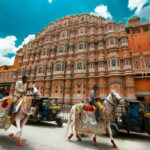
Then comes Hawa Mahal, the Palace of Breeze. You’ll be there long enough to appreciate the famous honeycomb façade with lots of small windows and balconies. For many people, the biggest payoff is the outside view and the way the façade rises like a screen.
Two practical tips:
- Wear shoes that handle uneven stone or smooth floors. You’ll be walking in multiple locations.
- If you hate crowds, think about where you’ll stand for photos so you’re not constantly repositioning.
Note: admission for City Palace and Hawa Mahal is marked as not included in the itinerary, so budget for tickets if you want to enter the buildings.
Royal Gaitor Tumbas, Jal Mahal, and Panna Meena ka Kund
This section is where the day slows down in a good way. Instead of only forts and royal buildings, you get monuments that feel more like memory and ritual.
Royal Gaitor Tumbas are cenotaphs (chhatris) tied to the Maharajas. They’re made of marble and stone and set in a calmer setting than the busiest landmarks. The value here is atmosphere: it’s quieter, more contemplative, and the architecture is the star.
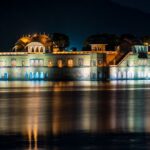
Then there’s Jal Mahal, the Water Palace. You won’t be spending a long time here. The tour is set up to pass by, with the goal being to catch that “floating in the lake” look. It’s a photo-and-views moment, not a deep visit.
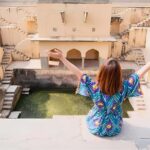
The standout practical stop is Panna Meena ka Kund, a stepwell dating to the 16th century. It’s described as an architectural marvel and a place where locals gathered. When you’re tired of looking up at fort walls and palace façades, a stepwell brings everything closer to eye level. You can also spot the structure without feeling like you need a full guided lecture to get it.
This cluster works well because each stop changes your perspective:
- royal memorials
- water palace sightline
- stepped architecture you can actually walk around and study
Amer (2 hours): a UNESCO site without a whole-day commitment
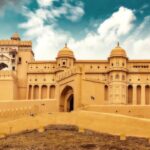
Amer is the big “this is Rajasthan” moment in this tour. You’ll have about 2 hours here, which is enough time to see the fort area and the kinds of details people come for—especially the large-scale architecture and the way the site sits in the landscape.
The itinerary frames Amer as a historic town near Jaipur and highlights the Amer castle as UNESCO World Heritage. The key benefit of this format is time control. You get a meaningful taste of Amer without turning your day into a full-day fort marathon.
What to plan for:
- Expect some walking and uneven surfaces.
- Bring water with you after leaving the vehicle.
- If you’re sensitive to sun and heat, plan your photo time carefully. The stops earlier in the day help you because you’re not starting Amer under the harshest light.
If you’re deciding between short and long visits around Jaipur, this is one of the better “short-but-real” ways to include Amer.



Ramgarhmode block printing: seeing the craft up close
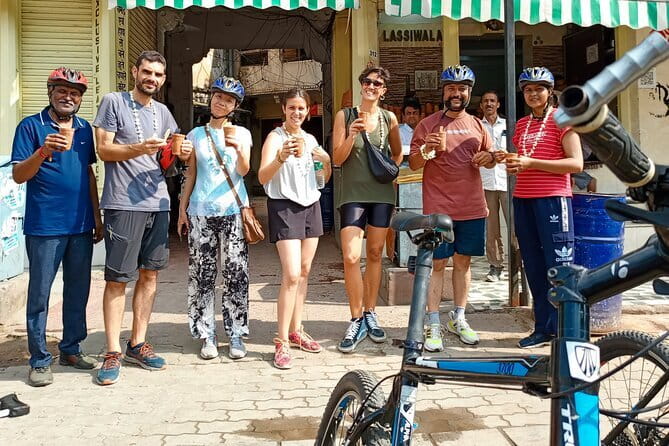
This tour adds a cultural craft stop that’s not just window-dressing. At Ramgarhmode, you’ll get a block printing demonstration from skilled artisans. You’ll learn about the process and how the techniques work—this is where the day becomes less about monuments and more about something you can understand with your hands and eyes.
Even in 30 minutes, block printing hits a sweet spot:
- You see the tools and the repeated steps.
- You can connect the final patterns to the labor behind them.
- You get a break from climbing steps and walking courtyards.
Quick advice if you want to make this stop worthwhile: don’t only aim for photos. If you’re curious, ask the simplest question you can think of—how the printing is lined up, how designs are transferred, or how colors are prepared. Those are the kinds of questions that lead to better explanations, and the craft becomes more than a sales pitch.
Galtaji Monkey Temple: sacred springs and the real monkey factor
The last major cultural stop is Galtaji (Monkey) Temple, also called the Monkey Temple. It’s a pilgrimage site in the hills near Jaipur, known for its temples and sacred springs, plus lively resident monkeys.
This is a different kind of experience than the palace and fort stops. It’s more active. You’ll be around animals and people moving through a holy setting, so expect energy rather than silence.
How to handle the monkey factor safely and respectfully:
- Keep your hands and bags secured. Don’t leave snacks or loose items dangling.
- Watch your footing around steps and uneven ground.
- If a monkey approaches, don’t chase or try to outsmart it. Give it space and let it pass.
Admission for the Monkey Temple is listed as not included, so plan for that ticket if you want entry. Also, because it’s a hill setting, you may want to wear clothes and shoes that let you move easily.
Price and logistics: is $16.99 really good value?
At $16.99 per person, the price is all about what you get that you usually end up paying for separately.
You’re paying for:
- hotel/airport pickup and drop-off
- a private AC vehicle
- bottled water
- fuel, parking, and taxes
- and entrance fees only in cases where a selected option includes them
Then the itinerary adds meaningful value: multiple major Jaipur sights plus Amer plus the block printing demonstration. Even if you buy a few tickets during the day (since several are marked not included), the overall structure still feels like a cost-effective way to cover a lot of ground.
One caution: the day includes several spots where admission isn’t included (City Palace, Hawa Mahal, Royal Gaitor Tumbas, and Monkey Temple). So the total out-of-pocket can rise based on what you choose to enter. If you want to minimize surprises, go in assuming you’ll pay some entry fees.
Also worth noting: this is a private activity, meaning only your group participates. That usually translates into fewer delays and a smoother schedule than shared-group tours.
Driver quality matters more than you think here
In Jaipur, the driver is part guide, part traffic manager, and part reality checker. The reviews associated with this tour give you a clear pattern: people rate the experience highly when the driver is punctual, speaks strong English, drives calmly, and keeps the vehicle clean.
Names that show up again and again include Samir and Naseeb (sometimes written as Nasib). What stands out in those comments is how professional they feel: on-time pickup, smooth communication, and careful driving even when roads get bumpy.
So here’s my advice: when you book, take a moment to confirm pickup time and location clearly. A tour that starts on time lets you see the market early and protects your full itinerary.
Who this tour fits best (and who should consider alternatives)
This is a strong match for you if:
- You want a structured way to see Jaipur quickly
- You like markets, architecture, and at least one craft experience
- You value comfort and easy pickup/drop-off
- You want someone to explain what you’re seeing as you go
It’s less ideal if:
- You want long, slow visits inside every monument
- You dislike animal-involved temple settings (Galtaji is known for active monkeys)
- You’re on a super tight budget and don’t want any chance of extra entry fees
If you’re the type who likes to return later on your own for deeper exploring, this tour works perfectly as a first “taste” day.
Should you book this Jaipur tour?
Book it if you want a smart, efficient day that covers the big Jaipur names, a real stepwell, Amer, a block printing demonstration, and Galtaji—without fighting traffic or building a route from scratch.
Skip or rethink it only if you know you hate short stops and you want hours inside each site. This itinerary is built for movement and variety, not for lingering.
If you do book, pack comfortable shoes, bring a little extra cash for admissions at sites marked not included, and show up ready for a day that mixes royal stone, working-market life, and a craft you can actually learn from. That combo is why this tour format works.
FAQ
How long is the Jaipur tour?
The duration is listed as about 8 hours.
Is hotel or airport pickup and drop-off included?
Yes. Pickup and drop-off are included.
Is this a private tour?
Yes. It’s described as private, with only your group participating.
Does the tour include block printing?
Yes. You’ll have a block printing experience at Ramgarhmode with a demonstration by artisans.
Do you visit the Monkey Temple?
Yes. The itinerary includes Galtaji (Monkey) Temple, with about 1 hour there.
Are monument entrance fees included?
Some admissions are marked as not included in the itinerary (for example City Palace, Hawa Mahal, Royal Gaitor Tumbas, and the Monkey Temple). Entrance fees are listed as included only if the option is selected.
Are meals included?
No. Meals are not included.
Do I get a mobile ticket and are group discounts available?
Yes. The tour includes a mobile ticket, and group discounts are mentioned as available.