REVIEW · PRIVATE CITY SIGHTSEEING TOURS
Private Full-Day Jaipur Sightseeing Tour by Tuk-Tuk
Book on Viator →Operated by Tuk Tuk Safari · Bookable on Viator
Jaipur in a single day, on a tuk-tuk. This full-day private drive is a fast, practical way to see major landmarks like Hawa Mahal, City Palace, Jantar Mantar, and the hilltop Amber Fort without wasting time figuring out transport.
I especially like the private setup, which means you can move at your pace instead of being rushed with a crowd. I also appreciate the round-trip hotel pickup and the practical extras that keep the day smooth: bottled water, fuel, parking, and taxes handled.
One key consideration: several of the top stops require extra entrance tickets (City Palace and Jantar Mantar/Hawa Mahal are the big ones). Budget for those add-ons so the day stays good value, and you’ll also want to confirm the tuk-tuk’s power type if that matters to you.
In This Review
- Key things to know before you go
- Why a private tuk-tuk makes sense in Jaipur
- Price and what you really get for $7.27 per person
- First stops: Jantar Mantar and Hawa Mahal in a tight, efficient rhythm
- City Palace: where Jaipur’s royal story still lives
- Jal Mahal: a short scenic stop that breaks up the day
- Amber Fort (Amer): the hilltop you don’t want to rush
- Royal Gaitor Tumbas: a quieter royal stop under Nahargarh
- Galtaji (Monkey Temple): pink stone, pavilions, and shade breaks
- Timing, tickets, and the practical stuff that affects your day
- Who this tour fits best
- Should you book this Jaipur private full-day tuk-tuk tour?
- FAQ
- What is the duration of the Private Full-Day Jaipur Sightseeing Tour by Tuk-Tuk?
- Does the tour include hotel pickup and drop-off?
- What’s included in the tour price?
- Are food and drinks included?
- Which entrance fees are not included for key stops?
- Is this tour private?
Key things to know before you go
- Private means your pace: It’s only your group, so you can linger longer where you want.
- Tuk-tuk navigation in tight streets: It’s a non-polluting way to move around Jaipur’s narrower areas.
- Big hitters in one sweep: Jantar Mantar, Hawa Mahal, City Palace, Amber Fort, plus a couple quieter stops.
- Plan for entrance fees: Some monuments are included as free stops, but others are ticketed.
- Short photo-friendly moments: Jal Mahal works well as a quick scenic break without stealing the whole day.
- You start and end at your hotel: Pickup/drop reduces day-of stress.
Why a private tuk-tuk makes sense in Jaipur
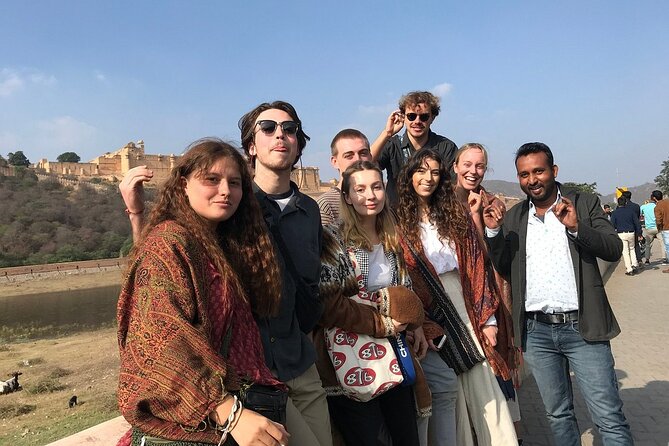
If you’ve ever tried to cover Jaipur under your own steam, you know the friction: distances add up, traffic shifts, and the streets can feel narrow and chaotic at peak times. A dedicated tuk-tuk solves a lot of that. You’re not negotiating rides back and forth between attractions. You’re just moving when it’s time to move.
The best part is that this is a private tour, not a shared bus day. That matters at places like City Palace, where you might want time to wander slowly. It also matters at Amber Fort, where your feet may want more breaks than a standard group pace.
Also, this is a non-polluting option. That’s not just marketing. It’s a practical choice for staying flexible in the parts of the city where regular vehicles can feel like a hassle.
You can also read our reviews of more private tours in Jaipur

Price and what you really get for $7.27 per person

On paper, the price looks strikingly low. The catch is that not every entrance fee is included. Your money is going into the parts that remove hassle: round-trip hotel pickup, private tuk-tuk transportation, and the operational costs like fuel and parking.
Here’s how I’d think about value:
- You’re paying for time-saving logistics. That’s worth real money if you’d otherwise spend it on transport and waiting.
- You’re paying for a private day. You’re not splitting attention with other groups.
- You’re not paying for certain monument tickets. Those are separate.
Entrance fees you should budget for:
- City Palace: INR 700 per person
- Jantar Mantar: INR 200 per person
- Hawa Mahal: INR 200 per person
- Royal Gaitor: INR 50 per person
Other stops in the route are listed as free (Jal Mahal, Amber Fort/Amer, and Galtaji Temple). When you add those ticketed costs to your plan, the overall value still works for most people—especially if you want to see a lot and you don’t want to coordinate transport yourself.
First stops: Jantar Mantar and Hawa Mahal in a tight, efficient rhythm

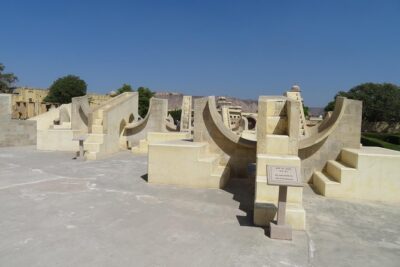
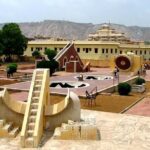
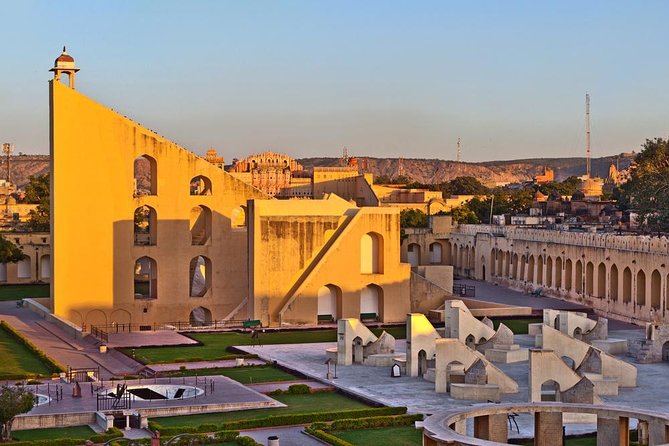
You start with Jantar Mantar, a Rajput-era observatory built by Sawai Jai Singh and completed in 1738 CE. The standout detail here is the sheer specificity of the site: it has nineteen architectural astronomical instruments. It’s the kind of place that rewards curiosity more than brute force sightseeing. If you take a little time to read and look around, you’ll leave feeling like you actually learned something.
One practical note: the Jantar Mantar visit is listed at about 1 hour, and the ticket is not included. With that time window, plan to focus on the main instruments rather than trying to study every corner.
Next is Hawa Mahal (Palace of Wind), built in 1799 by Sawai Pratap Singh. This is one of those Jaipur sights you’ve probably seen in photos for years, but seeing it up close is different because you notice the details in the facade and the idea behind it. The design let royal members observe everyday life from its many tiers and curved arches.
Hawa Mahal is also ticketed (INR 200 per person), and the stop is listed as about 1 hour. That’s enough time to appreciate the exterior and get some good views, but don’t count on endless wandering inside.
If you’re sensitive to heat, this is also a good part of the day to treat as a steady moving block. You’ll be spending most of your energy outdoors, so a hat and water habits matter.
City Palace: where Jaipur’s royal story still lives
Your route continues to City Palace of Jaipur, and this is the stop where I’d expect the biggest range in how people enjoy it. City Palace is designed by Maharaja Sawai Jai Singh and it remains a major landmark because the royal family still lives there today.
The visit time is listed as about 2 hours, which is helpful. City Palace isn’t just one view. It’s more of a layered experience: you can take it slowly, look for details, and shift your focus depending on whether you’re into architecture, museum-style rooms, or simply the atmosphere of a living royal complex.
The entrance fee is separate: INR 700 per person. That’s a noticeable chunk compared with the smaller sites in the route. I think it’s still worth budgeting for if you want the full picture of Jaipur beyond forts and street scenes.
Practical tip: since the tour provides transport but not food, plan your energy around this stop. If you skip lunch, City Palace can feel long. If you eat lightly earlier, you’ll enjoy it more.
Jal Mahal: a short scenic stop that breaks up the day
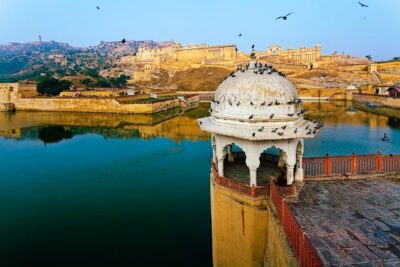
Between the city sights and the hill fort, you’ll pass Jal Mahal, the Water Palace located in the middle of Man Sagar Lake. This is one of those places where you don’t need long time to get the payoff. The listing gives it about 30 minutes, and the stop is free.
The value of this stop is not deep ticketed sightseeing. It’s a visual palate cleanser. It also gives you a chance to take photos and reset before you switch into fort mode.
If you’re traveling in daylight that’s too harsh, try to time your photos as you’d normally do elsewhere: wait for softer angles or accept that the best shots may be from certain vantage points only.
You can also read our reviews of more tours and experiences in Jaipur



Amber Fort (Amer): the hilltop you don’t want to rush
Then you get to Amber Fort (Amer), a major highlight. It’s on rugged hills outside Jaipur, built with red sandstone and white marble. The most interesting detail, from a travel perspective, is that it reflects both Hindu and Muslim architectural influences.
You’re given about 2 hours here, and I think that’s a workable window if you don’t try to do everything at once. Amber Fort isn’t a place where speed gives you more. It’s a place where attention gives you value: walls, courtyards, and the overall scale.
One drawback possibility: fort days can turn into foot pain days if you show up without planning. Since the day includes multiple outdoor stops (and you’re not told about indoor rest areas for every stop), wear comfortable shoes and keep your pace realistic.
Also, because Amber Fort is listed as free in this route, your “cost friction” is lower here. You’re paying mainly through time and energy, not by ticket fees.
Royal Gaitor Tumbas: a quieter royal stop under Nahargarh
After the big draws, the route slows down with Royal Gaitor Tumbas, located beneath Nahargarh outside the city walls. This cenotaph area is described as tranquil and relatively undiscovered, which is travel-speak for: you may get breathing room if the rest of the day was intense.
The stop is listed as about 30 minutes. The entrance fee is INR 50 per person, so it’s not expensive, but it’s still something to remember for your budget.
If you love a calmer setting between major sites, this stop is a smart move. You’re not only seeing the headline attractions; you’re also getting a moment that feels less like a photo line and more like a slow wander.
Galtaji (Monkey Temple): pink stone, pavilions, and shade breaks
Your last stop is Galtaji Temple, also known as the Monkey Temple. It’s made from pink stone and includes multiple pavilions with rounded roofs, carved pillars, and painted walls.
This is another short listed visit at about 30 minutes, with the stop marked as free in this route. That short time window can be a plus. By the end of a long day, a concise visit prevents the classic problem: you end up physically tired and mentally distracted, and you miss the feeling of a place.
If you’re sensitive to crowds, this is one of the stops where your experience could vary based on the time of day. Still, the structure details and the color of the stone are the kind of things that remain satisfying even when you’re rushing.
Timing, tickets, and the practical stuff that affects your day
This tour runs about 8 hours. That’s enough time to hit the major Jaipur icons, but it’s also long enough that you should plan for fatigue. The difference between enjoying a day like this and just getting through it is usually how you handle downtime.
Ticket rhythm matters:
- Some sites are free.
- Others require separate tickets on the spot.
- City Palace is the biggest paid cost.
You’ll want to decide early whether you’re treating this as a mostly sightseeing day (with some photo stops) or as a deeper monument day. The tour times suggest a balance: you get real time at City Palace and Amber Fort, and shorter windows at the other landmarks.
Comfort and transport notes:
- The tuk-tuk is described as non-polluting and made for moving around the city.
- One review note mentions the tuk-tuk wasn’t electric. If you’re sensitive to comfort or noise, I’d treat that as a good prompt to confirm vehicle details before you go.
Food and water:
- Food and drink are not included.
- Bottled water is included, which is helpful in Jaipur heat.
Who this tour fits best
This is a strong match if you want:
- A private day that doesn’t feel like you’re stuck in someone else’s schedule
- To see the major Jaipur landmarks in one go
- Hotel pickup/drop so you avoid day-of transport stress
- A mix of big-ticket sights (City Palace, Amber Fort) plus shorter stops (Jal Mahal, Royal Gaitor, Galtaji)
It may be less ideal if:
- You hate paying separate entrance fees and want everything fully included
- You’d rather spend a whole day at one site instead of covering many
Families should note: children must be accompanied by an adult, and the tour says most travelers can participate. If your group has mobility concerns, you’ll want to use your own judgment since multiple stops involve walking and outdoor time.
Should you book this Jaipur private full-day tuk-tuk tour?
I’d book it if your priority is efficiency with flexibility. You’re getting a private day, transport handled, and a lineup that covers both the iconic Jaipur images (Hawa Mahal, Amber Fort) and the less hurried feeling stops (Royal Gaitor, Galtaji).
I’d think twice if entrance fees would stress your budget. City Palace and the two ticketed observatory/palace stops are where costs land. Still, if you want the highlights without juggling tickets and directions, the tuk-tuk approach makes the day feel easier than self-guided.
FAQ
What is the duration of the Private Full-Day Jaipur Sightseeing Tour by Tuk-Tuk?
The tour runs for about 8 hours.
Does the tour include hotel pickup and drop-off?
Yes. Hotel (and airport/railway station) pickup and drop-off are included.
What’s included in the tour price?
The tour includes a private tuk-tuk for Jaipur sightseeing, fuel, parking charges, other taxes, and bottled water.
Are food and drinks included?
No. Food and drink are not included.
Which entrance fees are not included for key stops?
City Palace entrance is INR 700 per person. Royal Gaitor entrance is INR 50 per person. Jantar Mantar and Hawa Mahal entrance are each INR 200 per person.
Is this tour private?
Yes. It’s a private tour/activity, so only your group will participate.
If you’d like, tell me what month (and roughly what time of day) you’re going in Jaipur, and I’ll suggest the smartest way to budget ticket costs and pacing for that season.