REVIEW · PRIVATE CITY SIGHTSEEING TOURS
Jaipur Sightseeing
Book on Viator →Operated by Divine Private Tours · Bookable on Viator
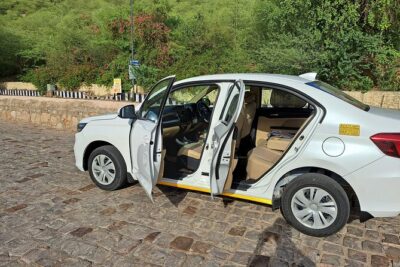
Jaipur clicks faster with a good driver. This private sightseeing outing keeps things comfortable with an air-conditioned car and a disciplined, safety-minded approach, so you’re not stressed between stops. I also like that the pace mixes quick cultural sights with longer time at the big hitter, Amer Fort, with a calm plan from start to finish.
Two things I’d highlight are the straightforward pickup flexibility (hotel, airport, railway station, or another location) and the way the tour is built around efficient sightseeing windows, including several stops where entry is free. One consideration: the famous forts and palaces you’ll want to go inside often have separate entry tickets not included, so you should budget for that.
In This Review
- Key Highlights You’ll Feel Immediately
- A Smooth, Private Way to Start Your Jaipur Day
- Pickup and Timing That Actually Helps
- The Amer Area: Jagat Shiromani Ji Temple and Panna Meena ka Kund
- Amer Fort: The Main Event and How to Use Your Time
- Jal Mahal: Short Visit, Strong Visual Impact
- City Palace and Jantar Mantar: Two Different Kinds of Genius
- Hawa Mahal: Fast Photos, Big Texture
- Royal Gaitor Tombs and the Market Moment at Bapu Bazar
- Price and Value: What You’re Really Paying For
- Driver Quality: Friendly, Polite, and Sometimes Variable
- Who This Tour Fits Best
- Should You Book This Jaipur Sightseeing Tour?
- FAQ
- What is included in the Jaipur sightseeing price?
- How long is the tour, and is it private?
- What pickup options do you have in Jaipur?
- Do I need to buy tickets for places like Amer Fort and City Palace?
- Will I receive a ticket on my phone?
- Is there free cancellation?
Key Highlights You’ll Feel Immediately
- Private ride with air-conditioning so heat and traffic don’t wreck your day
- Pickup from almost anywhere in Jaipur (hotel, airport, railway station, or your chosen spot)
- A smart mix of stop lengths: short photo moments plus longer time at Amer Fort
- Several free admission sights that help keep your overall costs down
- Major Jaipur icons, grouped efficiently to reduce backtracking
- Ask for the guide-style explanations you want at each stop, not just dropped-off photos
A Smooth, Private Way to Start Your Jaipur Day
If you’re short on time, Jaipur can feel like a lot. You’ve got forts on hills, city monuments in the middle of traffic, and markets where you’ll want to linger. This tour helps because it runs like a direct plan: a dedicated driver, an AC car, and a route that strings together top sights without making you figure out transit on your own.
You also get the kind of practical support that matters more than people think: safety-first driving, and a calm workflow that reduces rushing. The tour is set up for small groups (up to four), which makes it easier to ask questions and adjust on the fly if you need a quick breather.
That said, not every stop is equal. Some are quick and primarily for exterior views or short visits, while others like Amer Fort are the reason you’re here. Going in with the right expectations keeps the day fun, not frustrating.
You can also read our reviews of more tours and experiences in Jaipur.


Pickup and Timing That Actually Helps
The tour runs roughly eight hours, and it’s scheduled within a broad daily window (10:00 AM to 6:00 PM, Monday through Sunday). That timing is useful because Jaipur’s late afternoon can get uncomfortable, so starting in the daytime gives you better light for photos and more comfortable walking.
I like that pickup can happen from your hotel, airport, or railway station, or another location you want. That flexibility makes it easier if your schedule changes or you’re arriving mid-day. You’ll also use a mobile ticket, which is a simple win—less paper, fewer hassles.
One small tip for you: when you book, make sure your pickup address and contact details are crystal clear. A private tour works best when you’re easy to find.
The Amer Area: Jagat Shiromani Ji Temple and Panna Meena ka Kund

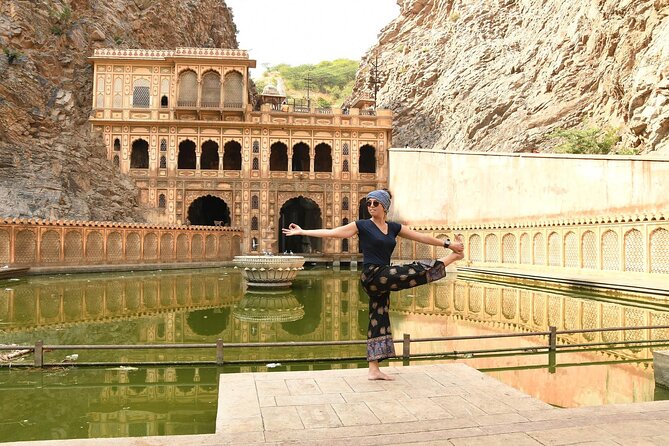
The early stops matter because they set the tone. Near Amer Fort you’ll visit Jagat Shiromani Ji Temple, a site known for its architecture and for having two main entrances. With about 15 minutes, you’re not meant to treat this like a long museum visit. Instead, it’s a quick cultural pause, good for getting a feel for the area before you climb into the main fortress zone.
Next comes Panna Meena ka Kund, a historic step well and rainwater catchment. The big draw is the geometry: the stairways create a symmetrical look that photographs well. You’ll typically have around 20 minutes here, which is enough time to walk around, get angles, and appreciate how this structure was designed to capture and manage water.
Why these two stops work early: they give you variety without exhausting you. Temples and step wells are calmer walking environments than forts in full midday heat, so it’s a good warm-up before Amer Fort.
Amer Fort: The Main Event and How to Use Your Time
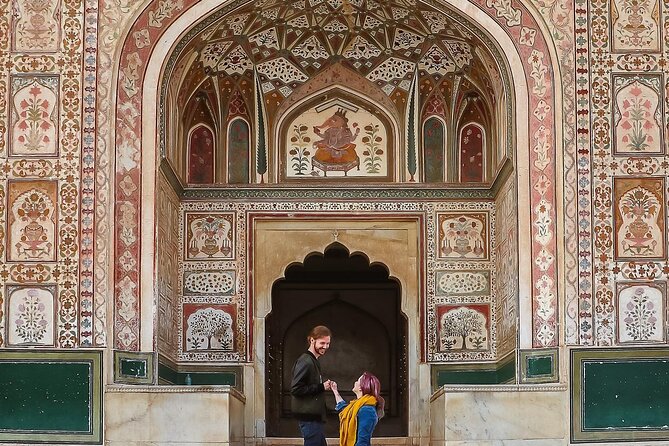
Then you reach Amer Fort (Amber Fort), and this is where the tour earns its name. You’ll get about 2 hours on site, and entry tickets are not included, so plan ahead. Amer Fort sits on a hill about 11 kilometers from Jaipur, which means you’ll get that classic fortress feeling right away—walls, courtyards, and the sense of power from the elevation.
Here’s how to make your two hours count. Wear shoes you can walk in for uneven surfaces, and keep your camera handy but your eyes first. Amer is the kind of place where the best photos come after you slow down and look up at details like the structure layout and the way courtyards connect.
A balanced expectation: two hours is enough to see the highlights, but it’s not enough to feel like you lived here for a day. If you’re a must-see-all-fan, you may want to prioritize what matters most to you inside—then let the rest be “nice if you get to it.”
Jal Mahal: Short Visit, Strong Visual Impact
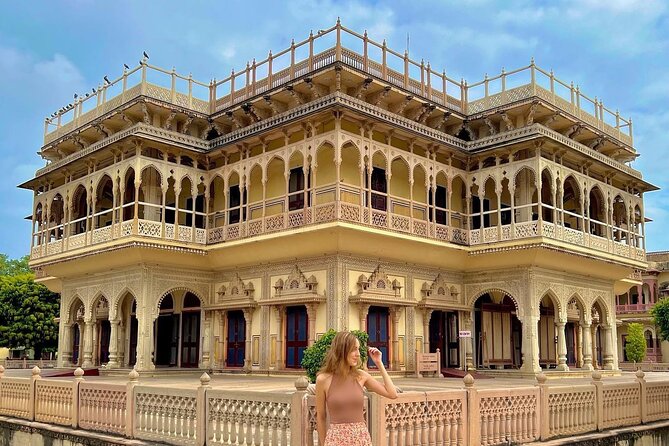
After Amer, the tour heads to Jal Mahal (Water Palace), set in the middle of Man Sagar Lake. You’ll usually have around 30 minutes here, and the admission is free. Even if you don’t spend much time at the water’s edge, the palace’s placement is instantly striking—built as a water setting, it looks like it belongs to the lake more than the land.
The palace and the lake around it were renovated and enlarged in the 18th century by Maharaja Jai Singh II of Amber, which helps you connect what you’re seeing to the story of the city’s rulers. With the short time, you’re mostly meant to view, photograph, and move on.
Practical tip for you: keep an eye on the light. Water surfaces can change quickly, and the best shots often come when the angle and brightness line up.




City Palace and Jantar Mantar: Two Different Kinds of Genius
Next up is City Palace of Jaipur, where you’ll have about one hour. Admission tickets are not included. The palace complex connects directly to the founding of Jaipur: Maharaja Sawai Jai Singh II established the palace after moving his court from Amber to Jaipur in 1727. That detail matters because it turns the stop from just a photo opportunity into a clearer chapter of why Jaipur exists in the way it does.
From there you’ll go to Jantar Mantar – Jaipur, a collection of nineteen architectural astronomical instruments built by Sawai Jai Singh II and completed in 1734. Admission is not included here either, and your stop is about an hour.
If you like science or just enjoy “how did they build that” moments, this is a fun contrast to the palace. Instead of royal rooms and courtyards, you get instruments designed to measure and track. You’ll likely get more from it if your driver gives explanations while you walk between instruments.
How to enjoy both City Palace and Jantar Mantar in one day: don’t try to memorize facts. Just focus on one idea at a time—royal power and city planning at City Palace, then observation and measurement at Jantar Mantar.
Hawa Mahal: Fast Photos, Big Texture
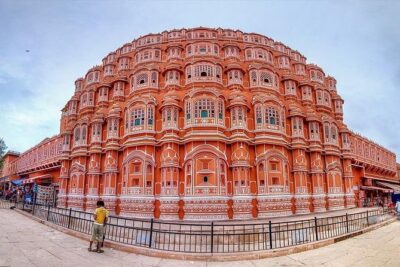
Then it’s Hawa Mahal (Palace of Wind) for about 15 minutes, with free admission. It’s made from red and pink sandstone and sits on the edge of the City Palace, extending to the zenana (women’s chambers). Even in a short stop, you can see why the façade became famous: the structure is designed with windows and perforations that create that signature look.
This is one of those places where the exterior experience is the point. You’re there long enough to see the shape, take photos, and understand the scale—but not long enough to treat it like a slow walking tour.
If you’re picky about photos, go early in the visit window and move carefully. Small changes in angle can make a big difference with Hawa Mahal’s patterns.
Royal Gaitor Tombs and the Market Moment at Bapu Bazar
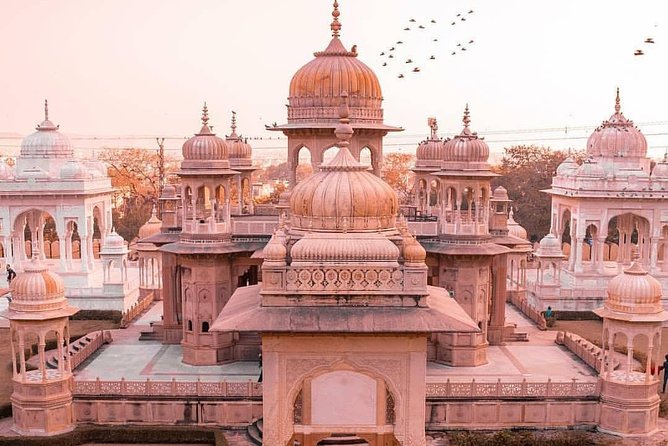
To round out the day, you’ll visit Royal Gaitor Tumbas for about one hour. Admission is not included. The tombs are known for chhatris—dome-shaped cupolas—especially ones made of white marble, with sandstone used in some chhatris. It’s a visual change from the desert-pink sandstone you’ll see elsewhere, and it gives you a quieter feeling in the itinerary.
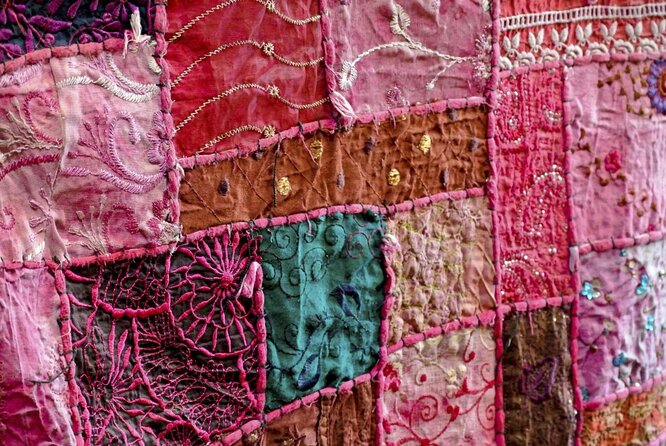
Finally comes Bapu Bazar, a local market stop (about 30 minutes). Admission is free, and this is where you can browse traditional outfits, handicrafts, antiques, footwear, jewelry pieces, and decorative items. The market stop is also paired with lunch time during the city portion, so you don’t have to hunt down food in the middle of tight sightseeing gaps.
Here’s the smart way to shop in a time-limited market: decide what you want before you arrive (shoes, small crafts, jewelry, gifts), then move quickly. If you drift, you’ll still find things—but you may lose time for the stuff you truly want.
Price and Value: What You’re Really Paying For
The price is listed per group (up to four people), around $39.14 per group, which is relatively low for a full eight-hour private ride. That’s the big value driver here: you’re paying mainly for the transportation and the planned routing, not a pile of paid admissions.
What keeps costs predictable is that all fees and taxes for the tour service are included, and pickup and AC transportation are part of the package. The parts that can change your personal budget are the entry tickets for forts and palaces, which are not included—Amer Fort, City Palace, and Jantar Mantar are explicitly listed as not included, and you should expect the other major interior sites to follow that pattern.
My advice: before you go, check the total you’ll spend on entry tickets for the interior parts you care about. This tour is a good deal if you’re okay doing some sights quickly and paying only for the places you want to enter.
Also remember: snacks are not included. Plan on bringing water or planning lunch inside the city tour timing.
Driver Quality: Friendly, Polite, and Sometimes Variable
This is where your day can make or break. The best experiences emphasize a professional company and a driver who stays serious about safety while being friendly and polite. One guide name that comes up in the strongest feedback is Hameed, described as giving good recommendations and clear information, and even helping with flexibility during the day.
That’s a sign of the tour’s potential: if you get the right driver-guide style, you’ll understand what you’re seeing faster and enjoy the day more, especially at places like Jantar Mantar where context helps.
Still, there’s at least one negative account tied to a guide-style mix-up—being met by a driver without the expected guiding support, confusion at a stop, and getting lost at Hawa Mahal. I can’t ignore that. Your best protection is simple:
- confirm who is guiding you (driver only vs guide-style narration)
- be clear about pickup location and first meeting point
- keep your phone charged and accessible for quick coordination
Most days should be smooth. Your job is just to reduce ambiguity.
Who This Tour Fits Best
This is a solid match if you:
- want a private day without juggling transit
- like seeing multiple Jaipur highlights in one loop
- don’t mind paying separate entry tickets for the interiors you want
- prefer a small group where questions are easier
It’s also a good fit for first-time visitors who want the classic “Jaipur greatest hits” without building an itinerary from scratch.
If you’re the type who wants long, deep, slow museum-style visits at every stop, this may feel a bit structured. The route moves, and some sites are short by design.
Should You Book This Jaipur Sightseeing Tour?
I’d book it if your goal is an efficient, comfortable day with a private ride, and you’re happy to handle separate entry tickets for major interiors. The price-to-duration ratio is strong, and the variety of stops (temple, step well, fort, water palace, astronomical instruments, palace façade, tombs, and a market) gives you a full Jaipur mix.
I’d hesitate only if you strongly need extended time at each site or if you’re worried about guide narration. If you book, set your expectations: quick stops are for orientation and photos, and the bigger sites take the time. Also, ask your provider to confirm who will guide you so your day doesn’t start with confusion.
FAQ
What is included in the Jaipur sightseeing price?
You get private transportation in an air-conditioned vehicle, and the tour price includes all fees and taxes. Snacks are not included, and entry tickets for forts and palaces are not included either.
How long is the tour, and is it private?
The duration is about 8 hours. It’s a private tour/activity, and it’s for only your group, up to 4 people.
What pickup options do you have in Jaipur?
Your driver can pick you up from your hotel, airport, railway station, or any desired location in Jaipur.
Do I need to buy tickets for places like Amer Fort and City Palace?
Yes. Amer Fort and City Palace are listed as admission not included, and Jantar Mantar is also listed as not included. Some stops like Jagat Shiromani Ji Temple, Panna Meena ka Kund, Jal Mahal, Hawa Mahal, and Bapu Bazar are listed as free.
Will I receive a ticket on my phone?
Yes. The tour includes a mobile ticket.
Is there free cancellation?
Yes. You can cancel for a full refund if you cancel up to 24 hours in advance of the experience start time.