REVIEW · CITY TOURS
Jaipur City Tour with Traditional Flower Market Visit
Book on Viator →Operated by Rajasthan India Tour Driver · Bookable on Viator
Flower scents and royal facades, in one day. I like how this Jaipur tour builds your morning around the flower and vegetable market walk, then strings together the city’s big landmark stops with a private AC car and local guide. You get a clear route through the Pink City without the usual navigation hassle.
My favorite part is that the day mixes iconic monuments with smaller, more specific sights, like the 16th-century Panna Meena Ka Kund stepwell and the cenotaphs at Royal Gaitor. The one thing to watch is the budget add-on: monument entrance fees are not included and are listed as $30 per person, plus any camera fees.
In This Review
- Why This Jaipur Tour Works So Well for One Big Day
- Private AC Car and a Friendly Driver: Fewer Headaches in the Pink City
- The 7:00–8:00 Flower Market Plan: A Morning You’ll Remember
- What to do with this time window
- Chai and Snacks at Local Food Stores: The Break That Keeps the Day Fun
- Amer: Sheesh Mahal Mirrors and Rajput-Mughal Details
- A practical note for Amer
- Panna Meena Ka Kund Stepwell: Small, Specific, and Worth the Stop
- If you like quiet moments
- Jal Mahal on Man Sagar Lake: The Palace That Lets You Breathe
- Royal Gaitor and Royal Cenotaphs: Stone Monuments with Real Detail
- Hawa Mahal Wind Palace: Architecture Tricks and Sacred Meaning
- How to enjoy it
- City Palace Complex and Living Royal Spaces
- Jantar Mantar: Astronomy That Feels Like Architecture
- Isarlat or Sargasuli Tower: A Viewpoint Built for Height
- Albert Hall Museum: Indo-Saracenic Style and State Museum Value
- Galtaji Temple: Pilgrimage Tanks and Hilltop Views
- What to expect at Galtaji
- Optional Market Time: Shopping for Fabrics, Sandals, and Bags
- What You’ll Actually Pay: Tour Price Versus Monument Entrance Fees
- Who Should Book This Jaipur City Tour
- Should You Book This Jaipur City Tour with the Flower Market Stop?
- FAQ
- What time slot includes the flower market?
- Is hotel pickup and drop-off included?
- Is this a private tour?
- Does the price include transportation?
- What food or drinks are included?
- Are monument entrance fees included?
- Are camera fees included?
- How long is the tour?
- What happens if the weather is poor?
- Can I cancel for free?
Why This Jaipur Tour Works So Well for One Big Day
- Morning flower-and-vegetable market walk with a stroll past an 18th-century heritage building
- Hawa Mahal photo stop first, then a walk toward the market before you start the wider circuit
- Tea-and-snacks break at older local food stores (masala chai plus samosa or kachori)
- A smart mix of major sights and quieter stops, from Amer to Panna Meena Ka Kund to Royal Gaitor
- A full guide-led flow that keeps you from bouncing between places on your own
Private AC Car and a Friendly Driver: Fewer Headaches in the Pink City

Jaipur can feel big fast. This is built for people who want to see a lot in one day without treating it like a self-made puzzle. Pickup and drop-off are included, and you travel by private transportation in an air-conditioned car.
A strong driver matters here. In the feedback for this tour, Vinod comes up as helpful, friendly, and professional, and that shows in how smoothly the day typically runs. Even if you do plenty of sightseeing trips, the advantage is still practical: you spend more time at the sights and less time managing traffic, entry lines, and logistics.
You can also read our reviews of more city tours in Jaipur

The 7:00–8:00 Flower Market Plan: A Morning You’ll Remember
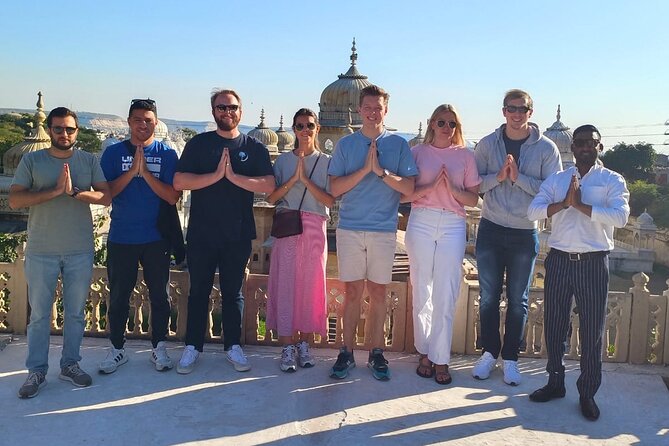
If you book the 7:00 AM to 8:00 AM time slot, your day starts with the flower and vegetable market, which is exactly the kind of local experience most people miss when they only chase monuments. Before the market walk, you get driven to Hawa Mahal for a photo opportunity.
Then you start walking toward the market. The route includes passing an 18th-century heritage building, which is a nice small detour that makes the morning feel more grounded in the city’s layers rather than just ticking off landmarks. You’ll learn about local ways of selling flowers and vegetables, so it’s not just a quick glance and gone.
What to do with this time window
Go with a flexible mindset. Markets reward curiosity, but they also mean you’ll be on your feet and navigating around stalls. Wear comfortable shoes and keep your camera ready, since the route is designed around short photo moments and then walking.
Chai and Snacks at Local Food Stores: The Break That Keeps the Day Fun
After the market visit, the tour takes you to the oldest local food stores to enjoy masala chai plus snacks, with options like samosa or kachori. This is one of the best value parts of the itinerary because it gives you a timed, guided pause instead of leaving you to find food on your own.
Also, the small set of included items helps you stay comfortable. Bottled water is included, and the tour includes complementary tea/coffee/lassi with the snacks. In a 9 to 10-hour day, that matters more than it sounds.
Amer: Sheesh Mahal Mirrors and Rajput-Mughal Details
Amer (about 11 km from Jaipur) is where Jaipur’s royal story feels physical. This stop is described as a historic town blending Mughal and Rajput architecture, and it’s packed with palaces, temples, and intricate carvings.
Two named highlights make Amer easier to focus on: Sheesh Mahal (Mirror Palace) and Sila Devi Temple. Sheesh Mahal is the kind of place where your eyes keep searching for patterns, so give yourself a little time and don’t rush the details. The Sila Devi Temple adds a spiritual layer that makes Amer feel more than just a scenic photo stop.
You can also read our reviews of more shopping tours in Jaipur





A practical note for Amer
Amer can involve stairs and uneven areas depending on where you’re walking. If you’re traveling with anyone who has mobility challenges, it’s smart to plan for a slower pace and let your guide know what feels comfortable.
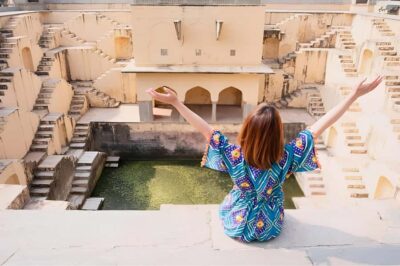
Panna Meena Ka Kund Stepwell: Small, Specific, and Worth the Stop
This is the kind of place that changes how you see Jaipur. Panna Meena Ka Kund is a 16th-century stepwell described as being in the shadow of a famous fortress. It’s a “less obvious” stop, which is exactly why I like it for people doing just one full-day tour.
A stepwell is also different from the typical palace-and-fort rhythm. Instead of royal rooms and court life, you’re looking at a piece of infrastructure tied to water and daily use, shaped into something beautiful over time.
If you like quiet moments
This stop is ideal when you want to step away from the most famous crowds and see something more specific. Expect less of a spectacle and more of a slow look.
Jal Mahal on Man Sagar Lake: The Palace That Lets You Breathe
Next up is Jal Mahal, the palace standing in the middle of Man Sagar Lake. It’s included as a sightseeing stop, and it serves a useful purpose in the route: it gives your eyes a break between heavier monument stops.
Jal Mahal is also great for quick photos and atmosphere. Even if the palace itself isn’t the longest stop, the lake setting gives you a different angle on Jaipur’s architecture, and it’s a good moment to slow down.
Royal Gaitor and Royal Cenotaphs: Stone Monuments with Real Detail
On the Nahargarh foothills, Royal Gaitor is described as a restful place. The centerpiece here is the cenotaph of Maharaja Pratap Singh, Madho Singh II, and Jai Singh II, with intricately carved stone monuments.
The guide focus is useful because Royal Gaitor is not only about seeing big names. It’s about understanding how the monuments are laid out and why certain marble features stand out. The description highlights that Maharaja Jai Singh II has the most impressive marble cenotaph, including a dome supported by 20 carved pillars.
If you like architecture that rewards attention, this stop is for you. It’s the opposite of a rushed photo-and-skip plan.
Hawa Mahal Wind Palace: Architecture Tricks and Sacred Meaning
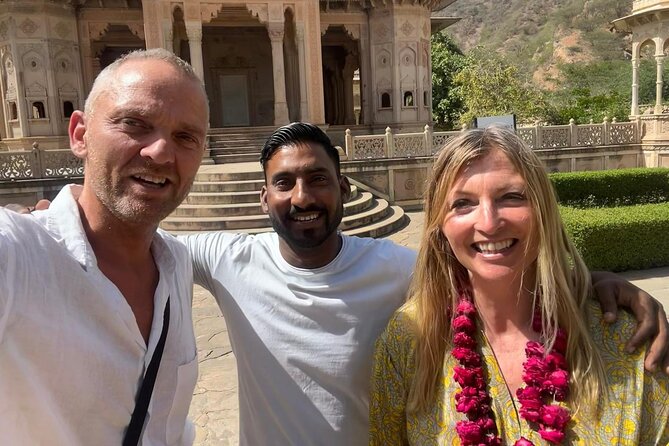
You’ll see Hawa Mahal twice in the day: first as a photo opportunity early on, and later as a full sightseeing stop. The tour describes it as a five-story building dedicated to Lord Krishna, known for its curved architecture and pyramidal shape.
One of the most memorable technical details is that it is described as the tallest building in the world built without a foundation, leaning at an 87-degree angle. Even if you don’t study the engineering, the effect is visible: it looks delicate, tall, and very deliberate.
How to enjoy it
When you arrive, take a minute to look at the facade from different angles. Then decide what you want to photograph: the overall structure or the detail patterns. This is a good stop for people who like to pause and analyze rather than just snap and move.
City Palace Complex and Living Royal Spaces
Inside the walled city, you’ll visit the City Palace Complex, conceived and built by Maharaja Sawai Jai Singh II. The description calls out a fusion of Mughal and Rajput architecture, and that mix is a major reason this stop is so satisfying.
Another key detail is that the palace is still home to the last ruling royal family, but in a private section. For your planning, that means you’re not walking through a totally abandoned museum. It’s an active historic space, and your experience will feel more layered.
Jantar Mantar: Astronomy That Feels Like Architecture
Jaipur’s Jantar Mantar is an early 18th-century astronomical observation site with a set of fixed instruments—about 20 main ones. If you normally skip “science monuments,” this can still work because the instruments are physical and geometric.
The big value here is perspective. Jaipur wasn’t only building for kings and ceremonies; it was building to measure the sky. That gives the day extra meaning beyond visuals.
Isarlat or Sargasuli Tower: A Viewpoint Built for Height
Isarlat (Sargasuli) Tower is described as a seven-storied historical heritage monument built in 1749 by Sawai Ishwari Singh. The tour includes panoramic city views from the top, which is where this stop pays off.
A tower visit is also a useful pacing tool. After walking the royal circuit, you get a viewpoint to reset your sense of direction and spacing in the city. Even short viewpoints change how you remember the route you just took.
Albert Hall Museum: Indo-Saracenic Style and State Museum Value
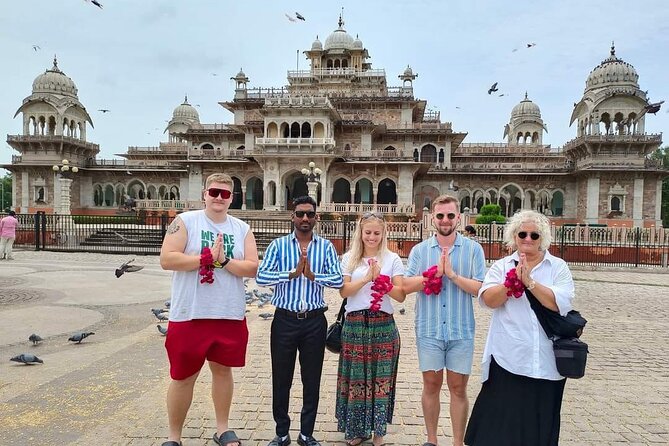
The Albert Hall Museum is described as the oldest museum of the state and it functions as the state museum of Rajasthan. The building is highlighted as Indo-Saracenic architecture and sits in Ram Niwas’s garden outside the city wall opposite New Gate.
This is a good match for you if you like when a monument trip includes objects and context, not only buildings. A museum stop also gives your feet a chance to rest, which is handy on a 9 to 10-hour itinerary.
Galtaji Temple: Pilgrimage Tanks and Hilltop Views
The final major spiritual stop is Galtaji, about 10 km from Jaipur. It’s described as an ancient Hindu pilgrimage site with a series of temples built into crevices of hills surrounding the city. Natural spring water flows down and fills sacred kunds (water tanks), where pilgrims bathe.
You can ascend further up to reach a hilltop temple with views across the valley floor, including Jaipur’s fortifications. The legend included here is that Saint Galav lived, meditated, and did penance at the site.
What to expect at Galtaji
This is a more active, sacred environment than the palaces. If you prefer quiet sightseeing, go with respectful attention. Also remember you’ll likely be walking on varied surfaces to reach higher viewpoints.
Optional Market Time: Shopping for Fabrics, Sandals, and Bags
After sightseeing, there’s an option to visit Jaipur’s markets for shopping. The tour notes you can find goods like fabrics, sandals, and bags, with low prices and quality.
This is where you should shop with a goal. If you’re browsing without a budget, the day can feel like a long detour. But if you know what you want, the driver can help you keep the market time efficient before heading back.
What You’ll Actually Pay: Tour Price Versus Monument Entrance Fees
The price listed is $13.59 per group (up to 3). That sounds low for a private, AC car itinerary that includes a local guide and covers a large circuit of sights. Still, you should budget for what’s not included.
- Monument entrance fees are extra: combined entry fees for Jaipur’s popular tourist monuments are listed at $30 per person.
- Camera fees are not included, and you may pay separately at monuments.
- Tips and gratuities are not included, though they’re recommended.
So the value equation is pretty clear. If you’re a small group and you’re okay paying entrance fees directly at the sites, you’re getting a lot of guided coverage for your base price. If you’re hoping to lock in a total cost with no surprises, you’ll want to add the listed $30 per person to your mental total.
Who Should Book This Jaipur City Tour
This one-day private tour fits best if you:
- Want a guided route through Jaipur’s key monuments without figuring out transport between them
- Like when a tour includes a morning local market experience, not only big-ticket attractions
- Enjoy architecture details, from Hawa Mahal’s wind-palace design to Jantar Mantar’s instruments
- Are traveling as a small group and value private car comfort
It might feel like a lot if you prefer slow travel and one or two major stops per day. This itinerary is designed for concentration: many sites, many transitions, and a steady pace across the city.
Should You Book This Jaipur City Tour with the Flower Market Stop?
I’d book it if your priority is a high-return day: flower market morning plus a full Jaipur highlights circuit with a local guide and private AC transport. The mix of major monuments and specific stops like Panna Meena Ka Kund and Royal Gaitor makes it feel more complete than the typical “only palaces” version.
I’d think twice if entrance fees and camera fees would stress your budget, since monument entry is listed at $30 per person and camera costs can add on. If you’re good with that and you want a structured day in Jaipur, this is a solid choice.
FAQ
What time slot includes the flower market?
If you select the time slot 7:00 AM to 8:00 AM, you’ll visit the flower & vegetable market in the morning.
Is hotel pickup and drop-off included?
Yes. Pickup from your hotel in Jaipur city and drop-off back at your hotel (or desired place in Jaipur) are included.
Is this a private tour?
Yes. It is a private tour/activity, and only your group participates.
Does the price include transportation?
It includes private transportation in an air-conditioned car, along with fuel, parking charges, and other taxes.
What food or drinks are included?
The tour includes complementary tea/coffee/lassi with snacks (samosa or kachori). Bottled water is also included.
Are monument entrance fees included?
No. Entrance fees are not included. The combined entry fees for Jaipur’s popular tourist monuments are listed at $30 per person.
Are camera fees included?
No. Camera fees at the monuments are not included.
How long is the tour?
The duration is about 9 to 10 hours.
What happens if the weather is poor?
The experience requires good weather. If canceled due to poor weather, you’ll be offered a different date or a full refund.
Can I cancel for free?
Yes. There is free cancellation, and you can cancel up to 24 hours in advance for a full refund.