REVIEW · 2-DAY EXPERIENCES
2-Day Private Jaipur City Sightseeing Tour with Six Place
Book on Viator →Operated by Momento India Tour · Bookable on Viator
This tour is a tidy way to see Jaipur without bouncing around on your own. What makes it work is expert guidance that turns big monuments into something you can actually picture, plus interactive moments where Jantar Mantar becomes more than a photo stop. I especially like how the plan balances lakeside views, fort views over the Aravalli hills, and the city’s royal icons, so the two days don’t blur together. The one watch-out is that several major sites have admission fees that are not included, so your final cost is a bit higher than the $45.36 headline price.
I also like the practical setup: air-conditioned vehicle, bottled water, and fuel/parking handled, which matters in Jaipur when distances add up. And because it’s private, you can move at the pace of your group instead of rushing to keep up.
One other consideration: the start window runs from 8:00 AM to 12:00 PM, so if you prefer very late starts or you’re trying to stack this with early morning activities, you’ll want to plan ahead around that timing.
In This Review
- Key details that make this tour worth your time
- Price and logistics: what $45.36 really means
- Day one from Man Sagar Lake to the Aravalli hills
- Jal Mahal: the palace that looks like it floats
- Jaigarh Fort: victory fort walls and the Jaivana cannon
- Nahargarh Fort: panoramic city views over Jaipur
- Day two: Hawa Mahal, Jantar Mantar, and City Palace
- Hawa Mahal: the pink honeycomb facade and its purpose
- Jantar Mantar: an 18th-century astronomical observatory you can understand
- City Palace: Rajput-Mughal architecture and museum time
- What the guides do that you can feel on the ground
- Interactive moments: why Jantar Mantar is more than an Instagram stop
- Photo and comfort tips for a two-day city run
- Who this private Jaipur tour fits best
- Should you book this Jaipur private tour?
- FAQ
- How long is the Jaipur tour?
- Is this a private tour?
- What’s included in the tour price?
- Which admission fees are not included?
- Is pickup offered, and where does it start?
- What are the operating hours for starting the tour?
- Can I cancel for a full refund?
Key details that make this tour worth your time
- Private, 2-day plan with six places so you’re not constantly relocating between scattered sights
- Air-conditioned vehicle + bottled water, with fuel and parking included for smoother logistics
- Fort views are built in (Jaigarh and Nahargarh) for big panoramas over Jaipur
- Jantar Mantar gets interactive attention, not just a walk past instruments
- Royal-era stops on day two (Hawa Mahal and City Palace) that reward a slower, guided pace
- Guides are highly praised for clear explanations and patience (names you may encounter include Sarfaraz, Vivek, and Piyush Agarwal)
Price and logistics: what $45.36 really means
At $45.36 per person for a 2-day private tour, the upfront price is the easy part. The real value question is how much you’ll spend on admissions after that.
Here’s what you should budget for based on the listed fees:
- Hawa Mahal: $2.50 per person
- Jantar Mantar: $2.50 per person
- City Palace: $11.46 per person
- Nahargarh Fort: $2.50 per person
- Jaigarh Fort: $8.50 per person
Add those up and you’re looking at about $27.96 in admissions on top of the tour price, for a rough total near $73.32 per person if you visit all six stops.
That’s still a decent deal considering the structure:
- You’re paying for a professional guide and an air-conditioned vehicle for two full sightseeing days.
- You’re also paying for less hassle: parking and fuel are handled, and pickup is offered.
If you hate paying small add-ons at each gate, then admissions may feel annoying. If you’re okay budgeting a chunk for entry fees, this tour looks like good value for the number of major landmarks you cover.
You can also read our reviews of more city tours in Jaipur


Day one from Man Sagar Lake to the Aravalli hills
Day one is built around “changing scenery” so your eyes don’t get bored. You start with a lake palace, then move into fort architecture and rampart viewpoints.
Jal Mahal: the palace that looks like it floats
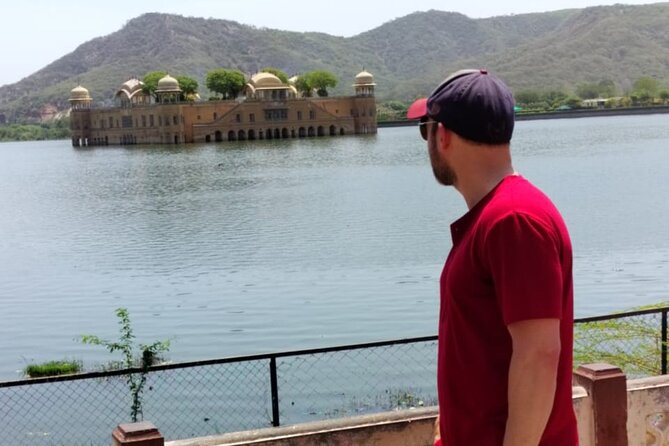
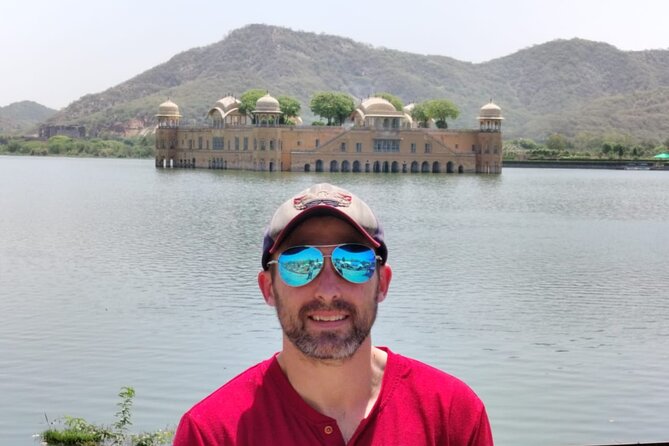
Jal Mahal sits in the middle of Man Sagar Lake, and it has that instantly recognizable look that makes people stop mid-walk and stare. This stop is listed as two hours, with free admission.
What to expect in practice:
- Plenty of time to take in the palace’s shape and setting around the lake.
- A chance to understand why the architecture stands out as much as the water does.
Even if you’re not a big “museum person,” this stop works because it’s visually different from what comes next. It also gives you an early soft landing on day one before forts start throwing dramatic views at you.
Practical note: lake-side photography can be weather-dependent. If you hit glare or haze, ask your guide where the better angles tend to be.
Jaigarh Fort: victory fort walls and the Jaivana cannon
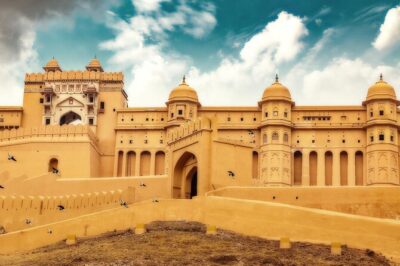
Jaigarh Fort is often called the Fort of Victory, and it’s known for serious fortifications. This is also where you’ll hear about the world’s largest cannon on wheels, Jaivana.
This stop is listed as two hours, with admission not included (you’ll pay on site). Fort time can feel repetitive if you only look at stone. With a guide, it becomes more about how the whole defense system was planned—positioning, scale, and why certain views matter.
What I like about putting this in the middle of day one:
- You’re already in the fort mindset from Jal Mahal’s architecture-and-setting feel.
- You then move upward into the “defense and dominance” story, which sets you up for Nahargarh’s panoramic outlook.
If you’re short on energy, prioritize the main viewpoints and the cannon area first. You’ll still get the core of the experience.
Nahargarh Fort: panoramic city views over Jaipur
Nahargarh Fort sits on the Aravalli Hills, and that location is the whole point: breathtaking panoramic views of the Pink City below. The stop is again about two hours, with admission not included.
This is a great day-one cap because:
- It gives your legs a walk with payoff (views).
- It helps you understand Jaipur’s layout better than you can from street level.
If you’re sensitive to heat, morning or late morning is usually easier. Since the tour start window is in the late morning range, bring light layers and stay hydrated—especially because Jaipur sun can be sharp.
You can also read our reviews of more private tours in Jaipur






Day two: Hawa Mahal, Jantar Mantar, and City Palace
Day two focuses on the Jaipur “signature” sites. It’s more classic sightseeing, but it’s planned so each stop has a different feel.
Hawa Mahal: the pink honeycomb facade and its purpose
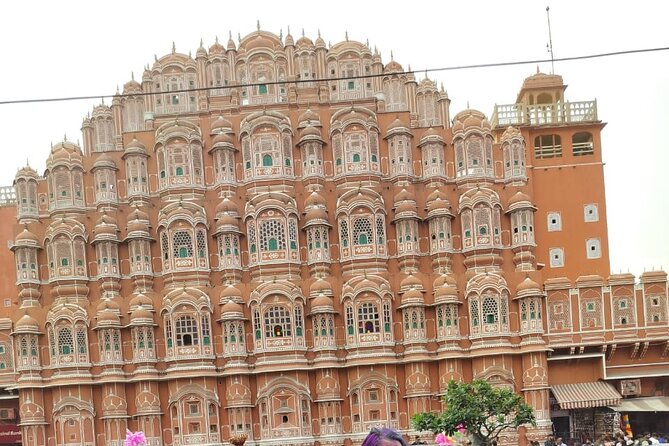
Hawa Mahal, or Palace of Winds, is the postcard face of Jaipur. You’ll see the unique pink honeycomb facade and a five-story palace designed so royal women could observe street festivals.
This stop is listed for two hours, with admission not included (about $2.50 per person).
What makes a guided approach useful here:
- You don’t just look at the exterior. You learn what the design was built to do.
- You get help with where to take photos so you don’t spend your time wandering for the best angles.
In the guide names shared by previous groups, Piyush Agarwal is called out for doing an extended, story-driven experience at Hawa Mahal, including time inside and good picture stops. That’s exactly the kind of attention that helps this stop feel less like a quick photo and more like a real “aha.”
Jantar Mantar: an 18th-century astronomical observatory you can understand
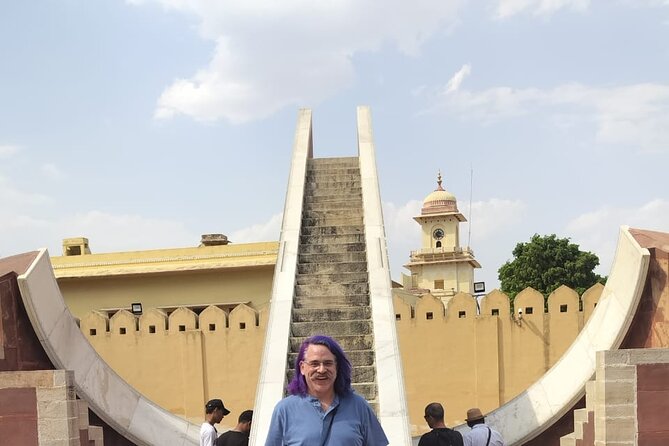
Then comes Jantar Mantar, an 18th-century astronomical observatory and a UNESCO World Heritage Site. The listing emphasizes a collection of architectural instruments used for celestial observations, and the guide format includes interactive elements—so you’re not only looking at structures, you’re learning what they measure and why they were built.
This is also listed for two hours, with admission not included (about $2.50 per person).
This stop can go two ways:
- You walk around with no context and it becomes “cool metal shapes.”
- Or you get a guide who explains how the instruments connect to the sky, and the whole place clicks.
I like that this tour explicitly includes demonstrations at Jantar Mantar. If you’re the type who asks questions, this is where your guide will earn their keep fast.
Sarfaraz and Vivek are both highlighted in the guide feedback for making Jantar Mantar feel alive rather than static, and that’s the difference between a checkmark stop and a memorable one.
City Palace: Rajput-Mughal architecture and museum time
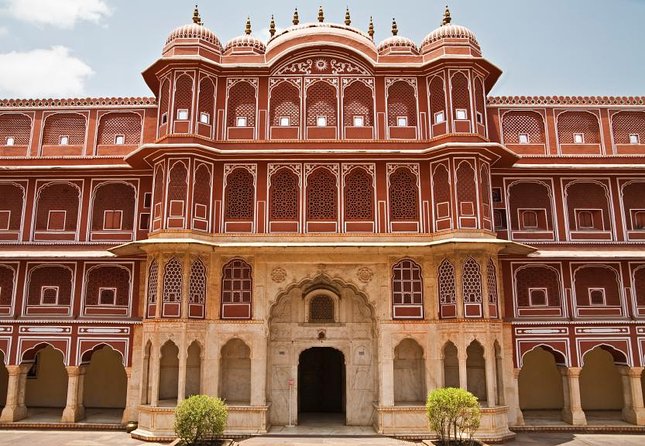
City Palace is a royal residence and museum complex showcasing Rajput and Mughal architecture. You’ll explore key parts including Mubarak Mahal and Chandra Mahal, plus areas like Diwan-i-Khas and other hall spaces within the palace grounds.
This stop is listed as two hours, with admission not included (about $11.46 per person).
If you only do Jaipur’s most famous exteriors, you miss how the city’s rulers built and represented power through design. City Palace helps you connect:
- what you saw in Hawa Mahal (women observing festivals from above),
- what you saw in forts (defense and control),
- and how the royal court space functioned as a living setting.
The admission fee here is higher than the forts and Jantar Mantar, so it’s worth going with the assumption that you’ll spend the full time instead of rushing through. A guide helps you spot what matters so you don’t leave thinking you saw “a palace” without absorbing anything specific.
What the guides do that you can feel on the ground
This tour is built around professional guiding, and the difference shows in how explanations land.
In the feedback and guide names associated with this tour style, three themes repeat:
- Patient, professional pacing: explanations stretch to match your questions.
- History with real-world meaning: stories tied to why a structure was built, not just who built it.
- Practical storytelling: you’re shown where to look for details that most people miss.
You might encounter guides including Sarfaraz, Vivek, or Piyush Agarwal. The common thread across names is the same: they make you understand what you’re seeing and they’re friendly about it.
That matters because Jaipur has a lot of “wow” architecture, but it’s easy to skim. When your guide points out the why, you leave with a better mental map of what the city was trying to achieve—visually, politically, and culturally.
Interactive moments: why Jantar Mantar is more than an Instagram stop
Jantar Mantar is the kind of place where a guided approach changes everything. The listing explicitly mentions demonstrations, and that lines up with what makes this stop worth protecting time for on day two.
When a guide runs through what the instruments are for, you start noticing details you would otherwise ignore:
- how the instruments connect to celestial observation,
- what shapes and scales were intended to do,
- and why the site was built as a coordinated set rather than random monuments.
If you enjoy hands-on or question-friendly experiences, this is a highlight. If you prefer quiet sightseeing, you can still get value, but you might want to ask your guide to pace the explanation so it doesn’t feel like a classroom.
Either way, the two-hour timing makes sense. You don’t have to sprint through. You can watch, ask, and take photos without feeling constantly behind.
Photo and comfort tips for a two-day city run
This tour includes bottled water and an air-conditioned vehicle, which helps a lot between stops. Outside the car, Jaipur often means sun, wind, and dust depending on the day. Here are practical ways to make the most of your time without slowing the group down:
- Wear comfortable shoes with grip. Forts mean uneven ground and stair sections.
- Bring a hat and sunglasses. Hawa Mahal and lake views both pull you into bright light.
- Keep your camera ready at viewpoints. The forts’ value is in sightlines, not in waiting until you’re tired.
- If you want strong photos, don’t treat every stop as a 10-minute check. With a guide, you can get the best angles faster and spend more time actually seeing.
Also: ask your guide what to prioritize inside each site. City Palace and forts both have areas that can feel like “more of the same” if you don’t have a plan.
Who this private Jaipur tour fits best
This is a smart choice for:
- First-timers who want the big Jaipur icons plus forts in a tight two days
- Anyone who wants explanations and stories, not just route-following
- People who prefer private pacing over group rushing
- History-curious travelers who like their context tied to architecture and purpose
It may be less ideal if:
- You want strictly free, no-admission sightseeing (because several major stops charge entry)
- You hate time spent walking in sun at forts
- You’re the type who likes “freedom” over guided time in enclosed palace and observatory spaces
If you’re traveling with multiple generations in your group, the private format can help you adjust pace on the spot, especially during viewpoint-heavy fort sections.
Should you book this Jaipur private tour?
I’d book this if you want a guided, organized way to see six major Jaipur landmarks over two days, with a guide who can explain what you’re looking at and include interactive attention at Jantar Mantar. The guide reputation—names like Sarfaraz, Vivek, and Piyush Agarwal—signals the kind of patient, story-first interpretation that turns Jaipur from “pretty buildings” into something you remember.
I’d pause and re-check your expectations if you don’t want to pay site admissions. The total add-on fees are not huge, but they are real, and they change the final price enough that you should budget for them.
If you can handle a mix of lake views, fort climbs, and palace museum time, this tour is a solid way to make your two days in Jaipur count.
FAQ
How long is the Jaipur tour?
The experience runs for about 2 days.
Is this a private tour?
Yes. It’s a private tour/activity, and only your group participates.
What’s included in the tour price?
The included items are an air-conditioned vehicle, bottled water, a professional tour guide, plus fuel charges and parking fee.
Which admission fees are not included?
Admission fees are not included for Hawa Mahal, Jantar Mantar, City Palace, Nahargarh Fort, and Jaigarh Fort. The listed amounts are Hawa Mahal $2.50, Jantar Mantar $2.50, City Palace $11.46, Nahargarh Fort $2.50, and Jaigarh Fort $8.50 per person.
Is pickup offered, and where does it start?
Pickup is offered, and the tour start point is Hawa Mahal Rd, Badi Choupad, J.D.A. Market, Kanwar Nagar, Jaipur, Rajasthan 302002, India.
What are the operating hours for starting the tour?
The opening hours are 8:00 AM to 12:00 PM, Monday through Sunday.
Can I cancel for a full refund?
Yes, cancellation is free up to 24 hours in advance of the experience start time for a full refund. If you cancel less than 24 hours before, the amount paid is not refunded.