REVIEW · 2-DAY EXPERIENCES
2-Day Private Jaipur City Sightseeing Tour with Three Forts
Book on Viator →Operated by Pashmina Tours · Bookable on Viator
Jaipur’s forts deserve two unhurried days. This private, air-conditioned tour is built for real pacing, with hotel pickup and a two-day route that hits the icons without trying to sprint through them all. You’ll rotate between forts, stepwells, palaces, and the city’s famous science site, so the story of Jaipur actually lands.
What I like most is the practical comfort: round-trip hotel transfers and bottled water, plus fuel/parking taken care of so you don’t waste time bargaining for rides. Second, I like the guide format. You get a real private guide, not just a ticket-and-walk approach, which makes it easier to ask questions and adjust the day when your group needs a breather.
One drawback to plan for: entrance fees aren’t included (about $30 per person), so your final spend will be higher than the headline price once you reach the ticket counters.
In This Review
- Key highlights worth your attention
- Why Two Days Works Better Than One Day in Jaipur
- Day 1: Amer Fort, Stepwell Art, Jal Mahal, City Palace, and Jantar Mantar
- Day 2: Hawa Mahal Photos, Jaigarh and Nahargarh Views, and Royal Gaitor
- What the Private Format Changes (AC Pickup, Bottled Water, Real Human Help)
- Price and Entrance Fees: What $99 Covers and What to Budget Next
- Photo Spots, Shopping, and How to Make the Day Feel Effortless
- Should You Book This 2-Day Jaipur Fort Tour?
- FAQ
- What does the tour cost?
- How long is the Jaipur sightseeing tour?
- Is pickup from my hotel included?
- What’s included in the price?
- Are monument entrance fees included?
- Is this tour private?
- Can I cancel for a refund?
Key highlights worth your attention
- Amer Fort + Hindu–Mughal mix: big fort views, plus architecture with both traditions showing up.
- Jantar Mantar, the sky-and-shadow observatory: not just sightseeing, but instruments built for measuring the heavens.
- Pacing over cramming: the two-day split helps you see more without running on fumes.
- Hawa Mahal photo stop: quick, iconic framing at the Palace of Wind.
- Jaigarh and Nahargarh perspectives: fort-to-fort views that connect to Jaipur’s defense ring.
- Royal Gaitor Tumbas: cremation architecture at the foothills of Nahargarh.
Why Two Days Works Better Than One Day in Jaipur
Jaipur looks compact on a map, but in real life it fights back with traffic, queue time, heat, and the simple fact that the forts take effort. A two-day plan helps you avoid the common trap: seeing the main sights as blurry checkmarks instead of places you can actually absorb.
This tour is designed to break the city into logical chunks. Day 1 leans into Jaipur’s royal core and the “city within the city” vibe: Amer Fort area, then Jal Mahal, then City Palace, then Jantar Mantar. Day 2 shifts outward and upward toward the forts that guard Jaipur’s skyline, with Hawa Mahal as a quick morning landmark and then Jaigarh and Nahargarh for the viewpoints.
You also get built-in downtime. Even when stops are time-limited, you’re not jumping between distant areas every hour. That matters when you want photos, time to ask questions, and a chance to sit for a drink without feeling behind.
One more practical point: because it’s private, your guide can respond to your group’s energy. If you want a slower pace at a monument, you can usually ask for it. If you’d rather focus on photos first and history second, that’s often easier in a private setting than in a bus full of people.
You can also read our reviews of more city tours in Jaipur

Day 1: Amer Fort, Stepwell Art, Jal Mahal, City Palace, and Jantar Mantar
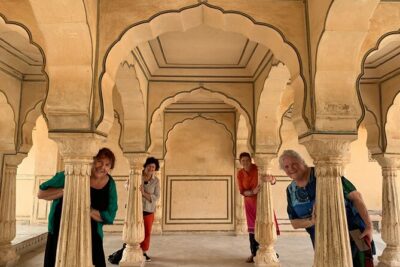
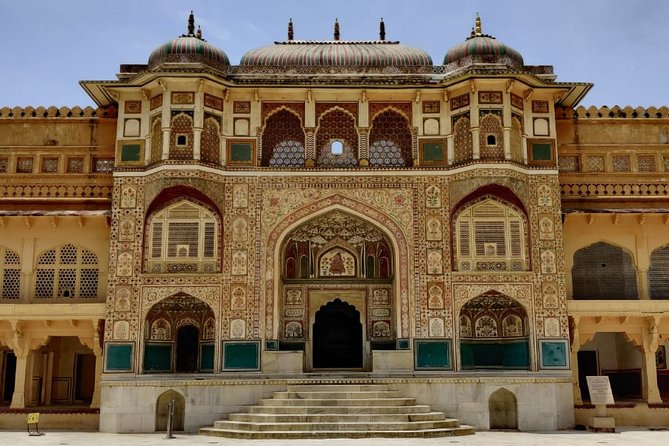
Day 1 starts with Amer (also spelled Amer/Amber) Fort, a world heritage site associated with the Hindu Rajput kings. What makes this stop special is the Hindu–Mughal architectural blend, which you can feel as you move through courtyards and gateways. It’s not only about walls; it’s about the way the fort was designed to impress, govern, and host ceremony.
Right nearby, you’ll visit Panna Meena ka Kund, a stepwell built in the 16th century. This is one of those places where the “short stop” doesn’t mean “small.” The steps are the show: the geometry and the artistry make it feel like you’re walking through a handcrafted structure built for water and community gatherings.
Then you get the cinematic pause of Jal Mahal, the Water Palace. It’s described as a palace set in water and built in 1799 AD. Even if you’re standing at a distance for photos, it gives you that classic Jaipur image—fort meets reflections—so your day isn’t just indoor halls and stone corridors.
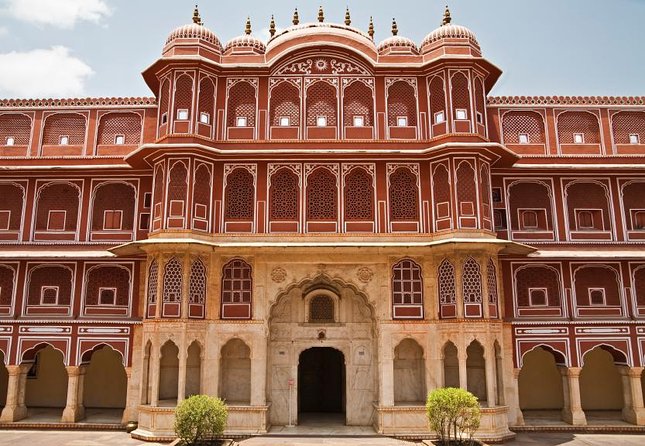
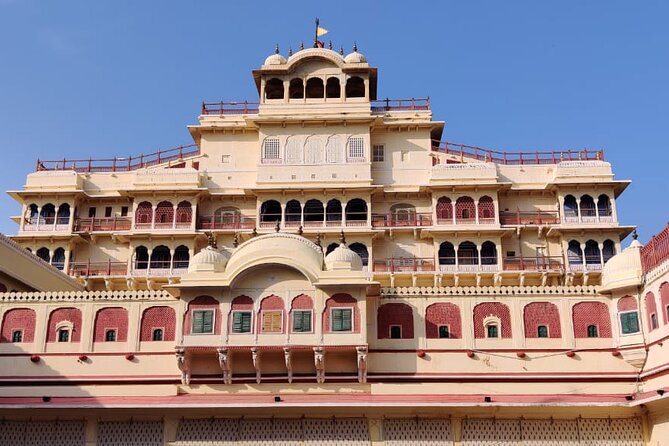
From there, City Palace brings everything back to the present-day royal storyline. A major part of it was converted into a museum in 1959, and that helps you connect the architecture to what’s preserved inside. Expect a mix of rooms, courtyards, and royal displays, rather than a single “look and leave” spot.
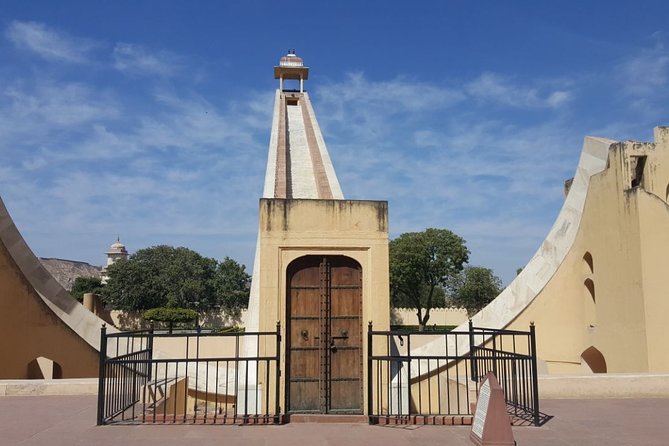
Finally, Jantar Mantar is the day’s big thinking stop. Built in the early 18th century, it’s an observatory with astrological and astronomical instruments connected to the astronomer-king Jai Singh. This site works well with a guide because you’re not just staring at stone tools—you learn what they’re for and how people used them before modern tech.
Quick practical tradeoff: several Day 1 monuments list entrance as extra, and not all stops include tickets. So bring patience for ticketing and budget for the entrance line item.
Day 2: Hawa Mahal Photos, Jaigarh and Nahargarh Views, and Royal Gaitor
Day 2 starts with a quick photo stop at Hawa Mahal, the Palace of Wind. It’s iconic, and the point of the stop is framing: you get a feel for why it became a symbol of Jaipur. The palace is associated with Maharaja Sawai Pratap Singh, and it was designed so royal women could watch street life without being fully exposed.
Then the focus shifts to forts with serious posture.
Jaigarh Fort sits on Cheel ka Teela (Hill of Eagles). The fort is known for palaces, temples, gateways, and its position above the city. You’ll spend time here, and it’s the kind of place where the altitude does half the work: the views help you understand the geography of Jaipur, not just the architecture.
From there, you move to Nahargarh Fort, described as guarding Jaipur for almost three hundred years. It’s part of a defense ring that also included Amer Fort and Jaigarh Fort. The big win at Nahargarh is the “look back” effect: once you’ve already seen Jaigarh, Nahargarh helps you picture how the whole defensive setup worked across the hills.
The day closes with Royal Gaitor Tumbas, the cremation site area for Rajasthan’s Maharajas. You’re looking at royal cenotaphs at the foothills of Nahargarh, and the architecture is described as a blend of Islamic influences and local style. This stop is quieter than the big fort checkpoints, but it can be the most memorable if your guide explains how the site functions historically and spiritually.
Photo and timing tip: if you’re sensitive to heat, ask your guide about earlier starts. One of the recurring advantages of a private format is that you can often shift timing to match the day’s light and temperature.
What the Private Format Changes (AC Pickup, Bottled Water, Real Human Help)
A good private tour isn’t just “no crowds.” It’s fewer wasted minutes and a smoother day.
Here’s the practical setup that makes it work:
- You get pickup and drop-off from your hotel.
- You travel in an air-conditioned vehicle.
- You receive bottled water during the tour.
- Parking and fuel are included, so you’re not stuck coordinating transport.
- You travel with a professional guide, who can explain what you’re seeing and help with pacing.
The guide component is where value really shows. Several groups mention strong English communication and patience when questions come up. Some names that have been associated with this tour include Sanjeev, Deepak, Bhanu Pratap Singh, Raghu, Kapil, and guides working with drivers such as Kaan Singh, Ram, Prakash, Vinod, Krishna, and others. In plain terms: the tour tends to perform well when your guide explains the “why,” not only the “what.”
It also helps with the stuff tourists often hate in India: confusion, ticket lines, and being pulled into side conversations at monuments. A guide who warns you about pushy sales behavior and steers you toward better options can save you both time and stress.
Finally, flexibility matters. A family with mobility needs reported extra care getting in and out of the car, and that kind of hands-on support is a big deal when you’re traveling with older parents or anyone who moves slowly.
Price and Entrance Fees: What $99 Covers and What to Budget Next
At $99 per person for two days, the headline price looks low for a private, two-day route with hotel pickup and an AC vehicle. But Jaipur has an extra cost reality: entrance fees.
This tour states that monument entrance fees are not included, with an estimated $30 per person for entrances. Gratuity is also not included. So you should budget for:
- The $99 base price
- Entrance fees (around the listed estimate)
- Tips for your guide and driver, if you choose to follow local custom
I’ll be blunt about the value question: if you expect everything to be turnkey with zero additional payments, you’ll feel surprised. But if you’re okay paying monument tickets once you arrive, the private format can still be a strong deal because you’re buying time, transport, and interpretation.
Also, don’t compare this only to the cheapest DIY option. A DIY ride can be quick to organize, but you lose the guided context at places like Jantar Mantar, and you’re more likely to spend time figuring out how far stops actually are, how to schedule around heat, and where to wait for views.
If price is your top priority, you might do better with a DIY day plus one paid guide. But if your top priority is an efficient, comfortable two-day experience, this is priced in a reasonable zone for what you get.
You can also read our reviews of more private tours in Jaipur






Photo Spots, Shopping, and How to Make the Day Feel Effortless
This tour is built around major landmarks, but the private format often supports small extras that make it feel personal.
For example:
- Many guides are known for being good at taking photos and choosing the right moment for a shot.
- There can be time for photography at Jal Mahal and Hawa Mahal without turning it into a 30-photo marathon.
- Some schedules have included extra stops like Patrika Gate early in the day, Albert Hall, Birla Mandir, or time for a bazaar visit.
- Shopping support may include guidance toward local crafts or textile areas, depending on your interests and timing.
Here’s how you keep this from becoming annoying. Tell your guide what you want before you start:
- Do you want the fastest museum visits, or do you want to linger for photos?
- Are you shopping for textiles or jewelry, or would you rather skip it?
- Do you prefer a sit-down lunch, or quick local food?
When your guide knows those preferences, the day tends to feel smoother. It’s also easier to avoid the back-and-forth where someone tries to redirect you at tourist spots. A local guide can often help you keep control of your time.
Should You Book This 2-Day Jaipur Fort Tour?
If you only have 2 days in Jaipur and you want the major sights plus the viewpoints that explain the city, I think this tour is a solid choice. The biggest reasons are simple: the pacing and the fact that it pairs iconic locations (Amber Fort, City Palace, Jantar Mantar, Hawa Mahal) with the forts that give context (Jaigarh and Nahargarh).
Book it if:
- You want hotel pickup/drop-off and an AC vehicle
- You prefer a guide who can explain what you’re looking at, especially at Jantar Mantar
- You’d rather pay entrance fees once than fight ticketing and routing by yourself
- Your group values comfortable pacing over rushing
Skip or reconsider if:
- You strongly dislike paying extra at ticket counters (entrance fees are not included)
- You’re traveling solo with a tight budget and are confident doing Jaipur transport and site entries on your own
My practical advice: message your tour provider before you go with your walking limits and your photo priorities. The tour works best when your guide can tailor the flow to your group.
FAQ
What does the tour cost?
It costs $99.00 per person.
How long is the Jaipur sightseeing tour?
It runs for 2 days (approximately).
Is pickup from my hotel included?
Yes. Round-trip transfers from your hotel are included.
What’s included in the price?
The tour includes pickup and drop-off in a private air-conditioned vehicle, bottled water, fuel charges and parking fee, and a professional tour guide.
Are monument entrance fees included?
No. Entrance fees are not included, with monument entrance fees listed at about $30.00 per person.
Is this tour private?
Yes. It’s a private tour/activity, and only your group will participate.
Can I cancel for a refund?
Yes, free cancellation is available. You can cancel up to 24 hours in advance for a full refund.