REVIEW · FULL-DAY
Explore Full Day Jaipur Guided Tour by Car with Guide
Book on Viator →Operated by Rajasthan Tours Holidays · Bookable on Viator
Jaipur moves fast, and this tour keeps up with you. I like how the day is paced for real sightseeing—big sights plus short, high-impact stops—while you ride in a private air-conditioned car with an English-speaking driver. I also like that you get a local perspective on what you’re seeing, and in at least one standout case, the guide Suresh was praised for clear explanations and good communication even with traffic. One drawback to plan for: most monument entrances are not included, so you’ll want cash or a card ready for that extra spend.
This is built for an all-day loop through the walled city and the famous landmarks outside it, with time for photos at Jal Mahal and a proper look at Jantar Mantar and the City Palace. You’ll also get a shopping window in the Pink City area, which can save you from figuring out where to go on your own.
The overall value is strong because so much of the logistics is handled—pickup, drop-off, fuel, parking, bottled water—so you can focus on the sights instead of the route.
In This Review
- Key Highlights You’ll Actually Feel
- A Day-Loop Built for Jaipur’s Big Landmarks
- Pickup and Private Car: Less Stress, More Sightseeing
- Early Morning: The Famous Palace Start
- Jal Mahal: A Quick Photo Break That Actually Works
- Panna Meena ka Kund: The Stepwell Symmetry Stop
- Royal Gaitor Tombs: The Calmer, Less-Clicked Stop
- Hawa Mahal: The Iconic Facade (and Its Time Cost)
- Jantar Mantar: UNESCO and Big Ideas in Stone
- City Palace Complex: Where Royals, Museums, and Architecture Meet
- Sargasuli Tower and Isarlat Sargasooli: Quick, Mathematical, Local
- Monkey Temple (Galta Ji): A Free Ending Stop With Atmosphere
- Shopping in the Pink City: 1 Hour to Spend on Your Terms
- Price and Value: What You Pay vs. What You Still Need
- Best Fit: Who Should Book This Jaipur Car Tour?
- Smart Tips for Getting More From the Day
- Should You Book This Full-Day Jaipur Car Tour?
- FAQ
- How long is the full-day Jaipur guided tour by car?
- Do I get pickup and drop-off in Jaipur?
- Is the transportation private?
- Do I travel in an air-conditioned vehicle?
- Is a professional guide included?
- What sights are included on the itinerary?
- Are entrance fees included?
- Are meals included?
- Is bottled water provided?
- Is free time included for shopping?
- What is the cancellation policy?
Key Highlights You’ll Actually Feel
- Private, air-conditioned car with an English-speaking driver means less hassle and more control of your timing.
- Short stops at photo-worthy landmarks (like Jal Mahal and the stepwell) help you pack in more without feeling stuck.
- Jantar Mantar + City Palace give you both the scientific side and the royal side of Jaipur.
- Galta Ji (Monkey Temple) is free on this itinerary, so it’s a good payoff stop at low cost.
- Shopping time in the Pink City area lets you browse jewelry and local goods without losing your tour momentum.
A Day-Loop Built for Jaipur’s Big Landmarks
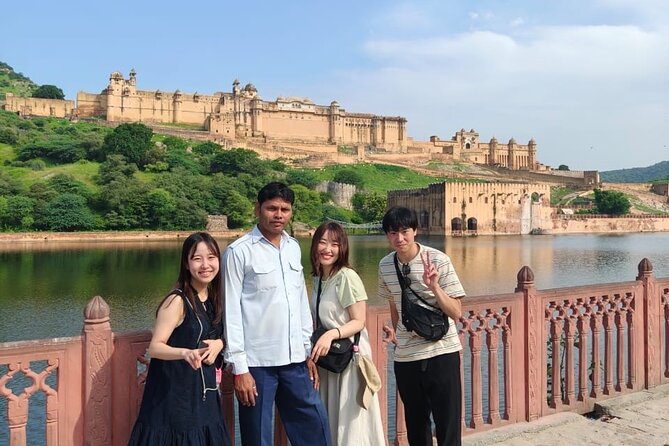
This full-day tour is designed around the reality of Jaipur: the sights are spread out, and traffic can change your timing. That’s why I like the private-car setup. You’re not shared into a rigid group schedule with frequent waiting, and you’re not stuck negotiating rides between monuments.
The pace is “8 hours-ish,” which is long enough to feel like you saw Jaipur, but short enough that you can still stay comfortable. You start early, meet your driver based on your input location, and then begin with a major palace stop near Jaipur.
One practical tip: plan to wear something you can move in. Even when the stops are brief, you’ll be walking around courtyards, stairs, and viewpoints. Also keep water handy—bottled mineral water is included.
You can also read our reviews of more guided tours in Jaipur
Pickup and Private Car: Less Stress, More Sightseeing
Your day starts with pickup and ends with drop-off at your chosen location in Jaipur. That matters more than people think, especially if you’re staying a bit outside the core or your hotel is hard to reach by car.
You travel in a private air-conditioned car with an English-speaking driver. The driver is the one who handles the road logic: getting you between stops, adjusting to traffic, and helping keep the tour on track. In one praised example involving a guide named Suresh, the focus was on communication and staying oriented even when roads slowed down. That kind of reliability is what makes a long day actually enjoyable.
If you choose the option with a professional tour guide, you also add someone who can explain what you’re looking at—why it was built, what it was used for, and what the details mean.
Early Morning: The Famous Palace Start
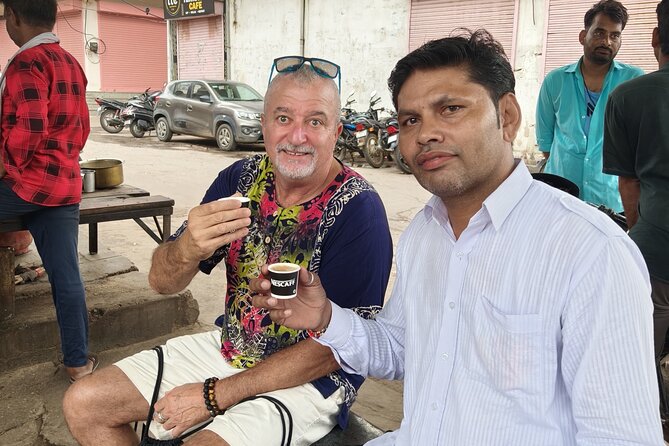
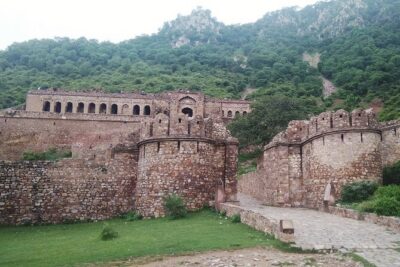
The day begins with the most famous palace near Jaipur. The itinerary sets aside about two hours and notes that admission is free for this first major stop.
Why this first? Because Jaipur’s palaces and forts reward a steady pace. You’ll get time to walk the grounds and get your bearings before the rest of the tour ramps into temples, observatories, and the iconic skyline of the Pink City.
What to expect during a palace visit like this (even when specifics vary by palace): look for how courtyards and sightlines are laid out. Many Jaipur royal buildings were planned around movement—how the royal family and visitors approached spaces, where views opened up, and where you could see across the complex.
Jal Mahal: A Quick Photo Break That Actually Works
Next you head toward Jal Mahal, the palace that appears to float on Man Sagar Lake. You only have about 15 minutes here, but that’s often the right amount of time for this kind of stop.
Why it’s worth it: Jal Mahal is visual. Even if you don’t spend long inside (and the itinerary lists admission as free), you’re there for the look and the angle. In a day that’s otherwise packed, short photo time prevents “palace fatigue.”
Practical note: bring your phone or camera settings ready. Light changes fast in open-air lake viewpoints, and you’ll want a clean shot before the next move.
Panna Meena ka Kund: The Stepwell Symmetry Stop
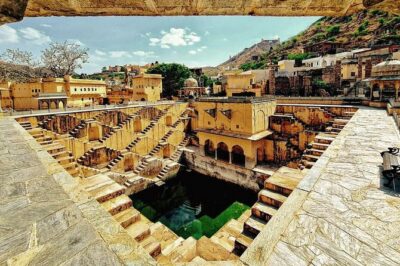
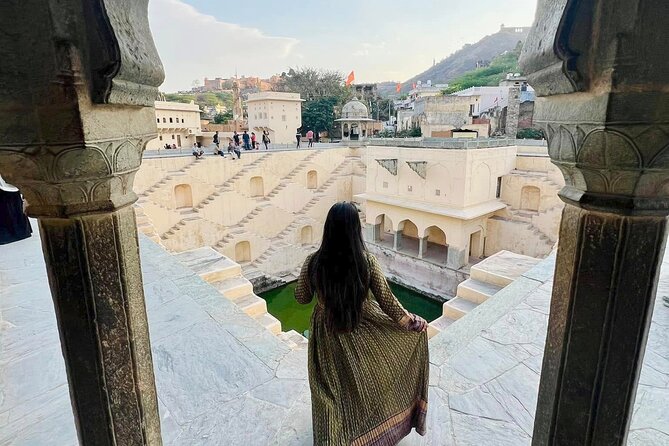
Then comes Panna Meena ka Kund, a symmetrical 16th-century stepwell. Again, the stop is short—about 15 minutes—and admission is free.
Stepwells can feel like a detour until you look closely. The value here is the design: the geometry, the repeating stair patterns, and the way it shows how water storage was also an architectural project. It’s a great contrast after palaces—more practical engineering, still beautiful.
If you’re the type who likes details, take your time at the viewing angle and look for the stair alignment from different points. Symmetry like this is easier to understand when you see it from the entry side and then slightly off-center.
You can also read our reviews of more tours and experiences in Jaipur




Royal Gaitor Tombs: The Calmer, Less-Clicked Stop
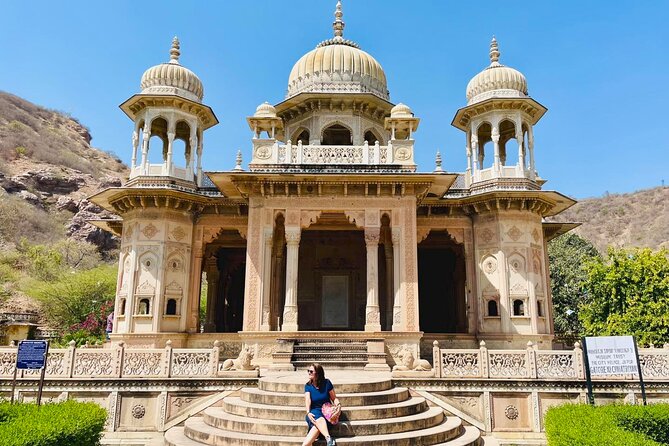
After the stepwell, you’ll visit the Royal Gaitor Tombs for about 30 minutes. Entrance is not included for this stop, so factor that into your budget day.
This is one of the stops that tends to feel different in a good way. It’s listed as a quieter site, set against hills, and the focus is on the carved marble cenotaphs of Jaipur’s royal family. That’s the kind of place where you can slow down and look.
Why it’s valuable: a lot of Jaipur’s famous sights are loud visually—big facades, iconic shapes, crowded viewpoints. Gaitor is more about craftsmanship and atmosphere. If you’re trying to balance the day with one “breather” stop, this is it.
Hawa Mahal: The Iconic Facade (and Its Time Cost)
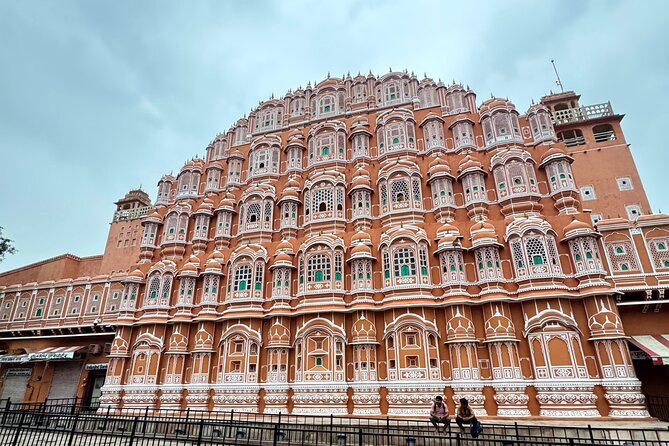
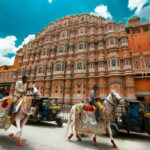
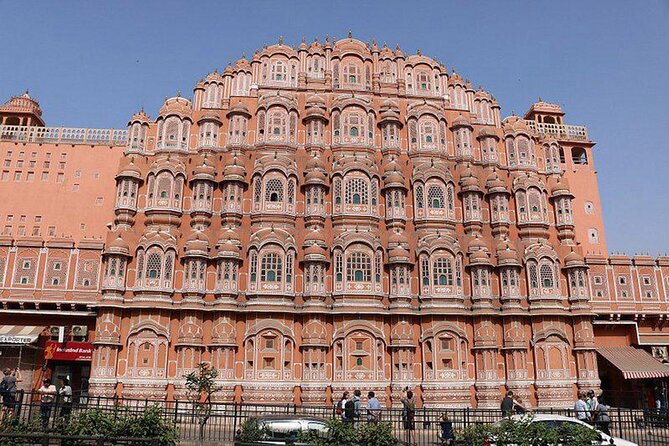
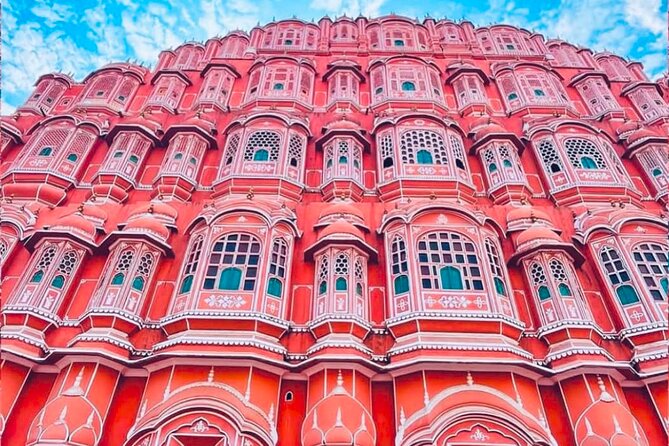
Then you’ll stop at Hawa Mahal, the Palace of Winds. The tour gives about 30 minutes. Entrance is not included here, so it adds to your day budget.
Hawa Mahal is famous for a specific reason: five stories and 953 small windows were designed so royal women could observe street life while staying behind privacy screens. In person, it feels like a stone honeycomb. Even if you can’t linger, you’ll still get the visual impact fast.
One consideration: because it’s a top landmark, it can be busy depending on your timing. Keep your expectations flexible. The goal on a tour like this isn’t a long sit-down visit—it’s to take in the shape and understand the purpose behind it.
Jantar Mantar: UNESCO and Big Ideas in Stone
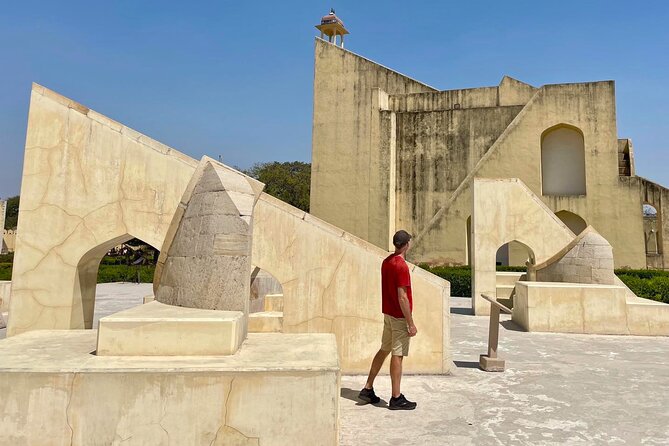
Next is Jantar Mantar—a UNESCO World Heritage site and one of the world’s largest stone astronomical observatories. You get about one hour here, and entrance is not included.
This is a different side of Jaipur. While palaces and temples show power and faith, Jantar Mantar shows measurement, observation, and serious “how the sky works” thinking. You’ll see a collection of architectural instruments built for astronomy.
What makes it worth a full hour: most people can appreciate the look from the outside, but you’ll get more from understanding what each structure was meant to measure. If you have the optioned professional guide, this is where their explanations can turn the visit from sightseeing into real understanding.
If you don’t have a guide, you might still enjoy it—just come ready to look closely and read what you can as you walk. The shapes aren’t random; they’re functional.
City Palace Complex: Where Royals, Museums, and Architecture Meet
After Jantar Mantar, you move to the City Palace of Jaipur complex for about one hour. Entrance is not included.
The City Palace is described as a blend of Rajasthani and Mughal architecture, and it’s still associated with the royal family. Practically, that means you’ll see grand courtyards, museum-style spaces, and a sense of continuity—this isn’t just a theme-park facade.
Why this stop matters after the science at Jantar Mantar: it brings you back to lived royal spaces and the way architecture expressed authority. Even if you’re not a museum person, the layout and materials help you see why Jaipur was designed to impress.
Time tip: in one hour, you won’t absorb everything deeply. Pick a route that covers the most iconic courtyards and highlights first, then decide if you want to linger in one museum space.
Sargasuli Tower and Isarlat Sargasooli: Quick, Mathematical, Local
You’ll also stop at Isarlat Sargasooli, a tower constructed in 1749 by King Ishwari Singh. The stop is only about 10 minutes, and entrance is not included.
Even with limited time, it’s an interesting “in-between” stop. The description points to Vaastushaastra architecture, which is about building design principles. If you like architectural logic—why buildings take the shapes they do—this is a quick opportunity to notice it without eating up your whole afternoon.
Monkey Temple (Galta Ji): A Free Ending Stop With Atmosphere
The next stop is Monkey Temple, also known as Galta Ji. You get about 15 minutes, and admission is free.
This is one of the more playful stops on the day, but also one that feels spiritual. The itinerary highlights its significance for the main deities and presents it as one of Rajasthan’s known temple sites.
Practical reality: expect monkeys around temple areas. Keep your belongings secured and don’t treat it like a zoo. If you go in with a calm, respectful mindset, you’ll enjoy the energy without drama.
Shopping in the Pink City: 1 Hour to Spend on Your Terms
After sightseeing, you’ll have time for shopping in the Pink City area. Your driver takes you to popular shopping spots, and you can spend as much time as you want within about one hour.
This is where the tour helps you most if you’re on a schedule. Instead of researching where to buy jewelry or what streets to walk, you get a guided handoff to shopping places that are already known for that kind of browsing.
What I recommend: decide before you arrive what you want to look for—jewelry, textiles, souvenirs, or something specific. One hour disappears fast in market lanes.
Price and Value: What You Pay vs. What You Still Need
The tour price is listed at $14.62 per person, for about 8 hours. That’s a low base cost for private car time, bottled water, and pickup/drop-off within Jaipur.
But here’s the main cost consideration: entrance fees for monuments are not included, and the itinerary lists entrance as about $25.00 per person. Meals are also not included.
So how do you judge value? You’re paying for:
- private transport and driver time,
- water, fuel, parking, and taxes,
- and potentially a professional guide depending on your selected option.
Then you’re paying extra for:
- monument entrances (budget the listed entrance fee),
- and your food.
If you plan to visit multiple major sites anyway, this adds up. If you only care about one or two stops, a paid entrance day might feel heavier. For most people who want a “best-of Jaipur” day without doing the driving themselves, the overall value makes sense.
Best Fit: Who Should Book This Jaipur Car Tour?
This works especially well if you:
- want to see a lot without renting a car,
- prefer a private day rather than waiting in a shared group,
- like a guided explanation when you’re looking at complex sites like Jantar Mantar,
- need hotel pickup and drop-off so you don’t waste your day figuring out logistics.
It may not be ideal if you want a long, slow museum-style day. The itinerary includes several major stops, but the timing per location ranges from 10 minutes to about 2 hours, so you’ll be moving.
Smart Tips for Getting More From the Day
A few practical moves will make this tour smoother:
- Bring some cash in case monument entrance payments are easier that way. The tour lists an entrance fee amount even though exact site-by-site fees can vary.
- Wear comfortable shoes because even short stops include stairs and walking.
- Charge your camera/phone before you head out, especially for Jal Mahal photos.
- If your option includes a professional guide, treat Jantar Mantar and the City Palace as your “ask questions” moments.
Should You Book This Full-Day Jaipur Car Tour?
If your goal is a fast, high-coverage day that still feels personal, I think this is worth serious consideration. The combination of private transportation, English support from the driver, and optional professional guiding makes it realistic for people who want Jaipur without the stress of coordinating everything themselves.
Book it if you’re excited by iconic Jaipur landmarks—Hawa Mahal, Jantar Mantar, the City Palace—and you’re okay budgeting for monument entrances and eating on your own. Skip it only if you prefer very slow visits or you’re trying to avoid any extra entrance fees altogether.
If you want a one-day snapshot of Jaipur that actually runs on time and keeps you oriented, this is a solid pick.
FAQ
How long is the full-day Jaipur guided tour by car?
The tour lasts about 8 hours.
Do I get pickup and drop-off in Jaipur?
Yes. Pickup and drop-off are offered at any desired location in Jaipur.
Is the transportation private?
Yes. This is a private tour/activity, so only your group participates.
Do I travel in an air-conditioned vehicle?
Yes. The tour includes a private air-conditioned car with an English-speaking driver.
Is a professional guide included?
A professional tour guide is included if you select that option. Otherwise, you still have the English-speaking driver.
What sights are included on the itinerary?
The itinerary includes a famous palace near Jaipur, Jal Mahal, Panna Meena ka Kund, Royal Gaitor Tombs, Hawa Mahal, Jantar Mantar, the City Palace Complex, Isarlat Sargasooli, Monkey Temple (Galta Ji), and shopping in the Pink City area.
Are entrance fees included?
No. Entrance fees for monuments are not included, and the stated entrance fee is $25.00 per person.
Are meals included?
No. Meals are not included.
Is bottled water provided?
Yes. Bottled mineral water is included.
Is free time included for shopping?
Yes. You’ll have about 1 hour to explore shopping spots in the Pink City area.
What is the cancellation policy?
You can cancel for a full refund if you cancel up to 24 hours in advance of the experience’s start time. If you cancel less than 24 hours before, the amount paid is not refunded.