REVIEW · TUK-TUK TOURS
Explore Jaipur with a Private Tuk-Tuk
Book on Viator →Operated by Jaipur Day Tours · Bookable on Viator
A tuk-tuk day can feel like Jaipur on rails. This private ride strings together major landmarks with an English-speaking storyteller, so you’re not just sightseeing—you’re getting the stories behind the stones. You’ll hop from views to palaces to famous observatories without the usual hassle of figuring out transport on your own.
I especially like the hotel-area pickup and drop-off. You choose a convenient starting point in Jaipur (hotel, airport, or railway station), and that saves hours when you’re trying to pack a lot into one day. The route also balances big icons with quick photo-and-walk stops, like the Jal Mahal lake viewpoint and the dramatic stepwell at Panna Meena ka Kund.
One thing to plan for: some stops are marked as having admission tickets not included, so your final cost can depend on the option you choose and how many ticketed sites you want time for. And with an 8-hour day, you’ll want to be ready for a steady pace in the heat.
In This Review
- Key highlights you’ll feel right away
- A private tuk-tuk loop in Jaipur: why the format works
- The pace: you’ll cover a lot, so plan your expectations
- Pickup, timing, and how to make the day feel easy
- Bottled water and built-in comfort
- Private means your group sets the vibe
- Hawa Mahal: the breezy facade you can actually enjoy in 30 minutes
- Why the timing works
- City Palace: where Jaipur’s power lived and evolved
- What to look for during your time
- Admission ticket note
- Jantar Mantar: the science stop that doesn’t feel like a lecture
- Practical tip: pace your photos
- Admission ticket note
- Jal Mahal and Panna Meena ka Kund: lake reflections and stepwell drama
- The Amer Hill photo advantage
- Why this segment is smart
- Amer town and fort area: where you get real time to wander
- What to do with your extra time
- Monkey Temple: when the story meets reality
- Admission ticket note
- Pink City stroll: the short walk that helps everything click
- How to make the stroll worth it
- Guide quality: Raul and what flexibility means on the ground
- Price and what you should budget (without surprises)
- Who this tuk-tuk day trip fits best
- Should you book Explore Jaipur with a Private Tuk-Tuk?
- FAQ
- How long is the Jaipur private tuk-tuk tour?
- Do you get pickup and drop-off in Jaipur?
- Is this tour private or shared?
- Is there an English-speaking guide or storyteller?
- Are entrance fees included?
- Are meals included?
- Is bottled water provided?
- Is there a mobile ticket?
- Can I cancel for free?
Key highlights you’ll feel right away

- Private tuk-tuk convenience: just your group, with a storyteller guiding the whole loop
- English-speaking context: you’ll understand what you’re seeing at major stops like City Palace and Jantar Mantar
- Amer Hill views built into the route: Panna Meena ka Kund gives you a strong photo angle to plan around
- A tight best-of day: quick stops like Hawa Mahal and Jal Mahal keep the day moving
- Raul-style flexibility: one named guide (Raul) was praised for being professional, flexible, and easy to reach before and after pickup/drop-off
- Some free stops too: Jal Mahal and Panna Meena ka Kund are listed as free in this plan
A private tuk-tuk loop in Jaipur: why the format works
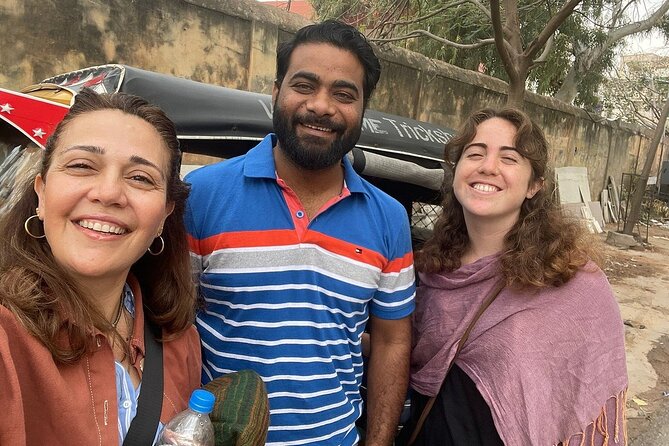
Jaipur can feel like a lot—big sites, busy streets, and distances that add up fast. A private tuk-tuk solves the biggest friction: you don’t waste your day negotiating rides, changing transport, or doing backtracking. You get one vehicle, one plan, and a human voice explaining what matters.
What makes this setup especially good value is the mix of structure and flexibility. You’re guided through major sights, but the guide can help you steer your time toward what you care about most. In at least one experience, the named guide Raul was praised as professional and flexible, and that matters because Jaipur rewards attention to details, not just checklists.
And yes, it’s fun. Riding through the Pink City streets in a tuk-tuk is part of the experience, but it’s also practical. You can get closer to activity areas than bigger vehicles, and you can keep stops efficient without looking rushed.
You can also read our reviews of more private tours in Jaipur


The pace: you’ll cover a lot, so plan your expectations
This is an 8-hour day that moves stop to stop. Some stops are longer (Amer gets time), while others are more of a focused look (Hawa Mahal and Jal Mahal are quick hits). If you’re the type who likes to linger, you’ll still have time—but you’ll want to use your longer stretches well.
Pickup, timing, and how to make the day feel easy

The day starts with pickup, and that’s one of the most underrated travel upgrades. You can arrange pickup from your hotel, airport, or railway station, which makes it easier to avoid the usual “where do we meet?” stress. Drop-off is included too, so the tour ends without you having to hunt for a ride back.
This matters in Jaipur because traffic and finding the right entry point to older areas can eat time. By removing that unknown, you can spend your mental energy on the sights.
Bottled water and built-in comfort
You’ll get bottled water. It sounds small, but in Jaipur’s heat it can be the difference between enjoying the day and feeling drained. Fuel, parking fees, and applicable taxes are covered, which means fewer surprise costs mid-day.
Private means your group sets the vibe
Since it’s private, your group controls the tone. If you’re traveling with family members who want photos now and rest later, you can try to pace it that way. If your group wants more story and less shopping talk, that’s a different vibe—and private helps you aim for it.

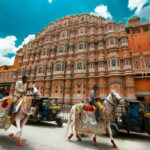




Hawa Mahal: the breezy facade you can actually enjoy in 30 minutes
You start with Hawa Mahal, the Palace of Winds. The building is famous for its facade and the idea that it helped cool royal life. In this plan, you get about 30 minutes, and that’s the right amount for most people.
In a short slot, focus on what you can see: the intricate window pattern and the overall look of the facade from the street. This isn’t a “long museum stop,” and the time reflects that. If you try to do too much research here, you’ll lose the fun of simply taking it in.
Why the timing works
Starting here is clever. It sets the visual mood for the day. You see a key Jaipur icon early, when your energy is high and the day hasn’t filled your phone storage yet.
City Palace: where Jaipur’s power lived and evolved
Next up is the City Palace, described as the royal house and historical administrative center of Jaipur’s rulers. You get about 1.5 hours, which is enough time to see several highlights without turning it into a rushed sprint.
What I like about having this stop in the middle of the day plan is that it gives you context. After seeing a facade like Hawa Mahal, the palace helps you understand what that royal aesthetic was for—governance, ceremony, and status.
What to look for during your time
The plan highlights entry gates and specific palace sections like Mubarak Mahal and Chandra Mahal. Even if you don’t go deep on every room, you can still use your time to catch the big story: how the palace complex functioned as a lived-in center of power, not just a single building.
Admission ticket note
Admission isn’t included here unless you choose the option that includes entrance fees. So if City Palace is a must-see for you, budget for it. This is one of those stops where it’s worth arriving with enough time to enjoy what you’re paying to enter.
Jantar Mantar: the science stop that doesn’t feel like a lecture
Then comes Jantar Mantar, a site built in the early 18th century for astronomical observation. You get about 45 minutes, which is a sweet spot. Long enough to appreciate the big instruments, short enough that it won’t turn into a classroom session.
The attraction here is the set of 19 astronomical instruments, associated with Rajput monarch Sawai Jai Singh. The guide’s storytelling is key at Jantar Mantar. Without context, it can be easy to see instruments and wonder what you’re looking at. With context, you start to grasp how these tools were meant to measure the sky.
Practical tip: pace your photos
This isn’t only about taking pictures. It’s also about seeing how the instruments relate to each other and to the concept of time and observation. If you spend the entire 45 minutes just photographing, you may miss the “wait, that’s what it’s for” moment.
Admission ticket note
Like City Palace, admission is listed as not included in this plan unless you opt for entrance fees.
Jal Mahal and Panna Meena ka Kund: lake reflections and stepwell drama
Jal Mahal is quick: about 15 minutes, and you view it from the edge of Man Sagar Lake. It’s listed as free in this plan. The effect is strong even if your time here is short, because the palace-in-the-water idea gives you a surprising visual pause between larger monument stops.
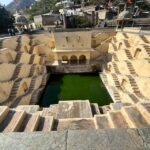
Then you go to Panna Meena ka Kund, a stepwell in Amer. This is one of my favorite kinds of stops: a place where the main “wow” is structure, symmetry, and viewpoint. You get 30 minutes, and it’s marked as free. The stepwell’s depth (about 200 feet) and the 1800 symmetrical steps are exactly the type of details that reward a guide explaining what you’re seeing.
The Amer Hill photo advantage
The stepwell also sets you up for a classic Jaipur view. The plan notes a look toward Amber Hill from here, and that’s useful because it gives you a natural photography frame while you’re already in the area.
Why this segment is smart
Jal Mahal and the stepwell work as a mood shift. After palace interiors and astronomical instruments, these stops are more visual and exploratory. You can walk, look, and reset your brain.
Amer town and fort area: where you get real time to wander
Amer is where the day shifts gears. You get about 2 hours in Amer, with time to explore the town and the iconic Rajput fort area. This is the longer stop in the plan, and it’s a good choice because Amer is the kind of place where you’ll want more than a glance.
The plan notes Rajput and Mughal influences in the fort architecture, and even without a deep dive into every style label, you can notice the blend in how the complex is laid out and decorated.
What to do with your extra time
Use your time to slow down enough to see:
- fort structure and walls up close
- the sense of elevation and approach
- the way the town feels around the fort area
Because the tour keeps other stops tight, this 2-hour window is your chance to actually “be there,” not just pass by.
Monkey Temple: when the story meets reality
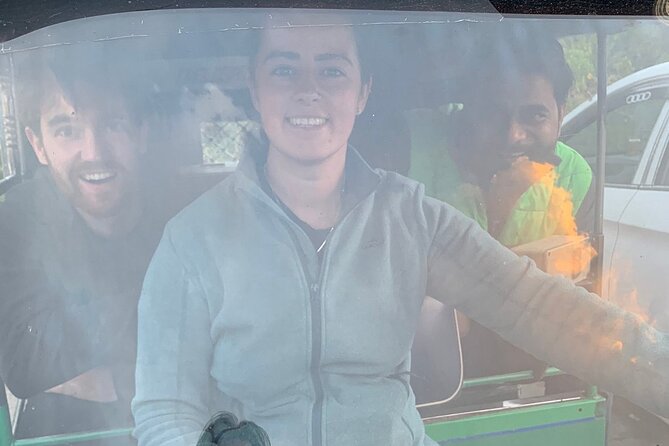
The Monkey Temple (also called the Sun Temple area in the plan) takes about 1.5 hours. It’s located in the Aravalli Hills area about 10 kilometers east of Jaipur, near a mountain pass. The best part is the interaction: you may see monkeys up close, and the plan even mentions that people can feed them as they live freely and gather for food.
This is also where you should be mentally prepared. Monkey areas can be chaotic in a good way, but they can also be noisy and unpredictable. If your group is nervous around animals, go slowly and follow the guide’s lead.
Admission ticket note
Entrance here is listed as not included unless you choose the option that includes entrance fees.
Pink City stroll: the short walk that helps everything click
At the end, you get about 30 minutes to stroll through the Pink City. The point here isn’t to “shop all day.” It’s to give you a human scale to the monuments you’ve been seeing. Narrow colorful streets and market energy help you connect the palace stories and fort views to everyday Jaipur life.
This is also a smart time window. Your legs are tired, the day is winding down, and you get exactly enough time to soak up the vibe without turning it into a marathon.
How to make the stroll worth it
If you want photos, do it early in the 30 minutes. If you want snacks or small purchases, keep it light and decide quickly so you don’t lose time you’ll wish you had later.
Guide quality: Raul and what flexibility means on the ground
The tour’s main human advantage is the English-speaking storyteller guiding you through the major stops. That’s not just translation. A good storyteller helps you connect details across the day: why Hawa Mahal’s facade matters, how City Palace reflects power, and what Jantar Mantar was built to do.
One named guide mentioned in feedback is Raul, and his praised traits were professionalism and flexibility. The same feedback noted he was timely and easy to reach before and after pickup/drop-off. That kind of accessibility matters when you’re trying to keep the day flowing smoothly.
It also mentioned a 60-year-old traveler who wasn’t initially keen on the tuk-tuk experience but ended up okay. That’s a reminder that the best guide behavior includes pacing and adapting. If someone in your group is hesitant, a guide who can read the room can turn a “maybe” into a win.
Price and what you should budget (without surprises)
At $6.80 per person, this tour is priced in the budget range, especially for a private tuk-tuk day covering multiple major sights plus a storyteller. For many people, the value is the transport package: fuel, parking, taxes, bottled water, and pickup/drop-off are handled in the offer.
The big variable isn’t the vehicle. It’s admission fees. Several stops are listed as not included for tickets (Hawa Mahal, City Palace, Jantar Mantar, Monkey Temple). A couple are listed as free for this plan segment (Jal Mahal viewpoint, Panna Meena ka Kund). And there’s an option that includes entrance fees if selected.
So how should you budget?
- If you pick the option that includes entrance fees, you’ll likely spend less time worrying about each site.
- If you don’t, you should expect to add ticket costs at the ticketed stops.
Either way, plan on some extra spend if your must-sees include City Palace, Jantar Mantar, and Monkey Temple.
Also remember meals and personal shopping aren’t included. If you get hungry, you’ll want to plan your timing so you don’t lose your best views while searching for food.
Who this tuk-tuk day trip fits best
This is a strong fit if:
- you want major Jaipur highlights without the stress of driving or constant ride-hunting
- you like learning with an English-speaking guide, not just wandering
- you’re traveling as a group that wants privacy and flexibility
- you appreciate a plan that mixes iconic monuments with quick visual stops
It may be less ideal if:
- you want very slow travel and lots of time inside museums
- you hate paying separate entrance fees (unless you choose the entrance-included option)
- your group needs frequent long breaks due to weather or stamina
Should you book Explore Jaipur with a Private Tuk-Tuk?
I’d book it if you want an organized, fun, and efficient Jaipur day with a guide who helps you understand what you’re seeing. The private tuk-tuk format is the real win here: it reduces friction, keeps you moving, and makes the day feel manageable.
You should pause and check ticket expectations if you don’t want to think about admission costs mid-day. Also, because it’s a full 8-hour loop, it’s worth bringing a realistic mindset: this is a best-of day, not a slow, multi-day deep exploration.
If your priority is seeing the big symbols of Jaipur—plus Amer, plus science at Jantar Mantar—and you want it without transport headaches, this tour setup is a smart choice.
FAQ
How long is the Jaipur private tuk-tuk tour?
It runs about 8 hours.
Do you get pickup and drop-off in Jaipur?
Yes. Pickup and drop-off are offered from your Jaipur hotel, airport, or railway station.
Is this tour private or shared?
It’s private. Only your group participates.
Is there an English-speaking guide or storyteller?
Yes. The tuk-tuk ride includes an English-speaking storyteller.
Are entrance fees included?
Entrance fees are included only if you select the option that includes them. Some stops are listed as not included for admission tickets.
Are meals included?
No. Meals are not included.
Is bottled water provided?
Yes, bottled water is included.
Is there a mobile ticket?
Yes. A mobile ticket is included.
Can I cancel for free?
Yes. Free cancellation is available up to 24 hours in advance for a full refund.