REVIEW · HERITAGE & CULTURAL WALKING TOURS
Jaipur Half-Day Heritage Tour by Women-Driven E-Rickshaw
Book on Viator →Operated by Rajasthan India Tour Driver · Bookable on Viator
Women drive; Jaipur heritage feels personal. I love the women-driven e-rickshaw setup and the hands-on stop at female artisan workshops, which turns sightseeing into something you can feel good about. The only real downside to plan for is that big-ticket entrances like Hawa Mahal, Jantar Mantar, and City Palace cost extra, and Albert Hall Museum entry is also not included.
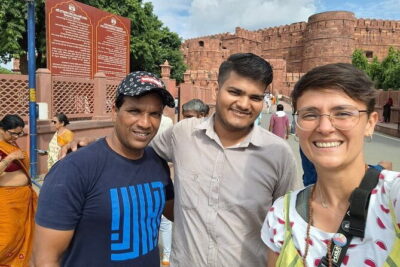
This half-day loop is built for people who want highlights without spending the whole day figuring out logistics. With pickup and drop, a professional guide, bottled water, and tea/coffee or lassi with samosa, you get comfort plus structure. In one prior experience, the driver was Laxmi and the guide was KK, and that kind of friendly organization is exactly what makes the route work.
In This Review
- Key things that make this tour click
- Women-driven e-rickshaw: more than a cute transport option
- Price and value: a private tour for up to 3, with key costs clarified
- How the 5-hour plan stays manageable in real life
- Stop 1: Jaipur flower market for colors, scents, and a morning reset
- Stop 2: Hawa Mahal as a quick architectural hit
- Stop 3: Jantar Mantar and the world’s largest stone sundial idea
- Stop 4: City Palace for courtyards, pavilions, gardens, and temples
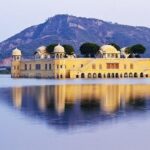
- Stop 5: Jal Mahal for the quick Water Palace moment
- Stop 6: Ramgarhmode workshop time with women artisans
- Stop 7: Albert Hall Museum as a thoughtful finale
- What you should plan for: tickets, pacing, and comfort
- Who this tour suits best
- Should you book the Jaipur Half-Day Heritage Tour by Women-Driven E-Rickshaw?
- FAQ
- How long is the Jaipur Half-Day Heritage Tour?
- How much does the tour cost?
- Is pickup and drop-off included?
- Is this tour private?
- What entrance fees are not included?
- Are any stops free to enter?
- What’s included during the tour?
- Is mobile ticketing used?
Key things that make this tour click
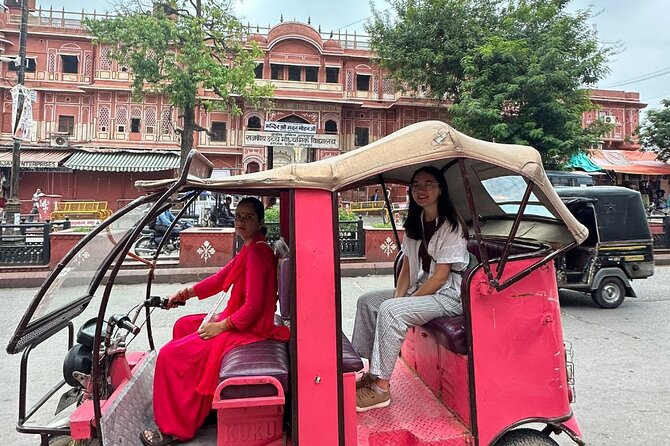
- Women drive the e-rickshaw so your trip directly supports their income and daily safety
- Private group feel (up to 3) with a route planned around major Jaipur landmarks
- Included refreshments: tea/coffee or lassi with samosa, plus bottled water
- A workshop stop, not just a photo stop at Ramgarhmode where you can see women artisans at work
- A smart mix of outdoors and indoors with the Albert Hall Museum as the finale
- Short, timed visits (about 30 minutes to 1 hour at each stop) that keep the day moving
Women-driven e-rickshaw: more than a cute transport option

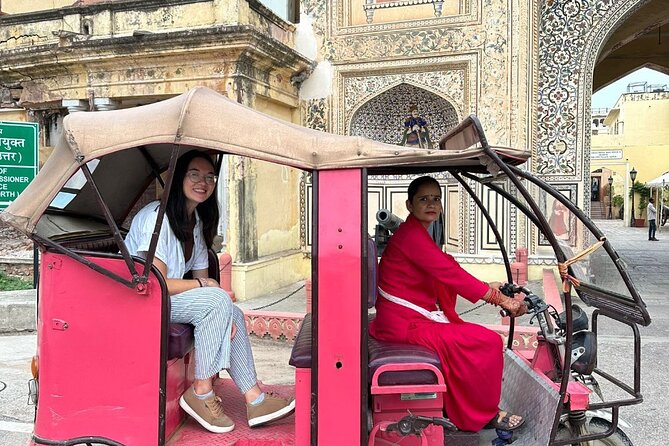
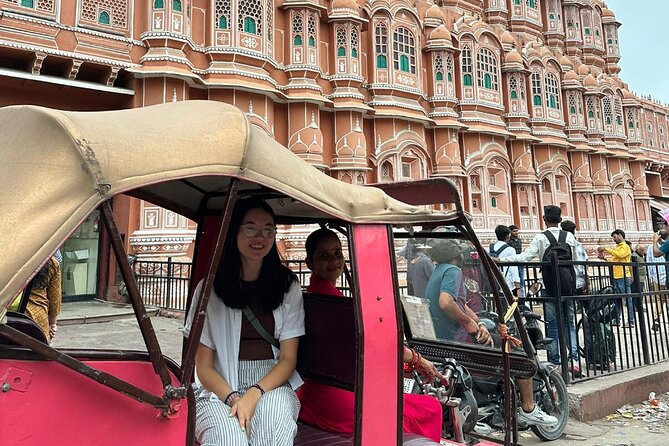
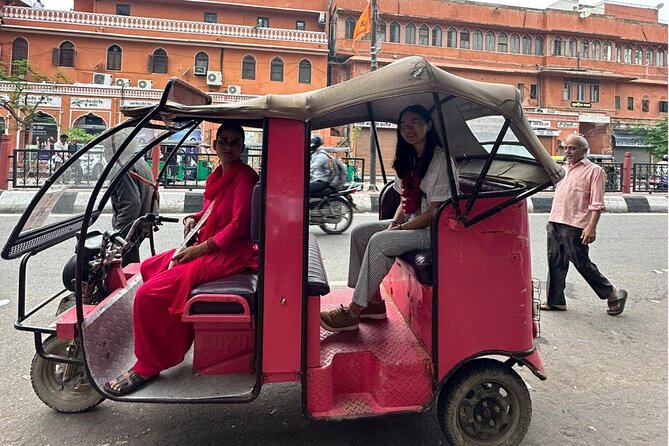
The biggest reason to book this tour is the mission behind the rickshaws. This service exists to help women earn a living. In many households, the money these drivers make is described as the sole support for their families, including situations where husbands may drink heavily or be abusive, or where drivers are widows. That’s a heavy reality, but it also means your ticket is doing practical good, not charity theater.
I also like that the tour doesn’t treat this as a side story. You’re literally riding through the city with the people it supports. It changes the vibe of sightseeing. Instead of watching “a driver” do a job, you’re traveling with women who are working hard for their families.
And yes, it’s still sightseeing. You’ll cover the core Jaipur names—then you’ll swap the usual landmark-only approach for a stop that shows skilled work up close.
You can also read our reviews of more historical tours in Jaipur

Price and value: a private tour for up to 3, with key costs clarified

At $31.02 per group (up to 3 people), this can be very good value if you’re traveling with even one companion. If you book as a pair or a trio, the cost per person drops a lot compared to typical single-person sightseeing rates.
Here’s the trade-off: several major attractions have entrance fees not included. Based on the listed prices, you should budget for:
- Hawa Mahal entry: $3.00 per person
- Jantar Mantar entry: $3.00 per person
- City Palace entry: $6.00 per person
That’s $12 per person if you enter all three. Jal Mahal and the flower market are listed as free, and the Ramgarhmode stop is included. Albert Hall Museum entry is not included, but the museum fee itself isn’t stated in the provided info.
The good news is that you’re not paying extra for the experience pieces that usually cost money—pickup/drop by private vehicle, the guided portion, and the electric rickshaw ride are all included.
Also included: bottled water, and tea or coffee (or lassi) with samosa. For a 5-hour day, that little food and drink break matters more than it sounds.
How the 5-hour plan stays manageable in real life
This tour runs about 5 hours and keeps each stop short enough to avoid the slow, dragged-out feeling that can happen with half-day tours. The route starts with the flower market, which works best earlier in the day. The flower market info specifically points to the morning transformation as vendors set out blooms, so you’re doing it at a good time of day.
You also get hotel/airport pickup and drop by private vehicle. That means you don’t lose time negotiating local rides right at the start or end.
One practical detail: you’ll be moving through central Jaipur areas on a rickshaw. That’s a comfortable pace for seeing the sights, but it also means you should expect some walking when you’re inside the monuments and museum. The durations make this clear—30 minutes here, 1 hour there—so you’ll cover a bit of distance even though the ride does most of the “getting there.”
Stop 1: Jaipur flower market for colors, scents, and a morning reset
The day begins at the Jaipur Flower Market, and it’s scheduled for about 30 minutes, with admission listed as free. The market’s whole personality is tied to timing: as dawn breaks, vendors set up and the place shifts into a color-and-scent show.
This first stop is more than a warm-up. It’s your chance to get oriented in the Pink City before the bigger landmarks. You’ll likely get good photo opportunities right as things are being set out, and the smell of flowers (and nearby snacks, if you notice them) can make the morning feel very local.
A consideration: markets can be sensory. If you’re sensitive to strong smells or crowded spaces, you’ll want to keep your expectations realistic. But the short 30-minute window makes it easy to enjoy without getting stuck.
Stop 2: Hawa Mahal as a quick architectural hit
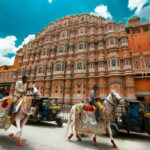
Next up is Hawa Mahal (Palace of Wind) for 30 minutes. Entry is not included, with a listed fee of $3.00 per person.
Hawa Mahal is presented as an iconic landmark with intricate designs and craftsmanship. That’s exactly the kind of stop that works well in a half-day tour: you don’t need hours to appreciate the facade and its details. The short timing also keeps this from turning into a long line situation if you show up later.
My advice: spend your time scanning the intricate exterior, not just snapping one wide shot. This is one of those structures where your second look is more satisfying than your first.
You can also read our reviews of more tours and experiences in Jaipur



Stop 3: Jantar Mantar and the world’s largest stone sundial idea
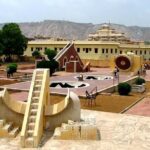
Jantar Mantar is next, scheduled for about 45 minutes. Entry is not included, and the fee listed is $3.00 per person.
What makes this stop special in the way this tour frames it: it’s an ancient astronomical observatory, and it includes the world’s largest stone sundial. That’s a memorable hook because you’re not only looking at buildings—you’re seeing tools meant to measure time and movement.
For you, this is a good match if you like when sightseeing comes with an idea you can hold onto. Even if you don’t know the background going in, the setting helps you understand it as something built for observation.
One consideration: because it’s an observatory, it’s easy to get tempted to rush for photos. Give yourself a bit of time to look steadily. If your guide points out how the sundial works, you’ll likely enjoy the stop more.
Stop 4: City Palace for courtyards, pavilions, gardens, and temples
City Palace takes about 1 hour in this plan, with admission not included (listed fee $6.00 per person).
The tour description emphasizes the complexity of the site: courtyards, buildings, pavilions, gardens, and temples. That “many parts” detail matters. An hour is enough to get a real sense of the place without feeling like you’ve barely started.
I like that this stop rounds out the tour after the observatory stop. Jantar Mantar is about measurement and time. City Palace is about how power, daily life, and design all occupy the same space.
Potential drawback: because City Palace includes multiple areas, it’s possible to feel a little “split attention” if you’re trying to do everything at once. Let your guide’s pacing help you choose what to prioritize.
Stop 5: Jal Mahal for the quick Water Palace moment
After City Palace, you get a brief 15-minute stop at Jal Mahal (Water Palace). Entry is listed as free.
This is a classic “pause for a scene.” The Water Palace is described as surrounded by architectural wonders and located in the middle of Man Sagar (Man Sagar Lake). Even with limited time, this stop is worth it because it gives you a view that differs from the tightly clustered monument feel elsewhere.
If you’re the type who likes short stops that reset your eyes, you’ll appreciate this. It’s not trying to be a long activity.
Stop 6: Ramgarhmode workshop time with women artisans
Now for the part that changes the tone of the whole day: Ramgarhmode, about 1 hour, admission listed as free.
You’ll visit factories and warehouses with women artisans, and the tour specifically calls out handcrafted work like carpets and embroidered fabrics. This is the closest thing on the itinerary to a “see how it’s made” experience—and it connects directly to the women-driven mission of the tour.
What I like here is that you’re not just watching a performance. You’re seeing skilled labor and craftsmanship that shows up later in what you might buy in India. Even if you don’t shop, you’ll likely leave with better appreciation for the effort behind textiles.
A practical note: industrial spaces can have different temperatures and lighting than outdoors. If you’re going to be taking photos, ask your guide if there are areas where pictures are okay. The stop is built to observe and learn, not to rush through.
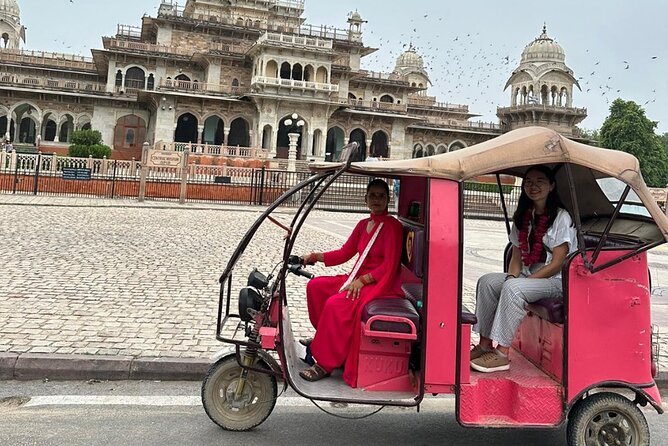
Stop 7: Albert Hall Museum as a thoughtful finale
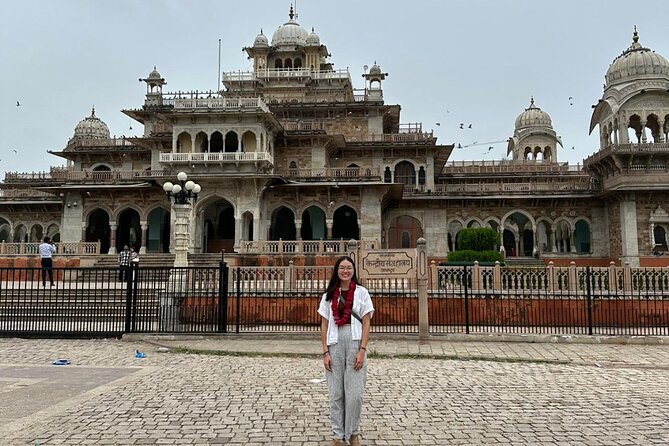
The tour ends at the Albert Hall Museum, with about 1 hour on the schedule. Admission is not included, though the entry price isn’t provided in the given information.
The museum is described as having a diverse collection: paintings, jewelry, carpets, ivory carvings, stone sculptures, metal works, and crystal pieces. That mix matters because it gives you a way to connect the morning’s monuments and the afternoon’s textiles to a broader picture of Jaipur and its craft traditions.
I like museum endings for two reasons. First, you get indoor air-conditioning potential (if you’re traveling in hotter seasons). Second, it’s a structured place to slow down after the walking and riding.
If you’re shopping-minded, this is also where you can see what categories of items are valued and displayed. If you’re just sight-focused, the variety keeps the hour from feeling repetitive.
What you should plan for: tickets, pacing, and comfort
A few things to keep straight so the day feels smooth instead of surprise-heavy:
Entrance fees you should expect
- Not included: Hawa Mahal, Jantar Mantar, City Palace, and Albert Hall Museum.
- Listed as free: flower market, Jal Mahal, and Ramgarhmode.
Your group size matters for value
- This is priced per group up to 3. If you can travel with a friend, you can split the cost and make the entrance fees the only meaningful extra spend.
Time discipline is the point
- With a 5-hour total duration, each stop has a built-in limit. If there’s one place you care most about, tell your guide early so the pacing can reflect your priorities.
Weather and comfort
- The tour includes outdoor time at multiple stops plus a market in the morning. Bring patience for heat and sun if the day is warm. If you’re sensitive, you’ll probably appreciate the indoor museum stop as a relief.
Who this tour suits best
This is a great fit if you want a high-impact, half-day heritage day with three traits:
- You care about an actual women-supporting livelihood initiative, not just “a theme”
- You want a guided structure that hits the Jaipur classics
- You like seeing craft and culture through real work spaces like Ramgarhmode
If you’re the type who dislikes long museum marathons or you hate spending hours in one monument, this timing should feel right. If you’re a “read every sign and linger everywhere” traveler, you might find the stop lengths a little short—because that’s how the tour stays manageable.
Should you book the Jaipur Half-Day Heritage Tour by Women-Driven E-Rickshaw?
I’d book it if you want a well-paced Jaipur highlights circuit that also includes an artisan stop with real human stakes. The strongest reasons are the women-driven e-rickshaw mission, the inclusion of Ramgarhmode workshop time, and the fact that the tour is organized with a professional guide and a smooth start-to-finish plan.
I’d think twice if you don’t want to manage separate entrance fees, since several major stops have them listed as extra. It’s still worth it for many people—just budget for the monument entries and plan to spend your time well inside each stop.
FAQ
How long is the Jaipur Half-Day Heritage Tour?
It runs for about 5 hours.
How much does the tour cost?
The price is $31.02 per group (up to 3 people).
Is pickup and drop-off included?
Yes. Hotel or airport pickup and drop-off are included by private vehicle.
Is this tour private?
Yes. It’s a private tour/activity, and only your group participates.
What entrance fees are not included?
The entrance fees not included are: Hawa Mahal ($3.00 per person), City Palace ($6.00 per person), and Jantar Mantar ($3.00 per person). Albert Hall Museum entry is also not included.
Are any stops free to enter?
Yes. The flower market and Jal Mahal are listed as free. Admission is also listed as free for the Ramgarhmode stop.
What’s included during the tour?
Bottled water, a professional guide, a private tour by electric rickshaw driven by women, hotel/airport pickup and drop, and tea or coffee or lassi with samosa.
Is mobile ticketing used?
Yes. A mobile ticket is included.