REVIEW · HERITAGE & CULTURAL WALKING TOURS
Jaipur Heritage Walking Tour – Local life, Havelis and Temples
Book on Viator →Operated by Bagheera Adventure · Bookable on Viator
Jaipur’s old lanes feel like an open-air classroom. This small-group walking tour mixes temples, havelis, and markets with street-food snacks and a local guide who sets a comfortable pace.
I like that it doesn’t just point at sights. You’ll walk through the working side of Jaipur, from a wholesale flower and vegetable market to artisan craft demos, then pause for a Hindu temple ceremony.
One possible catch: it’s a walking experience in and around busy markets, and the stop at Hawa Mahal notes that admission isn’t included, so you may need to plan for that if you want to go inside.
In This Review
- Key Highlights Worth Waking Up For
- Why This Pink City Walk Feels Like a Local Shortcut
- Starting at Hawa Mahal Road: Getting Oriented Fast
- Hawa Mahal: The Quick Look That Still Makes Sense
- City Palace Area and Old Havelis: Narrow Lanes, Real Details
- The Pink City Flower and Vegetable Wholesale Market: Work, Color, Scale
- Govind Devji Temple Aarti: A Ceremony With Timing Matters
- Tripolia Bazar Crafts: Seeing How Jaipur Gets Made
- The Street Food Portion: Included Snacks, Confident Stops
- Small Group Pace and a Guide Who Can Adapt
- Price and Value: $16 for a 3-Hour Old-City Mix
- What to Wear and Bring for a Comfortable Walk
- Who This Tour Suits Best
- Should You Book This Jaipur Heritage Walking Tour?
- FAQ
- How long is the Jaipur Heritage Walking Tour?
- How much does the tour cost?
- What’s included in the tour price?
- Are admission tickets included?
- Where does the tour start and end?
- Do I need cash or a physical ticket?
- Is this tour private?
- What if the weather is bad?
Key Highlights Worth Waking Up For

- A local guide like Viru who explains what you’re seeing and adjusts to your group’s rhythm
- Hawa Mahal on foot for a quick orientation, with time left afterward for food
- City Palace lanes and courtyards that show Jaipur’s old “haveli” way of living
- Wholesale flower and vegetable market views that feel like real work, not a set
- Govind Devji Temple aarti timing can be special if you catch the morning ceremony
- Tripolia Bazar craft demos where you see traditional making processes in action
Why This Pink City Walk Feels Like a Local Shortcut
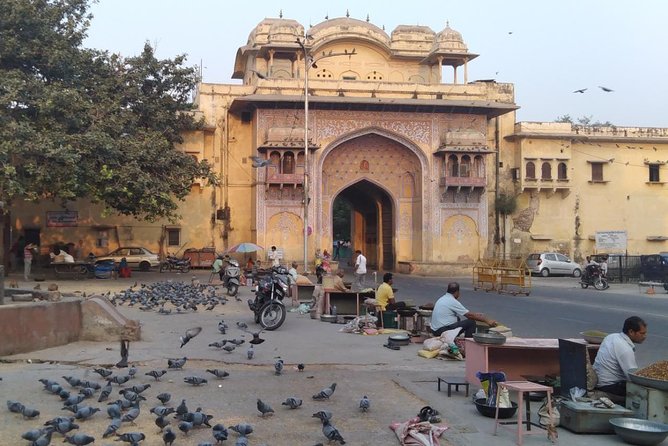
If you’ve ever toured Jaipur from a car window, this kind of walk changes your whole sense of the city. You’re in the Pink City’s tight lanes, moving at foot-speed, where details matter: the curve of a doorway, the way courtyards open up, and how people move between stalls and temples.
The best part for me is the balance. You get classic landmarks like Hawa Mahal and the City Palace area, but the tour also slows down for the “in-between” places—markets where the city’s daily rhythm is still obvious. And the small group size means you’re not stuck listening from the back.
You can also read our reviews of more walking tours in Jaipur


Starting at Hawa Mahal Road: Getting Oriented Fast
The tour begins near Hawa Mahal Road in Jaipur’s Pink City area, at a meeting point by the J.D.A. Market area. If you’re wondering whether you’ll feel lost, this is a good start: it puts you right where first-time orientation matters.
The first stop focuses on Hawa Mahal—the Palace of Wind. You’ll spend only about ten minutes here, and importantly, the ticket is not included. That means this is more about seeing and understanding the landmark than doing a long museum-style visit. Even if you skip entry, it still works as a “gateway stop” that helps you connect the rest of the walk to why the Pink City is arranged the way it is.
Practical tip: plan to spend most of your energy on the walking and the conversation, not on rushing inside buildings. The tour is designed to leave room for street life and snacks afterward.
Hawa Mahal: The Quick Look That Still Makes Sense
Hawa Mahal was built in 1799 by King Sawai Pratap Singh. The purpose wasn’t just pretty architecture—it was about allowing women of the royal court to view street and market processions.
Even with a brief stop, that context matters. When you can picture who used the building and why, you start noticing the details that otherwise look decorative. This is the kind of framing a good guide gives you: a short explanation that turns photos into understanding.
If you’re the type who wants to go inside a lot of places, remember this stop is only about ten minutes and the admission is not included. If you want more time there, you’ll likely need to pair this tour with a separate visit.
City Palace Area and Old Havelis: Narrow Lanes, Real Details
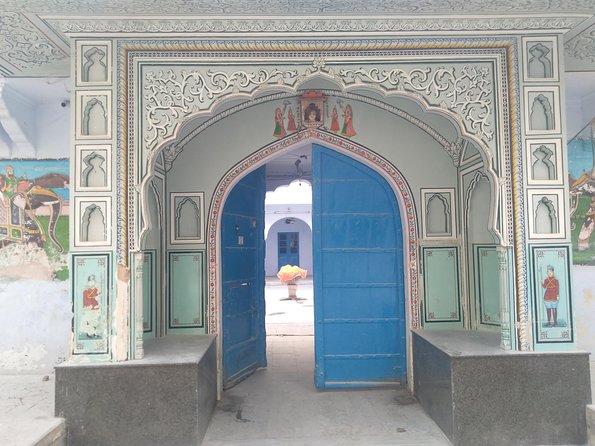
After Hawa Mahal, you step into the older parts of the city around the City Palace. Here the tour moves through what feels like a living archive: old havelis (traditional mansion homes) with courtyards and frescoes.
You’re not going for a long official indoor sightseeing block. Instead, you get short walking segments—about ten minutes at this part—where the guide’s explanations make the architecture legible. Look for the way courtyards create breathing space in tight neighborhoods. These spaces aren’t just decorative; they’re functional, shaping light, airflow, and everyday movement.
A big plus is that this section isn’t about consuming a checklist. It’s about noticing how Jaipur’s past still shapes the street-level experience. If you like architecture, but you also like people-watching, this stop format is a good fit.
The Pink City Flower and Vegetable Wholesale Market: Work, Color, Scale
Then comes one of the most memorable stops: the wholesale flower and vegetable market in the Pink City. You’ll spend about thirty minutes here, and admission is free.
This is the only wholesale flower and vegetable market in Jaipur mentioned in the tour description, and it’s where the city’s supply chain becomes visible. Don’t expect quiet. Expect activity—workers, baskets, and lots of hands doing lots of tasks. That’s exactly why this part is valuable. It shows you Jaipur as a functioning marketplace, not only as a backdrop for visitors.
Also, flowers and produce have a sensory effect that photos can’t fully capture. Even if you’re not buying, you’ll see how the market shapes the surrounding lanes and daily schedules.
One thing to consider: markets can be crowded and warm. Bring a mindset that this is part observation, part navigation. You might not want your phone out every five seconds.
You can also read our reviews of more historical tours in Jaipur





Govind Devji Temple Aarti: A Ceremony With Timing Matters
Next is the Govind Devji Temple area, also free for entry. The tour includes one of the temple ceremonies called aarti, and the guide provides the program context.
The tour specifically advises trying to attend the morning ceremony. That matters because temple ceremonies have an energy that’s tied to time of day. If your schedule allows it, go when they suggest. It’s the difference between seeing a site and seeing a site in action.
This stop runs about fifteen minutes. That’s enough time to understand what’s happening and not enough time to feel like you’re being rushed. The value here isn’t a long viewing session. It’s the explanation that helps you understand the purpose behind the ritual.
If you prefer a very quiet sightseeing pace, you may want to lean into respectful observation rather than trying to talk over the ceremony. The setting is devotional, so keep your attention on what’s unfolding around you.
Tripolia Bazar Crafts: Seeing How Jaipur Gets Made
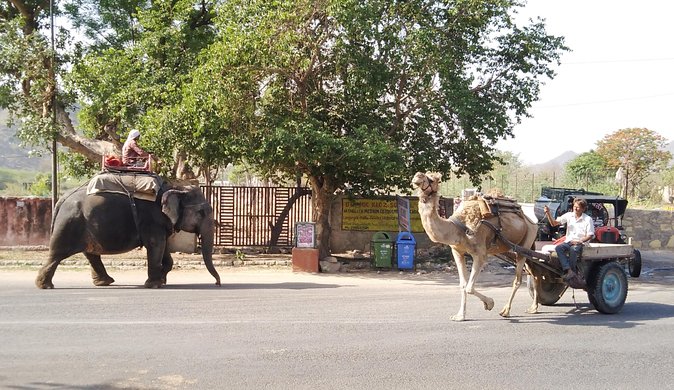
The final main stop is Tripolia Bazar, with a long stretch of time—about 1.5 hours—and admission is free.
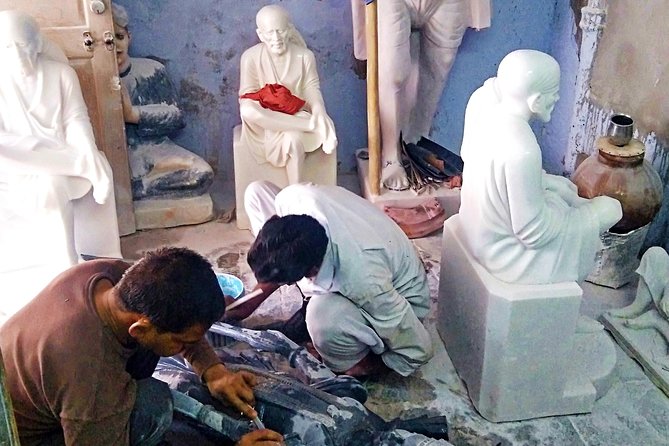
This is where the tour turns into something you can learn from, not just look at. You’ll see live demonstrations of traditional craft-making, including lac bangle making, marble carving, and brass utensil crafting. In other words, you get to watch the process rather than just admire the finished object.
This section is also a smart way to handle the “what do I actually do with souvenirs?” question. Instead of buying randomly, you’ll know what kind of work goes into items you might see later in shops. Even if you don’t buy, it makes the city feel more hands-on and real.
Note: craft demonstrations can be visual and fast-changing, so ask your guide questions if something catches your eye. Guides often have stories for why certain materials and designs became popular in this region.
The Street Food Portion: Included Snacks, Confident Stops
One of the tour’s stated highlights is trying local street food snacks from reliable vendors. Snacks are included, as is coffee and/or tea, plus free bottled water.
This matters more than it sounds. Street food can be a great experience, but it can also be stressful if you’re guessing where to eat. With a guide choosing reliable vendors, you’re more likely to get snacks that are worth your time.
Because the street-food moment comes after a temple and market walk, it feels like a reset. You’ll have moved enough to work up an appetite, but you won’t be so tired that food becomes an obligation.
Practical tip: sip the water often. Jaipur can be warm, and walking adds up. Having water included helps a lot when you’re in dense neighborhoods.
Small Group Pace and a Guide Who Can Adapt
The small group approach isn’t just a marketing phrase here. The reviews point to guide behavior that matters on the ground: guides who are thorough with explanations and happy to go at the group’s pace, rather than dragging everyone along.
One repeated theme is the guide’s ability to handle families. There’s a clear example of a guide adapting the experience for an 8-year-old, keeping the tour engaging without turning it into a boring lecture. That’s a strong sign the guide isn’t only focused on adults who already love museums.
If you want an active day with conversation, this is a good fit. If you want a silent walk for photos only, you might still enjoy it, but the tour’s format assumes you’ll engage.
Price and Value: $16 for a 3-Hour Old-City Mix
At $16 per person for about three hours, this is a serious value for Jaipur. What helps the math is what’s included:
- snacks
- bottled water
- coffee and/or tea
Most walking tours at this price either cut corners or include only one small extra. Here, you get several small comforts that add up during a warm, active city day.
The main cost uncertainty is admission for Hawa Mahal. The tour indicates the ticket is not included at that stop. That doesn’t automatically make the tour a bad deal—you can still appreciate Hawa Mahal from the exterior within the short time—but it does mean you should read the day as: landmark context first, full entry only if you plan for it separately.
Also, the tour is often booked about 42 days in advance on average. That’s a hint it’s popular for people who want an easy first taste of Jaipur’s Pink City without a long itinerary.
What to Wear and Bring for a Comfortable Walk
This experience is built for walking, plus a market day. So set yourself up:
- Wear comfortable shoes with grip.
- Dress for sun and heat; plan for walking between shaded and open spots.
- Bring a light layer for temple areas if you prefer that.
- Keep your phone charged, but don’t over-plan photos; the best moments are sometimes the quick ones—an explanation, a craft demo detail, a ceremony glance.
Because the experience requires good weather, check the forecast close to your start date. If it’s canceled for poor conditions, you’ll be offered a different date or a full refund.
Who This Tour Suits Best
This is ideal if you want:
- a first-time Jaipur day that mixes iconic sights with local life
- market energy without getting overwhelmed
- a guide who provides context for temples and architecture
- included snacks and drinks, so you don’t spend your day hunting
It might be less ideal if you:
- hate walking in crowded areas
- need fully guided entry into every major monument (since Hawa Mahal admission is not included)
- want a slow, museum-heavy pace with lots of indoor time
Should You Book This Jaipur Heritage Walking Tour?
Yes, you should book if you want a three-hour dose of Jaipur that feels grounded in daily life. The combination of markets, havelis, a temple aarti, and artisan craft demos is a smart mix. And the fact that guides are reported to be flexible with pace and family needs makes it a safer choice than tours that treat you like a moving statue line.
I’d skip or postpone if you’re likely to struggle with heat, crowds, or walking. Also, if you specifically want a long, paid visit inside Hawa Mahal, you’ll need to plan that separately.
If your goal is to understand why Jaipur looks the way it does—and to see the city at work, not only at rest—this tour is a strong start.
FAQ
How long is the Jaipur Heritage Walking Tour?
It runs for about 3 hours.
How much does the tour cost?
The price is listed as $16.00 per person.
What’s included in the tour price?
Included are snacks, bottled water, and coffee and/or tea.
Are admission tickets included?
Admission is not included for the Hawa Mahal stop. The other listed stops (City Palace area, Pink City market, Govind Devji Temple, and Tripolia Bazar) show admission as free.
Where does the tour start and end?
It starts at Hawa Mahal Road (near Badi Choupad, J.D.A. Market, Pink City, Jaipur) and ends back at the meeting point.
Do I need cash or a physical ticket?
You’ll receive a mobile ticket.
Is this tour private?
Yes. It’s described as a private tour/activity, so only your group participates.
What if the weather is bad?
The experience requires good weather. If it’s canceled due to poor weather, you’ll be offered a different date or a full refund.
If you tell me your travel month and whether you prefer morning or afternoon activities, I can suggest the best way to time this day around temple ceremonies and market comfort.