REVIEW · FOOD & DRINK
Cultural Walk and Food Tasting In Jaipur
Book on Viator →Operated by Rajasthan Cultural Tours · Bookable on Viator
Jaipur tastes better on foot. This cultural walk pairs traditional bazaars with real food tasting, so the city makes sense through what people actually buy and eat. You’ll move through Old Jaipur areas like the Pink City lanes, with stops that connect crafts, shopping streets, and snacks.
I especially like the small group size (up to 10), which keeps the pace friendly and the guide easy to hear. I also like how the route links street food to the places that created it, from Maniharo Ka Rasta for bangles to Bhagat Jaipur for sweets. It feels less like a checklist and more like a guided day in town.
One thing to consider: you should be ready for a solid walk on uneven bazaar streets, and the experience requires good weather. If it’s a bad weather day, it may be rescheduled or refunded.
In This Review
- Key highlights before you go
- Why this Jaipur walk is about more than food
- Price, group size, and what you really get for $22.37
- Meeting at Golcha Cinema and ending in Choti Choupar
- First stops: utensils, textiles, and a tower story that sets the tone
- Maniharo Ka Rasta for lac bangles and craft culture
- Bhagat Jaipur sweet shop and why timing matters
- Spice market and the lane known for stone-cut sculptures and marble
- Chai, dessert, and how the tasting stays pleasant
- Guide matters: Vivek and Raj-style storytelling in the Pink City
- What to bring for a 3-hour bazaar walk
- Who this tour suits best
- Should you book this Cultural Walk and Food Tasting in Jaipur?
- FAQ
- How long is the Jaipur Cultural Walk and Food Tasting?
- What does the $22.37 price include?
- Are there any foods or drinks not included?
- Where does the tour start and end?
- How big is the group?
- Is hotel pickup and drop-off included?
- What if the weather is bad?
- What’s the cancellation policy?
Key highlights before you go
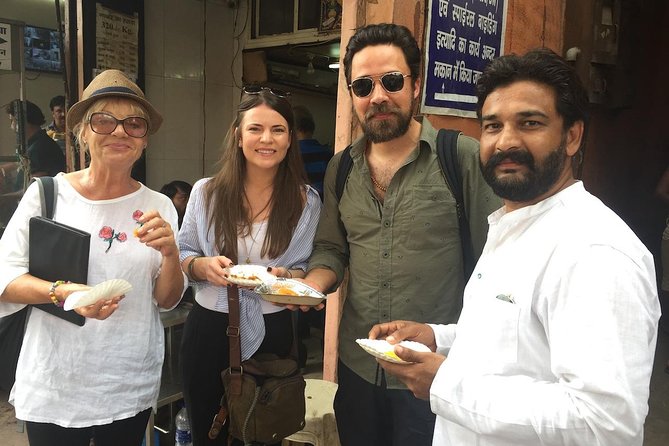
- Up to 10 people for a more personal food-and-culture pace
- English speaking foodie guide focused on history plus what to eat
- Masala chai + traditional dessert are included, not just snacks
- Maniharo Ka Rasta for lac bangles and craft culture in action
- Bhagat Jaipur stop with an included sweet shop admission ticket
- Spice market and a lane known for stone-cut and marble artistry
Why this Jaipur walk is about more than food
This isn’t only a food tour where you hop from one stall to another. The plan is to help you read Jaipur while you’re eating, by showing you why these streets exist and what they’re known for. You learn the city through hands-on scenes: crafts, shop types, and market traditions.
I like tours like this because food becomes a shortcut to culture. When you taste something in the same neighborhood where it’s part of daily life, it stops being random. You also get the fun of wandering the bazaar corridors that most people rush through.
The best part is that you’re not stuck behind a bus window. You’re walking the Old Jaipur lanes, including shopping streets where the vibe is long-established. That matters in a city where history isn’t in a museum case, it’s built into the street rhythm.
You can also read our reviews of more walking tours in Jaipur
Price, group size, and what you really get for $22.37
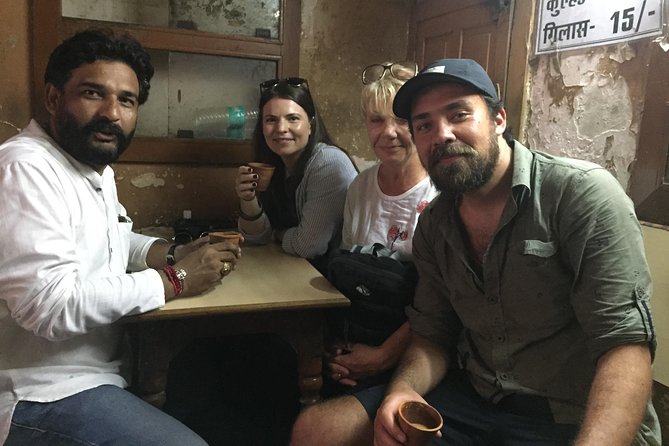
At $22.37 per person for about 3 hours, this is positioned as good-value for a guided tasting with multiple included items. You’re not just paying for access to food; you’re paying for an English speaking foodie guide who coordinates stops and explains what you’re looking at.
Included items make a real difference. You get food tasting, bottled water, masala chai at local tea shops, and a traditional dessert. That turns the price into a predictable day out instead of a series of add-ons.
What’s not included is also important: food and drinks beyond what’s specified aren’t covered, and there’s no hotel pickup or drop. If you want a full sit-down meal or extra drinks, you’ll need to budget separately.
Also, the tour caps at 10 travelers, which usually helps with pacing and questions. You’ll spend less time waiting and more time tasting and walking.
Meeting at Golcha Cinema and ending in Choti Choupar

The start point is Golcha Cinema, Chaura Rasta Road, New Gate, Bapu Bazar, in the Pink City. The end point is CHOTI CHOUPAR, Kishanpole Bazar Road, also inside Old Jaipur. That means you’ll cover ground in the parts of town where it’s easiest to keep exploring after the tour.
Having a clear start and end is useful in Jaipur, where directions can change street to street. It also helps you plan other sights afterward without guessing where you’ll end up.
You’re also near public transportation, which is a practical win. If you’re pairing this with forts or temples later, you can usually get back to main routes without too much hassle.
First stops: utensils, textiles, and a tower story that sets the tone
Early on, the tour pivots toward everyday craft and commerce. One stop focuses on buying brass, iron, and stainless steel utensils, plus nearby shops selling textiles and furniture. Even if you don’t plan to shop, you get a sense of how Jaipur is built on trades and materials.
Then there’s a stop with an explanation about a tower, including its history and the story behind it. This is the moment where the tour stops being only snack-based and becomes city-based. A good guide uses these quick history moments to connect streets to meaning.
A possible drawback here: if you only want food and would rather skip anything shop-related, those early craft stops might feel slow. But for most people, it’s worth it because it teaches you what to pay attention to later in the bazaar maze.
Maniharo Ka Rasta for lac bangles and craft culture
Next you’ll reach Maniharo Ka Rasta, a market famous for bangles. The name points to the craft: Manihar means one who makes bangles, and this rasta is filled with makers and sellers, especially bangles made with lac.
You’ll spend about 15 minutes here, and the atmosphere is the point. It’s not a distant landmark; it’s a living workshop-type street where the product is the culture. Watching how vendors present items and discussing what makes lac bangles special gives you a sharper view of Jaipur’s artisan economy.
Practical tip: keep an eye out for different styles and finishes, since bangles are a big part of local identity. If you’re shopping for jewelry, this is the kind of stop where you’ll get a feel for quality and common types before you buy elsewhere.
Admission for this part is listed as free, so your time is mostly about looking and listening. You can also use this as a bathroom-break moment if you need one before the sweet shop stop.
You can also read our reviews of more food & drink experiences in Jaipur





Bhagat Jaipur sweet shop and why timing matters
After bangles, the route shifts to sugar. You’ll visit Bhagat Jaipur, a very famous sweet shop in Jaipur, with about 10 minutes on site. The admission ticket is included.
Why this stop works in a food-tasting plan: it gives you a controlled break where you can reset your palate. Instead of throwing random sweets at you, it’s placed after a craft market, so the tastes feel like a change of pace.
The tour also typically includes chai, and the shop stop helps set up that rhythm. If you get chai at the right time, it makes later spice-market tastes easier to handle.
Keep in mind: this is still a bazaar area, so it can get tight around shop entrances. If you’re sensitive to crowds, you’ll want to follow the guide’s pace closely and step aside when needed.
Spice market and the lane known for stone-cut sculptures and marble
The next portion focuses on flavor and visuals. There’s a spice market stop, which is where you’ll understand why Jaipur food tastes the way it does. Even without getting into complicated cooking details, the smell and sorting of spices helps you connect the tastings you’ve had with the ingredients behind them.
Then the tour moves to a street especially known for delicately designed stone cut sculptures and marble artwork. This is where you slow down a bit and look closely at the craft in the built environment. Jaipur’s marble and stonework isn’t only for monuments; you can see how design thinking shows up in everyday streets.
A practical consideration: bazaar streets can be uneven, and you may encounter narrow lanes and lots of people. Wear shoes you trust. You’ll enjoy the carvings more if you’re not worrying about your footing.
Chai, dessert, and how the tasting stays pleasant
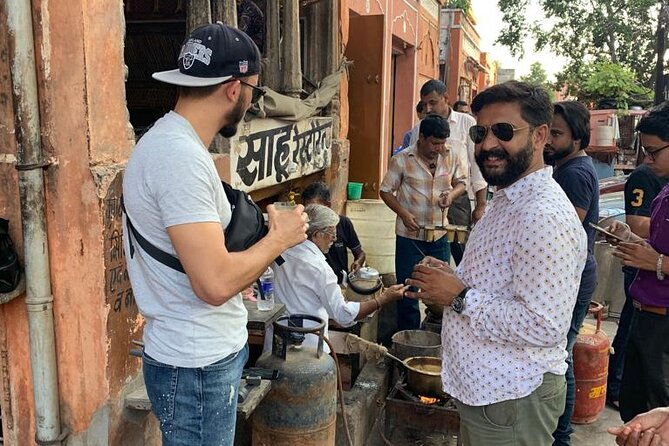
What makes this tour feel well-paced is that it includes key “support” items: bottled water, masala chai at local tea shops, and a traditional dessert. That means you’re not left dehydrated or trying to figure out where to buy a drink mid-walk.
In Jaipur’s heat, water coverage matters. Even if you normally skip bottled water at home, it helps you stay comfortable during a 3-hour walk that keeps moving.
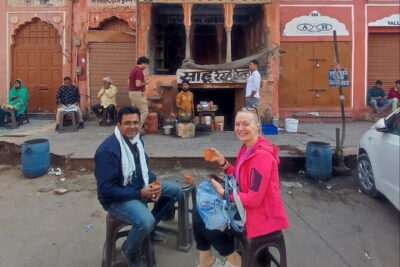
The included chai is also more than a beverage stop. It’s a cultural signal: tea shops are social places in markets, and chai gives you a moment to slow down and absorb the street scene. The dessert afterward helps round out the food story with something classic rather than random snacking.
If you’re the kind of person who wants variety beyond what’s on the plan, you can always buy extra later. Just know the included tasting is the core experience, and the rest is optional.
Guide matters: Vivek and Raj-style storytelling in the Pink City
The quality of a walking food tour rises or falls on the guide. In this case, the English speaking foodie guide role really seems to land, and names like Vivek and Raj show up in how people describe their experience.
The consistent theme is storytelling with purpose. Guides here connect what you see—craft streets, shop types, and specific landmarks—with what you taste. That’s why the history doesn’t feel like extra homework. It feels like context that helps your brain file away the smells, colors, and textures you just encountered.
Another strong point from how guides are described: people feel safe and looked after while walking busy lanes. In a place with traffic and crowded markets, having a guide who manages the flow matters.
If you do one thing to get the most out of it, ask short questions while you walk. Things like what a vendor is known for, how the craft works, or how chai and sweets fit into local routines. This tour is designed for interaction.
What to bring for a 3-hour bazaar walk
You won’t need special gear, but you do need comfort. Bring comfortable walking shoes, and wear something breathable. The route involves markets and older streets, which usually means uneven pavement and frequent stops.
A mobile ticket is included, so keep your confirmation accessible on your phone. That saves time at the start and keeps you from fidgeting in crowded areas.
If you’re the type who likes to shop, keep an eye out for opportunities tied to the route. You’ll pass areas known for utensils, textiles, furniture, and bangles, so you’ll have chances to compare styles and prices along the way.
Finally, have a plan for snacks beyond the included tasting. Since food and drinks other than what’s specified aren’t included, you may want to eat a light meal before you go, then let the tour handle the rest.
Who this tour suits best
This fits you if you want your first Jaipur day to feel local fast. It’s especially good for first-timers who want a handle on Old Jaipur without getting lost, and for food lovers who like history tied to real street life.
It also suits you if you prefer smaller groups. With a max of 10 people, it’s easier to hear your guide and stay together. You’re less likely to spend the tour trying to reconnect with people in a crowd.
I’d skip it if you hate walking or want a long seated meal. This is built around short stops, tasting, and continuous movement through bazaar streets.
Should you book this Cultural Walk and Food Tasting in Jaipur?
Book it if you want a smart mix of street food, chai, and local crafts, served with an English speaking guide who explains what you’re seeing. At this price point, the included water, chai, dessert, and multiple tasting stops make it feel like a full experience rather than a rushed sampler.
Think twice if you have limited mobility or you’re sensitive to uneven walking conditions. Since the tour requires good weather, check conditions before you commit. If weather is rough, be ready for a reschedule or refund.
If you’re planning to explore more of the Pink City after this, it’s a helpful orientation. You’ll leave with names of markets, types of crafts, and an understanding of how these streets connect to daily life.
FAQ
How long is the Jaipur Cultural Walk and Food Tasting?
The tour lasts about 3 hours (approx.).
What does the $22.37 price include?
The price includes food tasting, bottled water, traditional dessert, masala chai at local tea shops, and an English speaking food guide.
Are there any foods or drinks not included?
Yes. Food and drinks other than the specified items are not included.
Where does the tour start and end?
It starts at Golcha Cinema, Chaura Rasta Rd, New Gate, Bapu Bazar, Pink City, Jaipur and ends at CHOTI CHOUPAR, Kishanpole Bazar Rd, Pink City, Jaipur.
How big is the group?
The tour has a maximum of 10 travelers.
Is hotel pickup and drop-off included?
No. Hotel pickup and drop are not included.
What if the weather is bad?
The experience requires good weather. If it’s canceled due to poor weather, you’ll be offered a different date or a full refund.
What’s the cancellation policy?
You can cancel for free up to 24 hours in advance for a full refund. Changes within 24 hours aren’t accepted, and cancellations inside 24 hours don’t get refunded.