REVIEW · BICYCLE & CYCLING TOURS
Guided Morning Bicycle Tour with Food Tasting in Jaipur
Book on Viator →Operated by Seagull Jaunt · Bookable on Viator
Jaipur wakes up best on two wheels. This guided morning bicycle tour rolls through the Walled City for outside views, street scenes, and a food tasting that keeps things moving. You’ll get paired with an experienced bicycle captain and a tour escort who stays near the back, so you’re not just dropped into traffic-free sightseeing.
I like two things most: the slow, guided ride that makes the Pink terracotta streets easier to actually notice, and the food stops that go beyond a single sweet bite. On my ride, the guide (often Umesh) brings a clear, upbeat explanation of what you’re seeing and how Jaipur life works.
The main catch is simple: this is a no-monuments-inside format. Most sights are viewed from the outside (many are still closed in the morning), and you’ll want decent morning weather because the tour depends on it.
In This Review
- Key things you should know before you pedal Jaipur
- Entering Jaipur’s Walled City at Bike-Speed
- Raj Mandir Cinema: the classic Jaipur movie-house photo stop
- Panch Batti and Ajmeri Gate: pink facades, big protective doors
- Ram Niwas Garden: a traffic-free morning loop near Albert Hall
- Pink City and Chardiwari: seeing the walls that shaped daily life
- Hawa Mahal: the icon outside the gates
- Govind Devji Temple garden: markets, then laughing yoga
- Thatheron ka rasta: utensil makers and hands-on craft curiosity
- The food tasting: tea, snacks, and that Kullhad lassi finish
- Safety and comfort: helmets, escorts, and the support system
- Bike choices: tandem bikes and e-rickshaws when you need them
- Price and value: how $33.40 stacks up
- Who should book this Jaipur morning ride
- Small practical tips before you go
- Should you book this guided bicycle tour of Jaipur?
- FAQ
- FAQ
- How long is the guided bicycle tour with food tasting?
- What does the $33.40 price include?
- Where does the tour start?
- Do you visit monuments inside or just view them from outside?
- Is Raj Mandir Cinema or Ram Niwas Garden admission included?
- What food and drinks are included during the tour?
- Are helmets provided?
- Can children or people with health issues join the ride?
- Is this tour private?
- What happens if the weather isn’t good?
Key things you should know before you pedal Jaipur
- Outside-only sightseeing: you’ll enjoy views, photo points, and street context rather than entering monuments
- Safety built into the ride: a captain leads and an escort follows the last rider
- Food tasting that ends strong: tea up front and Kullhad lassi at the end
- Real artisan street time: Thatheron ka rasta for utensil makers working without machines
- Family-friendly bike options: tandem bikes and e-rickshaws for kids, elders, and riders with health limits
- Morning exercise and local interactions: you may join friendly movement and even laughing yoga
Entering Jaipur’s Walled City at Bike-Speed
Jaipur’s old center can feel like a maze until you get a plan. This tour gives you that plan, but with wheels instead of a van. You start at Raj Mandir Cinema, then work your way through the Walled City area in a slow rhythm that’s ideal for street-level noticing.
What makes this route work is timing. It’s a morning tour, and the itinerary leans into what you can see and understand when the streets are calmer. You’ll get short stops at big-name icons and then more meaningful time around neighborhood streets where daily life shows up: markets, workshops, temple grounds, and food joints.
And yes, the food matters here. You’re not just checking boxes; you’re tasting your way through the city’s morning habits.
You can also read our reviews of more food & drink experiences in Jaipur

Raj Mandir Cinema: the classic Jaipur movie-house photo stop
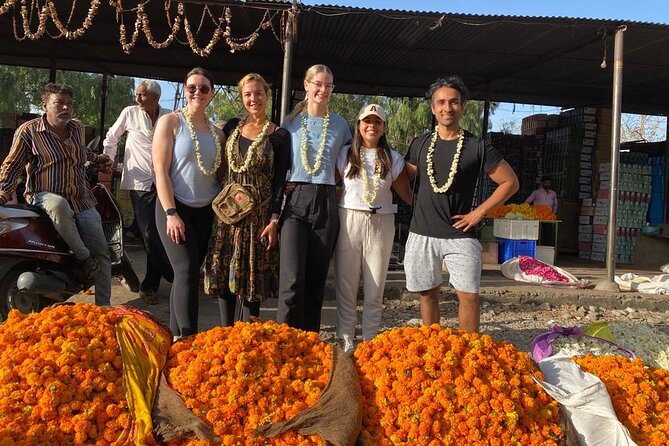
You’ll begin at Raj Mandir Cinema Hall, known as one of Jaipur’s oldest movie theatres and famous for its flashy interior look. You’re there for a quick stop (about 10 minutes), and admission isn’t included.
Even if you don’t go inside, the value is in the position and the pacing. This start point helps you avoid a rushed scramble later. Plus, it’s a smooth way to get your bearings before the tour turns into narrower, more historic streets.
Practical note: if you’re hoping to enter major buildings, this tour isn’t built for that. It’s a viewpoint-and-context ride.
Panch Batti and Ajmeri Gate: pink facades, big protective doors
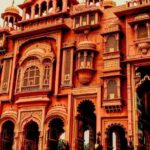
Next you’ll pause at Panch Batti, where you can gaze at rows of pink-terracotta buildings along main roads. This is a quick stop, but the benefit is visual context. Jaipur’s old city style can look repetitive if you only glance. From a bike, you catch angles, street rhythm, and the way buildings line up with the road.
Then comes Ajmeri Gate. This is where the “real” walled city starts, and the gate itself is a lesson in how the Maharajas designed protection. You’ll have a chance to see Jaipuri art on walls and the huge doorways that historically guarded localities from foreign invaders.
The guide’s role is important here. It’s easy to look at a gate and move on. A good explanation changes it from architecture to story.
Ram Niwas Garden: a traffic-free morning loop near Albert Hall
One of the smarter stops on the whole plan is Ram Niwas Garden. You get about 15 minutes here, and it’s one of those spots that feels calmer than the streets behind you. Traffic isn’t allowed in the morning hours, so you’ll bike on roads that don’t feel stressed.
The garden area also connects to the Anglo-Indian look associated with Albert Hall. You don’t need deep architectural knowledge to appreciate the feel. You just need time to look slowly, which is what this tour gives you.
Admission isn’t included for this stop, but you’re mostly there for the scenic morning ride and atmosphere rather than ticketed entry.
Pink City and Chardiwari: seeing the walls that shaped daily life
When you hit the Pink City stop, you’ll cross into the area tied to Chardiwari, the outer walls built to protect the Maharajas’ palace area. Jaipur often gets described as planned, and these walls help explain why planning matters.
You’ll also pass older markets along the way. That’s the hidden value of this stop: it’s not just a landmark. It’s a transition into the shopping and food lanes where people live, trade, and snack in between errands.
Photo tip: take a beat on the bike before you snap. Let the street angle form in your mind first. From a moving bike, you’ll get better photos if you pick a vantage spot early.
You can also read our reviews of more tours and experiences in Jaipur





Hawa Mahal: the icon outside the gates
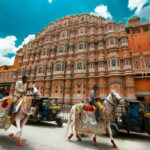
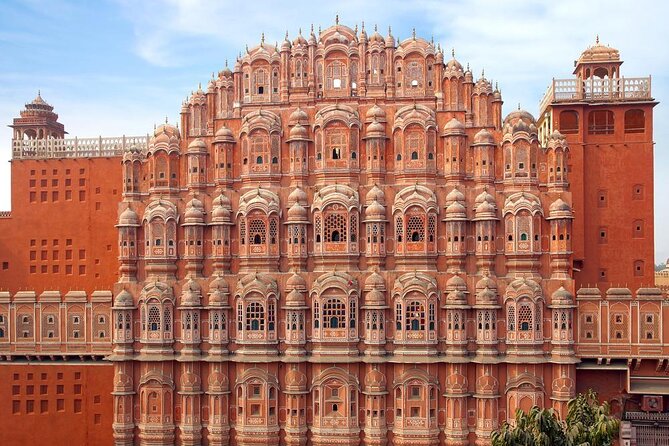
You’ll pause at Hawa Mahal, the Palace of Wind, with about 10 minutes dedicated to the viewpoint. It’s famous for the bunch of windows designed to bring cool air into the City Palace area.
You won’t go inside here. But outside views still help. You can study proportions and window patterns in a way that’s hard to do when you’re looking at it from one far-off angle.
Also, the route timing matters. In morning light, the details on the facade tend to look crisp, and the streets around it are easier to navigate than later in the day.
Govind Devji Temple garden: markets, then laughing yoga
This part of the itinerary is where the tour shifts from sightseeing to something more human. You’ll spend about 30 minutes around Govind Devji Temple and its garden area.
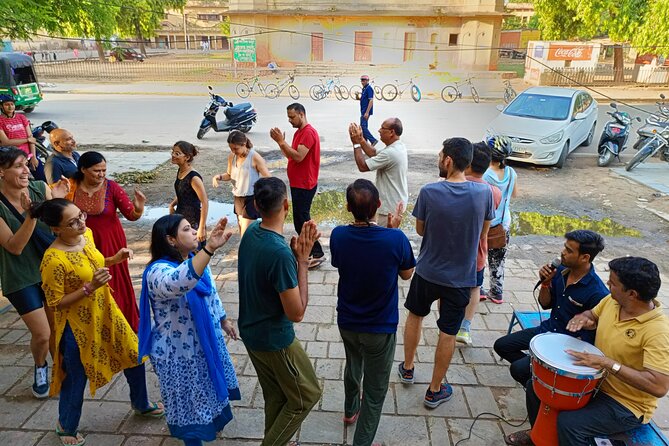
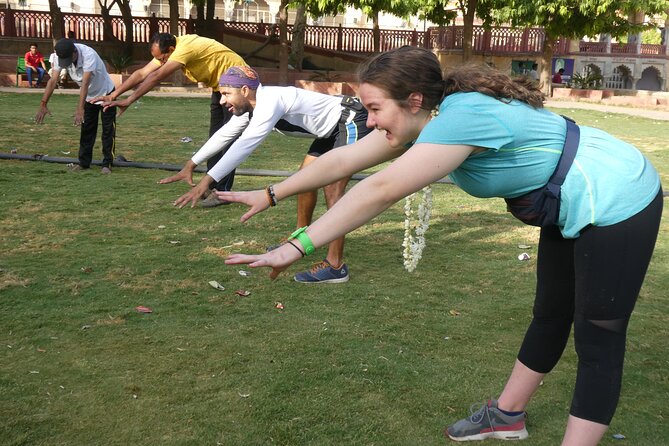
The morning focus includes food markets and a look at everyday stalls—vegetables and flowers, plus the street-side food atmosphere that people actually use. Then you’ll do laughing yoga in the temple garden.
Now, you don’t have to be a yoga person to enjoy this. It’s more of a playful icebreaker than a workout. The real value is seeing local culture in action, not just photographing it from a distance.
If you’re shy, you can observe first and join only if it feels comfortable. The group pace is slow and guided.
Thatheron ka rasta: utensil makers and hands-on craft curiosity
After the temple area, you’ll ride into Thatheron ka rasta, the street associated with brass utensil makers. Here, you see artisans working in an old style, without machines. It’s not a stage set; it’s real craft production.
What I like about stopping here is that it answers a question people often have in Jaipur: how can a city be both tourist-famous and still work as an artisan hub? This is the part that shows you the “work” side of the city.
If you want to participate, you can try making something yourself. Even if you don’t, the explanation of the process helps you understand why handcrafted items can take time.
Then the tour links this to food. You’ll experience local food joints in the same area—snacks that fit a morning routine rather than a staged tasting menu.
The food tasting: tea, snacks, and that Kullhad lassi finish
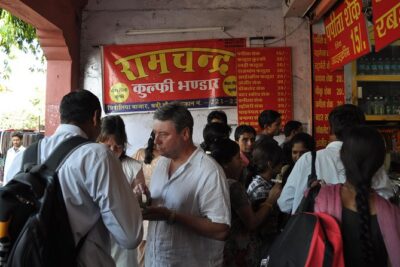
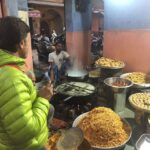
This tour earns its keep with food. You start with coffee and/or tea served in traditional style from a tea stall in the Walled City area. That sets the tone: Jaipur mornings taste like tea, street snacks, and quick bites between chores.
You’ll also get snacks such as potato and chili fritters, including options like kachori, pakodas, and jalebi. The exact selection can vary, but the pattern is the same: classic Indian street snacks that are meant to be eaten on the move.
Near the end, the tour finishes with Kullhad lassi, a churned yogurt shake served in a clay cup. That ending is practical too. By the time you reach it, you’ve ridden, walked a bit, and built up appetite.
You’ll also have bottled mineral water throughout, plus the tour provides a helmet, which matters more in crowded city areas than most people expect.
Safety and comfort: helmets, escorts, and the support system
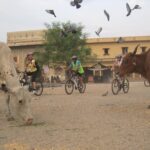
Riding a bicycle in an urban setting sounds intimidating until you see how the tour handles it. Here, the bicycle captain leads and a tour escort follows the last rider. That’s not just a feel-good detail. It means you’re less likely to get separated or stuck behind slow traffic moves.
Helmets are provided, which is a big deal when you’re riding in close streets. And if you need a different setup, the tour offers tandem bikes and e-rickshaws.
For families, this can be a game-changer. If a child can’t paddle, or an older family member has health limitations, you can still participate without turning the day into a compromise.
Bike choices: tandem bikes and e-rickshaws when you need them
Not everyone wants the same level of pedaling. This tour makes that flexible.
- Tandem bicycles are available for members who want to ride but may not manage a standard single-bike setup.
- E-rickshaws are available for children or older family members, and also for people who have health issues (the tour specifically notes back problems, heart problems, or pregnancy).
There’s even a mention of a safe seat with buckles for infants on bicycles. That’s important if you’re traveling with a family and trying to avoid the usual “either leave someone behind or change your whole plan” situation.
Price and value: how $33.40 stacks up
At $33.40 per person, you’re paying for a lot more than a ride. You’re getting:
- A guided route inside the Walled City area
- Use of the bicycle (plus helmets)
- Coffee and/or tea
- Snacks (including common street foods)
- Bottled water
- And an end-of-tour Kullhad lassi
Because the tour is private and includes food and drinks, it often works out better than trying to piece together tea stops, snack hunts, and a guided explanation on your own. You also avoid the “which street do we walk down” problem. The route is set, and you’re not wandering while the morning disappears.
Where it may not be the best value is if you only want monument entry or long sightseeing inside major sites. This isn’t that kind of tour. It’s designed for outside views and cultural context plus food.
Who should book this Jaipur morning ride
This is a great fit if you want:
- A short, focused way to understand the Walled City
- Street-level culture and food, not just landmark photos
- A calm morning pacing (short stops, slow ride, traffic-light sections like Ram Niwas Garden)
- A family-friendly sightseeing format where not everyone has to pedal
It’s less ideal if you:
- Only care about entering monuments (this tour is outside views)
- Expect a long, exercise-heavy bike route
- Are sensitive to morning schedules and need major flexibility if weather is bad
Small practical tips before you go
This tour runs in the morning, and it requires good weather. Pack like you’re going for a short city outing: comfortable clothes, something for sun protection, and shoes you can walk in.
You’ll receive water, tea, and snacks, so you don’t need to carry a meal. But having a small personal stash like tissues and hand sanitizer helps because you’ll be in markets and food areas.
Also, wear layers if mornings feel cool where you’re staying. Jaipur mornings can shift fast.
Should you book this guided bicycle tour of Jaipur?
If your goal is to experience Jaipur’s old city texture—walls, gates, temple garden energy, artisan craft streets, and real snack culture—this tour is a smart use of time. The ride format makes the Walled City easier to read, and the food tasting gives you a reason to slow down instead of racing from one photo to another.
I’d book it if you want an organized morning that still feels local. I’d pass if you’re chasing monument interiors or want a long “big distance” bike day.
FAQ
FAQ
How long is the guided bicycle tour with food tasting?
The tour is about 2 hours 30 minutes to 3 hours.
What does the $33.40 price include?
It includes use of the bicycle, coffee and/or tea, snacks, bottled water, helmets, and a Kullhad lassi at the end. It also includes tandem bicycles or e-rickshaws for family members who need them.
Where does the tour start?
The tour starts at Raj Mandir Cinema, C-16, Bhagwan Das Rd, Panch Batti, C Scheme, Ashok Nagar, Jaipur, Rajasthan 302001, India.
Do you visit monuments inside or just view them from outside?
The tour is for showcasing monuments view from outside only.
Is Raj Mandir Cinema or Ram Niwas Garden admission included?
No. Admission ticket for Raj Mandir Cinema is not included, and admission for Ram Niwas Garden is not included. Other stops listed have free admission.
What food and drinks are included during the tour?
You’ll get traditional-style morning tea (or coffee), plus snacks like kachori, pakodas, jalebi and other similar fritters. At the end, you’ll taste Kullhad lassi.
Are helmets provided?
Yes, the tour includes good quality helmets.
Can children or people with health issues join the ride?
Yes. Tandem bikes and e-rickshaws are available for children, older family members, and people who have health issues such as back problems, heart problems, or pregnancy.
Is this tour private?
Yes. It’s a private tour/activity, so only your group participates.
What happens if the weather isn’t good?
The experience requires good weather. If it’s canceled due to poor weather, you’ll be offered a different date or a full refund.