REVIEW · CITY TOURS
Jaipur@Twilight Guided Heritage City walk tour with Food Tasting
Book on Viator →Operated by Seagull Jaunt · Bookable on Viator
Twilight in Jaipur turns everyday streets into theater. This guided walk strings together craft lanes, market storefronts, and real workshop moments, then tops it off with food tastings along the way and a night stop near Albert Hall Museum.
What I like most is how you see process, not just products: from the sketch-to-painting flow of marble idol work to the hands-on energy of the bangle market. I also like that the pace stays walkable, so you’re not stuck in a bus feeling like you only got parking-lot views. One thing to keep in mind: this tour is weather-dependent, so if the sky decides to do its own plan, you may need to shift dates.
In This Review
- What you’ll actually do for 2.5–3 hours
- Key highlights worth showing up for
- Twilight logic: why this walk feels different than daytime
- Meeting point to walking loop: C Scheme to the old city’s craft lanes
- Khajane Walon Ka Rasta: where marble idols go from sketch to finish
- Tripolia Bazar and Thakur Uday Singh Ji Haveli: old mansion details with a colonial hint
- Maniharon ka rasta: lac bangles, bridal jewelry, and twilight color play
- Johri Bazaar to Achar Wali Gali: sweets first, then Jaipur’s pickle legend
- The e-rickshaw hop to Albert Hall Museum and Ram Niwas Garden night lighting
- Price, time, and value: why $29.96 can make sense here
- Who should book this Jaipur twilight walk
- Should you book this tour?
- FAQ
- What is the duration of the Jaipur@Twilight Guided Heritage City walk tour?
- What does the tour include besides the walking?
- Are museum or other admissions included in the price?
- Where do I meet the guide, and where does the tour end?
- How big is the group?
- Is this tour done by foot the whole way?
- What happens if weather is poor?
What you’ll actually do for 2.5–3 hours
You’ll meet in the C Scheme area near Raj Mandir Cinema, walk through some of Jaipur’s most famous old bazaars, and end in Ram Niwas Garden by Albert Hall Museum. Expect a small group (max 10) and a guided experience designed for street-level seeing, not museum-hours. You’ll also get part of the route by e-rickshaw, which is handy when the evening crowds thicken.
Key highlights worth showing up for
- Idol-making in action: See marble statue creation from sketch stage through final painting, plus examples of gold work on marble artifacts.
- Thakur Uday Singh Ji Haveli: Miniature wall paintings and even older-style lighting cues that help you understand the European/colonial influence in Jaipur interiors.
- Lac bangles and bridal display streets: Learn how lac bangles are made and watch the bridal-jewelry world at dusk.
- Sweet tasting, then pickle stop: A food moment early on, then a famed pickle shop visit tied to a Discovery Channel award claim.
- Night views with a museum finish: Use an e-rickshaw for the hop to Albert Hall Museum and get a look at the garden and museum lighting.
You can also read our reviews of more walking tours in Jaipur



Twilight logic: why this walk feels different than daytime
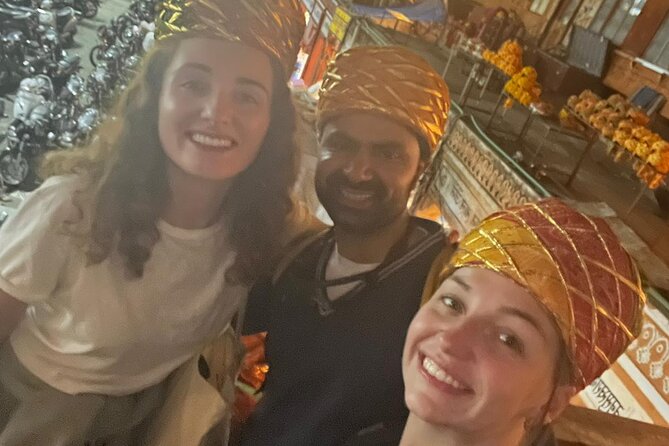
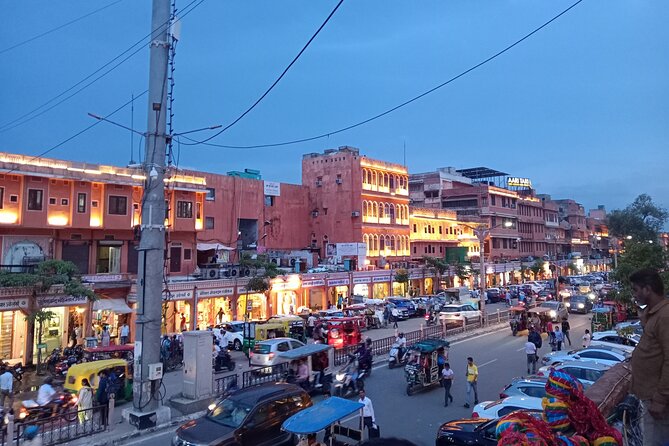
Daytime in Jaipur is about heat, speed, and quick photo stops. Twilight changes the job. You still get the colors of the markets, but the pace softens. Shop signs and street lanterns start doing their work, and older buildings stop looking like backgrounds and start looking like storyboards.
That’s exactly what this tour is built for: the mix of daylight fading into night glitters. You’re walking narrow lanes where evening traffic and market bustle naturally rise, but the guide keeps you moving with purpose. You’re not just wandering; you’re stepping through a sequence of crafts and shopping streets that each explain something about how people live and make things.
Meeting point to walking loop: C Scheme to the old city’s craft lanes
You start at Raj Mandir Cinema (C-16 on Bhagwan Das Rd area, Panch Batti/C Scheme). It’s a good staging spot because you can usually find transport connections without needing a long pre-trip. Then you shift into the old-city rhythm: close streets, shopfront displays, and quick turns that can feel confusing if you were doing it alone.
Because you’re walking for most of the tour, wear shoes you can trust. Jaipur evenings can be uneven underfoot, and you’ll want balance when you’re stopping often to look closely at hands, tools, and painted details. Bring a light layer too. Twilight can cool down faster than you expect.
Group size matters here. With up to 10 people, you get room to stop without the guide being forced into a frantic line-walk. That makes a difference at craft stops where you’ll want a moment to actually see how something is made.
Khajane Walon Ka Rasta: where marble idols go from sketch to finish
Your first craft stop heads you toward Khajane Walon Ka Rasta, with a focus on statue making—specifically the Khejado Ka Rasta area. This is the part where the tour earns its value for anyone who’s tired of only seeing finished souvenirs.
You’re guided through the overall flow: starting from a sketch and moving toward the finished painted marble statue. That sounds simple until you’re standing there and realizing how many steps sit behind what looks like one decorative object. You also get to observe real gold work on marble statues and artifacts, which is one of those visual details you don’t fully appreciate until you’re close enough to see the finishing work.
Why this stop matters for you:
- You’ll leave with a clearer sense of what you’re seeing in shops later. When you spot an idol or ornament, you’ll know it’s not just decoration—it’s labor and technique.
- The twilight timing helps you catch detail better. Even if it’s not dark yet, the lighting angle can make painted and gold surfaces look more dimensional than they do in harsh daytime sun.
Possible drawback: workshops and stalls can be busy in the evening. If you’re expecting quiet, museum-like pacing, you’ll need to lean into street atmosphere.
Tripolia Bazar and Thakur Uday Singh Ji Haveli: old mansion details with a colonial hint
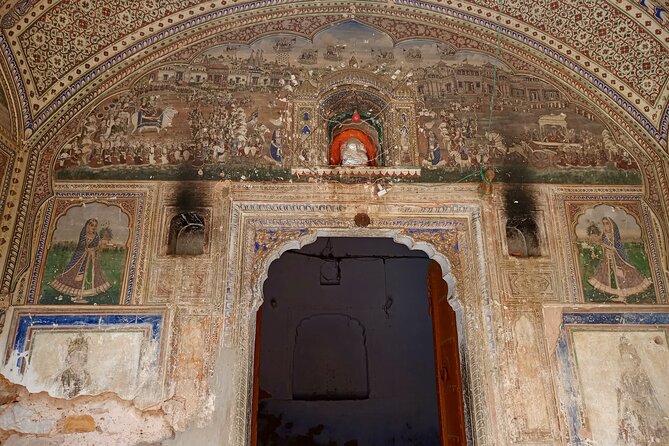
Next up is Tripolia Bazar and Thakur Uday Singh Ji Haveli, an older mansion setting that makes you slow down for interiors. The standout features here are the miniature art wall paintings plus some lighting cues connected to a British empire time style, including gas lamps for night illumination. There’s also mention of a vintage car, which adds a slightly playful, time-capsule feel.
This stop is a smart counterbalance to the more commercial bazaar streets. It shows how Jaipur’s wealthy domestic architecture preserved art and visual culture, and it helps you understand the contrast between Indian and European-influenced elements without needing a lecture.
What to watch for:
- The wall paintings. Miniatures work differently than big murals; you’ll want to actually look for small scenes and figure work rather than treat them as decoration.
- The way older lighting and courtyard-style layout changes how you perceive space at night.
Potential consideration: haveli spaces can be tight. Expect to keep your balance, and plan to pause when the guide stops talking rather than try to “keep moving” through without seeing.
You can also read our reviews of more food & drink experiences in Jaipur





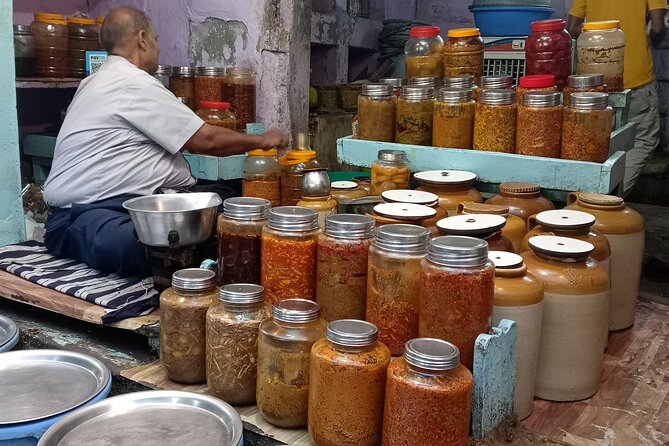
Maniharon ka rasta: lac bangles, bridal jewelry, and twilight color play
Maniharon ka rasta is the bangle-maker street, and it’s exactly the kind of place where twilight photographs well because the displays already look designed for the evening. The tour points you toward the street full of colorful bangles and artificial jewelry for brides. In other words, you get a sense of both craft and celebration.
The tour also flags the lac bangle-making process as a key experience here. Lac bangles are one of those Jaipur traditions where the technique matters as much as the final shine. You’ll see how the process works rather than only being offered a product.
Why you’ll probably enjoy this stop more than you expect:
- Even if you’re not buying bangles, watching the process helps you decode why Jaipur bangles can look so different from each other.
- Bridal jewelry displays give you cultural context. It’s not just “pretty objects.” They’re part of how weddings and ceremonies express identity and status.
Small practical note: this is a shopping-heavy street. If you get overwhelmed by people and merchandise, focus on what the guide is pointing out—specific displays, process moments, and materials.
Johri Bazaar to Achar Wali Gali: sweets first, then Jaipur’s pickle legend
After the bangle area, the tour shifts to Johri Bazaar. There’s a sweet tasting included here before you move toward Gopal Ji Ka Rasta and then into Achar Wali Gali.
This is where you meet the famous pickle shop story: a Pickle Man of India award claim connected to Discovery Channel, plus a shop described as being around 195 years old. Even if you’re not a “pickle person,” the food-and-legend angle is fun because it turns a normal street stop into a small local mythology lesson.
Why this works in a guided format:
- Pickles are intensely regional. Seeing the shop and hearing the long-running angle makes you think about sourcing, preservation, and flavor culture rather than just eating a bite.
- Sweet tasting earlier helps reset your palate for the rest of the walk, so you’re not stuck hungry while still walking.
Possible consideration: food tastings can affect your appetite. If you’re prone to overeating early, keep one eye on how you’ll feel at the end near the museum stop.
The e-rickshaw hop to Albert Hall Museum and Ram Niwas Garden night lighting
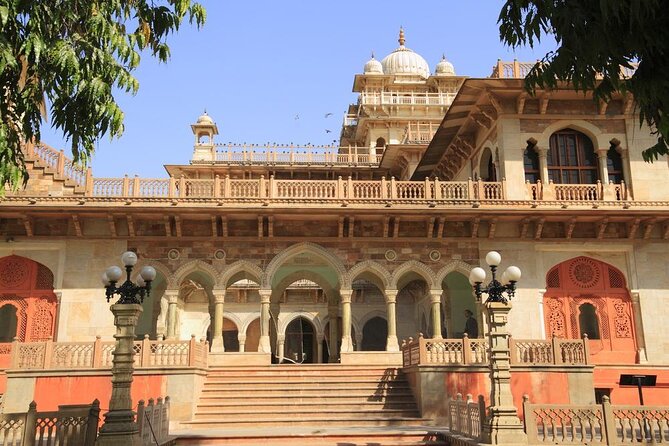
The route shifts toward Albert Hall Museum with an e-rickshaw transfer, which is a nice break after hours of walking lanes. You get to enjoy the night view of Jaipur markets while you ride, then you reach the museum area.
Albert Hall Museum sits in Ram Niwas Garden, and the tour emphasizes the garden and museum lighting. This matters because it’s one of the few moments on the tour where you’re not just looking at shopfronts. You get a wider visual view that helps your brain re-set after close-up craft viewing.
What to expect at this ending:
- A calmer, more open area where you can take photos without weaving through crowds.
- A chance to reflect on what you saw earlier: the crafts, the architecture details, and the street foods all line up into one coherent evening story.
Possible drawback: Albert Hall Museum itself has an important cost detail. Admission is not included, so if you’re the type who wants to go inside, plan for that extra step.
Price, time, and value: why $29.96 can make sense here
At $29.96 per person for roughly 2 hours 30 minutes to 3 hours, this tour is priced like a “smart evening plan,” not a half-day sightseeing production. The value comes from three things you rarely get together at this price:
- Workshop-style craft viewing (not just storefront shopping)
- Food tasting inside the walking route
- A night-focused finish near Albert Hall Museum
Also, you’re paying for time and guidance. Jaipur’s bazaar streets can be confusing if you’re trying to self-navigate, and the guide’s job is to keep the flow logical—statue making, then haveli interiors, then bangle streets, then sweets/pickles, then the museum area. That structure is what turns wandering into learning without making it heavy.
If you’re short on time, this is a strong option. If you already know Jaipur craft markets inside out and you want big-ticket sights, you might feel this is too small-scale. But for most visitors, it’s a good trade: less “checklist,” more “understanding what’s in front of you.”
Who should book this Jaipur twilight walk
Book it if you:
- Like crafts and want to see processes, not only finished items.
- Enjoy food tasting as part of the city experience.
- Prefer guided walking over big bus tours.
- Want a night plan that still stays manageable in length.
Consider skipping (or pairing differently) if you:
- Need quiet, low-crowd environments.
- Want only major monuments and museum interiors that take hours.
- Are likely to be uncomfortable in dense market lanes.
Should you book this tour?
If your goal is to understand Jaipur through hands, materials, and street food, I’d book it. The combination of idol-making process, a mansion interior with miniature paintings and older lighting references, and the bangle street plus sweets/pickles makes it feel like more than a simple walk.
One more practical nudge: plan your evening with footwear and flexibility. If the weather turns, you’ll want to be ready to shift, and you’ll enjoy the end at Albert Hall Museum more when you aren’t rushing.
FAQ
What is the duration of the Jaipur@Twilight Guided Heritage City walk tour?
It runs about 2 hours 30 minutes to 3 hours.
What does the tour include besides the walking?
The experience includes a curated food tasting and visits to several markets and heritage stops, with part of the route done by e-rickshaw.
Are museum or other admissions included in the price?
Albert Hall Museum admission is not included. Other stops listed show admission ticket free for those parts.
Where do I meet the guide, and where does the tour end?
You start at Raj Mandir Cinema (C-16, Bhagwan Das Rd, Panch Batti, C Scheme, Ashok Nagar, Jaipur) and end at Albert Hall Museum in Ram Niwas Garden.
How big is the group?
The tour has a maximum of 10 travelers.
Is this tour done by foot the whole way?
Most of it is walking, with an e-rickshaw used to move toward Albert Hall Museum.
What happens if weather is poor?
If the tour is canceled due to poor weather, you’ll be offered a different date or a full refund.