REVIEW · HERITAGE & CULTURAL WALKING TOURS
Magical Walk of Jaipur
Book on Viator →Operated by Contes Asia · Bookable on Viator
Pink streets make the city make sense.
This Magical Walk of Jaipur is built for walking—so you get a guided pass through historic sights without the usual hassles of traffic or getting turned around in tight lanes. I especially liked how it promises an intimate feel with a small group, and how the guide brings real context so the city reads like more than postcards.
What I really enjoyed was the personal, guided attention and the way the tour mixes major landmarks with local explanations. You don’t just tag along—you can ask questions, and guides like Mudassir and Hasseb are praised for English that’s easy to follow and stories that connect culture with what you’re seeing.
One thing to consider: monument entrances aren’t included, so you should expect extra on-site costs if you want to go inside everything. Also, the longer description you may see includes wording about food in Delhi, so if you’re expecting a food tasting in Jaipur, confirm what’s actually part of your exact departure.
In This Review
- Key highlights at a glance
- Meeting at Badi Chaupar: the smart way to start
- The walking pace: built for orientation, not marathon fitness tests
- Hawa Mahal: seeing the Palace of the Winds without the stress
- City Palace stops: architecture you can understand on the move
- Jantar Mantar observatory: when the timing stays practical
- Culture lessons on the street: religion, caste, and weddings
- Price and value: what you pay for $10
- What to expect from the group: small, social, and question-friendly
- Who should book this Jaipur walk
- Cancellation and flexibility: keep your plans calm
- Should you book Magical Walk of Jaipur?
- FAQ
- How long is the Magical Walk of Jaipur?
- How much does the tour cost?
- Is the ticket mobile?
- Are monument entrances included?
- Where do I meet the guide?
- What time does the tour start?
- What is the group size limit?
- What is the child policy?
- Is free cancellation available?
Key highlights at a glance

- Small group, max 19 people so you’re not swallowed by the crowd
- Guide included for history, culture, and architecture links that click fast
- 3 hours on foot with a central starting point to cut wasted time
- Focus on big sights: Hawa Mahal, City Palace, Jantar Mantar, and more
- Mobile ticket to keep things simple
- Ends back at the meeting point so you can re-plan your day quickly
Meeting at Badi Chaupar: the smart way to start

The tour starts at 47, Choudhary house, Badi Chaupar, Jaipur (Rajasthan 302002) at 9:00 am. I like this kind of meeting setup because it anchors you in the older part of the city early, when streets feel most navigable and you’re not stuck chasing a moving group.
It’s also listed as near public transportation, which matters in Jaipur. One taxi ride can be the difference between a smooth morning and a stressful one. If you’re coming by local transport, you’ll likely find it easier to get there without timing your entire day around a private car.
You can also read our reviews of more walking tours in Jaipur



The walking pace: built for orientation, not marathon fitness tests
This is a walking tour designed for people who enjoy moving on foot. With an approximate 3-hour duration and a maximum of 19 travelers, the pace tends to favor short transitions plus explanation at stops. That’s key when you’re seeing Jaipur landmarks in a compact time window.
Here’s what that means for you:
- You can get oriented quickly, especially if it’s your first visit to Jaipur.
- You’ll likely spend time listening and asking questions rather than staring at a map.
- You should wear comfortable shoes. You’re in narrow lanes, and the route is part of the experience.
A small-group format can also help with things like remembering names and dates. When the guide can actually talk to you, not just to the front of the crowd, the city’s details land better.
Hawa Mahal: seeing the Palace of the Winds without the stress
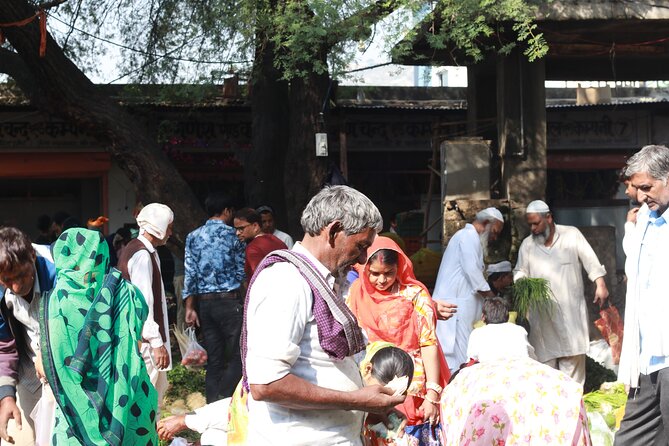
Hawa Mahal, or the Palace of the Winds, is one of the anchor sights mentioned. What I like about having it early in a walking plan is that you’re not losing momentum to travel delays. In a city where movement can get slow, a route that’s already shaped around walking helps you keep your day intact.
On a tour like this, you’re not just trying to spot a famous facade. You’re getting guided interpretation—how the site fits into Jaipur’s culture and how to read what you’re looking at. Guides in this tour style also tend to connect the monument to wider city life, which is exactly what makes a landmark feel less like a photo stop and more like a place with context.
The main “win” here is simple: you’re in the right spot at the right time, and you’re doing it without waiting in a big-city traffic bottleneck.
City Palace stops: architecture you can understand on the move

The tour also includes City Palace. Even without paying for everything on-site, a guided walk past major structures often helps you understand the role of the complex in the city’s story—who used it, how it relates to royal life, and why it matters when you’re comparing it to other landmark sites.
What you’ll feel on this kind of tour is a shift from seeing buildings to understanding them. Guides are specifically described as teaching about topics like religion, castes, and weddings, which might sound far from palace walls—but in Rajasthan, culture isn’t separate from architecture. It’s one connected system.
The drawback is also obvious: since entrances to monuments aren’t included, you may choose to view certain areas from outside (or pay separately). If you know you want full interior access, budget a bit for entry fees and plan your time accordingly.
Jantar Mantar observatory: when the timing stays practical
Jantar Mantar is another key stop, and this is where the tour’s structure can really help you. One practical detail that came up in the tour context is that the observatory portion may take around 40 minutes. That’s long enough to get the explanation, but not so long that you lose your morning.
If you like asking questions, this is a strong point in the route. The guide can tailor explanations to what you’re curious about, and with a small group you’re less likely to get rushed. I also like that the observatory stop has a clear identity in the tour plan. When you know what the stop is trying to do, you experience it with less uncertainty.
One consideration: observatories and landmark areas can involve standing and moving around in tight spaces. If you’re sensitive to crowds or mobility challenges, come prepared to pause and take it slow.






Culture lessons on the street: religion, caste, and weddings
This is one of the most praised parts of the experience. Guides such as Mudassir and Hasseb are singled out for being friendly and for sharing stories about how people live—especially around religion, castes, and weddings. That kind of street-level cultural explanation is what turns a walking tour into an actual understanding of the city.
I find these explanations work best when you let them. Don’t just nod and move on. Ask one or two follow-up questions. If you’re visiting as a couple or a solo traveler, this format still supports interaction because the group is limited to 19.
Also, one comment that stands out from the tour style: the route includes places beyond the most obvious tourist stops. That’s a real advantage if you’re tired of only seeing the same handful of sights in the same way every time.
Price and value: what you pay for $10

At $10.00 per person for roughly 3 hours, the big value isn’t the list of names—it’s the guide and the format. You’re paying for orientation, context, and time-saving navigation.
Here’s the breakdown based on what’s included:
- Included: a guide
- Not included: entrances to the monuments
So think of it like this: the tour helps you understand what to prioritize and how to experience each landmark, but if you want full access inside, you’ll likely pay additional fees on-site.
That’s still good value. Jaipur has enough major sights that you can easily spend more than $10 just getting to the right areas. This walking format reduces that waste, especially if you don’t want to negotiate multiple taxis for short distances.
If you’re on a tighter budget, this tour fits well because it gives you a guided overview without charging a premium entry-pack price.
What to expect from the group: small, social, and question-friendly
The tour caps at 19 people, and the meeting point is set up for everyone to gather together at 9:00 am before walking begins. In practice, this size is big enough to feel lively but small enough that you’re not lost in a sea of people.
I also like that the tour is described as personalized and designed to teach you more than you’d learn just wandering alone. That’s the whole point: you get a guided thread through the city so your time feels purposeful, not random.
If your travel style is more independent, the small-group setup can still work. You’re not locked into a rigid lecture—you have opportunities to ask questions, and you can keep your own pace in between.
Who should book this Jaipur walk
This tour is a good fit if you:
- enjoy walking and want to see Jaipur’s historic area on foot
- want a guided overview that ties culture and religion to the places you see
- prefer a small group rather than a large coach crowd
- are visiting for the first time and want a fast introduction
You might want to skip it (or at least adjust expectations) if:
- you’re unwilling to pay additional monument entrance fees
- you’re expecting a food-focused walk, because the supplied tour description includes wording about a spicy food walk concept that doesn’t match the Jaipur landmark focus
- you don’t handle walking in narrow lanes well
Cancellation and flexibility: keep your plans calm
This experience offers free cancellation up to 24 hours before the start time. That gives you a safety net if your Jaipur schedule changes after you arrive. Since the tour starts at 9:00 am, it’s smart to check your day plan and commit with confidence once you know how your morning looks.
Should you book Magical Walk of Jaipur?
Yes, if you want a guided, small-group way to understand Jaipur quickly. The price-to-time ratio is strong, and the focus on major landmarks—Hawa Mahal, City Palace, Jantar Mantar—plus culture lessons makes it feel more meaningful than a simple stroll.
Book it particularly if you care about the why behind what you see. The standout praise here is about guides turning big sights into understandable stories, and that’s exactly what helps Jaipur click fast.
If you want guaranteed interior access to monuments, treat this as a guided route and plan for extra entry costs. And if you’re hoping for food tasting, double-check what’s included in your specific Jaipur departure before you go in expecting it.
FAQ
How long is the Magical Walk of Jaipur?
It runs for approximately 3 hours.
How much does the tour cost?
The price is listed as $10.00 per person.
Is the ticket mobile?
Yes. The tour uses a mobile ticket.
Are monument entrances included?
No. Entrances to the monuments are not included.
Where do I meet the guide?
You meet at 47, Choudhary house, Badi Chaupar, Jaipur, Rajasthan 302002, India.
What time does the tour start?
The start time is 9:00 am.
What is the group size limit?
The maximum group size is 19 travelers.
What is the child policy?
A child rate applies only when sharing with 2 paying adults, and children must be accompanied by an adult.
Is free cancellation available?
Yes. You can cancel for a full refund up to 24 hours in advance of the experience start time.