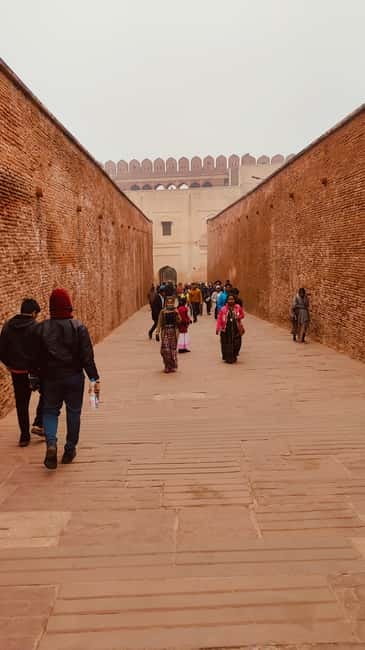
REVIEW · HERITAGE & CULTURAL WALKING TOURS
Heritage Culture and History Walking Tour in Jaipur
Book on Viator →Operated by RICH walk ( heritage, culture, history walk ) · Bookable on Viator
Jaipur has a way of rewriting your mental map fast. This heritage walk strings together major monuments and everyday street life in just a bit over two hours. You’ll start at Jantar Mantar, then move through the royal core, active temples, and markets before the view finale at Isarlat Sargasooli.
I especially like the pacing: it’s long enough to understand why each place matters, but short enough that you don’t feel dragged from stop to stop. I also like that the guide can answer real questions (including religion, architecture, and daily life), and they sometimes adjust the story based on what you care about.
One drawback to weigh: not all entrances are included. You’ll budget for tickets like City Palace (1000 INR) and a few others, so the final cost can rise beyond the $20 tour price.
In This Review
- Quick highlights I’d plan around
- How this Jaipur walk flows from monument to market
- Jantar Mantar: astronomy, royals, and a surprising starting point
- City Palace of Jaipur: power, design, and royal storytelling
- Govind Devji Temple and the aarti moment
- Chandi Ki Taksal and the temple-and-bazaar rhythm
- Hawa Mahal: what you gain by seeing the facade only
- Mandir Shree Laxminarayan ji and Johri Bazar crafts
- Katla Purohit Ji Ka streets and the Isarlat Sargasooli finale
- Price and value: $20 plus tickets, but a smart mix
- Guides set the tone: tailoring, English, and real Q&A
- Who should book this (and who might want a different route)
- Practical tips so you enjoy every stop
- Should you book it?
- FAQ
- How long is the Heritage Culture and History Walking Tour in Jaipur?
- Where does the tour start?
- Where does the tour end?
- Is the tour price ($20) enough to cover all entrances?
- Are any temple stops free?
- What is included in the tour?
- What is not included?
- Is the tour private?
- Does the tour use a mobile ticket?
- Can I cancel for a full refund?
Quick highlights I’d plan around

- Jantar Mantar first: start with astronomy tied to Raja Sawai Jai Singh II’s big vision
- City Palace + temple stops: see royalty and worship without rushing either
- Aarti at Govind Devji Temple: one of the most moving moments on the route
- Facade-only Hawa Mahal: you get the look and the story without an extra interior visit
- Johri Bazar and Katla Purohit Ji Ka: history keeps going after the monuments
- Isarlat Sargasooli sunset-friendly views: a tower finale made for photos
How this Jaipur walk flows from monument to market
This is a 2 hours 25 minutes walking tour that feels like a guided route across Jaipur’s layers. It’s designed as a private experience, meaning it’s only your group, not a large mixed crowd. You get a water bottle, and there’s an English and Spanish written guide to help you follow along.
It’s also a smart format if you want variety in one day. You’ll bounce between astronomy, palace architecture, temple rituals, and two market areas. That mix is great for first-timers because it helps you understand Jaipur as a functioning city, not just a list of sights.
Practical note: because it’s walking-focused, wear comfortable shoes. You’ll spend many minutes moving between stops, and some parts are in older streets.
You can also read our reviews of more walking tours in Jaipur



Jantar Mantar: astronomy, royals, and a surprising starting point

You begin at Jantar Mantar, meeting at the ticket counter area. The big idea here is that Jaipur’s rulers didn’t treat science as separate from culture. You’ll learn how the astronomical instruments connect to Raja Sawai Jai Singh II and his plan for measuring the sky.
This is not just a quick glance. The stop is about 20 minutes, which is enough time to understand what you’re looking at if your guide keeps it practical. You’ll see the instruments and hear how they were used to track celestial events.
Admission for Jantar Mantar is 200 INR and is not included in the $20. If you’re traveling on a tight schedule, this is still a good use of time because you set a theme for the whole day: Jaipur’s history is technical and artistic at the same time.
City Palace of Jaipur: power, design, and royal storytelling
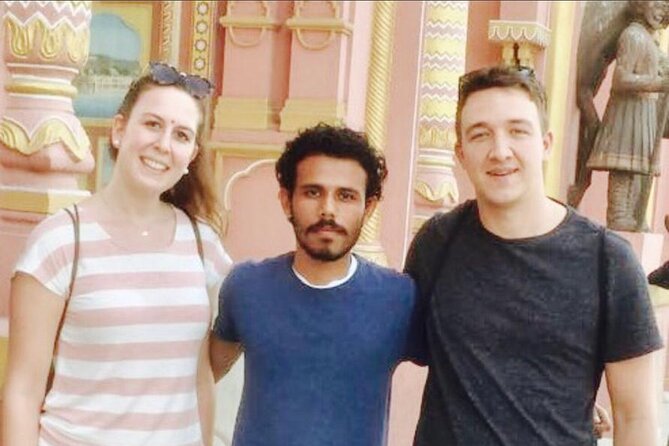
From Jantar Mantar, the route heads to the City Palace of Jaipur for another about 20 minutes. This complex is where you start seeing why Jaipur became a capital with identity. The tour focuses on the royal family stories and the architectural beauty of the palace grounds.
What I like about this stop is the way guides usually explain palace design as a system: spaces weren’t random. They were built to control movement, display status, and support administration and life inside the compound. Even if you’re not a palace superfan, the story often makes the walls feel less like scenery and more like context.
Admission is 1000 INR, not included. Budget for it up front, especially since it’s the biggest single ticket on the route. Still, if you’re only doing one guided “royalty” stop, City Palace is the one I’d put on your short list.
Govind Devji Temple and the aarti moment

Next up is Govind Devji Temple, with about 20 minutes on site. This is your reset button. The tour includes time to witness the aarti ceremony, so you’re not just looking at architecture—you’re experiencing a living ritual in a serene setting.
This stop can be especially meaningful if you like culture that’s practiced, not staged. Aarti is one of those experiences where you understand more than you can explain, even if you don’t know every word. If you’re traveling with kids, it’s also often easier for them to stay interested here than at purely visual monuments.
The temple visit does not list an admission fee in the provided details, so you’ll likely focus on being respectful and attentive. If you tend to feel awkward in crowded religious spaces, the guidance here can help you know what’s appropriate and where to stand.
Chandi Ki Taksal and the temple-and-bazaar rhythm
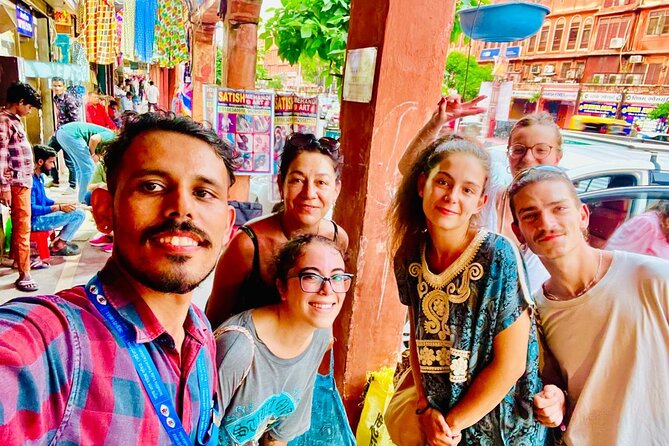
After Govind Devji, the walk takes you through Chandi Ki Taksal, a local bazaar described as existing since the 17th century. The emphasis isn’t on shopping. The idea is that you can explore at your own discretion while your guide connects the streets to the longer story of Jaipur.
This part matters because it shows you how markets supported the city. You’re watching history in motion: metalwork and craft traditions have shaped urban life here for centuries. It’s also a useful change of pace after a temple stop.
Then the tour continues to Mandir Shri Ram Chandra Ji (about 20 minutes). This temple is listed as free admission, and it’s another quieter, spiritual pause where you can appreciate temple design and the significance of Lord Rama.
If you like your days to alternate energy levels, this sequence works. Temple, bazaar, temple. It keeps the walk from feeling like a straight-line sightseeing drill.
You can also read our reviews of more historical tours in Jaipur





Hawa Mahal: what you gain by seeing the facade only
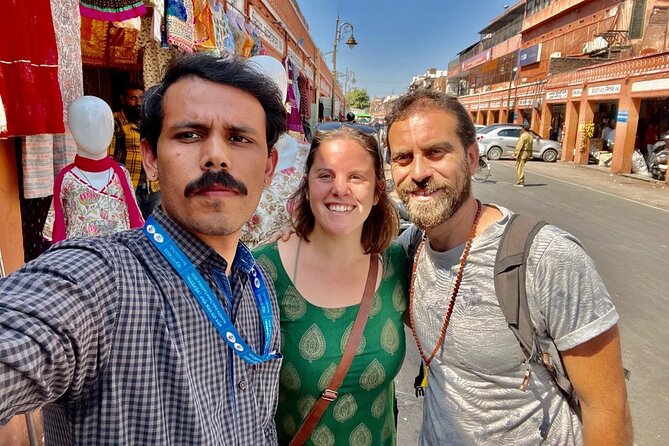
The next stop is Hawa Mahal (Palace of Wind). You’ll spend about 15 minutes and the plan is to see the famous facade from the outside rather than go inside.
That choice actually makes sense for a walking tour like this. Hawa Mahal’s exterior is what people remember: the patterned look and the idea behind the design. Plus, keeping it exterior helps you keep momentum for the rest of the route, including more temples and markets.
One caution: the tour listing says Hawa Mahal admission is 200 INR and is not included. Since you won’t be going inside, you likely won’t need that ticket for the scheduled experience. If you later decide you want the interior experience on your own, that’s when you’d think about the additional cost.
If your schedule is tight and you care more about story than ticket time, this “look and learn” approach is a win.
Mandir Shree Laxminarayan ji and Johri Bazar crafts
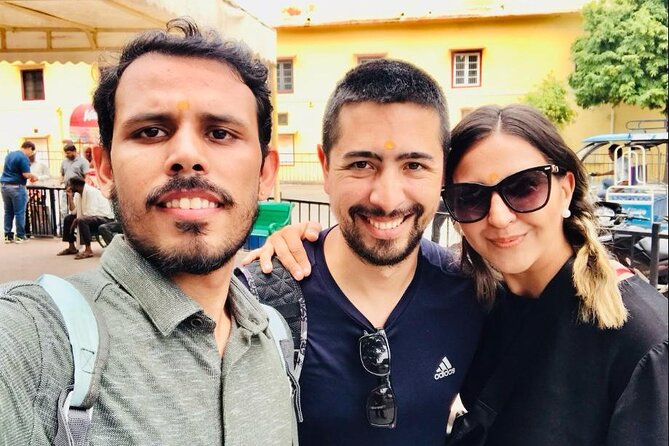
After Hawa Mahal, you visit Mandir Shree Laxminarayan ji for about 25 minutes. This is another free admission stop. The tour frames it around Lord Vishnu and Goddess Laxmi, and you’ll have time to take in the calm atmosphere and architecture while learning the cultural significance in Hindu tradition.
Then the route shifts into shopping streets with Johri Bazar. This market is known for jewelry and handicrafts, and the tour gives you time to soak up the scene and explore shopfronts at your own pace.
I like how this isn’t forced buying time. You get the option to look closely, ask questions, or just enjoy the human rhythm of the market. If you’re the type who likes to collect small, meaningful souvenirs (things you can’t easily find at home), this is the part where it’s easiest to browse without feeling rushed.
Katla Purohit Ji Ka streets and the Isarlat Sargasooli finale
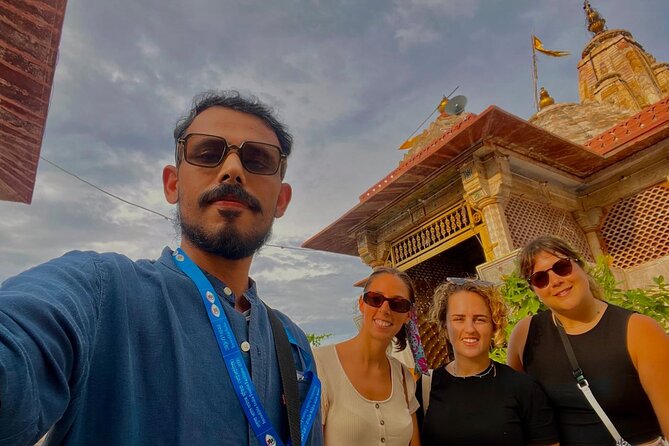
The tour then moves into the older neighborhood streets of Katla Purohit Ji Ka, described as a historic market area. The guidance is again not to push purchasing. The value here is in walking the narrow lanes and seeing the everyday texture of Jaipur rather than only big-ticket monuments.
Finally, you end at Isarlat Sargasooli, a historic tower built in the 18th century. Your visit is about 10 minutes, and the main payoff is the panoramic city views. The tour ends at a spot near Aatish Market, and the tower is a great last stop if you want photos that feel like Jaipur, not just a postcard.
Admission for Isarlat Sargasooli is listed as 200 INR and not included. If you want the best view, plan to cover that ticket. The walk to the end point also makes the day feel complete: science and royalty earlier, then daily streets, then city-spanning viewpoints.
Price and value: $20 plus tickets, but a smart mix
The base tour price is $20 for roughly 2 hours 25 minutes. That’s a decent deal for a guided route that covers multiple major sites and a couple of temple experiences. But the cost logic here is not just the $20—your final spend depends on entrances.
Here’s the ticket reality from the route details:
- Jantar Mantar: 200 INR (not included)
- City Palace: 1000 INR (not included)
- Hawa Mahal: 200 INR (not included)
- Isarlat Sargasooli: 200 INR (not included)
That’s 1600 INR in paid admissions for those four named ticketed stops. Also note that Mandir Shri Ram Chandra Ji and Mandir Shree Laxminarayan ji are marked as free admission. So you’re getting a couple of built-in “no ticket” moments that help keep the schedule efficient.
For value, the question is: do you want a guided story that connects these places, or do you just want to self-tour? If you want context, this format is efficient. If you hate paying multiple entry fees, you may prefer a smaller subset of sites or a route that includes fewer ticketed monuments.
Guides set the tone: tailoring, English, and real Q&A
This tour’s reputation centers on the guide quality. Names that come up include Aditya (often described as energetic and passionate), Adi, Ankit, and Richa (also spelled as Richi). Guides are described as friendly and able to answer questions about architecture, religion, and daily life.
One especially useful detail for you: the guide may ask what you’re most interested in and adjust the route discussion. That’s how you get a tour that feels personal even when you’re with a group. It also makes a difference if you’re traveling with kids or someone who gets bored easily; you can point the guide toward what keeps everyone engaged.
Language support matters too. The tour includes an English and Spanish written guide. That’s helpful when you want something to read while you walk or when audio is hard in busy streets.
If you like a guide who speaks with confidence and follows your curiosity, this is one of the tours in Jaipur that’s worth prioritizing.
Who should book this (and who might want a different route)
This tour fits best if you’re:
- a first-time visitor who wants major sights plus street life
- interested in how history connects to religion and architecture
- traveling as a family, including kids who need stories that move quickly
- the type who likes asking questions and getting straight answers
It may be less ideal if you:
- don’t want to pay several entrance fees during a single outing
- struggle with walking in older streets and market areas
- prefer long, quiet time inside one monument over short stop-and-go viewing
The route is balanced by design, but it’s still a walking schedule. Be honest about your stamina.
Practical tips so you enjoy every stop
A few small things can make the whole day feel smoother:
- Wear shoes you can walk in for a couple of hours, not just for short museum visits.
- Bring any form of ID you typically need for ticketing, since several stops have separate entry fees.
- Have a rough plan for photos at the end: Isarlat Sargasooli is the payoff view, so save your best camera settings for the finale.
- If you want to focus on one theme, tell your guide at the start (temples, architecture, or daily life). Guides are set up to respond to interests.
Also, remember that markets are part of the experience. Even if you don’t plan to buy, slow down and look. The value is in seeing how the city works.
Should you book it?
If your goal is to understand Jaipur in one guided sweep—royalty, temples, markets, and views—this tour is a strong choice. The $20 base price is reasonable, and the real value comes from the guide’s ability to connect the stops into a story you can remember.
Book it if you’re okay paying the additional entrance tickets and you like walking routes. Skip it only if you want fewer ticketed sites or you prefer more time inside one location instead of covering many in a single outing.
FAQ
How long is the Heritage Culture and History Walking Tour in Jaipur?
The tour lasts about 2 hours 25 minutes.
Where does the tour start?
The tour starts at Jantar Mantar at the ticket counter area in Jaipur.
Where does the tour end?
The tour ends at Isarlat Sargasooli, near Aatish Market in the Gangori Bazaar area.
Is the tour price ($20) enough to cover all entrances?
No. Several entrances are not included. Ticket prices listed are Jantar Mantar (200 INR), City Palace (1000 INR), Hawa Mahal (200 INR), and Isarlat Sargasooli (200 INR).
Are any temple stops free?
Yes. Mandir Shri Ram Chandra Ji and Mandir Shree Laxminarayan ji are listed as having free admission.
What is included in the tour?
Included items are a water bottle and an English and Spanish written guide.
What is not included?
Not included are the entrance tickets for Jantar Mantar, City Palace, Hawa Mahal, and Isarlat Sargasooli (with the prices listed in INR).
Is the tour private?
Yes. It’s described as private for your group only.
Does the tour use a mobile ticket?
Yes. The tour notes include a mobile ticket.
Can I cancel for a full refund?
Yes, there is free cancellation. You can cancel up to 24 hours in advance for a full refund. If you cancel less than 24 hours before, you won’t get a refund.