REVIEW · 2-DAY EXPERIENCES
2 Days Jaipur: Amber Fort, Hawa Mahal Tuk-Tuk Tour
Book on GetYourGuide →Operated by Nahargarh Travels · Bookable on GetYourGuide
Jaipur from a tuk-tuk feels like a movie. You get a full-day loop of big-name sights plus a few places most people speed past, all with a driver who helps you connect the dots. I especially like how the Hawa Mahal honeycomb facade and the Amber Fort hilltop views stack up in the same ride.
Two things I really enjoyed: the chance to see Hawa Mahal’s 953 carved windows up close, and walking through Jantar Mantar, where the instruments are built for measuring the sky. You’re also guided to photo stops like Jal Mahal, which looks like it’s floating, even though it’s very much part of the real landscape.
One thing to keep in mind is transport reliability. If your tuk-tuk has mechanical trouble, you may end up waiting while another one is arranged, and that eats into your sightseeing time.
In This Review
- Key Points to Know Before You Go
- Price and Value: Why This Costs So Little (and What to Budget)
- The Tuk-Tuk Ride That Makes Jaipur Feel Local
- Morning Power Moves: Amber Fort and the Fort-Hill Circuit
- City Palace: More Than a Royal Photo Stop
- Hawa Mahal: The Palace of Winds in Real Life
- Jantar Mantar and the Sky-Measure Instruments
- Jal Mahal: The Photo Stop That Feels Like a Floating Palace
- Panna Meena ka Kund: The Step-Well Most People Don’t Plan For
- Lunch, Local Markets, and Real Shopping Time
- Driver Quality: The Best Days Run Smooth, but Watch for the Weak Link
- Timing and How to Prepare for a Full Day of Stops
- Entry Fees, Meals, and What You Actually Pay For
- Who This Tuk-Tuk Tour Suits (and Who Should Skip It)
- Should You Book This Jaipur Tuk-Tuk Tour?
- FAQ
- What does the tour price include?
- What costs extra on this tour?
- How long is the sightseeing day?
- Which places will I visit during the tour?
- Is the tour wheelchair accessible?
- What should I bring and what rules should I follow?
Key Points to Know Before You Go
- Tuk-tuk city circuit for getting around fast, without dealing with constant driving stress
- Fort views in one run: Amber Fort plus the nearby fort stops like Jaigarh and Nahargarh
- Royal sights with context at City Palace, not just a quick photo stop
- UNESCO Jantar Mantar with big-instrument astronomy that actually makes sense on a walking route
- Jal Mahal and Panna Meena ka Kund for dramatic photos and a stop many people skip
- Driver as guide in multiple languages, with some drivers getting praised for safety and experience
Price and Value: Why This Costs So Little (and What to Budget)
At around $7 per person, this is priced like a “book it now” kind of tour. The included parts are the things that usually add up in India: pickup and drop-off, a full day of tuk-tuk transport, parking, fuel, and GST.
What’s not included is equally important. Your monument entry tickets (Amber Fort, City Palace, Hawa Mahal, Jantar Mantar, Albert Hall Museum, and more) are extra, and meals aren’t included either. So the cost looks low on paper, but your real budget depends on how many paid sites you visit and what you eat during the lunch break.
The good news: this style of route is exactly how you maximize value. You’re not paying for lots of separate transfers, and you’re using the driver’s local knowledge to keep the day moving.
You can also read our reviews of more tours and experiences in Jaipur


The Tuk-Tuk Ride That Makes Jaipur Feel Local
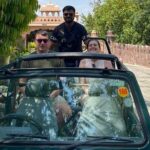
A tuk-tuk in Jaipur isn’t just transportation. It changes how the city feels, because you’re moving through narrower streets and closer to daily life than you would on a bigger bus.
You’ll also benefit from the guide-driver setup. The tour description frames the driver as a guide, and that matters for places like Jantar Mantar and City Palace, where it helps to know what you’re looking at. Bonus: the driver languages can include English and several others (Hindi, French, Spanish, Japanese, Dutch, German).
One practical note: tuk-tuks are great for the ride, but you still have to walk at monuments and viewpoints. Bring comfortable shoes, and expect uneven steps and short climbs, especially around forts.
Morning Power Moves: Amber Fort and the Fort-Hill Circuit
Your day starts with a hotel pickup, then you head for the fort area early. That timing is useful because you’re not just arriving later to a crowd; you’re building the route with the fort views in mind.
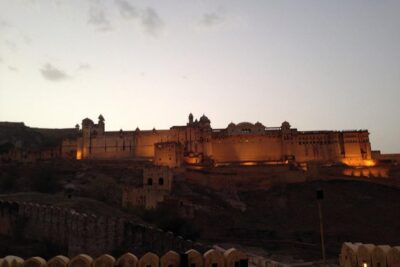
Amber Fort is the headline stop, and it’s easy to see why. You get guided time to explore the courtyards and intricate designs, plus panoramic lookouts from the hill. It’s the kind of place where the details matter: how the layout works, where the light falls, and why certain sections look the way they do.
What many people miss is that this tour doesn’t only stop at Amber. You also get photo stops and guided time at Jaigarh Fort and Nahargarh Fort. That matters because the fort story in Jaipur isn’t one building—it’s a defensive hilltop system and the surrounding views.
The one consideration here is effort. Fort days involve stairs and a longer pace than a straight-city walk. If your back isn’t happy on uneven ground, you’ll want to think carefully before booking.
City Palace: More Than a Royal Photo Stop
After the fort zone, you shift toward the old royal core. City Palace is a royal residence complex with multiple sections, including areas described as Mubarak Mahal, Chandra Mahal, Diwan-I-Khas, and the Maharani Palace.
The payoff here is that you’re not just doing an exterior look. Guided time helps you understand what’s a museum-like space, what’s more residential, and how the complex connects together. You’ll also appreciate the “pause moments” built into the stop—these are the spots where you can reset before heading into Hawa Mahal and beyond.
If you like architecture, this is one of the best places in the day to slow down slightly. Just remember that entry tickets are extra, so build that into your total cost.
Hawa Mahal: The Palace of Winds in Real Life
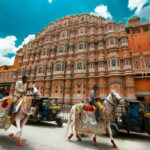
You’ll see Hawa Mahal next, with guided time to learn the story and take in the design. It’s described as a palace over 220 years old with a honeycomb pattern and 953 carved windows—those numbers sound impressive, but the experience is even more so once you’re standing close.
The trick for making this stop more than a quick photo is to pay attention to placement and repetition. The windows aren’t just decoration; they’re part of the ventilation and viewing concept of the building. A good driver-guide route helps you look beyond selfies and notice the structure.
Also, it’s a photo stop, so try to time your camera breaks well. When you’re done with Hawa Mahal, you’re moving again, so don’t get stuck waiting for the perfect shot if you’d rather spend that energy later at Jantar Mantar.





Jantar Mantar and the Sky-Measure Instruments
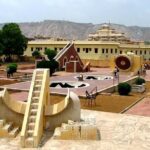
Then comes Jantar Mantar, listed as a UNESCO site and described as an ancient observatory with impressive astronomical instruments.
This is one of those places where you’ll either love it or feel lost—depending on how much context you get. That’s exactly why the driver-guide format helps. As you walk past different instruments, the design starts to make sense in terms of measuring and tracking.
Plan for your camera time, but also keep in mind that monument rules apply. Flash photography isn’t permitted inside the monuments, so be ready with settings that work without it.
The timing in the day gives you enough hours to do this properly without rushing through. You’ll likely enjoy it more than a quick “look and go” stop, especially if you’re the type of traveler who likes knowing what a place was built to do.
Jal Mahal: The Photo Stop That Feels Like a Floating Palace
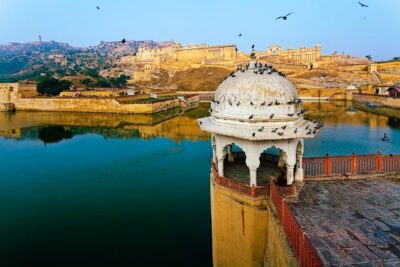
Jal Mahal is next: a palace that appears to float on the water. It’s marketed as a perfect photo moment, and it is.
This stop is brief, but that’s part of the strategy. Jal Mahal is a scene. You want enough time to frame the shot and move around a bit for angles, not a long museum-style visit.
If you like sunrise or golden-hour photos, you might wish you’d had different lighting, but even in daylight the reflection look can still be strong. Use your time to get a couple of compositions, then save your energy for the more walking-heavy stops.
Panna Meena ka Kund: The Step-Well Most People Don’t Plan For
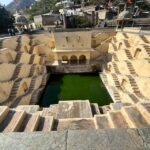
One of the best value moments in this route is the stop at Panna Meena ka Kund. It’s described as an ancient step-well with a fascinating story, and it works because it’s less common than the big royal attractions.
Step-wells can be easy to misunderstand if you only see them as a photo background. With guided time, you’re more likely to appreciate how the structure functions and why it mattered historically. You also get a short, manageable visit, which keeps the day from turning into endless walking.
This is a good place to slow down for a minute and notice the geometry. It’s also a strong spot if you want photos that don’t all look like the same Jaipur postcard.
Lunch, Local Markets, and Real Shopping Time
Midday you get a break for lunch and shopping. The shopping window is described as 2 hours, which is enough time to browse without turning it into a full-day commitment.
This is where you can focus on practical souvenirs: textiles, handicrafts, and jewelry are mentioned as common items you’ll find in local markets. If you’re trying to keep shopping realistic, this is a better setup than scattered quick stops that force you to buy fast.
Food isn’t included, so this is also your chance to eat what you want—within your own budget and spice comfort zone. The tour does frame the day as time to enjoy traditional Rajasthani cuisine, so use that lunch window to go for something you can actually find enjoyable, not just something you feel pressured to try.
Driver Quality: The Best Days Run Smooth, but Watch for the Weak Link
A good driver can make a tour like this feel easy. A bad one can turn it into a stressful schedule scramble.
One positive review highlights a driver named Raja (praised as an experienced and safe guide). That kind of driver is exactly what you want for a packed day—someone who can keep timings realistic and get you to the right spot without drama.
On the other side, there’s a clear caution from a poor experience: on the second day, a tuk-tuk problem caused delays, including waiting periods, and the situation affected sightseeing time. That doesn’t mean it will happen to you, but it’s the main risk in this format—your day is only as smooth as the vehicle.
If you’re the type who can roll with delays, you’ll probably be fine. If your Jaipur time is tight and you hate wasting hours, treat this as a “possible perfect day” rather than a guaranteed no-hassle schedule.
Timing and How to Prepare for a Full Day of Stops
This is built as a long sightseeing run. The tour description says it runs from about 8:30 AM to 5:30 PM with hotel pickup and drop-off, plus guided time at each major stop.
That means heat management matters. You’ll be walking, standing, and waiting for photo opportunities. Bring a hat, sunscreen, and water, and wear shoes you can walk in for hours.
Also note the rules: smoking and alcohol/drugs are not allowed. Photography is generally allowed, but flash photography isn’t permitted inside monuments. If you follow those, your day stays smoother.
Entry Fees, Meals, and What You Actually Pay For
Here’s the clean way to think about the money.
Included:
- Tuk-tuk ride for the day
- Pickup and drop-off
- Driver as guide
- Bottled water
- Parking, tolls, fuel, and GST
Not included:
- Meals and beverages
- Entry fees for Amber Fort, City Palace, Hawa Mahal, Jantar Mantar, Albert Hall Museum, and more
So you should budget two buckets: the base tour cost plus monument tickets plus lunch. You don’t know the ticket totals from the info here, so I can’t give a number, but you can still plan your spending mindset.
Also, because so many stops are included in the route, you’re less likely to get bored or regret missed sights. You’re using paid time efficiently.
Who This Tuk-Tuk Tour Suits (and Who Should Skip It)
This tour is a strong fit if you want:
- A single-day-feeling route that hits Jaipur’s best-known landmarks plus a couple of quieter stops
- A guided approach that helps you understand places like City Palace and Jantar Mantar
- A practical, low-cost way to move across town in a compact vehicle
It may not be ideal if:
- You have back problems (the tour notes this as not suitable)
- You’re counting on wheelchair access in a way that requires fully supportive transport and minimal stairs (the info says wheelchair accessible, but it also lists wheelchair users as not suitable, so you need to confirm what that means for you)
If you’re an active traveler who enjoys seeing a lot without overthinking it, you’ll likely enjoy the pace. If you want slow, restful sightseeing, this route may feel like too many stops.
Should You Book This Jaipur Tuk-Tuk Tour?
I’d book it if you want an efficient Jaipur highlight run, like the idea of learning at City Palace and Jantar Mantar, and you’re comfortable handling a day that includes walking and optional monument ticket costs.
I’d hesitate if you’re risk-sensitive about delays. The negative experience shows that a tuk-tuk breakdown can push your schedule, and if you can’t afford lost time, you might prefer a more structured backup plan.
If you do book, you’ll make the most of it by packing smart (shoes, hat, sunscreen, water), planning for paid entries, and keeping your expectations on the vehicle track—when the tuk-tuk runs well, this is a fun way to see Jaipur.
FAQ
What does the tour price include?
The price includes hotel pickup and drop-off, a tuk-tuk ride for the day, bottled water, parking charges, fuel, tolls/interstate taxes, and GST. A driver who acts as a guide is also included.
What costs extra on this tour?
You’ll pay separately for entry fees to monuments such as Amber Fort, City Palace, Hawa Mahal, Jantar Mantar, Albert Hall Museum, and more. Meals and beverages are also not included.
How long is the sightseeing day?
The tour description says it starts around 8:30 AM and ends around 5:30 PM, as part of a 2-day listed experience with availability for starting times.
Which places will I visit during the tour?
You’ll see Amber Fort, Jaigarh Fort (photo stop), Nahargarh Fort (photo stop), Panna Meena ka Kund, Jal Mahal, City Palace, Hawa Mahal, Jantar Mantar, Gaitor Ki Chhatriyan, Albert Hall Museum, and Birla Mandir, with lunch and shopping time in between.
Is the tour wheelchair accessible?
The activity information says wheelchair accessible, but it also lists wheelchair users as not suitable. If you use a wheelchair, you should confirm with the operator how the route and stops work for your specific needs.
What should I bring and what rules should I follow?
Bring comfortable shoes, a hat, sunscreen, a camera, and water. Smoking is not allowed, and flash photography isn’t permitted inside monuments. Alcohol and drugs are also not allowed.