REVIEW · PRIVATE CAR WITH DRIVER
From New Delhi: Jaipur Tour by Fast Train or by Private Car
Book on GetYourGuide →Operated by India Tour Solution - ITS · Bookable on GetYourGuide
A long day, but it has real payoff in Jaipur. I like the combo of fast rail or private car with a live English-language guide, so you’re not just snapping photos—you’re learning what you’re looking at. I also love how early starts make the major stops feel calm instead of chaotic. One thing to consider: it’s an intense schedule with an early pickup, and you’ll feel it if you’re not used to a full-day run.
From the hilltop showpieces to the patterned stepwell stairs, this trip is built around the city’s recognizable icons and the stories behind them. Guides like Yusuf, Soni, and Hitesh (as noted in past bookings) can turn the day from information overload into something you actually remember. The main drawback is timing: one booking had a near-miss with the train, so you should take confirmation seriously.
In This Review
- Key things I’d plan around
- Fast Train or Private Car: Your Delhi–Jaipur Timing Choice
- 5 AM Pickup to Amber Fort: The Start That Sets the Tone
- Jal Mahal (Lake Palace) Outside Views: Beautiful, With One Limitation
- A Lunch Break You Should Plan Around
- Jantar Mantar: When Jaipur Turns Scientific
- City Palace and Chandra Mahal: Courtyards, Museums, and Power
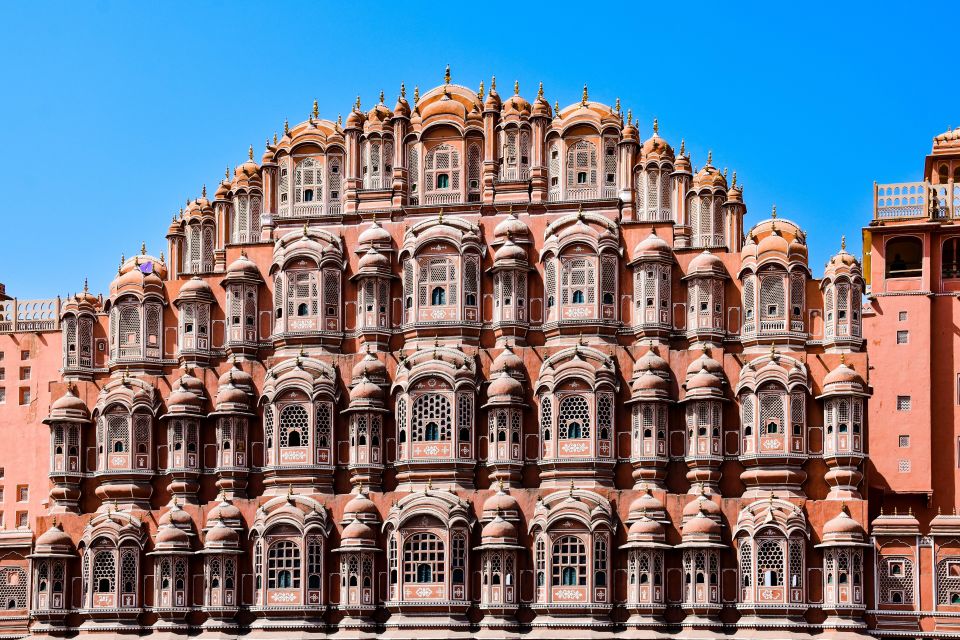
- Hawa Mahal’s Latticework and the 953 Windows
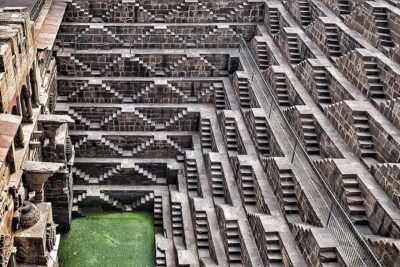
- Panna Meena Ka Kund Stepwell: Those Patterned Stairs
- Galta Ji Monkey Temple: If You Still Have Energy
- Guide Power: The Real Reason People Rate This So High
- Price and Value: Is $27 Worth a 15–16 Hour Day?
- Small Practical Tips for a Long Day in Jaipur
- Should You Book This Jaipur Day Trip?
- FAQ
- FAQ
- What time is pickup in Delhi?
- How long is the tour?
- What are the train times from Delhi to Jaipur?
- What time does the trip end?
- Is lunch included?
- Can I enter Jal Mahal?
- Are monument tickets included?
- Is the tour wheelchair accessible?
- Is the tour suitable for pregnant women?
Key things I’d plan around
- Two transport options: roundtrip train with station help, or door-to-door private car for the same sights.
- Live guide at each stop, with multiple language options (English plus several others).
- Amber Fort first, when lighting and crowds tend to be friendlier.
- Jal Mahal is view-only (no entry), so plan for photos from outside.
- Icon stops get real context: Jantar Mantar, City Palace, and Hawa Mahal aren’t just quick photo pulls.
- Guide quality matters, and the experience is often described as great because of it.
Fast Train or Private Car: Your Delhi–Jaipur Timing Choice
This is one of those trips where the transport option changes how the day feels, even though the monument lineup stays the same.
If you choose roundtrip transfer by train, your morning starts early. You’re picked up at 5:00 AM from your New Delhi-area hotel (or one of the listed pickup areas), then driven to New Delhi Railway Station. Your train leaves at 6:10 AM and reaches Jaipur around 10:45 AM. When you arrive, your guide meets you in front of your coach, and you continue in a private car for sightseeing.
The car option is more flexible in one way and tougher in another. Pickup is also around 5:00 AM, and you’ll drive to Jaipur, arriving at about 9:30 AM. The roundtrip drive back has a rough end time of 8:00–9:00 PM, depending on traffic.
My practical take: if you get motion-sick or hate stations, car might feel simpler. If you want to reduce road-time stress and keep the day on schedule, the fast train option usually makes the most sense.
You can also read our reviews of more private tours in Jaipur


5 AM Pickup to Amber Fort: The Start That Sets the Tone
Amber Fort is the big opening act, and it’s a smart choice to hit it first. The fort sits on a hilltop and is known for Rajput architecture with a blend of Hindu and Mughal influences. You’ll get a guided visit of about 1.5 hours, which is enough time to understand the layout without feeling like you’re sprinting.
Why it works early: Amber Fort can get busy later. Starting in the morning helps you walk the courtyards and viewpoints with less crowd pressure, and you can focus on details like the fort’s design language and the way the complex rises with the terrain.
What to watch for:
- Wear comfortable shoes. The ground can be uneven, and you’ll do more walking than you expect for a “day trip.”
- Bring sunglasses and sunscreen. You’re in Rajasthan, and the sun doesn’t negotiate.
Jal Mahal (Lake Palace) Outside Views: Beautiful, With One Limitation
Jal Mahal is one of those places that looks instantly postcard-worthy. The lake setting gives you reflection shots and a layered view of architecture against water.
Here’s the important bit: entry into Jal Mahal is prohibited. So you’re not doing a full interior visit. Instead, you’ll spend about 1 hour in the area with a guided stop focused on what you can see and photograph from the outside.
This actually helps the pacing. It’s a visual breather between bigger sightseeing stops. You can also take advantage of the stop to photograph the way the fort-like building sits in the lake, without feeling rushed through a museum-style interior.
A Lunch Break You Should Plan Around
Lunch is built into the schedule (listed as about 1 hour). Meals and drinks are not included, so you’ll likely pay as you go.
My advice: keep your expectations flexible. You’re in a tight itinerary with a private car and guide coordinating timing. Choose something quick and reliably filling rather than hunting for an elaborate meal, especially if you want to keep energy for the later forts and observatory.
Jantar Mantar: When Jaipur Turns Scientific
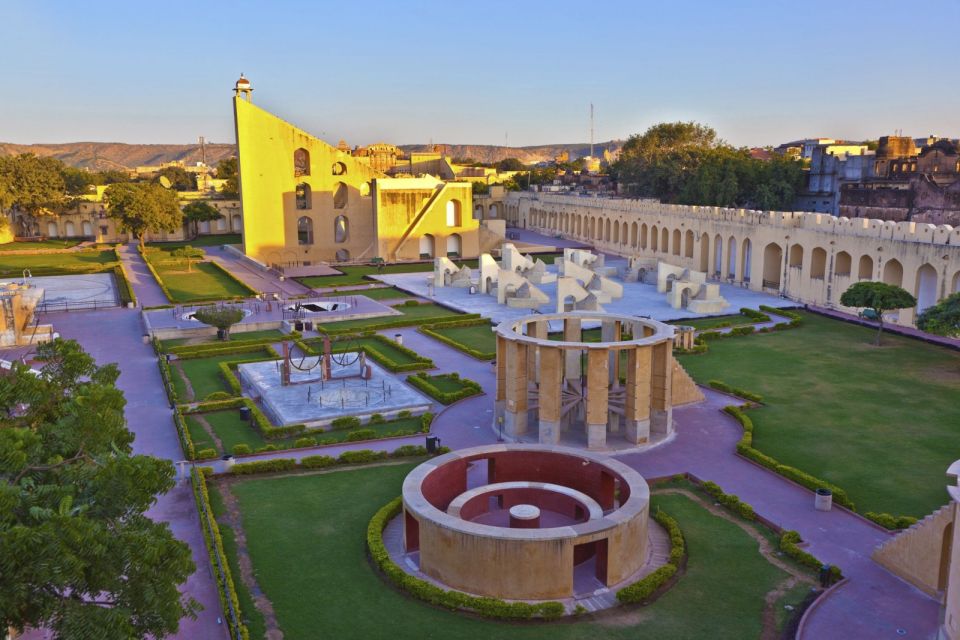
After Amber Fort, you’ll head to Jantar Mantar, the UNESCO-listed astronomical observatory. This is one of Jaipur’s most interesting stops because it’s not just decorative architecture—it’s functional design.
You’ll get about 45 minutes with a guide explaining the set of large architectural instruments used to measure time, predict eclipses, and track celestial bodies. The effect is simple: when you understand what you’re looking at, the structures stop feeling like random stone gadgets and start feeling like a system.
If you like places that mix art and math, you’ll enjoy Jantar Mantar. Even if you don’t, your guide should translate the purpose into something you can visualize. It’s also a good stop in the middle of the day because it breaks up the “palace-tour” rhythm.
You can also read our reviews of more tours and experiences in Jaipur






City Palace and Chandra Mahal: Courtyards, Museums, and Power
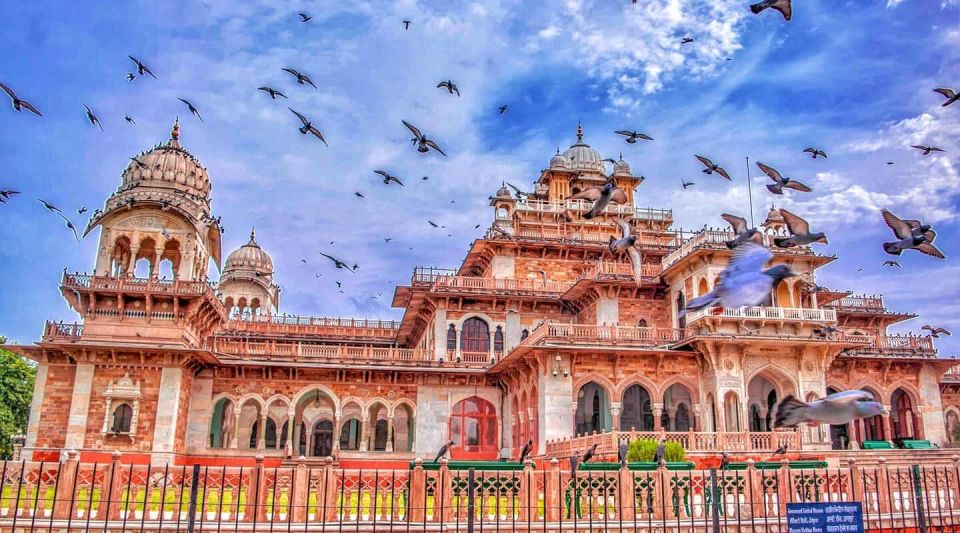
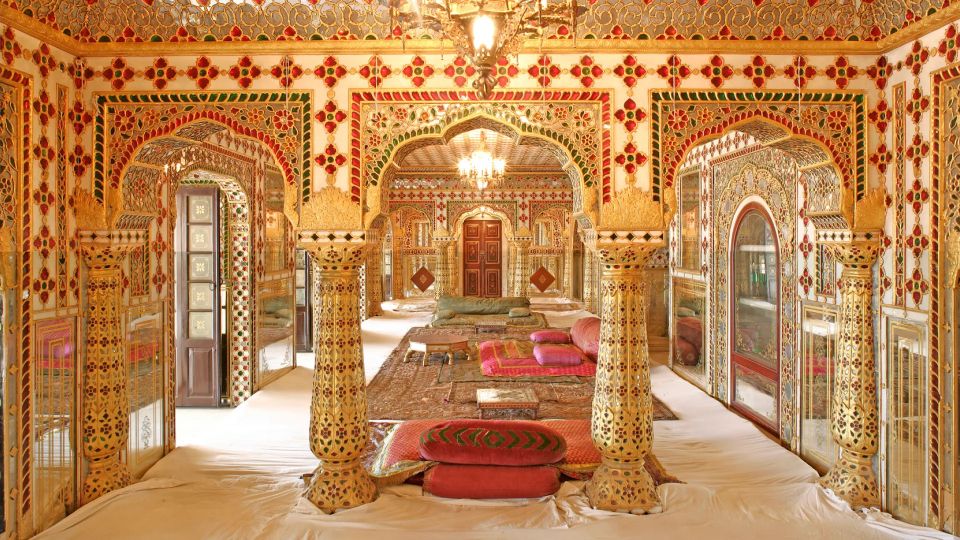
City Palace is the next guided stop (about 1 hour). This palace complex blends Rajput and Mughal architecture and includes courtyards, gardens, museums, and the famous Chandra Mahal.
What makes it more than a checklist stop is that City Palace helps you connect the dots between the fort (Amber) and the other symbols of Jaipur. It’s a place where you can see how royal life, governance, and design taste all lived side by side.
During your visit, expect a structured walk through key parts of the complex, with the guide pointing out the features that matter. If your guide is strong (and some guides named in past bookings like Soni and Rajentha are described as very good at explanation), you’ll come away with a clearer sense of how these palaces functioned.
Hawa Mahal’s Latticework and the 953 Windows
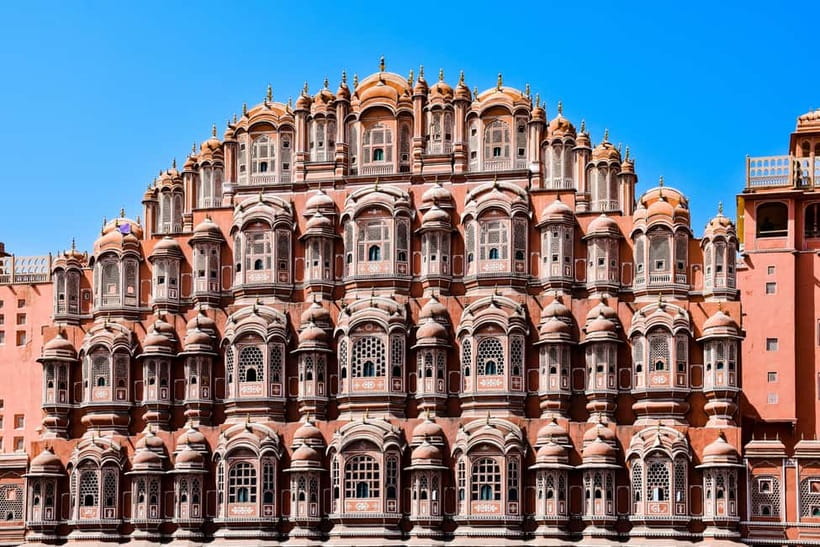
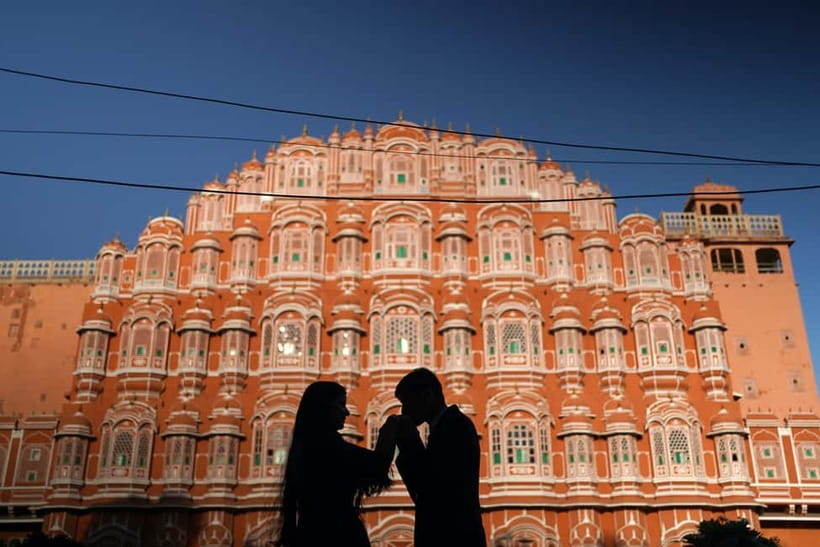
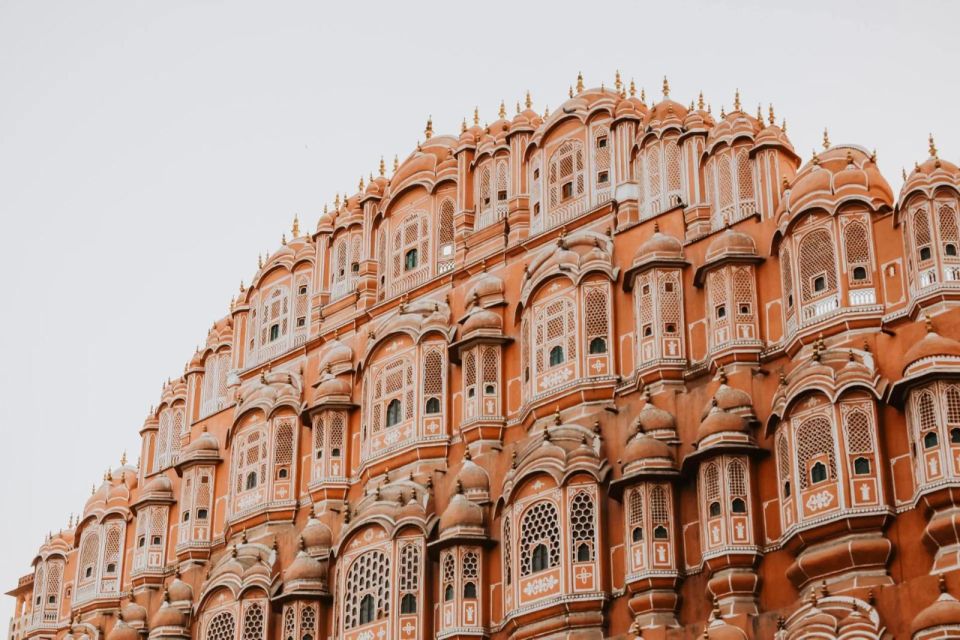
Then comes the photo stop that needs context: Hawa Mahal, also called the Palace of Winds. It’s a distinctive five-story façade with intricate latticework and 953 small windows designed so royal women could observe street activity without being seen.
You’ll spend about 45 minutes here with a guide. What I like about Hawa Mahal as a stop is that it’s a short, high-impact way to understand Jaipur’s visual identity. It’s also a good chance to compare how the city’s architectural choices change from fortifications to façade-focused design.
If you’re a photographer, arrive with patience. The best angles often depend on where the crowds move. Your guide can also help you time the walk so you’re not always fighting for position.
Panna Meena Ka Kund Stepwell: Those Patterned Stairs
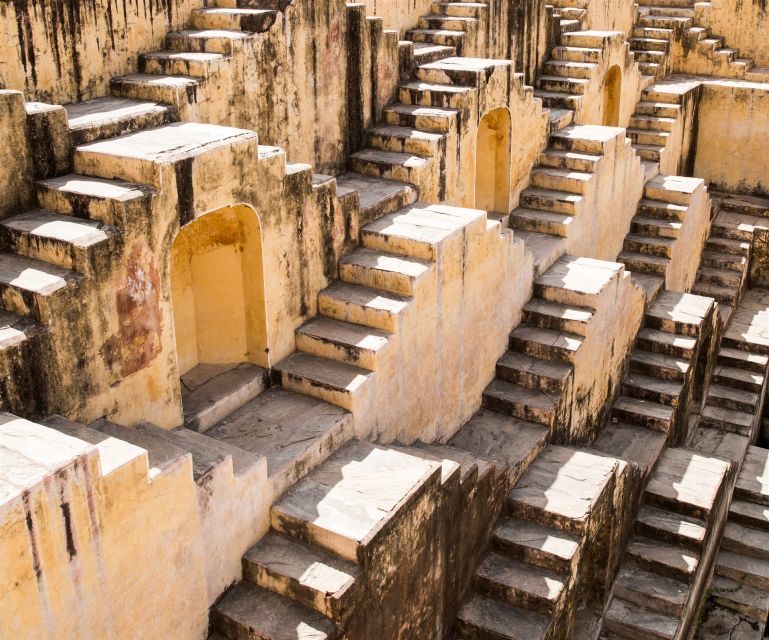
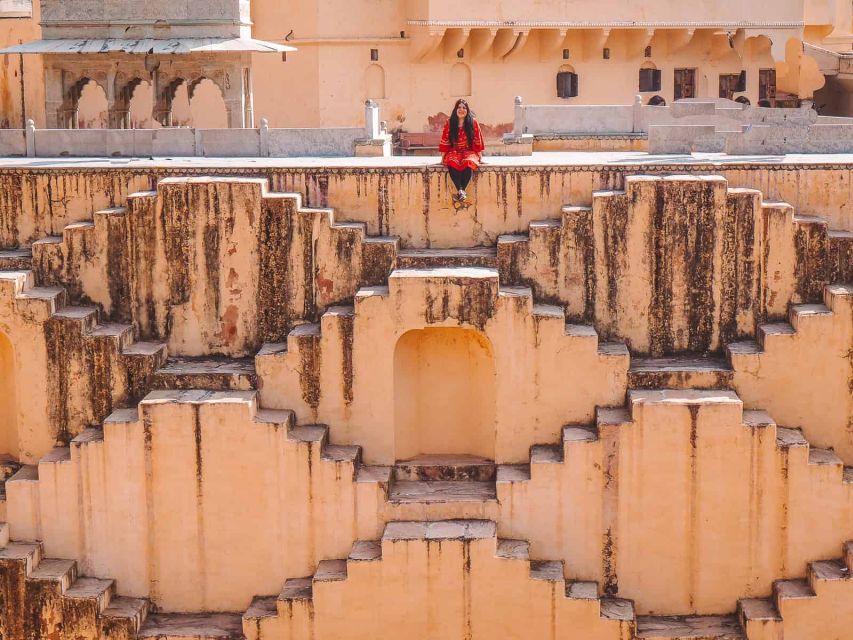
One standout mentioned in the trip highlights is the patterned stairs at Panna Meena Ka Kund. Stepwells are often overlooked compared to palaces, but they’re deeply practical and surprisingly beautiful. The patterned geometry helps you see how architecture served daily life—water management, cooling, and community function.
This is the kind of stop where a good guide makes a difference. Instead of treating it like a quick photo, you’ll learn how the design worked and why the stair-and-water relationship mattered.
If time feels tight that day, don’t skip paying attention to this section. Stepwell visuals can look like “just stairs” until someone explains the purpose, and then it clicks fast.
Galta Ji Monkey Temple: If You Still Have Energy
You may also visit Galta Ji Temple, sometimes called Monkey Temple, if time allows. Expect about 1 hour when included.
This site is a holy Hindu pilgrimage area with a series of ancient temples, water tanks, and bathing ghats set in natural surroundings. It can feel different from the structured palace and fort stops—more sensory, more lived-in, and more about spirituality than royal design.
One practical note: this isn’t described as a “quick walk past.” If your legs are tired by late afternoon, pace yourself. Comfortable shoes matter again.
Guide Power: The Real Reason People Rate This So High
The monument schedule is strong, but what people consistently emphasize is the human factor: the live guide.
In past experiences, guides such as Yusuf have been praised for being Russian-speaking and fun, with a knack for showing you the most beautiful parts of Jaipur. Soni also gets strong marks for clear explanations and adapting to questions. Hitesh is mentioned for Spanish fluency, and Rajentha is praised for being easy to talk with and able to adjust the itinerary.
You should treat the guide as your cheat code. A great guide helps you:
- understand the design choices behind places like Jantar Mantar and Hawa Mahal
- move efficiently between stops without losing the meaning of what you’re seeing
- ask questions and get answers in your language
Your trip is described as a private group, and that matters. In a private format, you’re less likely to feel like you’re constantly chasing a crowd or getting left behind.
Price and Value: Is $27 Worth a 15–16 Hour Day?
At about $27 per person, this can look like a steal for a full day that includes transportation, guiding, and major sights. The value gets stronger when you see what’s included.
Included highlights:
- Hotel or station pickup and drop-off
- Private air-conditioned car with driver for the sightseeing portion
- Round-trip train coach fare (for the train option)
- Live tour guide services at each location
- Monument entry tickets at all places if the option you book includes tickets
- Water bottles
- All tolls, parking, and taxes
- Skip the ticket line
Not included:
- Meals and drinks
- Personal expenses
So where does the cost land in real-life terms? You’re paying for a coordinated day: early pickup logistics, rail (if chosen), car transport, and a guide who explains the sights. Meals are the main extra you’ll add, and you can control that cost.
Could it be expensive if you only want one or two sights? Yes. The price makes sense because you’re getting a concentrated “greatest hits + context” version of Jaipur, not a slow wander.
Small Practical Tips for a Long Day in Jaipur
This is a 15–16 hour format. That’s not a light “quick day out.” Plan like a pro.
- Bring comfortable shoes. You’ll do repeated walks through courtyards and historic areas.
- Pack sunscreen and sunglasses. The sun starts early and lasts.
- If you’re doing the train option, keep your schedule organized. There has been at least one report of almost missing the train, and the fix is simple: confirm train details and updates with the operator ahead of time so you’re not guessing when you’re on a tight return.
- You might ask your driver for toilet breaks for the car transfer option, since it’s explicitly available.
Also, if you’re choosing this trip, note that it’s listed as wheelchair accessible and it’s not suitable for pregnant women. If either of those is relevant, you’ll want to plan with care.
Should You Book This Jaipur Day Trip?
Book it if you want a high-structure day with the main Jaipur monuments explained in plain language, plus transport that doesn’t require you to think about trains or routing. This is especially good if you care about learning why places look the way they do, not just getting exterior photos.
Don’t book it if you hate early mornings or you’re trying to travel at a slow pace. Also, if you’re very sensitive to tight timing, remember this is an all-day run with major stops layered in.
If you’re on the fence, choose the option that matches your stress level:
- Train option for less road time and a clearer schedule.
- Car option for the comfort of door-to-door driving, with the tradeoff of traffic uncertainty.
FAQ
FAQ
What time is pickup in Delhi?
Pickup starts around 5:00 AM from your hotel or one of the listed New Delhi-area locations.
How long is the tour?
The tour duration is listed as 15–16 hours.
What are the train times from Delhi to Jaipur?
The train leaves Delhi at 6:10 AM and arrives in Jaipur around 10:45 AM.
What time does the trip end?
For the train option, you’ll return to Delhi around 10:40–10:50 PM. For the car option, the tour ends around 8:00–9:00 PM.
Is lunch included?
No. Meals and drinks are not included, and lunch is scheduled for about 1 hour.
Can I enter Jal Mahal?
No. Jal Mahal entry is prohibited, but you can see it from outside and take photos.
Are monument tickets included?
Monument entry tickets are included at all places if that option is booked. The tour also includes skip-the-ticket-line support.
Is the tour wheelchair accessible?
Yes, the tour is listed as wheelchair accessible.
Is the tour suitable for pregnant women?
The tour is listed as not suitable for pregnant women.