REVIEW · CITY TOURS
Private Jaipur City Tour by Tuk Tuk Or Car
Book on Viator →Operated by Jaipur Rajasthan Cab · Bookable on Viator
Jaipur can feel like a maze of pink stone and traffic noise. This private day tour keeps it simple, letting you move at your speed by tuk-tuk or AC car. You’ll hit Jaipur’s big names like Hawa Mahal and Jantar Mantar, then slip into quieter spots that make the day feel more like you found the city than you just followed it.
I especially like the way the route balances iconic stops with calmer breaks. The optional expert guide (and included entrance-tickets option) can turn quick photo stops into real understanding without dragging the whole day out.
One thing to plan for: meals are not included, and a couple of the best-looking places are mostly for views, not inside access—so build in your own snack plan.
In This Review
- Key things to know before you go
- Tuk-tuk or AC car: how you choose the vibe
- Pickup that actually helps: start in the right place
- Albert Hall Museum: a strong first stop for scale and style
- Hawa Mahal: the Breeze Palace from street level
- Jantar Mantar UNESCO: giant stone tools for the sky
- City Palace: the royal center still in use
- Royal Gaitor Tumbas: the calmer side of the royal story
- Jal Mahal and the lake viewpoint: photos without entry
- Panna Meena ka Kund stepwell: geometry you can feel
- Amer: courtyards, gates, and the big-fort atmosphere
- Expert guide add-on and entrance tickets: when it’s worth paying
- Price and value: $7 that works best when you plan smart
- How guides and drivers shape the day (and what to ask for)
- Who should book this private Jaipur city tour
- Should you book this private Jaipur tour?
- FAQ
- Is hotel or station pickup included?
- How long is the private Jaipur city tour?
- Can I choose between a tuk-tuk and a car?
- Are monument entrance tickets included?
- Does the tour include meals?
- What is included besides transportation?
- Is this a group tour?
- Which stops have free entry in the plan?
Key things to know before you go
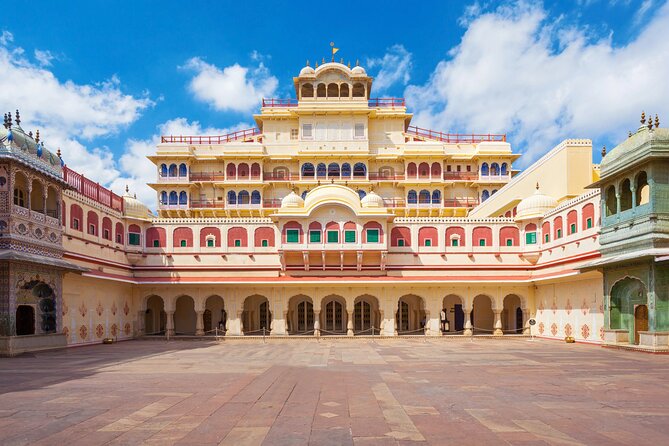
- Private vehicle with hotel, airport, or railway-station pickup and drop-off
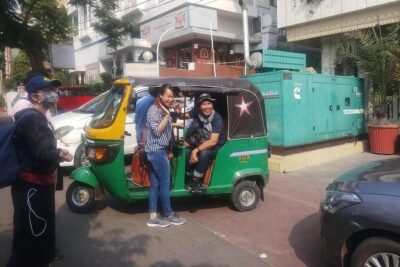
- Choose tuk-tuk or car, so you can trade comfort for street-level fun
- A tight, full-day plan: museums, palaces, stepwells, and Amer in about 8 hours
- Entrance tickets are optional (included only if you select the ticket + expert guide option)
- Photo-friendly stops like Jal Mahal, where you mostly enjoy the view from outside
- Multiple driver-guide options you may hear about, including Firoz and Vinod, known for smooth, safe days
Tuk-tuk or AC car: how you choose the vibe
This is a private tour, which means the big difference is not just what you see. It’s how you get there. If you pick a tuk-tuk, you get that open-air, street-level feel that makes Jaipur feel closer—louder, quicker, and more immediate. If you pick the car, you get a more comfortable ride through traffic and longer distances between sights.
I like that you can switch the way you travel without having to rebuild the whole day. That matters in Jaipur, where a few extra minutes waiting around can eat into the moments that are actually worth your camera time.
One practical thought: bring sunscreen and something for sun protection if you choose the tuk-tuk. You’ll spend a lot of the day walking in and around monuments.
You can also read our reviews of more city tours in Jaipur

Pickup that actually helps: start in the right place
You’re picked up from your hotel, airport, or railway station, and you’re dropped back at the end of the day. That sounds basic, but it’s a real value in a city like Jaipur, where getting to the old-city sights can be the most frustrating part if you’re routing yourself.
Also, the tour is designed for a single group. That means you’re not waiting for other people to argue over photos or slow-walk through courtyards. Your timing is more yours.
Albert Hall Museum: a strong first stop for scale and style
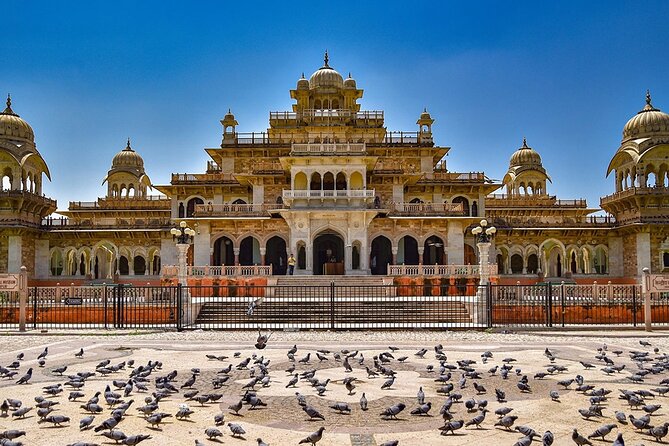
You start at Albert Hall Museum, one of Jaipur’s oldest museums. Expect about an hour here. The building itself is a headline—Indo-Saracenic architecture that feels like a clever mix of styles rather than one straight line.
Inside, you’ll find Rajasthani artifacts and displays like weapons and textiles, plus some unusual items that can make you pause. One standout is the Egyptian mummy exhibit, which gives the museum a surprising global twist compared to the rest of Jaipur’s royal story.
Why this stop works early: museums help you decode what you’re seeing later. After you see objects, textiles, and materials up close, the palace carvings and royal-era details start to feel less like decoration and more like a system of design.
Downside to consider: admission to the museum is not automatically included in the default format. If you want fewer ticket runs, choose the option that bundles monument entry tickets.
Hawa Mahal: the Breeze Palace from street level
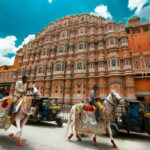
Hawa Mahal is all about its shape and function. The famous five-story façade of pink sandstone was built so royal ladies could watch street festivals from behind 953 small windows. The windows weren’t just for looks—air could move through the structure, which is why it earned the nickname Palace of Breeze.
You’ll have about 45 minutes. That’s enough to see the exterior from the right angles and take photos without feeling rushed.
A key consideration: the main value here is viewing. You’re mostly admiring the façade and the windows rather than doing a long interior experience. Plan your camera time early, because this is a place where crowds can form.
If you’re the type who likes details, ask your driver or guide to point out the window layout and how the building was meant to function. Those small explanations make the façade much more interesting than it seems at first glance.
Jantar Mantar UNESCO: giant stone tools for the sky
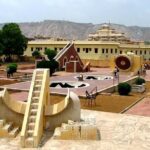
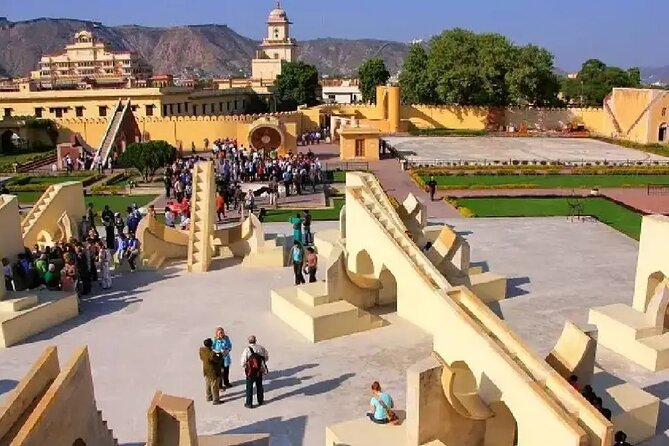
Next up is Jantar Mantar, a UNESCO World Heritage Site. You’ll spend about 45 minutes here. This is one of those places where Jaipur shifts from royal symbolism into science and measurement.
Jantar Mantar contains giant stone instruments created for astronomical observations in the 18th century. The theme is simple: how Maharaja Jai Singh II tracked celestial bodies with tools large enough to measure the sky.
What I like: it’s not just a backdrop. The instruments look artistic, but the story is practical. You start to see astronomy as something rulers cared about for calendars, navigation, and planning—real-world purposes, not just curiosity.
Like many monuments on this route, entry may require a ticket unless you’ve selected the entrance-tickets option. If you hate dealing with ticket lines, bundle it.
You can also read our reviews of more private tours in Jaipur






City Palace: the royal center still in use
The City Palace sits in the heart of old Jaipur and gives you the clearest sense of continuity. You’ll have about two hours here.
This is the royal landmark built by Maharaja Sawai Jai Singh II, and it’s still partly used by the royal family. That detail matters. You’re not just looking at a museum that went quiet years ago. You’re seeing a living legacy expressed through architecture and space.
What to watch for during your two hours:
- Courtyard viewpoints that connect exterior and interior spaces
- How the palace layout shifts from open areas into more structured, controlled rooms
- Carving and materials that echo across other Jaipur landmarks
Admission again is not automatically included unless you choose the ticket + expert guide option. If you’re doing the full day, paying once for entrances can be worth it just for stress reduction.
Royal Gaitor Tumbas: the calmer side of the royal story
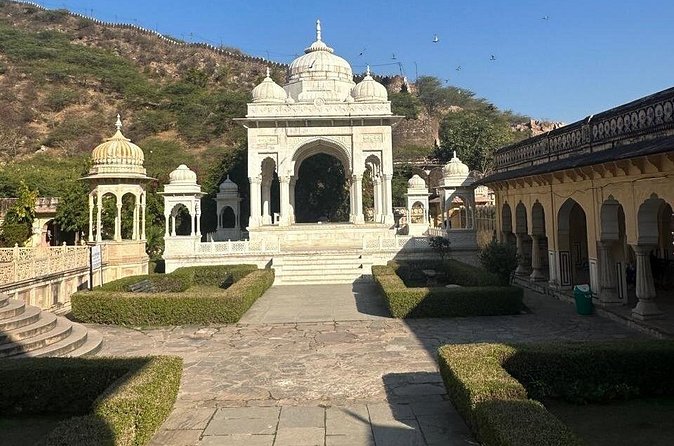
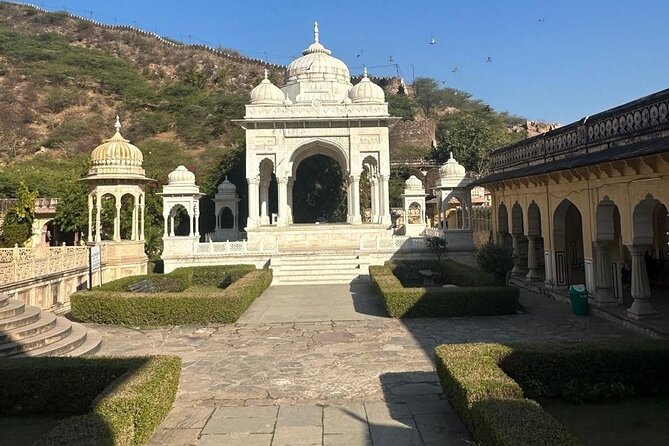
After the big-name sites, you visit Royal Gaitor Tumbas for about 30 minutes. This is a marble cenotaph complex where Jaipur’s rulers were cremated.
Why it feels special: the carvings are ornate, but the setting is quieter. This stop gives you a breather from the crowds and noise that come with palaces and major city landmarks.
It’s also a good place for slower travel. Spend a few extra minutes looking instead of taking photos nonstop. When you treat it like a pause rather than a checkbox, it changes how the whole day feels.
Admission is not included in the basic format unless you pick the entrance-tickets option.
Jal Mahal and the lake viewpoint: photos without entry
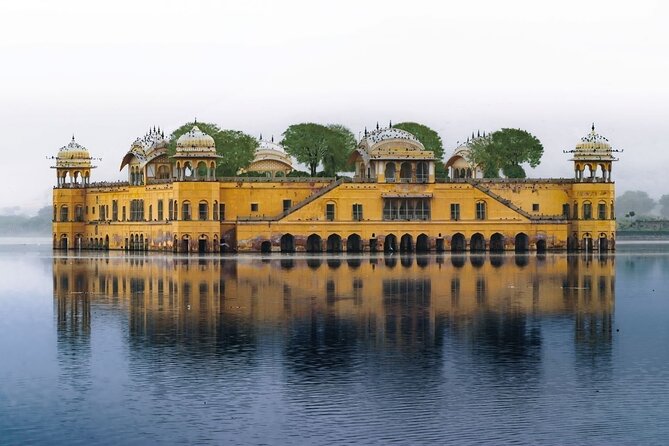
Jal Mahal is the famous palace floating in the middle of Man Sagar Lake. You’ll have about 15 minutes, and entry isn’t available—so think of this as a photos-and-views stop.
Even without access, it’s a strong visual moment. The palace shape is distinctive, and the Aravalli hills make the background feel layered rather than flat.
A practical tip: keep your expectations on the right track. If you want to walk around inside or explore gardens, this stop won’t do that. But if you want one of Jaipur’s most recognizable views, it’s a quick win.
This stop is listed with free ticket status in the plan, so it shouldn’t add cost if you’re following the suggested route.
Panna Meena ka Kund stepwell: geometry you can feel
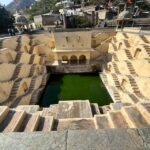
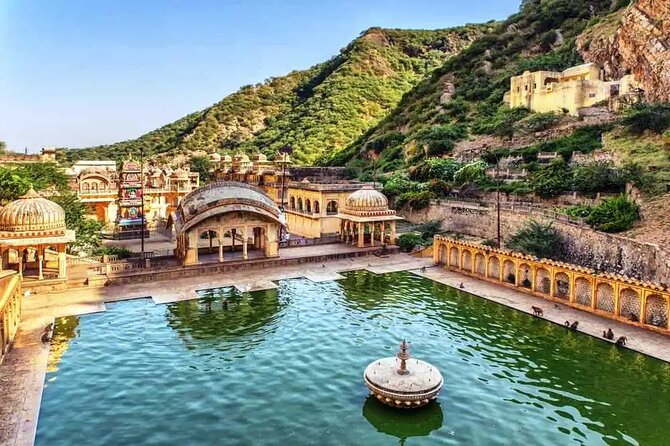
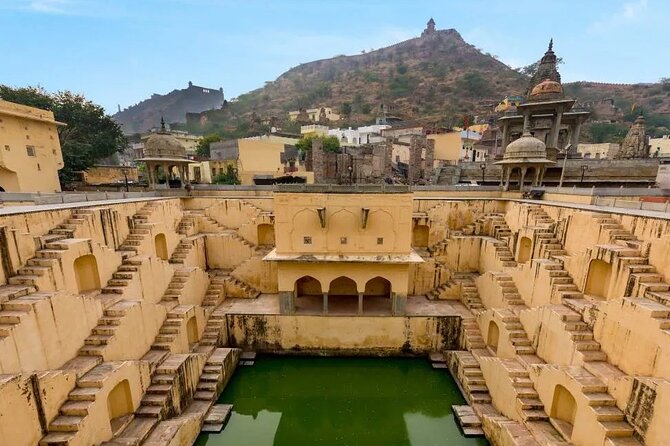
If you like architecture, Panna Meena ka Kund is the moment that can make you slow down. It’s an ancient stepwell known for its symmetrical staircases used for water collection and community gathering.
You’ll spend about 30 minutes here, and it’s one of the more photogenic places on the route because the structure creates patterns you can’t help but frame.
What makes it interesting beyond photos is the implied daily life. Stepwells were practical infrastructure, not a decorative afterthought. When you stand in front of the repeating stair geometry, you start to understand why these places mattered socially, not just functionally.
This one is listed as free ticket access. So it’s also a good stop for value: you get a full experience without paying another entry fee.
Amer: courtyards, gates, and the big-fort atmosphere
Amer is where the day often turns from sightseeing into feeling. You’ll spend about two hours here, with time around Jaleb Chowk and the grand gates Suraj Pol and Chand Pol.
Amer is the classic fort setting with layered spaces. Jaleb Chowk is the main courtyard where the king’s soldiers would parade and assemble. That historical idea helps you imagine movement and purpose behind each corridor and open area.
Suraj Pol and Chand Pol are not just entry points. They’re part of the fort’s story, each carrying its own historical significance. With the right guide, that can add meaning fast. Without one, you can still enjoy the architecture, but you’ll move through more like a viewer than a translator.
This is also a good moment to ask your driver for a smart photo angle. A safe, confident driver helps here. The route can be tight around major attractions, and you want someone who knows how to get you positioned without wasting time.
Expert guide add-on and entrance tickets: when it’s worth paying
You can add a knowledgeable local guide for deeper insight, and you can also select monument entry tickets for convenience. If you’re the kind of person who wants more than a collection of photos, the guide option can change the whole feel of the day.
Even if you don’t take every explanation, having someone explain the why behind each place helps you remember it later. Jantar Mantar stops being just stones. City Palace stops being just royal walls. Hawa Mahal stops being just a pink façade.
For budget planning, here’s the simple math logic:
- If you’re okay paying individual monument fees, you might keep costs down and only take the audio-guided style of learning.
- If you want fewer interruptions and less ticket wrangling, choose the option that bundles monument entrance tickets + expert guide.
Price and value: $7 that works best when you plan smart
At $7 per person for an about 8-hour private tour with pickup, vehicle, fuel, parking, taxes, and bottled water, the value is strong—especially compared with the cost of multiple separate transport arrangements inside Jaipur.
But you still need to budget for:
- Meals, since they’re not included
- Monument entry tickets unless you select the ticket option
- Any personal spending like shopping or refreshments
If you’re going with a small group, the private setup can feel even better. Private means you’re not stuck waiting on strangers. It also means you can keep the pace aligned with your own interests, like giving extra time to City Palace or speeding through photo-focused stops like Jal Mahal.
My best advice: decide your priority before you book. If you care most about royal monuments and photos, the ticket option may save you time. If you’re happy to skip a little entry and focus on exteriors and viewpoints, you can keep it lean.
How guides and drivers shape the day (and what to ask for)
From the service style around Jaipur Rajasthan Cab, the big pattern is reliability: drivers are described as on-time, efficient, and safety-focused. Names that come up include Firoz and Vinod—both praised for making the ride smooth and for sharing local advice.
That local advice can be practical. One common theme is food recommendations for authentic Rajasthani dishes. If you want that flavor in your day, ask your guide during pickup. You might even be able to swap a short stop for a good breakfast or a quick local meal point if your day timing allows it.
What you can ask on the spot:
- Which side of Hawa Mahal gives better photos at your time of day
- Where to spend extra minutes at City Palace
- Whether Jal Mahal is best viewed from a specific angle you can reach quickly
A good driver saves time. Time is what you buy with a private day.
Who should book this private Jaipur city tour
This tour is a good fit if you want:
- A full-day Jaipur overview without complicated planning
- The ability to pick tuk-tuk for fun or car for comfort
- A route that mixes major sights with quieter stops like Royal Gaitor Tumbas and the stepwell at Panna Meena ka Kund
- Flexibility in pacing, plus the option to add an expert guide
You might especially enjoy it if you’re traveling as a couple or small family and want control. It also works well for first-timers who want a classic Jaipur sampler with the right order.
If you’re chasing only one type of attraction—only museums, only forts, or only street markets—then you may find this plan covers a bit too much. In that case, use the flexibility to spend less time at stops that don’t fit you.
Should you book this private Jaipur tour?
I’d book it if you want a straightforward, private way to see Jaipur’s must-dos in about a day, with pickup handled and the choice of tuk-tuk or car. The itinerary has a smart flow: you start with museum context, move through the iconic architecture, then add the calmer, more reflective stops that make the day feel balanced.
I’d think twice if you hate paying separate monument tickets, because several major sights list admission as not included unless you choose the ticket option. Also, if meals are a big part of your travel style, plan your own food stops ahead of time.
If you’re deciding at the last minute, the good news is that the tour setup is designed for flexibility and free cancellation up to 24 hours before start time, so you can keep your plans flexible while you lock your Jaipur schedule.
FAQ
Is hotel or station pickup included?
Yes. You get pickup and drop-off from your hotel, airport, or railway station.
How long is the private Jaipur city tour?
It runs for about 8 hours.
Can I choose between a tuk-tuk and a car?
Yes. The tour includes a private vehicle, and you can choose a tuk-tuk or a car.
Are monument entrance tickets included?
Not automatically. Monument entry tickets are included only if you choose the option that includes an expert guide and entry tickets.
Does the tour include meals?
No. Meals are not included.
What is included besides transportation?
You’ll have bottled water, fuel charge, parking, and all other taxes. An expert guide and monument entry tickets are included only if you select that option.
Is this a group tour?
No. It’s private, meaning only your group participates.
Which stops have free entry in the plan?
Jal Mahal and Panna Meena ka Kund are listed with free admission in the itinerary. Other stops show admission as not included unless you select the entry-tickets option.