REVIEW · AMBER FORT & CITY PALACE TOURS
Jaipur: Full-Day City Tour with Camel Ride and Monkey Temple
Book on GetYourGuide →Operated by INDIATOR · Bookable on GetYourGuide
Jaipur can feel like a puzzle of palaces and plans. This full-day tour strings together the big hitters and explains what you’re looking at, from Amber Fort to the latticework of Hawa Mahal. You also get a camel ride near Jal Mahal and a stop at the Monkey Temple area, which is about as memorable as Jaipur gets in one day.
I especially like how the route mixes scale and detail. Amber Fort’s gates, courtyards, and palace spaces give you the “why” of Rajput fort design, while Jantar Mantar shows how people used instruments to track time and planets long before phones. A possible drawback: the schedule is tight, and the day can shift a bit depending on where your hotel is, so it helps to keep your expectations flexible.
In This Review
- Key Points Worth Noticing
- The Big Picture: A 9-Hour Jaipur Hit List
- Amber Fort: More Than a Pretty Fort Wall
- Jal Mahal (Water Palace): Camel Ride by the Lake
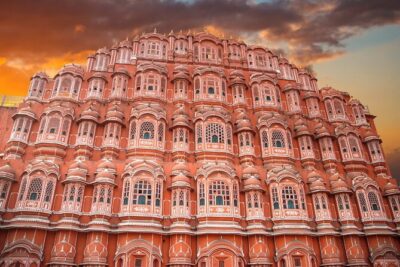
- Hawa Mahal: The Air Palace and Its 953 Windows
- Jantar Mantar: Ancient Instruments for Time and Planets
- Galtaji (Monkey Temple): Holy Pools and Monkey Chaos Control
- Lunch and Local Shops: Where the Tour Becomes Real
- Price and Value: Is $113 Worth It?
- Timing, Comfort, and How to Prepare
- Who This Tour Fits Best
- Should You Book This Jaipur Full-Day Tour?
- FAQ
- What time does the tour start?
- How long is the Jaipur city tour?
- What sights are included?
- Is there a camel ride during the tour?
- Is the tour guide available in English?
- Where do we meet the group?
- Can I cancel and get a refund?
Key Points Worth Noticing
- Amber Fort’s protective layout: you’ll see multiple courtyards and gates, not just a single viewpoint.
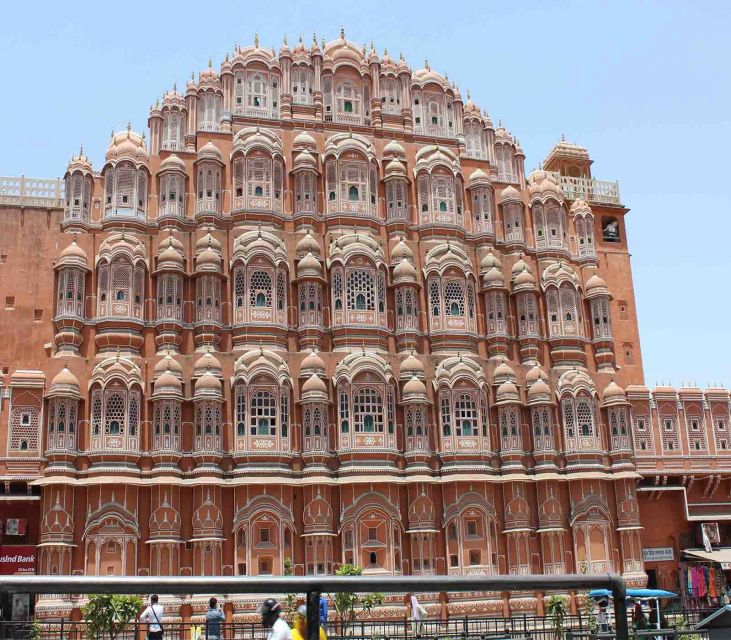
- Hawa Mahal’s 953 windows: the latticework design is the star, and it actually makes sense when you’re there.
- Jantar Mantar for astronomy and time: the place is built for observation, not just sightseeing.
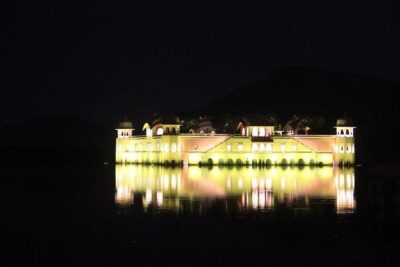
- Jal Mahal camel ride on Man Sagar Lake: a classic Jaipur photo stop with a short ride attached.
- Galtaji (Monkey Temple) and its seven holy pools: it’s a temple with water rituals and plenty of monkeys nearby.
- Lunch plus guided context: the guide keeps moving so you’re not just collecting landmarks.
The Big Picture: A 9-Hour Jaipur Hit List
You’ll start early, with pickup from your hotel lobby at 8:00 AM and a full day out in Rajasthan’s pink-city energy. The total time is listed as 9 hours, which means you’re covering a lot, but not doing it in a rushed, “bus window only” way. The goal is simple: hit the main sights people come for, plus a few experiences that make Jaipur feel specific.
The tour includes a driver and an English-speaking live guide, so you get interpretation on the monuments as you go. That matters in Jaipur because a lot of what you’ll see is architectural “logic.” The day’s flow also matters: Amber Fort first, then Jal Mahal for the camel ride and museum-like exhibits, then Hawa Mahal and Jantar Mantar, and finally the Monkey Temple area.
One practical note: the order of stops can change based on your hotel location. That’s normal for city routing. Just confirm which sites you’re prioritizing when you meet your guide.
You can also read our reviews of more city tours in Jaipur

Amber Fort: More Than a Pretty Fort Wall
Amber Fort is the tour’s anchor stop. You’ll go to this enormous fort complex where each gate, courtyard, and palace space has a role in how the fortress worked. It’s not just one building you walk through; it’s a whole system of movement and defense, shaped by Rajput rule.
The fort is described as being built by Man Singh, Rajput king of the region. That detail isn’t academic—it helps you understand why the architecture is so intentional. Fort walls and layered entrances weren’t only about protection. They also controlled how people entered and how authority was displayed.
What I like for you here: you get a chance to slow down and actually see how the place is organized. If you’ve ever felt lost in large forts, this kind of structured walk helps. You’ll know where you are and why you’re going there.
Possible drawback: forts are still forts. You’ll likely do some walking on uneven ground, and it’s a long morning block. Wear shoes you’re happy to get a bit dirty, and keep water handy.
Jal Mahal (Water Palace): Camel Ride by the Lake
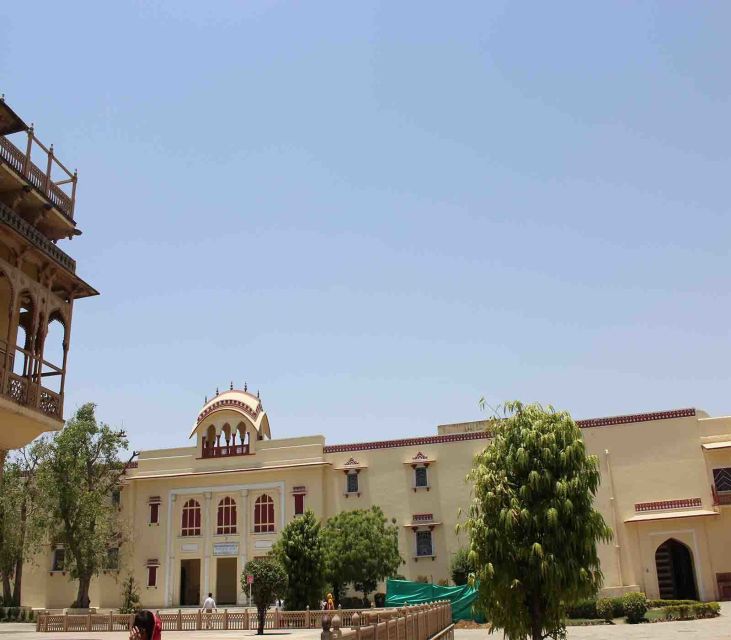
After Amber Fort, the route heads toward Jal Mahal, also called the Water Palace. This one is visually striking because it sits in the middle of Man Sagar Lake. It’s one of those Jaipur landmarks that looks almost unreal from certain angles.
Here’s where the day turns fun in a hands-on way: you’ll take a camel ride in this area. The tour includes this as a specific experience tied to Jal Mahal rather than leaving it as a separate add-on. If you’ve wanted a camel ride in India but didn’t want to negotiate or research logistics on your own, this is one of the simpler ways to do it.
You’ll also see exhibits at the Water Palace. The tour description notes a large collection including weapons, royal costumes, Mughal miniatures, antiques, and paintings. That museum-style stop adds variety after the outdoor fort. It also helps connect Jaipur’s court culture to what the monuments looked like in real life.
What to watch for: photos are easy here, but the camel ride portion has its own rhythm. Keep your phone secure and follow the guide’s instructions closely so you don’t get surprised mid-ride.
Hawa Mahal: The Air Palace and Its 953 Windows
Next comes one of the most famous silhouettes in India: Hawa Mahal, also called the Air Palace. The story on this one is built into the building itself. It was built by Maharaja Sawai Pratap Singh, Kachwaha ruler of Jaipur.
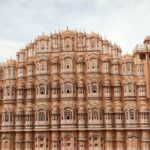
The main attraction is the facade with 953 small windows decorated with intricate latticework—a crisscross pattern that you’ll really only understand when you’re standing in front of it. The tour’s framing makes sense: you’re not just counting windows. You’re looking at a design language used for airflow, privacy, and view lines in a royal setting.
For you, this stop works best if you take a few minutes to focus on the lattice patterns at different heights. If you move around, you’ll notice the way light and shadows change the look of the facade. It’s a reminder that architecture is also a lighting tool.
Potential drawback: Hawa Mahal is a visual monument. If you prefer thick historical context at every stop, you’ll still get it, but some of the time here is about looking carefully rather than walking deep inside.
Jantar Mantar: Ancient Instruments for Time and Planets
Then you’ll move to Jantar Mantar, an astronomical observation site built by Maharaja Jai Singh II. The description is clear about what this place was for: accurate observation of astronomy, time, planets, and other celestial bodies.
This stop is special because it helps you connect Jaipur to the idea that science and empire weren’t separate categories. You’re seeing a purpose-built measuring environment. The structures are the instruments. The scale is part of the point.
I like how this tour doesn’t treat Jantar Mantar as a side stop. It’s positioned after Hawa Mahal and before the temple finale, so you get a change of pace: from palace aesthetics to practical observation tools to religious ritual.
Practical tip: bring patience. Even when you know the basics, these instruments can take a minute to read. Let your guide explain what each area is used for, then go back and look again. That second look is when it starts clicking.
You can also read our reviews of more tours and experiences in Jaipur




Galtaji (Monkey Temple): Holy Pools and Monkey Chaos Control
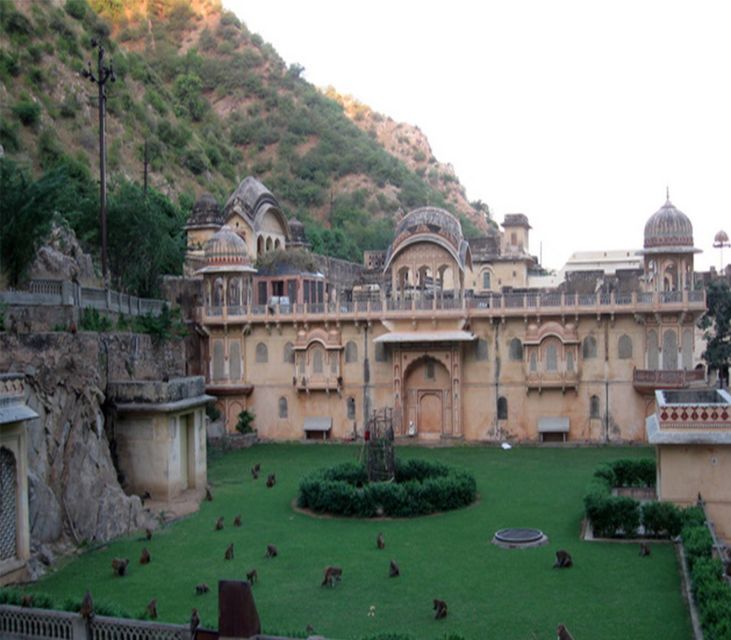
The final major cultural stop is Galtaji Temple, also known as the Monkey Temple. The tour description is specific: this is a Hindu temple area with a large number of monkeys and seven water pools filled with holy water, where followers come to bathe and wash away sins.
This is the kind of place where the atmosphere changes instantly. Monkeys are part of the scene, and you’ll feel like you’re sharing the space rather than visiting a quiet museum.
The best advice I can give you: treat the monkeys like you’d treat an unpredictable situation. Don’t act like they’re pets. Follow your guide’s instructions on food and behavior. One past experience described a guide behavior that pushed monkeys toward people by throwing food, which is the exact opposite of what you want. Your goal is to stay calm, keep distance, and avoid turning feeding into a crowd-control problem.
Also, be ready for stairs and uneven ground. That same experience mentioned a difficult walking slope during the Monkey Temple visit. If you have mobility concerns, ask your guide what the route looks like before you commit to the longer walk.
Lunch and Local Shops: Where the Tour Becomes Real
Some tours stop at monuments. This one adds a practical human part: lunch at a local restaurant after the Water Palace exhibits.
Then you’ll get time for shopping at famous shops before returning to your hotel. Jaipur shopping is its own world—textiles, small crafts, and souvenirs tied to the city’s style. The tour doesn’t spell out what you’ll see at each shop, so think of this as structured time to browse rather than a guaranteed “one perfect store” experience.
If you like shopping with context, ask your guide what to look for. If you don’t, use that time to buy one or two things you know you want. A full-day itinerary moves fast enough; don’t let the last hour disappear into endless browsing.
Price and Value: Is $113 Worth It?
At $113 per person for a 9-hour day with pickup and a live English guide, this tour’s value depends on how you like to travel.
Here’s what you’re paying for, based on the tour components: hotel pickup and driver time, guide interpretation, multiple major Jaipur landmarks, camel ride at Jal Mahal, and a lunch stop. If you try to stitch together Amber Fort, Hawa Mahal, Jantar Mantar, Jal Mahal, and Galtaji on your own, you’ll spend time coordinating transport and dealing with ticket timing and directions. The money is partly paying for convenience.
Where the value can wobble: the day is tight, and different guides can steer the experience slightly differently. One experience mentioned the Monkey Temple stop being swapped to a different temple at the end of the day, which changes what you think you’re getting. Another mentioned the day feeling hurried, especially when weather changes required itinerary tweaks.
My take: if you want a single guided loop and you’re comfortable being flexible about the order and flow, this price can make sense. If you’re very strict about hitting every named site in the exact sequence, you’ll want to confirm priorities early and keep an eye on timing.
Timing, Comfort, and How to Prepare
This kind of day trip rewards good planning.
- Start with comfortable shoes. Forts and temple areas are rarely flat, and you’ll walk enough that sneakers or sturdy sandals matter.
- Bring water and sun protection. Jaipur sun can be stubborn even when the day feels structured.
- Pack light. You’ll be moving between sites frequently, and you don’t want bags slowing you down.
- Plan for monkeys and camel ride rules. Listen first, act second.
Most of all, keep a simple travel mindset: you’re seeing Jaipur through a guided, high-impact lens. If you treat it like a checklist plus a few deeper explanations, you’ll likely enjoy it. If you want long stays at every site, you might feel the time squeeze.
Who This Tour Fits Best
This tour makes the most sense if you:
- want a full-day highlights loop without arranging transport between sites
- like architecture and design as much as temples
- enjoy learning how places worked—fort defense, royal windows, and astronomical measuring
- want one classic experience in the middle (the camel ride near Jal Mahal)
- are okay with a final stop where monkeys are part of the setting
It may not be ideal if you:
- need lots of downtime
- have limited mobility and worry about walking slopes and temple steps
- prefer strict, unchanging itineraries with no rerouting
Should You Book This Jaipur Full-Day Tour?
I’d book it if your goal is to see Amber Fort, Hawa Mahal, Jantar Mantar, and Galtaji in one go, with a guide explaining what you’re looking at and a lunch stop included. It’s a practical way to build a Jaipur day around meaning, not just photos.
I’d hesitate if your priorities are inflexible—especially if Monkey Temple is the one must-see for you. Before the tour starts, confirm that you’re planning to do the Monkey Temple stop and ask how the route might shift based on weather or hotel area. If you do that, you’re setting yourself up for the best version of the day: smooth guidance, strong English interpretation, and the kind of improvisation that can actually improve your route.
If you like your sightseeing organized, but not sterile, this is a good fit.
FAQ
What time does the tour start?
Pickup is scheduled for 8:00 AM from your hotel lobby.
How long is the Jaipur city tour?
The duration is listed as 9 hours.
What sights are included?
The tour includes Amber Fort, Jal Mahal (Water Palace) with exhibits and a camel ride, Hawa Mahal, Jantar Mantar, Monkey Temple (Galtaji), and time for shopping.
Is there a camel ride during the tour?
Yes. You’ll enjoy a camel ride at the Water Palace area.
Is the tour guide available in English?
Yes, the tour includes a live guide who speaks English.
Where do we meet the group?
The meeting point is your hotel lobby. Coordinates are provided for the meeting area.
Can I cancel and get a refund?
Yes. Free cancellation is available up to 24 hours in advance for a full refund.