REVIEW · JAIPUR
Hands-on Embroidery Workshop
Book on Viator →Operated by Creatis · Bookable on Viator
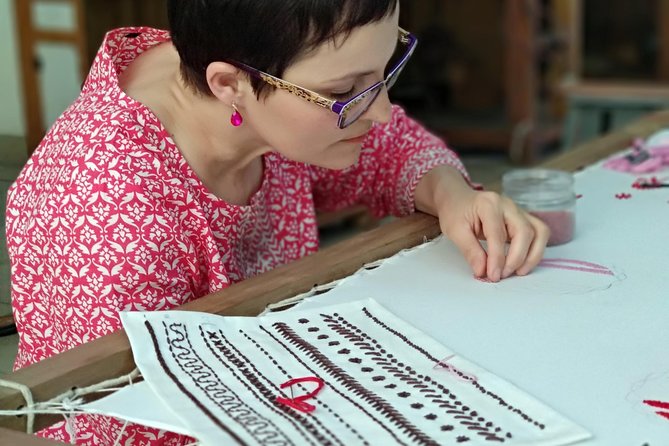
Embroidery feels small until you start stitching. In Jaipur, this hands-on embroidery fundamentals class turns plain fabric into something personal, with time spent on borders, texture, and flashy embellishments like beads and mirrorwork.
I like that you get an organized, beginner-friendly pass through the basics: tools, fabric prep, and design transfer. I also love how the session doesn’t stop at flat stitches—it pushes into 3D decorative work and secure ways to attach sparkle materials.
One drawback: there’s no hotel pickup, and you’ll want enough time to get yourself to Creatis in Sudarshanpura before the class starts.
In This Review
- Key things to know before you go
- Jaipur embroidery at Creatis: a 2-hour creative reset
- Getting started: tools, fabric prep, and design transfer
- The stitch curriculum: outlines, texture fills, details, and joining
- Going 3D: raised effects that lift off the fabric
- Sparkle time: beads, mirrors, sequins, and coils
- Your project choice: hooped sampler vs sew-on patch
- Hooped sampler: made for display
- Sew-on patch: made for use
- Which one should you choose?
- Creatis logistics: where to meet and what to wear
- Price and value: what $25.50 covers in Jaipur
- How to get the best result in a beginner-friendly class
- Should you book this Jaipur embroidery workshop?
- FAQ
- How long is the embroidery workshop in Jaipur?
- How much does it cost?
- Is hotel pickup included?
- What should I wear?
- What is the minimum age to join?
- Can I get a full refund if I cancel?
Key things to know before you go
- 2-hour format that still covers a real range of techniques so you leave with skills, not just a souvenir.
- Guided practice on how stitches actually build texture (borders, fills, outlines, details, and joining).
- Embellishments like beads, mirrors, sequins, and coils with practical attachment tips.
- Two project styles: a hooped sampler for display or a sew-on patch for use.
- Small group size (max 15) which helps you get help when you get stuck.
- Mohit and the team keep the vibe relaxed and step in with guidance when needed.
Jaipur embroidery at Creatis: a 2-hour creative reset
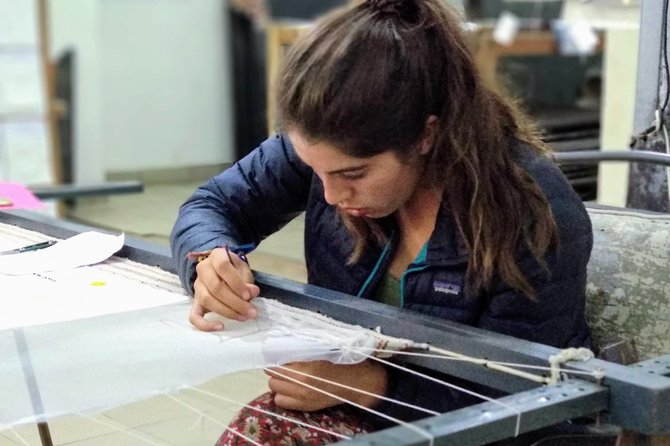
If you want a break from sightseeing that still feels totally Indian, this is a great fit. Jaipur has plenty of shops that sell embroidery and accessories, but this workshop is about the part most tourists miss: learning how the stitches are built, one by one.
The session runs about 2 hours at Creatis, and it’s designed for beginners and creative souls. That matters, because embroidery can look intimidating until someone shows you a few stitch families and how they work on fabric. The class is also kept to a small group, with up to 15 people, so you’re not stuck watching from the back.
You’ll need a little patience and hand-eye coordination, but you don’t need to be athletic. The setup is described as clean and comfortable, and the guidance is the main reason it feels easy to follow—especially if your fingers have never worked with thread before.
You can also read our reviews of more tours and experiences in Jaipur



Getting started: tools, fabric prep, and design transfer
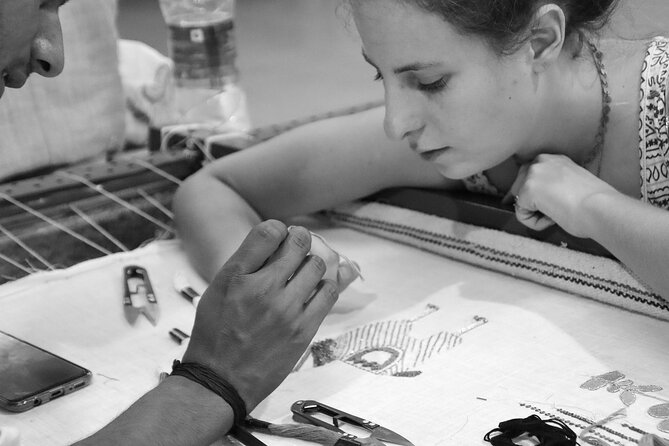
The workshop begins with the stuff that makes embroidery easier later: getting familiar with the basic embroidery tools and materials. Before you even stitch, you learn how fabric behaves and why preparation matters. Even a beginner project looks better when the fabric is positioned the right way.
You’ll also cover how to prepare fabric and transfer designs. That’s a big deal in a short class. Without a good transfer method, you spend your time guessing where lines should go. Here, the focus is on setting you up so you can concentrate on the stitches rather than wrestling with the pattern.
This early stage is where the small-group feel helps. If you’re unsure about how something should be placed or aligned, you can ask. And based on how the workshop is described, Mohit and the team make sure you stay comfortable while you learn.
The stitch curriculum: outlines, texture fills, details, and joining
After the prep, you move into the core of the learning. The workshop gives you a curated set of stitches that do more than look pretty—they build structure. That’s what separates embroidery that looks flat from embroidery that looks alive.
You’ll work on borders and outlines, learning how to frame shapes with clean edges, stems, and defined lines. Outlines are often the first thing beginners can do well, because the goal is clear: make the line look intentional. When that clicks, the rest starts to feel possible.
Then comes fill and texture. This is where stitches become a design tool, not just decoration. You practice coverage and patterning so surfaces stop looking empty. It’s the same logic as painting: fills give you depth, and texture gives you personality.
Next you add details and accents—the small touches that make a piece feel finished. Think of these as the visual punctuation marks. In a short class, you won’t memorize an entire embroidery encyclopedia, but you’ll learn enough stitch logic to recognize what to add next when you’re working alone later.
Finally, there’s structural and joining. This is the practical part people don’t expect: how to hold things together with subtle strength. Even if you’re only making a small project, the joining knowledge helps your piece look neat and stay intact.
Going 3D: raised effects that lift off the fabric
A lot of embroidery workshops stop at flat stitching. Here, the class explicitly includes 3D and decorative work—techniques that create raised forms that catch light and feel sculptural.
In practical terms, this stage teaches you how to think beyond a line on fabric. You’re learning how embroidery can become dimensional—how you can add depth, not just color. Raised effects can also teach you control, because you’re managing thread height and placement.
This is also one of those “you get it fast” parts for many beginners. As soon as you see your stitches standing up instead of lying flat, you feel the difference. And it helps you trust your ability to finish something that looks like it belongs in a frame—or on a garment.
Sparkle time: beads, mirrors, sequins, and coils
Now the fun part. You learn embellishment techniques that take your embroidery from pretty to eye-catching. The class covers additions like beads, mirrors, sequins, and coils, plus tips for making them secure and long-lasting on fabric.
This is where embroidery becomes more like craft engineering. You’re not just placing decoration—you’re attaching it in a way that won’t pop off after a few wears or a casual stretch. Learning secure attachment methods is especially useful if you choose the patch project, because that piece is meant to be used.
The workshop also focuses on how these materials work together. Mirrors and beads often do different jobs visually, and coils can add structure or rhythm. When you understand that, you can make smarter choices instead of randomly adding sparkle.
And yes, there’s supposed to be a good vibe in the room. One review notes a great playlist and a relaxed mood, which helps when you’re concentrating on tiny work. Two hours is enough time to learn, but not enough to feel hurried if the atmosphere is supportive.





Your project choice: hooped sampler vs sew-on patch
You get to choose your project style, and the choice changes how you’ll think during the class.
Hooped sampler: made for display
If you pick the hooped sampler, you’ll create something that’s meant to be shown. This is ideal if you want a finished piece you can keep on a shelf, hang on a wall, or gift to someone who loves handmade art.
A sampler format also makes the stitch variety feel more intentional. Borders, outlines, fills, and details each have a visible role. If you want to practice multiple stitch types without worrying about heavy wear and tear, this is the safer bet.
Sew-on patch: made for use
If you pick the sew-on patch, you’re aiming for something you can add to clothes or accessories. That means the practical skills matter more—especially structural and joining work and the secure attachment of decorative elements.
A patch project is perfect if you want a functional souvenir. It’s also a great option if you like the idea of using embroidery outside of a frame.
Which one should you choose?
If you’re short on time (or nerves), the hooped sampler feels easier to plan visually because it’s for display. If you’re excited to customize something you already own, the sew-on patch is the more “real life” outcome.
Creatis logistics: where to meet and what to wear
The class meets at Creatis A12 Sudarshanpura RIICO, behind Tata Motors Service Center, in the Industrial Area, Sudarshanpura near Bais Godam, Jaipur. The activity ends back at the same meeting point.
There’s no hotel pickup, so you’ll want to plan your route ahead of time. The good news is it’s described as near public transportation, so you likely won’t need a private driver to make it work. Still, this is an industrial-area address, so it’s smart to arrive early enough to find the building calmly.
Dress code is smart casual. Keep it comfortable for sitting and close handwork—especially if you’re prone to getting fussy with sleeves or loose fabric. The class is for adults, with a minimum age of 18.
Also note the workshop is set for moderate physical fitness. It’s not an obstacle-course situation, but you should be able to sit for the two-hour session and focus your hands.
Price and value: what $25.50 covers in Jaipur
At $25.50 per person, this workshop lands in the affordable range for a hands-on creative activity in Jaipur. The best value part isn’t just the price—it’s what’s included versus what you’d otherwise need to buy to practice.
The cost includes all taxes, fees, and handling charges, plus GST (Goods and Services Tax). That’s helpful because you don’t get hit later with surprise extras at checkout.
What about materials? The details you share point to you learning with the actual tools used in embroidery. Plus, reviews highlight that you can receive take-home goodies, including an embroidery hoop and other items to keep going. That’s a meaningful value boost: you’re not only paying for instruction, you’re also leaving with what you need to try again later.
The two-hour time frame is also part of the value. In that short window, you get instruction on multiple stitch families and finishing techniques, plus a real project choice (hoop or patch). If you’re trying to pack Jaipur with meaningful activities, this is a strong use of time.
How to get the best result in a beginner-friendly class
You’ll get the most from this workshop if you go in ready to learn the logic, not just the look. Embroidery is slow craft work, so the real win is understanding how stitches build texture and structure.
Here are a few ways to make it smoother:
- Take your time on outlines. If your border looks clean, the whole piece looks intentional.
- Ask early if placement feels off during design transfer or fabric setup. Fixing it early saves frustration.
- Focus on secure attachment when adding embellishments. That’s what keeps your beads and mirrors from turning into loose souvenirs.
- Choose the project that matches your goal: hoop sampler for display, patch for customization.
Also, if you can, keep your expectations realistic. Two hours means you’ll make something satisfying, but you’re not expected to master every embroidery stitch tradition in one sitting. The goal is that you leave with usable skills and a piece you can be proud of.
Should you book this Jaipur embroidery workshop?
I think this is a good booking if you want an authentic creative experience that doesn’t require prior skill. It’s especially worth it if you enjoy crafts where the process matters: practicing stitches, learning textures, and seeing how embellishments work when they’re attached correctly.
Book it if:
- you’re a beginner who wants guided basics (tools, transfer, stitch families)
- you want sparkle work like beads and mirrors without guessing
- you’d rather make a hooped sampler or sew-on patch than just watch demonstrations
Skip it if:
- you really need hotel pickup and hate navigating to an industrial-area address
- you only want a quick look at embroidery without doing close handwork
If you like the idea of turning thread and fabric into something that feels personal, this hands-on embroidery workshop at Creatis is a smart, value-friendly way to spend two hours in Jaipur.
FAQ
How long is the embroidery workshop in Jaipur?
The workshop lasts about 2 hours.
How much does it cost?
It costs $25.50 per person.
Is hotel pickup included?
No. Hotel pickup is not included.
What should I wear?
The dress code is smart casual.
What is the minimum age to join?
The minimum age is 18 years.
Can I get a full refund if I cancel?
Yes, you can cancel for a full refund if you cancel at least 24 hours in advance of the experience start time. If you cancel less than 24 hours before, the amount paid will not be refunded.