REVIEW · 3-HOUR EXPERIENCES
Jaipur: 3-Hour Morning Bike Tour of Jaipur Old City
Book on GetYourGuide →Operated by Le Tour De India · Bookable on GetYourGuide
Jaipur wakes up early, and this bike tour lets you see it close. You’ll ride the Old City lanes at a slow, human pace, stop for family-style chai and breakfast snacks, and catch morning moments you’d never time on your own.
I like that the experience blends real daily life with big sights like Hawa Mahal and the Govind Dev Ji temple ceremony. The main trade-off is the early start, plus you’ll need to dress modestly for temple and public activities.
In This Review
- Key things that make this tour worth your morning
- Why sunrise biking in Jaipur beats the usual checklist
- Meeting point and how the 3-hour ride is paced
- Safety first: guides, helmets, and the battery rikshaw following you
- Entering the walled city: havelis, narrow lanes, and the chai stop
- Albert Hall morning calm and the best light for Hawa Mahal photos
- Govind Dev Ji temple ceremony: Krishna aarti up close
- Laughing yoga in the morning park and the flower/vegetable market scene
- Food joints and breakfast tastings: chai, lassi, and street snacks
- Bicycles, sizes, and getting the right ride (including tandem and kids)
- Price and value: what $28 buys you in time, access, and taste
- What could be tricky for you
- Who this Jaipur bike tour suits best
- Should you book this Jaipur old-city morning bike tour?
- FAQ
- Where does the tour start?
- How long is the bike tour?
- Is a helmet provided?
- What bikes are used, and are there options for kids or non-riders?
- Is the tour family-friendly, and what are the age limits?
- Do I need modest clothing?
- Are transfers from hotels included?
Key things that make this tour worth your morning
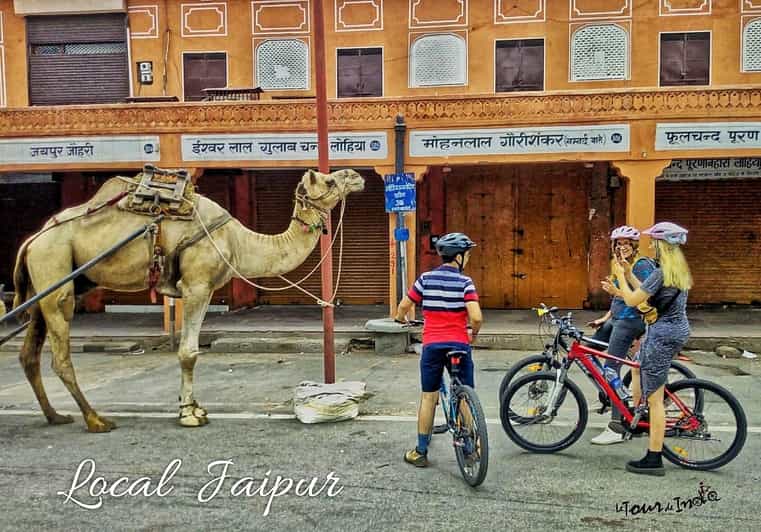
- Small group (up to 8) with 3–4 guides, so you’re not lost in a crowd
- High-end bikes (Trek, Giant, Merida) plus helmets, with kid options like kids bikes and tandem rides
- A battery rikshaw support vehicle following along for extra peace of mind
- Chaiwala stop and breakfast tastings at well-known local food joints
- Hawa Mahal morning photo light before the streets fill up
- Govind Dev Ji Krishna aarti plus a laughing yoga session and a flower/vegetable market walk-by
Why sunrise biking in Jaipur beats the usual checklist
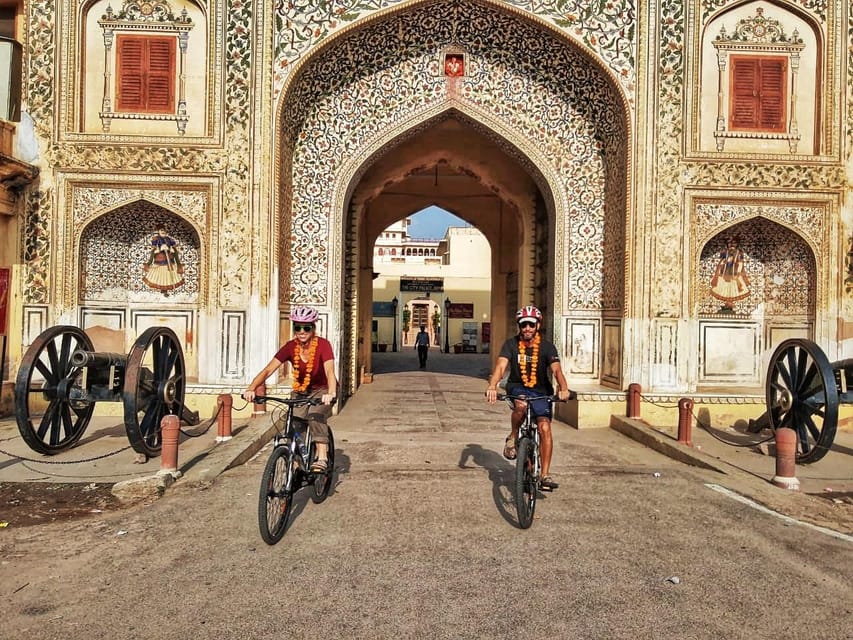
If your Jaipur plan is all palaces and big-ticket monuments, this is a nice counterweight. You don’t start the day by lining up and heading straight inside. Instead, you pedal through the walled-city streets while shops open, people move, and the city’s routines are still fresh.
The big win is how the sights connect to everyday life. You’ll see architectural landmarks, yes, but you’ll also meet the people and routines around them: tea making, temple devotion, morning park chatter, and market conversations.
One more thing I appreciate: the ride is built for comfort and safety, not for fitness bragging. The route covers about 9+ km in 3 hours, which keeps it feeling like sightseeing by bicycle rather than a workout.
You can also read our reviews of more cycling tours in Jaipur
Meeting point and how the 3-hour ride is paced
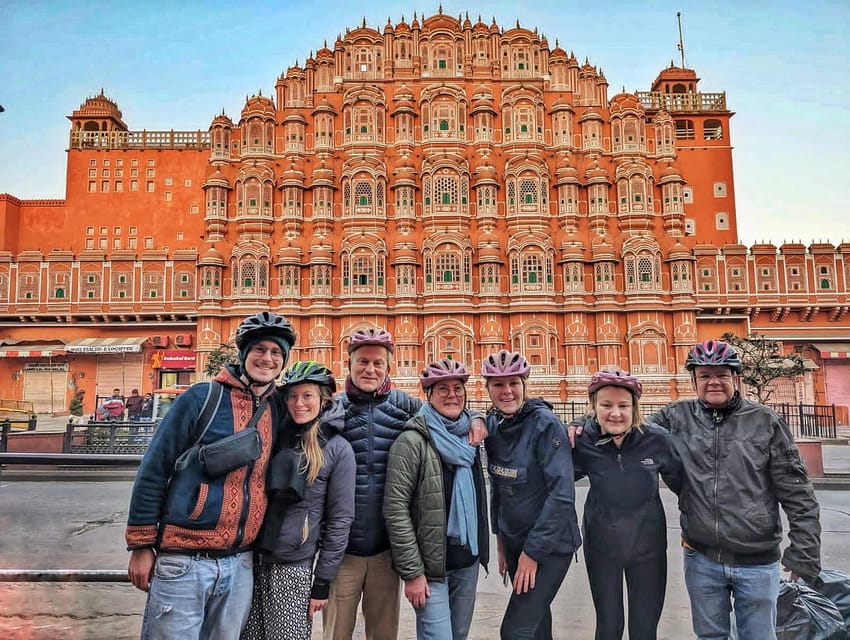
You start at the Le Tour De India office, right opposite the Beacon Wall Street hotel (use that as your landmark). There’s a short briefing about the tour route and what to expect, then you roll into the walled city.
In practice, the pacing matters. You’ll have multiple stops for tasting and photos, plus time to move through pedestrian-heavy areas near temples and markets. That’s why the tour feels relaxed even though it’s early.
The finish returns you to the same place you started—the office—so you’re not stuck figuring out a pickup point afterward.
Safety first: guides, helmets, and the battery rikshaw following you
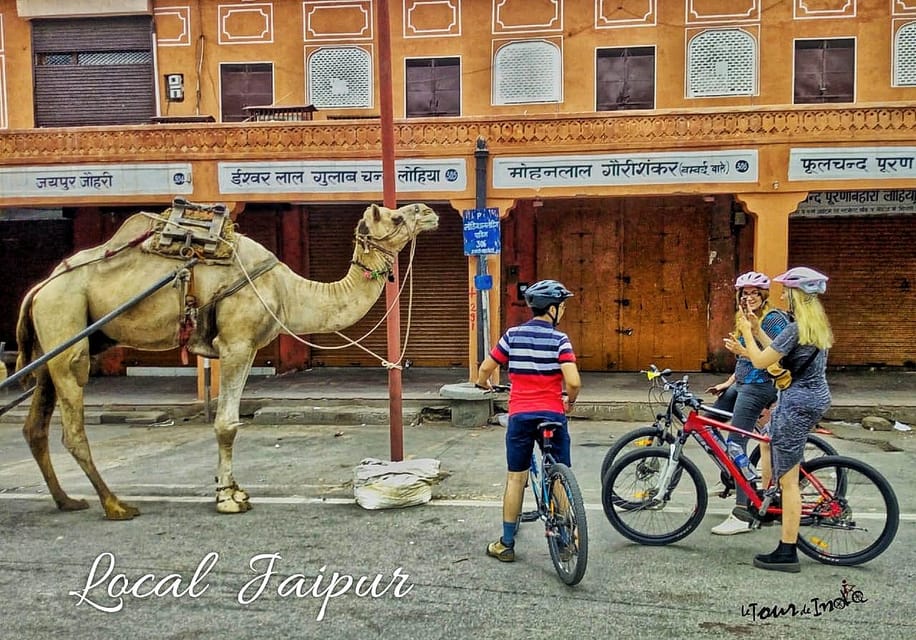
This is the kind of bike tour where the safety details matter, because you’re riding in active city streets. You ride with 3–4 experienced bicycle guides who lead and escort the group, and helmets are included.
What stands out is the support vehicle: a battery rikshaw follows along. That means if someone needs a breather or isn’t riding the full time, there’s a practical option to stay with the group rather than getting separated.
And from the way the guides are described (names like Kushi, Jyoti, Yudhi, Himmat, Pushpa, Partha, and Himanshu show up across groups), it seems like they run the day with energy and a close eye on everyone’s comfort.
Entering the walled city: havelis, narrow lanes, and the chai stop
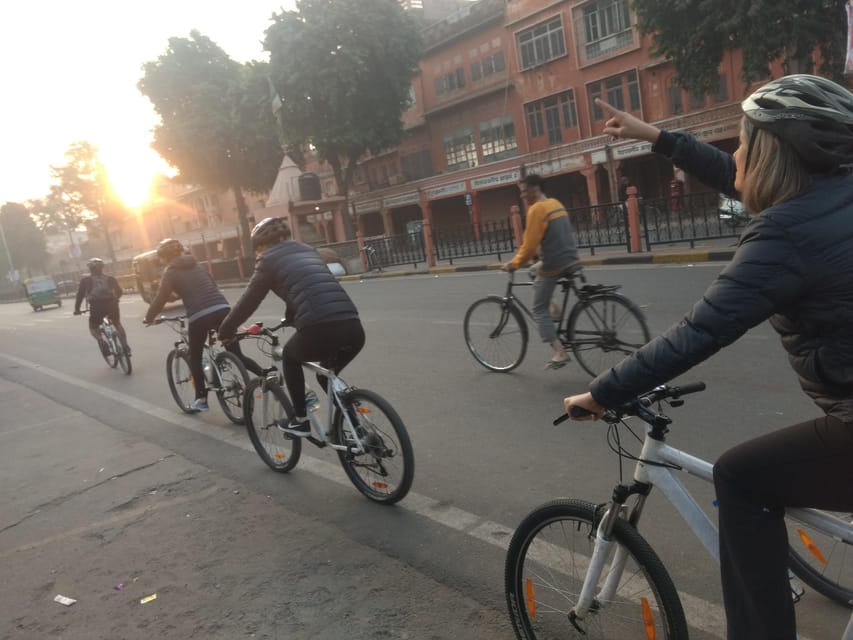
After the briefing, you enter Jaipur’s Old City streets where the rhythm is different from the main tourist routes. The lanes are narrower, the traffic is more mixed, and you’ll be moving at a “city pace” that feels like walking—just a little faster.
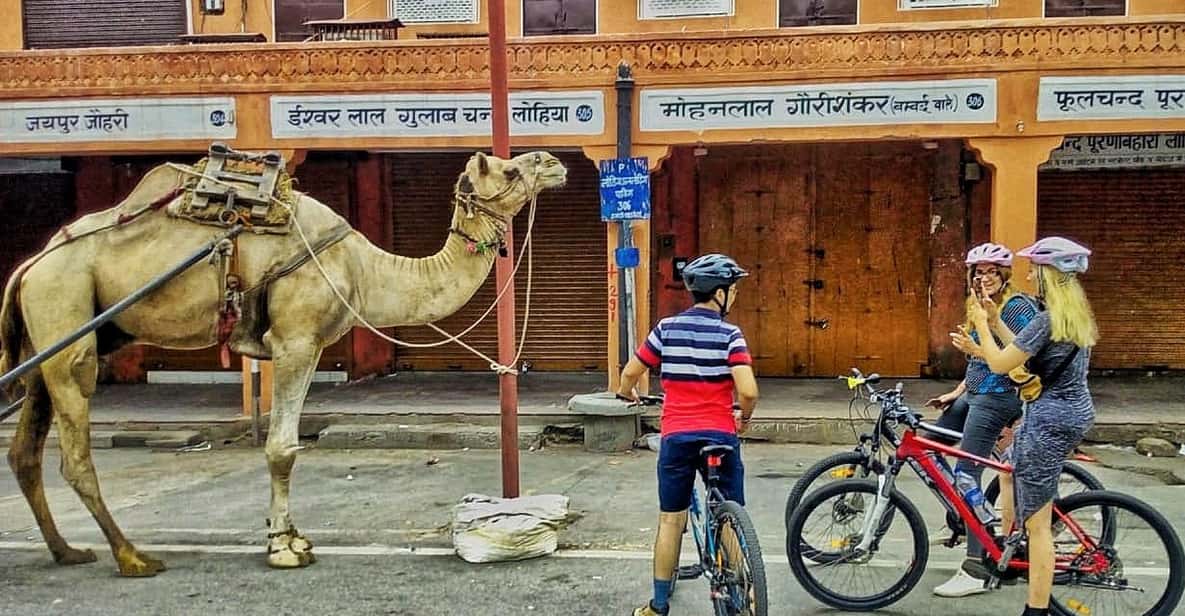
Along the way, you pass areas with vintage havelis and other architectural features that read differently from a bike than from a bus window. You’ll also get chances to meet locals as the group navigates everyday movement.
Then comes one of the most popular early-morning moments: a visit to a famous chaiwala, where the business has been run by the same family for three generations. This stop is more than a drink break. It’s your introduction to how Jaipur breakfasts start—slow sips, quick smiles, and the kind of tea you’ll taste again later in the day’s food stops.
Albert Hall morning calm and the best light for Hawa Mahal photos
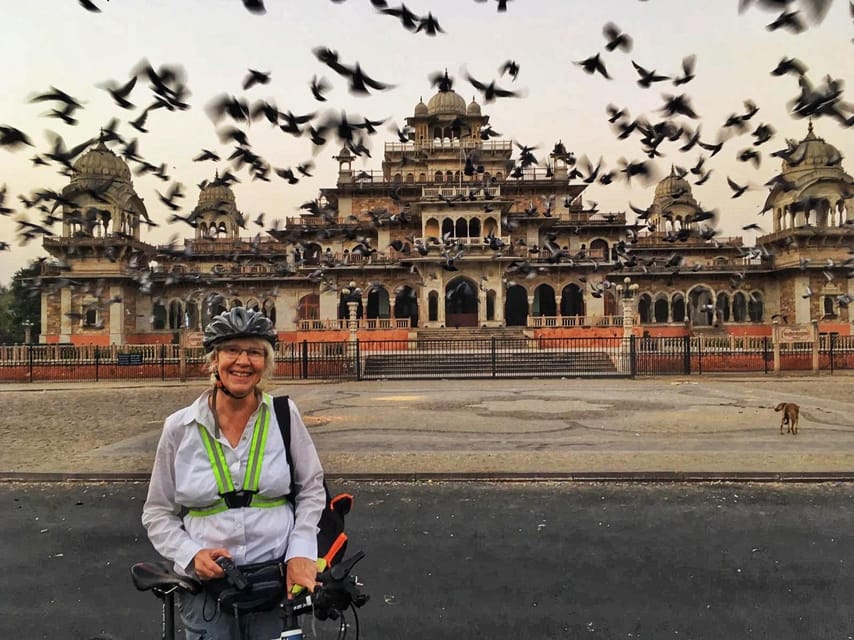
After chai, you ride toward the Albert Hall Museum area. In the morning, the nearby public park atmosphere is described as a place to see morning life—people chatting, sharing gossip, and going about daily routines.
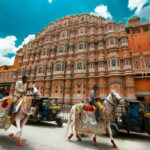
Then you head to Hawa Mahal (the Place of Winds) for a photo stop. The timing here is practical: morning sunlight gives you softer light and a less crowded feel than later in the day.
If you’ve seen Hawa Mahal at noon, you know it can feel like a postcard. This is the version that feels like the city owns it, not the version that belongs to tour buses.
You can also read our reviews of more city tours in Jaipur





Govind Dev Ji temple ceremony: Krishna aarti up close
The temple portion is the most intense, in the best way. You’ll cross multiple gates as you approach Govind Dev Ji, maneuvering the bikes through crowded pedestrian flow as people head to the ceremony.
Inside, the morning devotion is the main event: aarti preparation, large bells, lighted wicks, and groups singing together. The energy is communal and loud in a way that doesn’t feel like a performance for tourists—it feels like a real morning ritual.
A quick practical note: this is where modest dress becomes more than a rule. You’ll be part of the scene, moving among devotees, and your clothing needs to respect that. The tour specifically asks for modest dress and comfortable shoes for temple and public activity.
Laughing yoga in the morning park and the flower/vegetable market scene
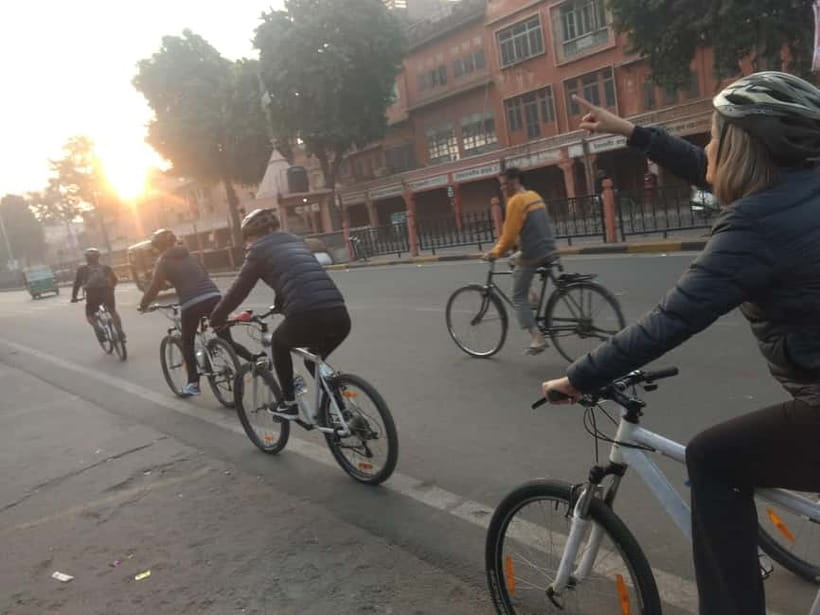
Right after the spiritual stop, the day shifts gears to something lighter: a laughing yoga session. The idea is simple, and the experience is funny if you’re open to it. People around you are doing it as a normal morning practice, not as entertainment.
Then you ride into the market zone—described as the biggest vegetable and flower market in Jaipur. This is the kind of place where photos come easily because the colors and activity are already there: traders talking and negotiating, merchants working through stacks of produce, and shoppers and carriers moving through with purpose.
Even if you’re not the type to browse markets, this stop gives you something valuable. You start to understand the city’s supply chain and everyday trade culture, not just its monuments.
Food joints and breakfast tastings: chai, lassi, and street snacks

This tour is built around food, not just sights. You’ll taste a variety of local cuisine at recognized food joints, plus you’ll stop for tea and breakfast-style snacks that match the morning vibe.
From the info and the repeated mentions, some of the “main characters” include masala chai and lassi (often served as a yogurt drink). You may also sample items like samosa with yogurt in the spirit of local breakfast eating.
What I like is the structure: you don’t just get dumped at a market and told to fend for yourself. You’re brought to places where the process already feels established, and you taste enough to get a real sense of flavors without committing to one heavy meal.
If you have any dietary needs, the tour asks you to let them know in advance. That’s worth doing early, because it’s the difference between trying to improvise on the spot and getting a proper plan from the start.
Bicycles, sizes, and getting the right ride (including tandem and kids)
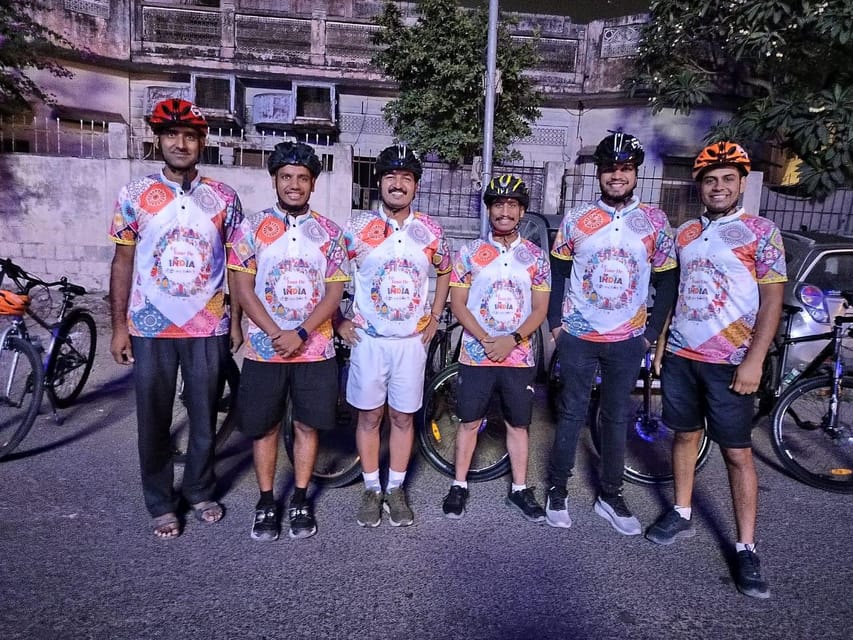
A good bike tour is mostly about the bike fit. This one uses high-end bikes—Trek, Giant, and Merida—and they offer bikes of different sizes.
The tour also makes space for mixed groups. There are tag-along options for kids, tandem bikes for couples or non-riders, and bikes that can match different ages and comfort levels.
There’s also a key limitation: it’s not suitable for children under 3 years, and babies under 1 year aren’t accepted. If you’re traveling with younger kids, that’s not a flexible “ask at check-in” situation. Plan accordingly.
Price and value: what $28 buys you in time, access, and taste
At about $28 per person for 3 hours, the best value here isn’t only the bike. You’re paying for access—routes inside the Old City, timed photo moments, a temple ceremony experience, and structured food stops.
The food part alone often costs more than $28 if you’d try to build the day yourself with guides and careful route planning. Add in helmets, a small group setup (max 8), and the support vehicle following you, and the price starts to make more sense.
Also, this tour compresses several “Jaipur themes” into one morning: architecture, worship, markets, and breakfast. If your itinerary is tight, this gives you more feel for the city than a single-site visit.
What could be tricky for you
The early start is the main consideration. People describe alarm times as early as around 5:15am, and even a 6am start can feel sharp if you aren’t used to mornings.
Second, temple and public activity mean you’ll need to follow the modest dress request and be comfortable moving through crowds. You don’t need formal attire, but you do need practical clothing and shoes.
Finally, transfers aren’t included. The tour starts at the office by Beacon Wall Street hotel, so you’ll want to plan your own ride to that meeting point.
Who this Jaipur bike tour suits best
This works best if you want Jaipur to feel like a place, not just a checklist. You’ll enjoy it if you like early mornings, local food, and learning how daily life runs around major landmarks.
It’s also a good fit for families where not everyone rides at the same level, because there are kids bikes, tag-along options, and tandems. And because the group is small with multiple guides, it suits couples and friends who want personal attention rather than a line-walk through the city.
If you hate bikes, dislike crowds near temples, or you can’t manage early mornings, you might want a slower alternative. But for the right traveler, this is one of the more “Jaipur-feeling” mornings you can buy.
Should you book this Jaipur old-city morning bike tour?
I’d book it if you want the Pink City as it looks before it gets photographed to death. The combination of safe, guided cycling, food tastings, a Hawa Mahal morning photo stop, and the Govind Dev Ji Krishna aarti is a strong mix of visual sights and real-life atmosphere.
It’s especially worth it if you value guides who can handle traffic and pedestrian moments without turning the ride into stress. The support vehicle and the small-group setup are a good sign here.
Before you book, be honest about one thing: the early alarm. If that’s a dealbreaker, skip it. If mornings don’t scare you, this is a smart use of a few hours in Jaipur.
FAQ
Where does the tour start?
It starts at the Le Tour De India office, opposite the Beacon Wall Street hotel (your landmark).
How long is the bike tour?
The tour lasts 3 hours.
Is a helmet provided?
Yes, good quality helmets are included.
What bikes are used, and are there options for kids or non-riders?
The tour uses high-end bikes (Trek, Giant, Merida) and offers different sizes. There are kids bike options, tag-along options, and tandem bikes for non-riders and couples.
Is the tour family-friendly, and what are the age limits?
The tour is described as family-friendly, but it is not suitable for children under 3 years, and babies under 1 year are not accepted.
Do I need modest clothing?
Yes. The tour requests modest dress because you’ll visit a temple and participate in public activities/celebrations with locals.
Are transfers from hotels included?
No. Transfers to and from your hotel are not included in the tour cost.