REVIEW · CITY TOURS
Jaipur City Heritage and Architecture Tour
Book on Viator →Operated by Royal Jaipur Tours · Bookable on Viator
Jaipur can feel like a maze, but this tour keeps it simple. You get hotel/airport pickup and drop-off plus an English-speaking driver who helps you see the real highlights in an efficient 8-hour day. I like that the plan mixes the famous landmarks (Hawa Mahal, Jantar Mantar, City Palace) with quieter stops around town. The only real catch: several big sights charge entrance fees, so your final cost depends on which tickets you add.
This is a private experience (just your group) in a car, which is a big deal in Jaipur traffic and heat. If you care more about understanding what you’re looking at than just collecting photos, the driver’s explanations make the day feel smoother and less stressful. One consideration: the day is packed, so if you want long, slow wandering at every site, you may feel the schedule.
In This Review
- Key things I’d pin to your map
- A full-day Pink City plan with pickup and a real driver
- Amer: starting near the fort zone and watching daily life
- Panna Meena ka Kund stepwell: the short stop that steals the show
- Jal Mahal: the palace-in-the-lake moment, and why the stop is brief
- Royal Gaitor beneath Nahargarh: quieter royal memory, longer time inside
- Hawa Mahal and Jantar Mantar: two ticketed icons you should plan for
- Hawa Mahal: the facade photo and the context behind it
- Jantar Mantar: astronomy as architecture
- City Palace: courtyards and the center of Jaipur power
- Pink City on foot: use the hour to slow down
- Price and value: the $11.24 headline vs the real ticket budget
- Private car reality in Jaipur: why this style works
- Should you book this Jaipur City Heritage and Architecture Tour?
- FAQ
- What’s included in the tour?
- How long is the Jaipur City Heritage and Architecture Tour?
- Is this tour private or shared?
- Do I need to pay entrance fees?
- Are any stops free?
- Do I get a ticket on my phone?
- What’s the cancellation policy?
Key things I’d pin to your map
- Private car + English-speaking driver so you’re not stuck decoding directions
- Pickup and drop-off from hotel/airport/railway station to start clean and easy
- Major monuments included in the route: Hawa Mahal, Jantar Mantar, City Palace
- Free-entry stops like Panna Meena ka Kund and time for strolling the Pink City
- Entrance fees are not included for several top attractions, so budget for tickets
- Clean, comfortable driving matters in Jaipur, where roads can be intense
A full-day Pink City plan with pickup and a real driver
Jaipur is one of those places where the highlights are spread out, and the roads can be challenging. That’s why I like tours that begin with pickup and end with drop-off, using a private car. You don’t waste the first hour figuring out where to go or timing buses. You also don’t end your day with the headache of finding transport back.
On this tour, you’re riding with an English-speaking driver, and that makes a difference at monuments where the details matter. The route is designed for a full day: you’ll hit the classic “must-sees” but also get a few stops that feel more local and architectural than just postcard views.
If you happen to get a driver like Imran or Asif (names that show up in past service experiences), you’ll likely appreciate the calm, safety-first driving and the helpful, practical recommendations that come with the ride. One past experience even described the car as super clean and spacious, which matters when you’re doing an 8-hour loop.
You can also read our reviews of more city tours in Jaipur

Amer: starting near the fort zone and watching daily life

Amer is about 11 km from Jaipur, and it’s a smart first leg because it sets the tone early: forts, heritage structures, and a more atmospheric feel than the city center. You get around 2 hours here, and the time window is long enough to see more than just the obvious front entrance.
What I like about starting in Amer is that it anchors the rest of the day. When you later see other royal-era sites in Jaipur—palaces, courtyards, and astronomical instruments—you’ll spot repeating themes in design and symbolism. You also see how the city’s heritage connects to where people actually live and move around nearby, even when you’re focused on monuments.
One practical consideration: Amer is part of the Jaipur fort area ecosystem, and entrance pricing can be separate depending on what you want to do on-site. The tour’s pricing notes entrance fees that can apply to fort-related stops, so plan for that if you’re aiming to go inside major structures.
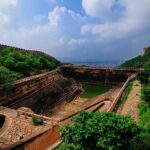
Panna Meena ka Kund stepwell: the short stop that steals the show
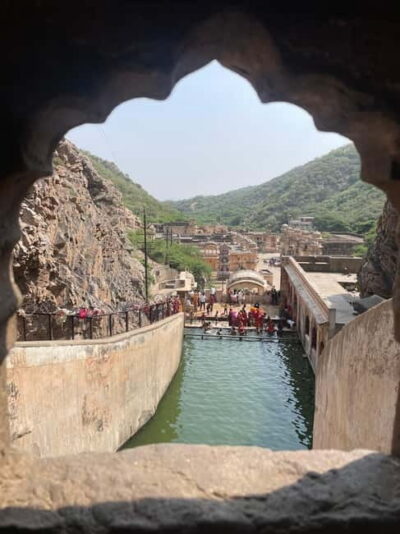
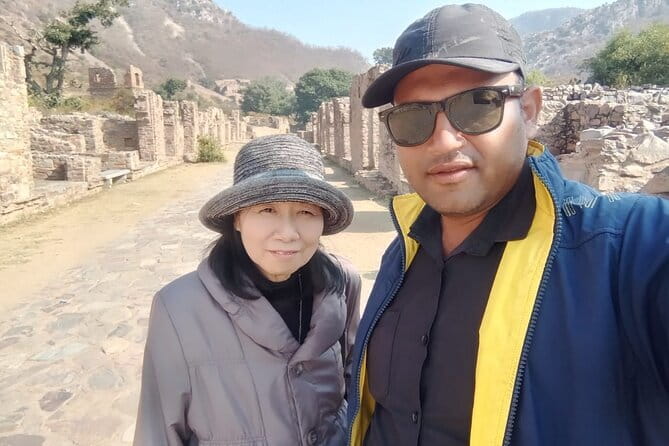
Panna Meena ka Kund is one of those places that’s easy to overlook if you only chase the biggest name attractions. Here, you get a focused 30 minutes, and it’s marked as free entry.
This stepwell is known for geometric design—symmetry, niches, and stair-like structure that gives you a strong visual pattern from multiple angles. Even in a quick visit, it tends to feel like you’re looking at an architectural puzzle that was meant to be understood slowly. If your travel style likes design details—shapes, repetition, human engineering—this is the kind of stop you’ll remember.
Because the time is short, you’ll want to arrive ready to look. Give yourself a minute to notice the geometry before you start taking photos or rushing to the next spot. The payoff is that it feels different from the palaces and courtyards.
Jal Mahal: the palace-in-the-lake moment, and why the stop is brief
Jal Mahal sits in the center of Man Sagar Lake, and the construction is dated to 1699. You’ll only have about 15 minutes here, and the entry is listed as free.
So treat Jal Mahal as a visual breather rather than a long museum-style stop. You’re there for the sightline: the palace shape rising from the lake creates a strong “wow, that’s odd in a good way” effect. It’s also a nice transition between Amer and the tighter cluster of Old City landmarks later.
If you’re the type who wants to linger for views, you might wish you had more time. But in an 8-hour plan, the short visit keeps the day moving so you don’t end up trading the big interior sights for extra photos by the water.
Royal Gaitor beneath Nahargarh: quieter royal memory, longer time inside

Royal Gaitor, also called Gaitor Ki Chhatriyan, sits below Nahargarh Fort. You’ll get about 45 minutes, and entrance is listed as not included.
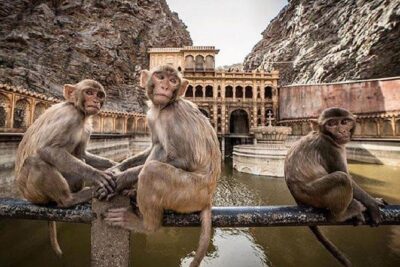
This is a strong stop when you like heritage without constant crowds. The structures are the eternal resting place for Kachchwaha kings and princes, and the setting gives it a calm, contained feeling compared to the louder photo points. It’s also a good moment for architectural observation: you’re not just looking at one building—you’re reading a whole arrangement.
The main consideration here is simple: budget for entrance fees if you plan to go in. But if you skip the paid side, you might miss the full experience that makes Gaitor worth the time.
You can also read our reviews of more historical tours in Jaipur



Hawa Mahal and Jantar Mantar: two ticketed icons you should plan for
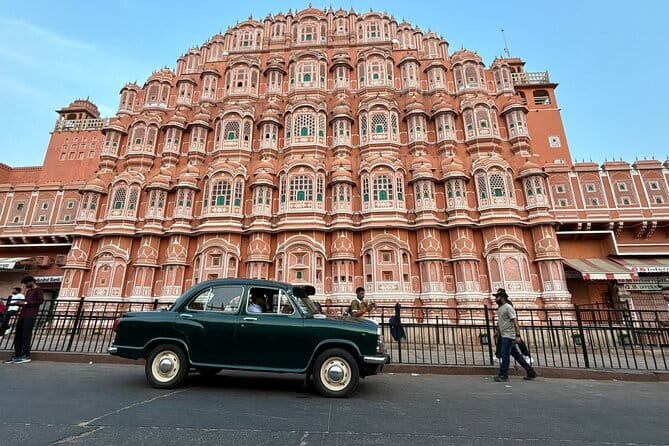
Hawa Mahal (Palace of Breeze) and Jantar Mantar are both major “Jaipur brand” sights, and both are listed as not included for admission.
Hawa Mahal: the facade photo and the context behind it
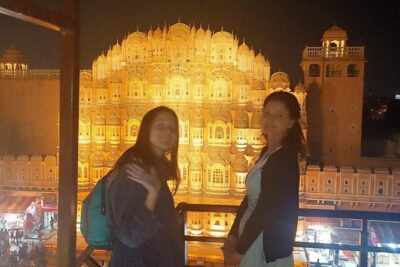
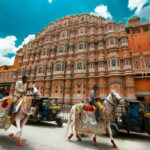
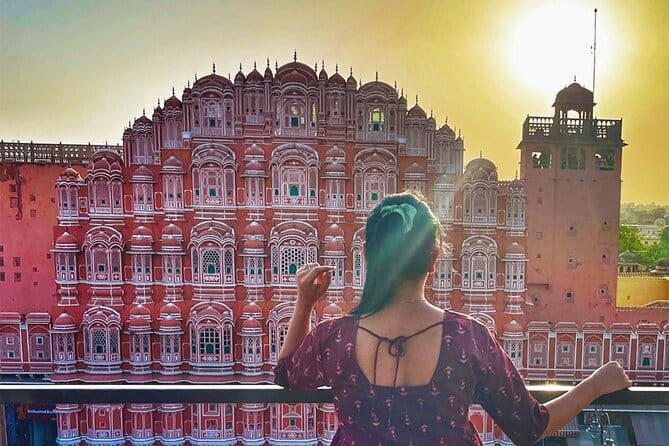
Hawa Mahal is built from red and pink sandstone and connects to the Zenana (the area associated with royal women). The tour allots about 45 minutes, which works because this is a place where the best experience is often outside and around the structure, even if you also want to get closer.
I like this stop because it gives you a visual anchor. Once you see the honeycomb-like facade style, the rest of Jaipur’s royal design choices start making more sense. It’s also the kind of location where you can spend time just looking at symmetry and how the building performs as a facade.
Jantar Mantar: astronomy as architecture
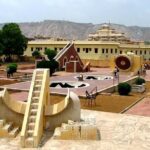
Jantar Mantar, created by Rajput king Sawai Jai Singh and completed in 1734, is a set of astronomical instruments. You’ll also get about 45 minutes, and admission is not included here too.
This is where the day stops being only about aesthetics. The instruments were designed to measure and track celestial patterns, and seeing them in place makes the scale feel real. I recommend treating this as an “explain it to yourself” stop: try to connect the shapes and tools to the idea of timekeeping and observation.
If you only have energy for one ticketed interior-style moment, Jantar Mantar is the one that tends to reward curiosity the most.
City Palace: courtyards and the center of Jaipur power
The City Palace is the big Old City anchor, and you’ll have about 2 hours here. It’s listed as not included for admission.
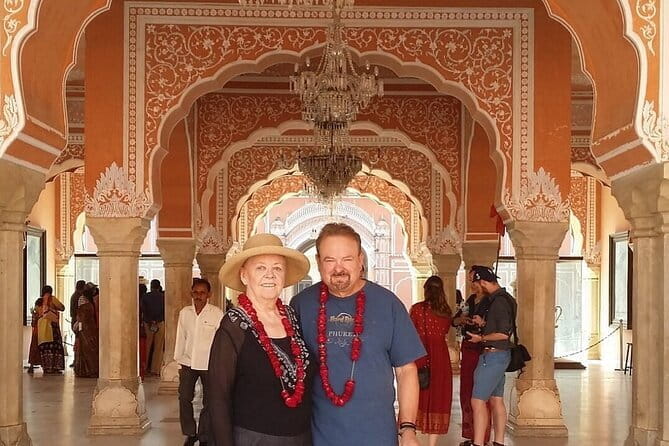
This complex of courtyards, gardens, and buildings is where royal administration and lifestyle overlap. It was built by Maharaja Sawai Jai Singh II, the founder of Jaipur, and it blends Mughal and Rajput architectural influences. That mixture matters, because it helps you understand Jaipur as a crossroads city—part local royal identity, part outside influence shaped into something distinctly Jaipur.
Two hours is a good chunk of time, because you can move through the palace structures without feeling like you have to sprint. I also like that City Palace sits in the heart of the Old City, so the transition afterward is natural: you’re done with the major monument complex, then you can step directly into street level.
Main consideration: entrance fees. If you’re trying to control costs, this is one of the places where paying usually feels justified because it’s more than one photo spot.
Pink City on foot: use the hour to slow down
After the palace and monument zones, you’ll get about 1 hour to stroll through the Pink City, with time near Hawa Mahal and space to walk narrow streets and markets.
This is where you get to reset your pace. A car tour can make everything feel timed and efficient, but the Old City streets are where you can actually feel the place: building colors, street angles, and the sense of daily movement around landmark backdrops.
I’d use this hour strategically. Don’t try to cover everything. Instead, pick a small area around your landmarks and look for the tiny differences: how facades change from block to block, and where the streets open out for better angles. If you’re shopping-inclined, you can also ask your driver for practical pointers—some drivers have helped with recommendations around carpets and textiles.
Price and value: the $11.24 headline vs the real ticket budget
The listed price is $11.24 per person, and that’s attractive for a full-day private experience with pickup, bottled water, and fuel/parking/driver costs handled.
But the math changes once you factor in admission. Entrance fees are not included for City Palace, Hawa Mahal, Jaipur Fort, Jantar Mantar, and Royal Gaitor, listed as $35.00 per person. There’s also an additional $46.00 per person option for Royal Splendour (Blue Room).
So what do you get for the money? You’re paying for:
- a private car for about 8 hours,
- hotel/airport/railway pickup and drop-off,
- bottled water,
- an English-speaking driver,
- and a route that hits multiple big-name monuments without requiring you to plan transport between them.
If you plan to enter most paid sights, the entrance fees can quickly become the larger part of your budget. Still, many people find it worthwhile because you’re seeing several major attractions in one coherent day rather than paying for separate half-day logistics.
My advice: decide in advance which ticketed sights matter most to your group. If City Palace and Jantar Mantar are your priorities, you can plan around that. If you’d rather save money, you might reduce paid admissions while still enjoying the exterior views and the free stops.
Private car reality in Jaipur: why this style works
Jaipur’s scale is one reason this sort of private day tour feels practical. Instead of hopping between points with changing transport, you sit, ride, and arrive with less friction.
This is also why an experienced, safety-focused driver is valuable. Past experiences specifically mentioned careful driving on roads that can be dangerous. When traffic and road conditions are a factor, having someone who’s steady behind the wheel reduces stress so you can actually enjoy the sights.
And because it’s private, you’re not balancing your pace with strangers. You can also benefit from driver guidance on what to prioritize during tight time windows—especially at places like Hawa Mahal and Jantar Mantar, where the best experience depends on knowing where to look and when to move on.
Should you book this Jaipur City Heritage and Architecture Tour?
Book it if you want a structured, full-day Jaipur plan with pickup, drop-off, an English-speaking driver, and a route that covers the main royal landmarks plus a couple of more architectural stops like Panna Meena ka Kund.
Skip it (or adjust expectations) if you’re trying to keep entrance fees to a minimum. Several high-interest sights are listed as not included, so your final total can be meaningfully higher than the $11.24 figure.
One smart approach: treat the free stops as “balance” and the ticketed sights as your “must enter.” If you do that, you’ll get the best mix of value and meaning out of the 8-hour day—and you won’t end the trip feeling like you only did checkboxes.
FAQ
What’s included in the tour?
The tour includes a private car with an English-speaking driver, hotel/airport/railway station pickup and drop-off, bottled water, and fuel charge, parking fee, driver allowance, and all other taxes.
How long is the Jaipur City Heritage and Architecture Tour?
It runs for about 8 hours.
Is this tour private or shared?
It’s private. Only your group participates.
Do I need to pay entrance fees?
Yes. Entrance fees are not included for City Palace, Hawa Mahal, Jaipur Fort, Jantar Mantar, and Royal Gaitor (listed as $35.00 per person), and Royal Splendour (Blue Room) is listed as $46.00 per person.
Are any stops free?
Some stops are listed with free admission, including Panna Meena ka Kund, Jal Mahal, and the time in the Pink City.
Do I get a ticket on my phone?
A mobile ticket is part of the experience.
What’s the cancellation policy?
You can cancel for free up to 24 hours in advance of the experience start time for a full refund.