REVIEW · AMBER FORT & CITY PALACE TOURS
Jaipur Tuk Tuk Sightseeing Tour with Monkey Temple Sunset View
Book on Viator →Operated by Jaipur City Tour Taxi · Bookable on Viator
Jaipur by tuk-tuk feels like a moving museum. This private 9–10 hour route mixes major landmarks with a sunset moment at Galtaji Monkey Temple, all with hotel/airport pickup and drop.
I especially like the door-to-door convenience, because you’re not wasting time figuring out transport or parking. I also love that the route isn’t only big-ticket sights; it includes smart pacing with quick stops like Jal Mahal before heading to the more atmospheric temples and fort areas.
One thing to plan for: the tour price doesn’t cover site entry. You’ll need to budget an entrance fee of ₹1,650 per person, and meals aren’t included.
In This Review
- Key highlights you’ll feel on the day
- The 9–10 hour Jaipur route that stays realistic
- Albert Hall Museum: the easiest win for art and context
- Hawa Mahal: five stories, no foundation, and lots of window drama
- Jantar Mantar: when giant instruments explain the sky
- City Palace: a landmark that helps you read the city
- Royal Gaitor Tumbas: a calmer mood after the big icons
- Jal Mahal: quick, scenic, and surprisingly satisfying
- Amer: the fort-and-palace area that gets the time
- Galtaji Monkey Temple at sunset: the ending with personality
- Guide moments that change the day: English explanations and flexibility
- Price and the real budget for entrances
- What to expect from the flow of stops
- Who this tour fits best (and who might not love it)
- Should you book this Jaipur tuk-tuk sunset tour?
- FAQ
- How long is the Jaipur Tuk Tuk Sightening Tour?
- Do I get hotel or airport pickup and drop-off?
- Is this tour private?
- What transportation options are available?
- Are entrance fees included?
- Are meals included?
Key highlights you’ll feel on the day
- Pickup and drop in Jaipur: hotel/airport handoff so you start straight into sightseeing
- Tuk-tuk or AC vehicle options: choose the ride that fits your comfort level
- Jantar Mantar instruments still in use: astronomy turned into giant, working tools
- Amer takes the time (about 2 hours): enough duration to actually see the fort-palace area
- Galtaji sunset viewpoint: the day ends with a mountain temple setting and a monkey-famous vibe
- Guide quality can be excellent: the English-speaking driver is built in, and some guides (like Khalid/Ali) are known for clear explanations and flexibility
The 9–10 hour Jaipur route that stays realistic
This tour is built for a full day without feeling like you’re sprinting from one photo spot to the next. You’ll start with a pickup from your chosen location in Jaipur and end with drop-off back to where you started. That matters more than it sounds, because Jaipur traffic and parking can make “just go on your own” plans more stressful than fun.
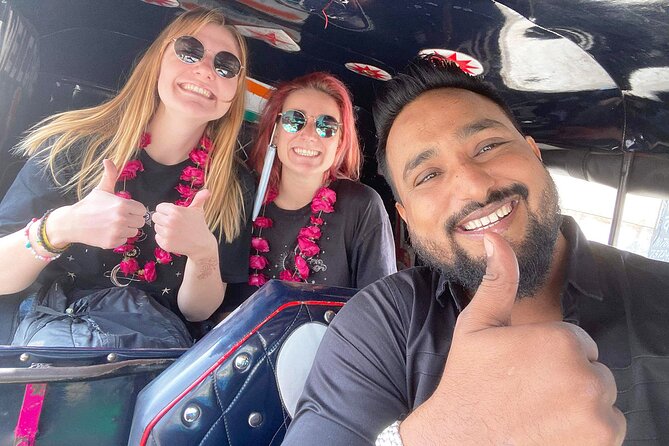
You also get a choice of how you move: a private tuk-tuk or an AC vehicle, depending on the option you pick. For hot months, an AC car can be a big relief. For atmosphere and easier street vibes, a tuk-tuk is more fun than efficient-looking cars. Either way, the tour includes fuel, parking, taxes, and bottled water, so the basic comfort pieces are handled.
A practical note: it’s a private tour, meaning only your group participates. That’s a real advantage here because you can slow down for questions at the technical stops (Jantar Mantar is a good example) or adjust when you want to spend more time at a palace or viewpoint.
You can also read our reviews of more evening experiences in Jaipur



Albert Hall Museum: the easiest win for art and context
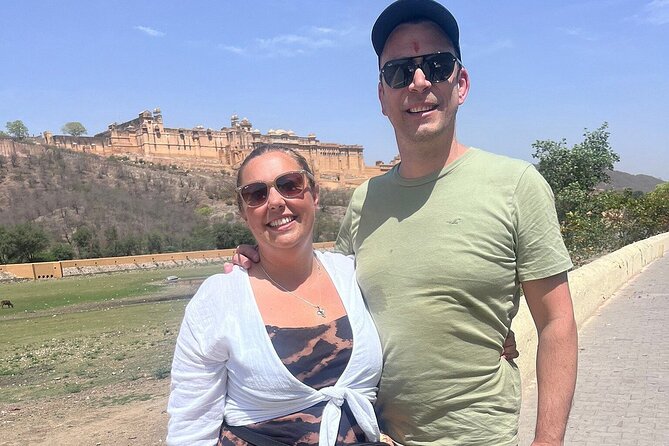
Your day begins at Albert Hall Museum, described as the oldest museum in the state. It’s not just a room of objects—the building and grounds are part of the experience. Inside, you’ll find things like international art, miniature paintings, and sculptures.
Why I like starting here: it gives you a baseline for what you’re seeing later in Jaipur. When you move from museum art to palace architecture, the city stops being a list of landmarks and starts feeling like one story.
Time is about 1 hour, and entrance isn’t included. That means you’ll want to arrive ready to pay the entry fee (the tour’s overall entrance budget is listed separately). If you’re the type who hates crowds in museums, go in with the mindset that you’re there for the highlights, not an exhaustive catalog.
Hawa Mahal: five stories, no foundation, and lots of window drama
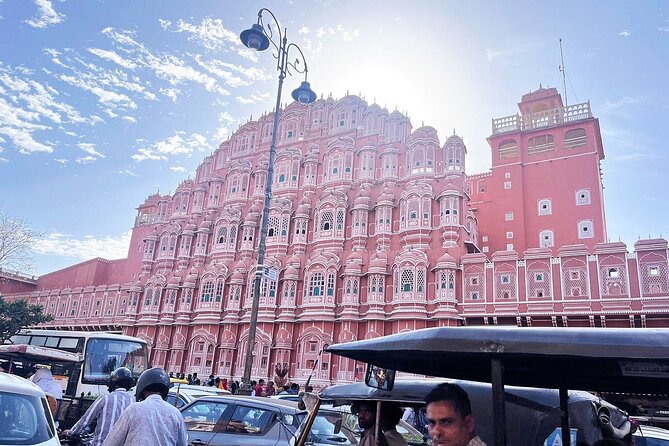
Next up is Hawa Mahal (Palace of Breeze)—a five-story architectural marvel that rises without any foundation, according to the description you’ll be hearing. What makes it famous is the curved design and pyramidal shape, plus the famous window grid that gives it that lace-like silhouette.
You’ll spend about 45 minutes here. That’s a comfortable amount of time if your main goal is to understand what you’re looking at and get the best angles. The only downside is that entrances aren’t included, so you’re paying for access on top of the tour cost.
The practical challenge with Hawa Mahal is that it’s visually busy. You’ll want to take a step back, look at the overall form first, then zoom into the windows and symmetry. A guide helps because the explanation turns the building from wallpaper into a real piece of engineering.
Jantar Mantar: when giant instruments explain the sky
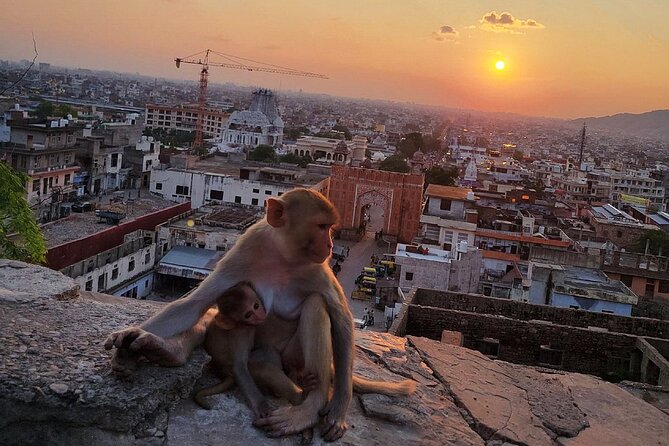
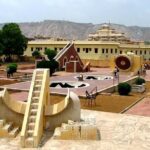
Then comes Jantar Mantar in Jaipur, the largest of five observatories built by Jai Singh II. The big difference here is that these astronomical instruments are still in use—so it isn’t only history behind glass.
You’ll have about 45 minutes. Entrance isn’t included, but the payoff is that you’ll understand how the instruments work instead of just ticking off a site name. Jantar Mantar can feel confusing if you only look at it. With a guide, you get to connect the shape of a tool to what it measures.
A consideration: because it’s an active-looking, technical space, it can be easier to miss details if you’re hungry or tired. If you tend to get cranky when you’re hot, plan to drink water and use the shade when you can during this stop.
City Palace: a landmark that helps you read the city
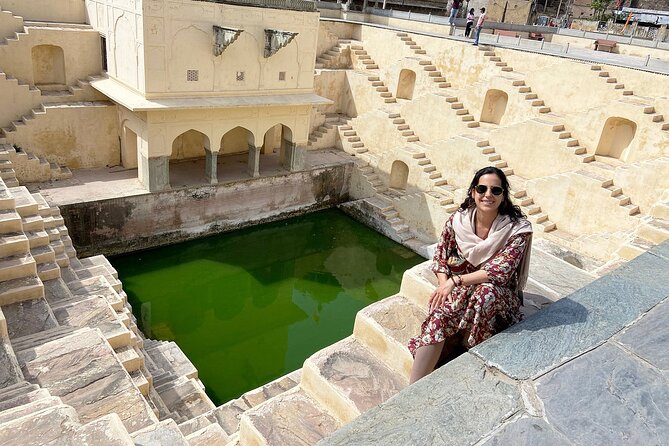
After Jantar Mantar, you’ll head to City Palace. This is a major landmark in Jaipur, and it’s a key part of the royal complex story. You’ll have about 2 hours, which is notably longer than most palace-style stops on a one-day sightseeing route.
Entrance isn’t included, so again, plan for separate site fees as part of your day budget (₹1,650 per person is listed as the entrance fee). The upside of the extra time: it gives you room to slow down, step through, and actually notice the mix of design elements instead of rushing.
If you like architecture, this is where you’ll start building a “mental map” of Jaipur’s power centers—museum, observatory, and palace all connected by the same theme: human-made places shaped to control and celebrate the world around them.



Royal Gaitor Tumbas: a calmer mood after the big icons
Next are the Royal Gaitor Tumbas. This regal cenotaph houses tombs of Jaipur’s royal family, and the setting is described as serene, with lush green surroundings.
You’ll spend about 45 minutes, and entrance isn’t included. This stop works as a mental reset. It’s the kind of place where you can slow your pace and let the day’s noise fall away.
The main tradeoff: you won’t get the same “wow factor” as the busiest monuments. Instead, the value here is atmosphere and context—how power and memory show up differently in Jaipur than in public palaces and viewpoints.
Jal Mahal: quick, scenic, and surprisingly satisfying
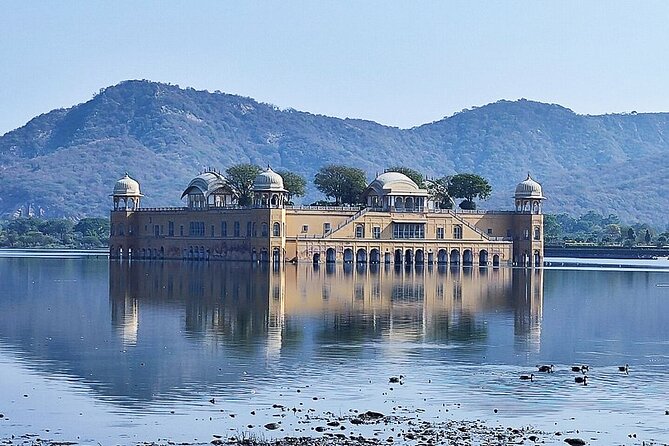
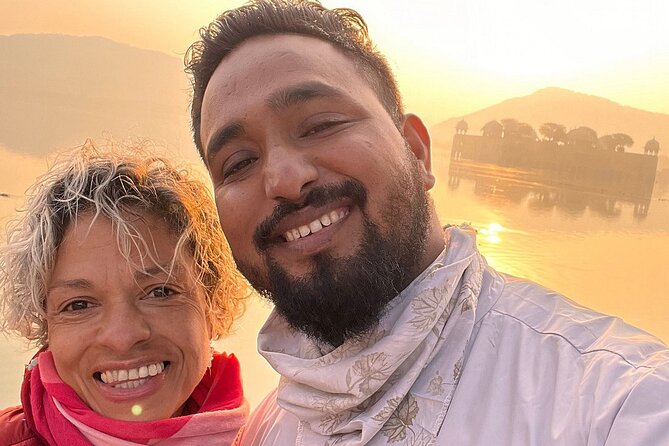
Jal Mahal is the kind of stop that proves you don’t need hours to enjoy a landmark. You’ll get about 15 minutes at this striking structure surrounded by water. It’s known for its architecture reflected by the setting—sparkling waters create a memorable visual.
The good part: since the stop is short, you won’t feel stuck here. The not-so-good part: you need to accept that you’ll be moving on pretty quickly. Don’t schedule this day expecting an extended photography session.
Jal Mahal’s entrance is listed as free, which helps. Still, you’ll want to arrive when lighting is favorable—if your tour timing lets you, it’ll make this quick stop feel bigger.
Amer: the fort-and-palace area that gets the time
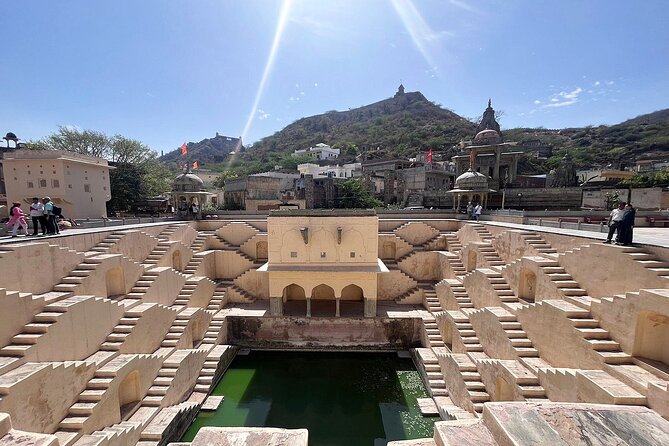
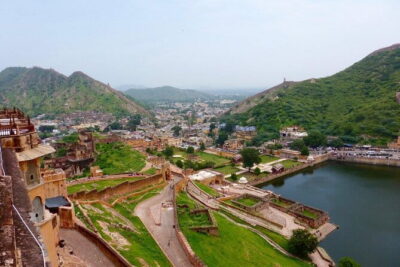
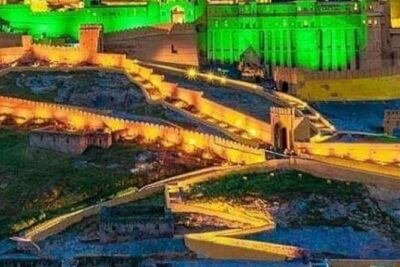
Your next major segment is Amer, a town about 11 km from Jaipur city. Amer is renowned for its Rajput fort and palace, described as a blend of Hindu and Mughal architecture. That blend is a real draw because it shows how Jaipur’s royal tastes adapted across time and influence.
You’ll have about 2 hours here, and entrance is listed as free. That makes Amer one of the best value stops on the day—more time, fewer add-on costs.
This is also where you’ll likely feel the day’s “full tour” aspect most. Even with a good driver, Amer takes effort: you’ll be walking, turning corners, and spending time in areas that are not designed for speed. My advice is to wear something comfortable and plan to take breaks when you need them.
Galtaji Monkey Temple at sunset: the ending with personality
The day’s final emotional beat is Galtaji Temple, also known as the Monkey Temple, located on the outskirts of Jaipur. It’s set among mountains and described as adorned with flowers—so it’s not just a landmark, it’s a setting.
You’ll spend about 1 hour here, and entrance is listed as free. This stop is especially valuable because the overview frames it as a sunset view experience. If your timing lines up, that last light can make the whole experience feel more like a story than a checklist.
A practical consideration: this is a temple area famous for monkeys. You should expect them to be part of the scene, even if the intensity varies by time and day. Keep your belongings secure, don’t approach animals, and listen to what your driver or guide advises.
Guide moments that change the day: English explanations and flexibility
You’ll travel with an English-speaking driver, and if you chose the option that includes a guide in other languages, you’ll also get guiding time tailored to your group.
What makes this tour feel worth it is the way the guide role is described: sites explained along with broader answers about society and everyday life in India. One set of reviews highlights Khalid as a standout guide for history plus general questions, and the team includes Ali as well. The useful part for you: that kind of flexibility matters when you want to modify a stop pace or ask questions that aren’t in a standard script.
If you’re the type who likes learning but hates feeling lectured, you’ll probably enjoy the balance here—facts tied to what you’re seeing in front of you.
Price and the real budget for entrances
The tour price is listed at $7.27 per person, which is low enough that you should look at it as the cost of transportation and guided time, not the cost of everything. The big line item you’ll need to budget separately is entrance fees (₹1,650 per person).
So what does your money buy? From the included list, you get hotel/airport pickup and drop, fuel and parking, bottled water, and a private tuk-tuk or AC vehicle with an English-speaking driver. That’s a lot for one day, especially because Jaipur sites are spread out and parking/coordination can become a hassle.
Meals are not included, so you might want to plan for either a quick break you arrange yourself or something you bring. Since the tour runs 9–10 hours, skipping a meal can make the museum and palace sections feel harder than they need to be.
If you’re traveling with friends, the group discount can make this a strong deal. And because it’s private for your group, you’re not sharing your day with strangers who want the same things in the same time slots.
What to expect from the flow of stops
A day like this has two rhythms: short “icon” stops and longer “meaning” stops.
- Quick wins: Hawa Mahal (45 min), Jal Mahal (15 min), Royal Gaitor (45 min)
- Deeper time: City Palace (2 hours), Amer (2 hours)
- Technical “payoff” learning: Jantar Mantar (45 min)
This pacing is smart. You get variety without running out of steam. If you start skipping attention early in the day, you’ll miss the strongest parts—Jantar Mantar and Amer tend to be the moments that feel most worth it later.
Who this tour fits best (and who might not love it)
This is a great match if you want:
- A one-day plan that covers big Jaipur highlights plus a sunset-style temple ending
- A private setup with pickup and drop
- Transport flexibility: tuk-tuk fun or AC comfort
It might not be perfect if you’re the type who wants long, slow time in fewer places. Here, the day is structured to touch many sites, so you won’t get hours of museum wandering or leisurely palace cruising.
Also, budget-minded folks should be ready for the separate ₹1,650 per person entrance fee and plan for meals, since those aren’t included.
Should you book this Jaipur tuk-tuk sunset tour?
If you want a smooth, efficient day with a proper ending, I think this one earns a spot on your shortlist. The mix of Albert Hall Museum, Hawa Mahal, Jantar Mantar, City Palace, Amer, and Galtaji gives you the main Jaipur flavors without needing to plan transport between far-apart locations.
Book it if you value pickup + private transport, and you’re okay paying entrance fees separately. One more reason to feel good: the tour includes bottled water and options for tuk-tuk or AC, which matters on a long 9–10 hour day.
One last practical thought: the policy is listed as free cancellation if you cancel up to 24 hours before the start time. That gives you room to adjust your plan if your Jaipur schedule shifts.
FAQ
How long is the Jaipur Tuk Tuk Sightening Tour?
The tour runs about 9 to 10 hours.
Do I get hotel or airport pickup and drop-off?
Yes. Pickup and drop-off are included from your chosen location in Jaipur, including hotel or airport.
Is this tour private?
Yes. It’s a private tour/activity, and only your group participates.
What transportation options are available?
You can choose between a private tuk-tuk or an AC vehicle, depending on the option you select.
Are entrance fees included?
No. Entrance fees are not included, and an entrance fee of ₹1,650 per person is listed.
Are meals included?
No. Meals are not included on this tour.