REVIEW · TUK-TUK TOURS
Ultimate Jaipur Tuk Tuk Tour with Pickup
Book on Viator →Operated by Rajasthan Incredible Tours · Bookable on Viator
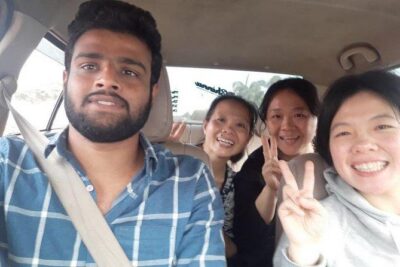
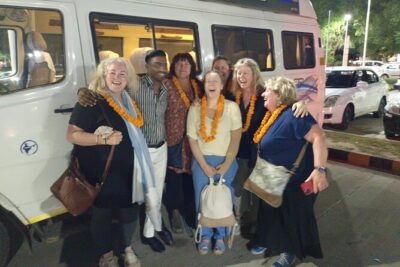
Nine hours, one tuk-tuk, and Jaipur clicks. This is a private tuk-tuk day that’s built for comfort and flow, with pickup included so you’re not wrestling taxis before you even start sightseeing. I also liked the very human service from Sohail: crystal-clear communication, on-time arrival, and a calm, polite approach that makes the whole day feel organized.
Here’s the one thing to watch: monument fees and meals cost extra. Many of the big stops are listed as admission not included (with an approximate total around $30), so your final spend depends on what you choose to enter and how you handle lunch. You’ll also do some walking, and the dress code is smart casual, with short shorts and sleeveless tops not recommended at temple-related spots.
In This Review
- Key highlights worth your attention
- Why a tuk-tuk day feels right in Jaipur
- Price and value: $16 sounds low, until you budget for entry
- Pickup, timing, and the small logistics that matter
- The 9-hour route and why the order works
- City Palace of Jaipur: royal power plus real-world time
- Jantar Mantar: the “stone sundial” moment
- Hawa Mahal: why the palace has so many windows
- Jal Mahal: a short, scenic water-palace break
- Albert Hall Museum: Indo-Saracenic style and art value
- Royal Gaitor Tumbas: calmer tombs with breathing space
- Amer (Amber area): fort-and-palace time without an extra fee here
- Panna Meena ka Kund: a stepwell that changes your pace
- The tuk-tuk experience: comfort, movement, and street-level viewing
- What you should plan for: money, photos, and what to wear
- Who this tour suits best
- Should you book this Jaipur tuk-tuk tour with pickup?
- FAQ
- FAQ
- How long is the Jaipur tuk-tuk tour?
- What does the $16 price include?
- Are entrance fees for monuments included?
- Are meals included in the tour price?
- Do I get pickup and drop-off?
- Is this tour private or shared with strangers?
- What dress code should I follow?
- Is there a luggage limit?
- Do you need a passport for this tour?
- What happens if the weather is poor or I need to cancel?
Key highlights worth your attention
- Private tuk-tuk pace in the Pink City: easier navigation and a closer look at street life than in a big coach.
- Pickup and drop-off included: hotel, airport, or bus/railway station transfers so your day starts smoothly.
- Guide support with real reliability: Sohail’s punctual service and clear communication show up in the experience.
- A smart mix of major sights and quieter stops: City Palace, Jantar Mantar, Hawa Mahal, plus calmer tombs and stepwell time.
- Some stops have free entry: Jal Mahal, Amer, and Panna Meena ka Kund are marked as free on this route.
- You control the tone of the day: it’s described as customizable, so you’re not locked into a rigid group agenda.
Why a tuk-tuk day feels right in Jaipur
Jaipur is one of those cities where travel style changes what you notice. In a car, you’re mostly focused on traffic. On a tuk-tuk, you feel the city at human speed. You can actually look around—shopfronts, street corners, school kids, and the constant flow of everyday life—without the sense you’re just passing through.
This tour also avoids the large-group pressure. You’re in a private setting with only your group, so you’re less likely to lose people or lose time to slow-moving coordination. The tuk-tuk route is designed to get you from landmark to landmark efficiently, and the day is long enough that it doesn’t feel rushed.
You can also read our reviews of more tours and experiences in Jaipur.

Price and value: $16 sounds low, until you budget for entry
At $16, this tour is priced like a transport-and-guided-sightseeing deal, not like a full all-in package. The included items are meaningful: pickup and drop-off, bottled water, and the costs of fuel, parking, toll taxes, and intercity taxes, plus the tuk-tuk sightseeing itself.
Then reality kicks in. Monument entrance fees are explicitly not included, and the listing gives an approximate total around $30. Meals are also not included, so lunch becomes your main flexible cost. If you plan to enter most sites that require tickets, your day will cost more than $16—but you still get a full 9-hour sightseeing loop with transport taken care of.
My practical takeaway: if you want the best value, decide ahead of time which stops you’ll pay to enter. That way you’re not surprised mid-day.
Pickup, timing, and the small logistics that matter
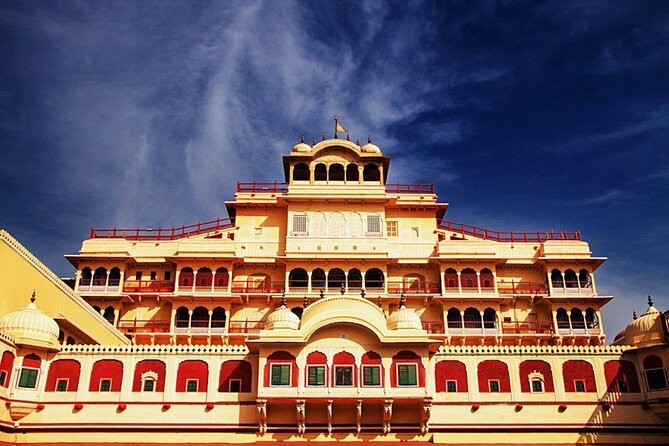
The tour includes round-trip pickup and drop-off from your hotel, airport, or bus/railway station. That matters in Jaipur. A day like this is won or lost by timing, and the service described with Sohail includes reaching on the spot and on time, plus crystal-clear communication.
You’ll also receive a mobile ticket, and the tour is confirmed at booking. That’s helpful when you’re trying to reduce the mental load of coordinating multiple city bookings.
A couple of travel-note details that can actually save you stress:
- You’re allowed a maximum of 1 suitcase and 1 carry-on bag. If you travel with oversized or excessive luggage, restrictions may apply—so it’s smart to ask ahead.
- The tour notes a smart casual dress code. Short shorts or sleeveless tops aren’t recommended for temple areas.
- There’s moderate walking, so comfortable shoes are the move.
The 9-hour route and why the order works
This day is set up like a loop: big-picture Jaipur first, then you move through more varied architecture, and finish with Amer and the stepwell. The total sightseeing time is long enough that you’ll have time at each main stop without constantly feeling like you’re sprinting for the next ride.
Also, the mix is the point. You’re not only doing the famous names. You get a blend of:
- royal-era sites (palaces and ceremonial spaces),
- scientific/architectural landmarks (astronomy instruments and sundials),
- a water-focused moment (Jal Mahal),
- museums and tomb complexes,
- and a quieter stepwell stop that breaks up the day.
City Palace of Jaipur: royal power plus real-world time
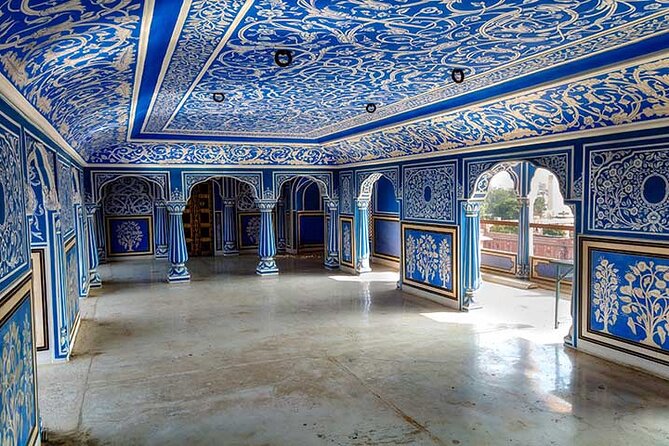
Stop 1: City Palace of Jaipur (about 2 hours, admission not included)
This is the kind of place where you understand why Jaipur is known as the Pink City. The City Palace was built by Maharaja Jai Singh, who was also a notable astronomer, and it’s not just a museum-in-a-building. Part of it is associated with the erstwhile royal family, so you get that sense of continuity rather than a totally frozen display.
What I like about starting here: it gives you context fast. You’re learning how the city was organized and why the royals shaped so much of what you see today. The drawback is simple: because admission isn’t included, you need to decide if you want the ticketed experience or if you prefer a shorter look.
Practical tip: if you’re trying to keep costs down, you can still enjoy the surroundings, but plan time for whichever indoor/section access you choose.




Jantar Mantar: the “stone sundial” moment
Stop 2: Jantar Mantar (about 1 hour, admission not included)
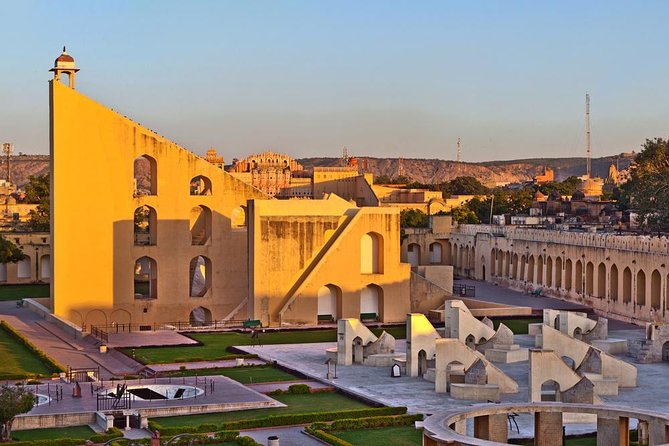
Jantar Mantar is a collection of nineteen architectural astronomical instruments built by the Rajput king Sawai Jai Singh. It includes the world’s largest stone sundial and is a UNESCO World Heritage site.
Here’s the value: even if you’re not a science person, it’s visual. The instruments are physical scale models of time and sky. It turns sightseeing into a puzzle you can look at for 10 minutes and still feel satisfied.
The consideration: because this is another ticketed stop, your day’s total entrance fees can climb. If you love architecture and science, it’s usually worth paying; if you’re burned out, you might skim and move on to the next exterior landmark.
Hawa Mahal: why the palace has so many windows
Stop 3: Hawa Mahal (about 1 hour, admission not included)
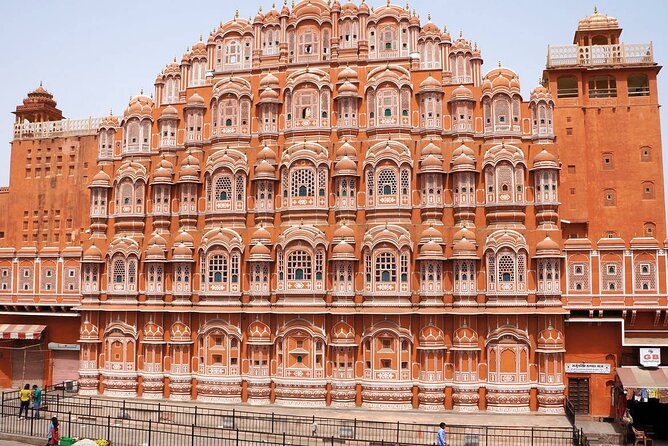
Hawa Mahal, the Palace of Wind, is the landmark most people recognize instantly. It was built by Sawai Pratap Singh, and the design is described as being planned so the royal household could look at everyday life in the city.
What to expect: tier upon tier of curved arch-like structures. Even without going deep into rooms, the exterior is meaningful because it explains the purpose: watching the city go by.
Budget note: entrance isn’t included on this stop. If you mainly want photos and the quick understanding of the design idea, you can focus your time and keep costs under control.
Jal Mahal: a short, scenic water-palace break
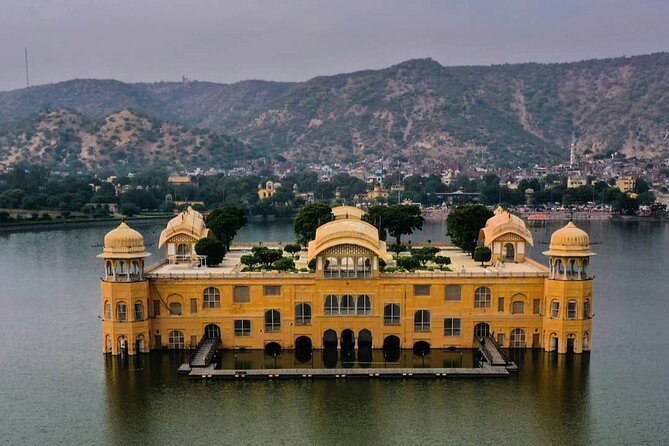
Stop 4: Jal Mahal (about 30 minutes, admission free)
Jal Mahal is the water palace in the middle of Man Sagar Lake. It’s described as an exceptional structure of Rajput culture, and the palace plus the lake area were renovated and enlarged in the 18th century.
This is a good breather stop. After two major-ticket sites, you get a lighter moment—short, scenic, and easier on your legs. The drawback is time: 30 minutes can feel quick if you want a long sit-down.
If you’re sensitive to sun heat, use this stop to hydrate and re-set. Bottled water is included, which helps.
Albert Hall Museum: Indo-Saracenic style and art value
Stop 5: Albert Hall Museum (about 1 hour, admission not included)
Albert Hall Museum is described as the oldest museum of Rajasthan and serves as the state museum. The building is located in Ram Niwas garden outside the city wall opposite New Gate, and it’s noted as an example of Indo-Saracenic architecture.
For me, museum time can go one of two ways: either it’s a deep pay-off or it’s too long. At an hour, you’re likely to get the benefit without getting trapped. It’s also a nice change after forts, palaces, and open-air landmarks.
If you’re watching the budget, this is one of the places where you can decide what you really want. If museum interiors matter to you, pay the admission. If not, spend time on the architecture and surroundings and move on.
Royal Gaitor Tumbas: calmer tombs with breathing space
Stop 6: Royal Gaitor Tumbas (about 30 minutes, admission not included)
These tombs are for many maharajas, including Pratap Singh, Madho Singh II, and Jai Singh II. The best description in your info is that this is peaceful and not so famous among tourists.
This stop is valuable for a very simple reason: the day stays varied. After the big iconic names, you get a quieter area that feels less like a checklist and more like a slow pause.
The consideration: admission isn’t included here either. If you want a low-cost day, you might shorten your time. Still, the experience is shaped by atmosphere more than by a single showpiece.
Amer (Amber area): fort-and-palace time without an extra fee here
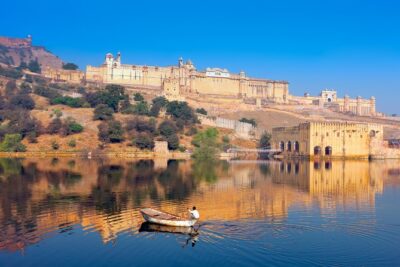
Stop 7: Amer (about 2 hours, admission free)
Amer is a historic town near Jaipur known for a Rajput fort and palace, and it was once the capital of the Rajput rulers of Amber. You’re described as getting a blend of culture, history, and beauty.
What makes this stop practical: it’s one of the free-entry points on the itinerary. That helps you keep your overall cost lower, especially if you already paid for City Palace or Jantar Mantar.
The time allocation is also generous. Two hours gives you room for a real look rather than a quick walk-by. The drawback is that it still sits within a full day, so wear shoes you can trust and keep your water handy.
Panna Meena ka Kund: a stepwell that changes your pace
Stop 8: Panna Meena ka Kund (about 30 minutes, admission free)
This is a 16th-century stepwell known for symmetrical staircases and intricate carvings. It served as a water reservoir and a place for locals to gather.
This is the kind of stop that often feels better than it sounds in words. A stepwell is architecture, function, and social life in one place. It’s also a useful contrast after palaces and forts: instead of power and ceremony, you’re seeing daily infrastructure.
Since it’s marked as free and only 30 minutes, it’s a low-cost win. The trade-off: you might wish you had more time if you enjoy slow photo-walks.
The tuk-tuk experience: comfort, movement, and street-level viewing
Tuk-tuks are great for keeping the day lively. You move faster than you would in a larger vehicle, and you get an intimate view of street life. That sounds like marketing, but it matches the logic of how you’ll feel during the ride.
That said, comfort is personal. With any small vehicle, you’ll notice bumps and heat more than you would in a car. Bring a light layer if you’re sensitive to air movement, and use the provided bottled water as your routine hydration anchor.
The day also includes a moderate amount of walking. This isn’t a full hiking itinerary, but you’re going to get your legs working at least a little across multiple stops.
What you should plan for: money, photos, and what to wear
Your biggest planning variable is admissions. The itinerary marks many entrances as not included, while some stops are free. If you want to keep costs predictable, set your own priority list now:
- If you really want major ticketed landmarks, expect monument fees beyond the base price.
- If you’d rather spend less on entry, focus on the free stops and treat ticketed places as optional.
Clothing-wise, follow the smart casual requirement. For temple areas, short shorts and sleeveless tops aren’t recommended. Comfortable shoes matter because even “short” visits often come with steps, uneven surfaces, and time spent standing and walking inside or around sites.
Who this tour suits best
This tour is a strong fit if you want:
- a private day (not a bus-group scramble),
- tuk-tuk sightseeing with real street-level movement,
- a full-day route that hits major Jaipur landmarks plus quieter moments like tombs and a stepwell,
- and pickup included so you can start without logistical stress.
It may not be ideal if:
- you strongly dislike paying separate entrance fees for most top sights,
- you want a fully all-in package with meals included,
- or you need an itinerary with minimal walking and zero dress-code sensitivity.
Should you book this Jaipur tuk-tuk tour with pickup?
I’d book it if your goal is an efficient, friendly Jaipur day that doesn’t feel like mass tourism. The value is strongest when you treat the $16 as transport plus a guided route, then budget thoughtfully for monument admissions and lunch. The guide service described by Sohail—on time, clear communication, and polite patience—also makes a difference on a long day.
I’d skip or rethink if you don’t want to pay entrance fees or you’re not interested in at least a few of the ticketed landmarks. But if you’re open to paying for the parts you care about, this is one of the easiest ways to see Jaipur in a single long loop without turning your schedule into a series of taxi math problems.
FAQ
FAQ
How long is the Jaipur tuk-tuk tour?
It runs for about 9 hours.
What does the $16 price include?
The included items are pickup and drop-off (hotel/airport/bus/railway station), bottled water, fuel and parking-related costs, and a tuk-tuk sightseeing tour of Jaipur.
Are entrance fees for monuments included?
No. Monument entrance fees are not included (approximately $30, based on the information provided).
Are meals included in the tour price?
No. Meal expenses are not included.
Do I get pickup and drop-off?
Yes. Round-trip pick-up and drop-off are included from your hotel, airport, or bus/railway station.
Is this tour private or shared with strangers?
It’s a private tour/activity, meaning only your group participates.
What dress code should I follow?
Smart casual dress is recommended. Short shorts or sleeveless tops are not recommended for temple areas.
Is there a luggage limit?
Yes. You’re allowed a maximum of 1 suitcase and 1 carry-on bag. Oversized or excessive luggage may have restrictions, so it’s best to inquire.
Do you need a passport for this tour?
Yes. A current valid passport is required on the day of travel for all participants.
What happens if the weather is poor or I need to cancel?
The tour requires good weather. If it’s canceled due to poor weather, you’ll be offered a different date or a full refund. You can cancel for a full refund up to 24 hours in advance, and changes within 24 hours of the start time aren’t accepted.