REVIEW · CITY TOURS
Full-Day Jaipur City Sightseeing Private Tour
Book on Viator →Operated by Reliable India Tours · Bookable on Viator
Jaipur in one smooth day. This private full-day tour hits the big icons—Amer, Hawa Mahal, City Palace, and Jantar Mantar—without you juggling rickshaws, directions, or timing. I especially like the round-trip pickup and AC comfort, which makes the day feel easier from the moment you start.
My second favorite part is the flexible approach to guidance. Your driver can get you between sights, and since he’s not a licensed guide, you can either hire site guides where you want them or enjoy a more relaxed, self-guided pace. The main drawback to plan for is cost add-ons: entrance fees and lunch aren’t included, so you’ll want to budget ahead for the monument tickets.
In This Review
- Key Highlights You’ll Care About
- A Full-Day Route That Keeps You Moving (Without Feeling Rushed)
- Entering Amer: Fort Energy and Mughal-Style Royal Scale
- Panna Meena ka Kund and Jal Mahal: Stepwell Geometry and a Water Palace
- Royal Gaitor Tumbas: Carved Walls and Temples in a Smaller Moment
- Hawa Mahal and City Palace: Jaipur’s Royal Face and Court Life
- Hawa Mahal: The Palace of the Breeze
- City Palace: A Living Royal Complex
- Jantar Mantar: The Big Stone Sundial and UNESCO-Listed Science
- Price and Logistics: Where the Value Really Comes From
- Service Level: AC Comfort, English Driver, and Sam’s Team Approach
- Who This Tour Fits Best (and Who Should Adjust)
- Should You Book This Jaipur City Tour?
- FAQ
- What’s included in the pickup and drop?
- How long is the tour?
- Is this a private tour?
- What’s the group size for the price?
- Is the vehicle air-conditioned and is there an English-speaking driver?
- Do I get a licensed tour guide?
- Are entrance fees included?
- Is lunch included?
- Are bottled water and other small items included?
- What happens if the weather is bad or the minimum isn’t met?
Key Highlights You’ll Care About
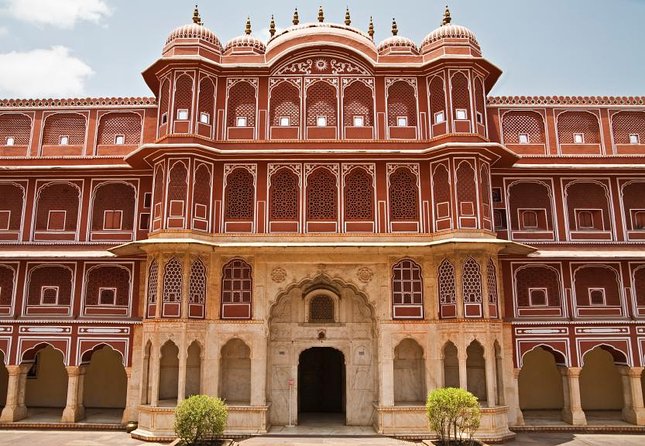
- Hotel, airport, or railway station pickup and drop keeps your day low-stress.
- Air-conditioned private car helps you stay comfortable in Jaipur heat.
- Flexible guidance: driver handles driving; you choose where to add guides.
- A smart hit list of Amer, Hawa Mahal, City Palace, and Jantar Mantar.
- Good value for small groups (priced per group up to 3).
- Bottled water included, so you’re not constantly searching on the go.
A Full-Day Route That Keeps You Moving (Without Feeling Rushed)
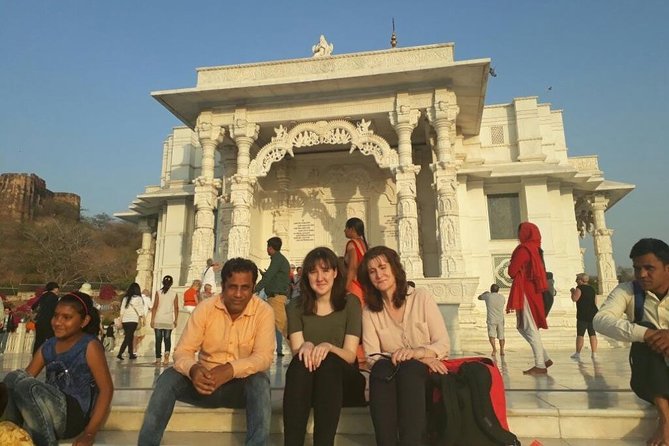
The biggest win with this kind of private city tour is simple: you get a plan that works. You’re not trying to string together several disconnected landmarks on your own, hoping you’ll beat traffic or find the right entrances. Instead, you’re in an AC private vehicle with pickup and drop, and you can focus on seeing.
This format is also great if it’s your first trip to Jaipur or you only have one day to cover the essentials. You’ll cover sights that are famous for a reason—Amer for its forts and royal grandeur, and the City Palace–Hawa Mahal–Jantar Mantar stretch for Jaipur’s royal and scientific identity.
That said, you still need to think like a one-day visitor. The day is roughly 8 to 9 hours, and you’ll be hopping between stops. If you hate walking between sites or you like long, slow museum-style pacing, you may want to consider adding breaks—or asking for a lighter schedule where possible.
You can also read our reviews of more city tours in Jaipur

Entering Amer: Fort Energy and Mughal-Style Royal Scale
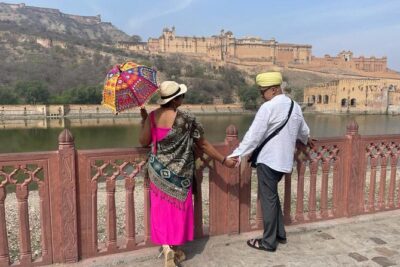
Amer is where the day gains momentum. You’ll head to Amer for about three hours, and it’s easy to see why this area is often the first “wow” stop for Jaipur visitors. Amer is known for its majestic Mughal architecture and Rajput palaces, which means you’re not just looking at buildings—you’re looking at a whole royal statement in stone.
What I like most about starting here is that it sets the tone for the rest of your route. After Amer, the city’s other landmarks feel connected: Jaipur wasn’t built by accident. It grew from rulers who cared about power, court life, and design—then you see those ideas repeated in different forms later in the day.
One practical consideration: Amer takes some time on your feet, even if you’re not doing everything inside every section. Wear comfortable shoes and keep your water close. Also, since your driver is there for driving (and not as a licensed site guide), you may decide to hire a guide on-site if you want tighter historical explanations for the fort complex.
Panna Meena ka Kund and Jal Mahal: Stepwell Geometry and a Water Palace
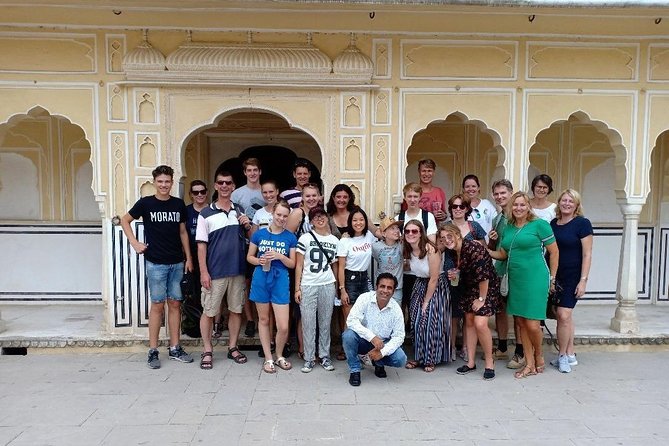
After Amer’s royal scale, the itinerary turns to water-related places that feel surprisingly different. Panna Meena ka Kund is a stepwell built in the 16th century, described as an eight-story structure about 200 feet deep, with 1,800 symmetrical steps. Even in a short visit (around 30 minutes), the sheer orderliness of the steps gives you something to look at beyond decoration—this is architecture designed around access to water and social life.
Then comes Jal Mahal, the so-called water palace sitting in Man Sagar Lake. You’ll spend about 15 minutes there, which is short, but the payoff is in the views. You see a Rajput cultural structure placed right on the water’s edge, giving Jaipur a softer side after the fort.
Here’s the best way to enjoy these two stops: don’t rush your eyes. Stepwells can be easy to miss because they’re not always “tourist-museum” obvious. But when you pause, you start noticing how form and function work together. Same with Jal Mahal—spend a moment letting the setting click, rather than treating it as a quick photo only stop.
Royal Gaitor Tumbas: Carved Walls and Temples in a Smaller Moment
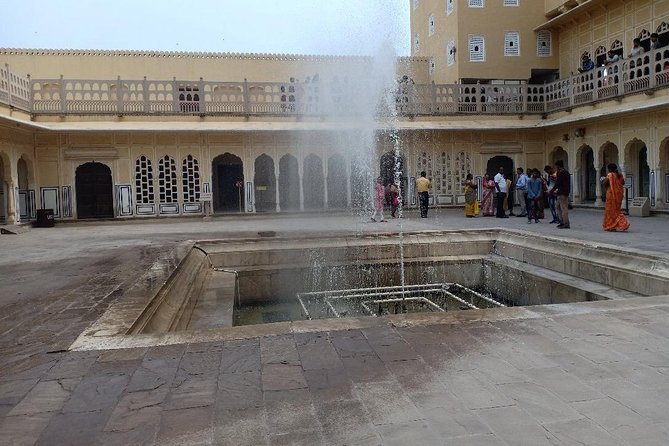
Next is Royal Gaitor Tumbas, a site built during the 18th century, with intricate carvings and a complex that includes temples dedicated to different figures. You’ll have about 45 minutes here, which feels like a nice change of pace after the more famous city stops.
This is also the kind of place where you benefit from a guide—if you want deeper context. The driver won’t be providing a licensed commentary inside the site, so you’ll be doing a lot of the interpretation yourself, or you’ll decide to hire a separate guide. If you enjoy reading the visual cues—carving patterns, temple layouts—you’ll get a lot from it even without extra narration.
The risk here is time. Forty-five minutes can disappear if you end up wandering around without a sense of what you’re trying to understand. I’d treat it like a focused walk: look for the main carved sections and the areas that contain the temples, then take your photos and move on.
Hawa Mahal and City Palace: Jaipur’s Royal Face and Court Life
Now you hit two of Jaipur’s most recognizable royal landmarks: Hawa Mahal and The City Palace.
You can also read our reviews of more private tours in Jaipur






Hawa Mahal: The Palace of the Breeze
Hawa Mahal is famous for a reason. You’ll spend about one hour here, and it’s described as being built by Sawai Pratap Singh, planned for the royal household to observe everyday life in the city. That makes it more than a pretty façade. It’s designed for presence—visibility without direct involvement.
One thing to consider: your experience here depends on what you want from the stop. If you want to learn the story and how the windows connect to the idea of watching the city, you might want to add a site guide. If you just want the look, timing, and photos, the hour gives you enough time to do it without feeling trapped.
City Palace: A Living Royal Complex
Then you’ll move to The City Palace, with about two hours allocated. It’s associated with Maharaja Jai Singh and the former royal family, and the palace complex is positioned as a key part of Jaipur’s royal identity.
I like how this stop balances visual beauty with a more grounded sense of how power actually worked. City Palaces tend to feel more “real” than single monuments because they’re part of a functioning heritage space. Even if you go at your own pace, you’ll likely find details that make the architecture feel less like a backdrop and more like a designed environment for court life.
Jantar Mantar: The Big Stone Sundial and UNESCO-Listed Science
After the royal buildings, you’ll visit Jantar Mantar – Jaipur for about one hour. This site is described as a collection of nineteen architectural astronomical instruments, built under the direction of Sawai Jai Singh, and it includes the world’s largest stone sundial. It’s also described as a UNESCO World site, so it’s not just a quirky landmark—it’s a recognized scientific heritage space.
Why this stop matters in the context of the day: it changes the story. Jaipur isn’t only about palaces and pageantry. It’s also about observation, measurement, and how rulers used science as part of their worldview.
Your one-hour window is enough to understand the big concept and see the main instruments, but not enough for ultra-deep learning of every measurement. Since the driver isn’t a licensed guide, you’ll decide if you want a separate guide here. If you do, this is a great place to add one because the value of Jantar Mantar rises fast when you know what you’re looking at and why it’s designed the way it is.
Price and Logistics: Where the Value Really Comes From
The tour is priced at $13.43 per group (up to 3), with round-trip pickup and drop. That price structure can look surprisingly low until you consider what’s included: a private AC car, fuel and parking fees, bottled water, and an English-speaking driver.
Still, there’s no magic here. Entrance fees and meals cost extra. The tour notes an expected combined entry fee of $25.00 per person for Jaipur’s popular tourist monuments, and lunch isn’t included.
So how do you judge value?
- If you’re traveling as two or three people, the private car helps you spread the cost and keeps you from paying for multiple taxis or dealing with multiple separate tickets and entrances.
- If you’re going alone, it can still be worth it if you value convenience over budget travel.
- The add-on cost is predictable, and you can plan for it in advance so the day doesn’t feel like a surprise bill.
Two extra practical points. First, you’ll want to confirm what the monument fee covers on your day, since the listed stops include a mix of places with admission marked as free and places marked as not included. Second, bring a little cash and a card just in case—entry systems can be inconsistent from site to site.
Service Level: AC Comfort, English Driver, and Sam’s Team Approach
The tone of the service is a big part of why these tours work for first-time visitors. The experience includes an English-speaking driver and typically you’ll feel taken care of from pickup to drop-off.
You also get a helpful, human element: in the feedback tied to this service, Sam and his team come up for being warm and professional, and for giving solid information during the day. Even though the driver isn’t a licensed guide, good drivers still make the difference by explaining what you’re seeing and helping you avoid wasted time at the wrong entrances.
Also, the tour can include a licensed tour guide if you select that option. If you want clearer interpretation at multiple stops—especially Hawa Mahal, City Palace, or Jantar Mantar—that option can turn the day from sightseeing into real understanding.
Who This Tour Fits Best (and Who Should Adjust)
This is a strong match if you:
- have limited time and want to hit the key landmarks in one day
- like the idea of a private car rather than group buses
- prefer guidance on timing and transportation, then choose how much history you want inside each site
It might not be ideal if you:
- want fully guided, museum-style explanations at every stop without making choices
- don’t want to pay additional entrance fees on top of the tour price
One more thing to keep in mind: the experience requires good weather. If conditions are poor, you’ll be offered a different date or a full refund, which is reassuring for planning.
Should You Book This Jaipur City Tour?
If you want one day in Jaipur that feels organized and comfortable, I think this is a smart booking. The combination of private AC transport, a route built around top landmarks, and the option to add licensed guidance where you care most makes it flexible without being chaotic.
Book it if you’re traveling with up to three people and you want convenience more than you want to piece together logistics. Skip—or adjust expectations—if you’re counting on everything to be fully guided and fully included. Once you budget for the monument entry fees and plan for lunch being on your own, this tour becomes an efficient way to see Jaipur’s main “greatest hits” in a single day.
FAQ
What’s included in the pickup and drop?
The tour includes round-trip hotel, airport, or railway station transfers, with pickup and drop handled as part of the experience.
How long is the tour?
It runs about 8 to 9 hours.
Is this a private tour?
Yes. It’s a private tour/activity and only your group participates.
What’s the group size for the price?
The price is listed per group (up to 3).
Is the vehicle air-conditioned and is there an English-speaking driver?
You travel in a comfortable air-conditioned private car with an English-speaking driver.
Do I get a licensed tour guide?
A licensed tour guide is included if that option is selected. Otherwise, your driver is not described as a licensed guide.
Are entrance fees included?
No. Entrance fees are not included, and the tour notes a combined entry fee amount for Jaipur’s popular monuments.
Is lunch included?
No. Lunch is not included.
Are bottled water and other small items included?
Yes. Bottled water is included, and the tour also includes fuel, parking fee, and other charges.
What happens if the weather is bad or the minimum isn’t met?
The experience requires good weather. If it’s canceled due to poor weather, you’ll be offered a different date or a full refund. It can also be canceled if a minimum number of travelers isn’t met, with an alternative experience date or a full refund.