REVIEW · HERITAGE & CULTURAL WALKING TOURS
Jaipur Heritage and Old Market Shopping Tour
Book on Viator →Operated by Unique Jaipur Tour · Bookable on Viator
Five hours, and your head fills fast. This Jaipur Heritage and Old Market Shopping Tour strings together the Pink City and key landmarks, then sends you straight into shopping lanes like Chandpole and Johari. I especially like the way it keeps traditional craft in the middle of the day, with short demos on block printing, blue pottery, and jewelry making.
What I really like is the human side: Rauf Khan is described as warm, helpful, and able to tailor the market stops so you get a more local feel instead of only predictable tourist booths. You also get a private vehicle and hotel pickup, so the day stays smooth even when the streets get busy.
One drawback to consider: this isn’t built around food shopping. If you’re mainly hunting spices and tea, you might find some items in markets but the focus is more on crafts and handmade goods, plus entry to places like Isarlat Tower and Albert Hall Museum isn’t included.
In This Review
- Key highlights at a glance
- A Pink City Market Route That Actually Feels Organized
- Chandpole Bazaar: Start With Classic Rajasthan Goods
- Khanjane Walon ka Rasta: Marble Décor for a Unique Jaipur Souvenir
- Maniharo Ka Rasta: Bangles and Silver-Ornament Shopping Focus
- Isarlat (Tower): 18th-Century Victory Memorial and a Photo Pause
- Tripolia Bazar and the Royal Mausoleum Near Tripolia Gate
- Albert Hall Museum: What You Get Without Paying Admission
- Johari Bazaar: Bandhni, Block Prints, Jewelry, and Bargain Energy
- Hawa Mahal: The Honeycomb Façade for Street-Level Photos
- Jaipur Blue Pottery Art Centre: A Short Demo With Real Craft Detail
- Satguru’s the Textile World: Women’s Work, Block Printing, and Rug Craft
- Price and Logistics: Why This $16 Tour Feels Like More
- Shopping Smarts: How to Buy in Jaipur Without Getting Frustrated
- Who This Tour Is Best For (And Who Should Pass)
- Should You Book This Jaipur Heritage and Old Market Shopping Tour?
- FAQ
- How long is the Jaipur Heritage and Old Market Shopping Tour?
- What is included in the tour price?
- Are craft demo classes included?
- Do I need to pay for entry to Isarlat Tower or Albert Hall Museum?
- Which markets are part of the tour?
- Is food included?
- Is this a private tour?
Key highlights at a glance

- Craft demos in short bursts (10–15 minutes) so you learn without losing the day to workshops
- Market routing that hits real craft districts from Chandpole Bazaar to Johari Bazaar
- Guide support from Rauf Khan with a reputation for safety, flexibility, and good shopping guidance
- Photo-friendly heritage stops like Hawa Mahal and Isarlat Tower (entry not included for some sites)
- Monuments mostly viewed from outside, keeping time for markets and hands-on crafts
- Low price for private comfort with pickup, bottled water, and a local expert driver-guide
A Pink City Market Route That Actually Feels Organized
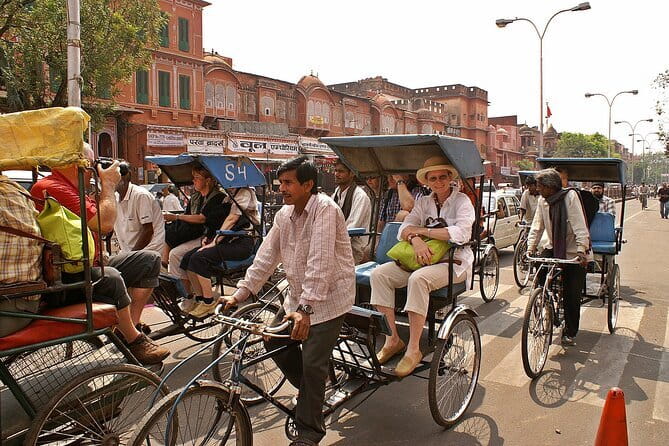
Jaipur can be overwhelming in the best way. This tour works because it doesn’t treat markets as a random stroll. You move in a practical sequence—heritage points, then specialized shopping lanes—so you’re not backtracking constantly.
At around $16 for about 5 hours, the big value is that you’re buying time and logistics. You get hotel pickup and drop-off, a private vehicle, bottled water, and a local expert to steer you through the right areas. And because monuments are mostly viewed from the outside, the schedule leaves space for what most people come for: crafts, textures, and bargaining with confidence.
If your goal is to get your bearings in Jaipur while still leaving room to shop meaningfully, this tour’s pace makes sense.
You can also read our reviews of more historical tours in Jaipur


Chandpole Bazaar: Start With Classic Rajasthan Goods
Chandpole Bazaar is the first swing of the day, and it’s a good one. You’re in an area known for handicrafts across categories—textiles, jewelry, brassware, pottery, and more—so it’s easy to build a shopping list quickly.
In 30 minutes, you can:
- compare styles across stalls,
- spot the materials you like (cotton vs silk blends, oxidized silver vs brighter pieces),
- and get a feel for pricing before you hit the more specialized jewelry and décor lanes later.
Watch-outs: Chandpole is a lot of impressions at once. Wear comfortable shoes and keep your shopping mindset simple: pick one or two categories you want (like bangles and block-printed fabric) rather than trying to buy everything on the first stop.
Khanjane Walon ka Rasta: Marble Décor for a Unique Jaipur Souvenir
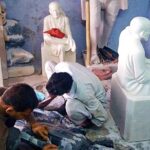
Right after Chandpole, the tour heads to Khanjane Walon ka Rasta, a street known for marble sculptures and marble décor items. This is a nice contrast to the textile-and-jewelry energy, because marble is slower, heavier, and more display-based.
What’s great here is choice. The market offers pieces in different sizes and designs, so you can shop for:
- smaller desk souvenirs,
- decorative accents for shelves,
- or larger items if you’re traveling with luggage space.
Practical tip: Since marble items can be heavier and breakable, decide early how you’ll pack it. If it’s fragile, prioritize sturdier packaging and consider shipping options outside of the tour if you want peace of mind.
Maniharo Ka Rasta: Bangles and Silver-Ornament Shopping Focus
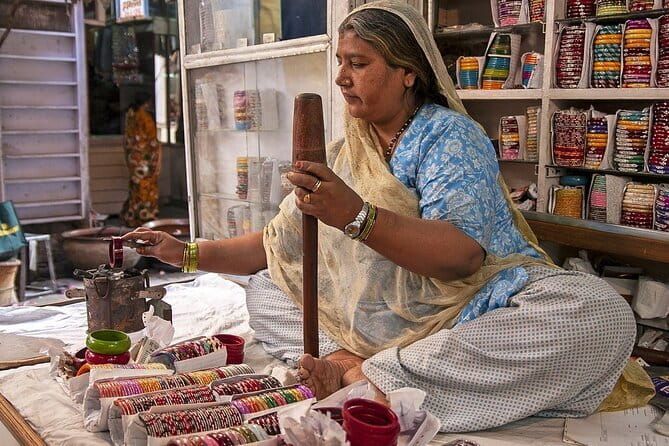
Maniharo Ka Rasta is a direct hit for jewelry lovers—especially traditional Rajasthani bangles and silver ornaments. The shops here tend to feel more specialized than general markets, so you can compare similar items side by side.
In a half hour, I’d use the time to:
- check the look of different bangles together (same wrist, different styles),
- compare finish quality (polish level, carving detail, and how well stones or inlays sit),
- and ask straightforward questions about what you’re buying.
One smart move: bring a photo of what you want (even if it’s just a wrist shot from your hotel mirror). It helps you communicate faster and reduces the chance of getting nudged into something you don’t actually love.
Isarlat (Tower): 18th-Century Victory Memorial and a Photo Pause
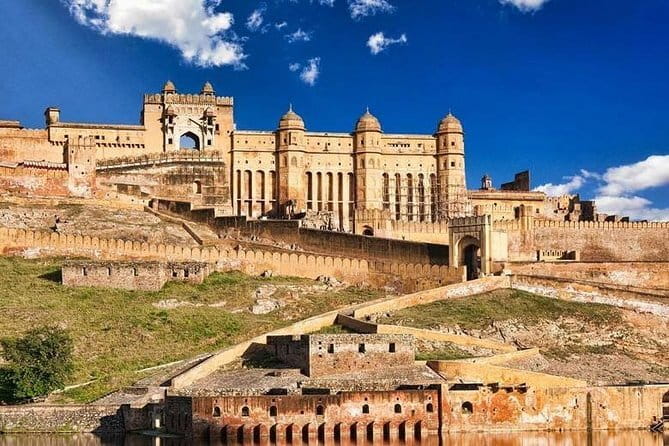
Next comes Isarlat (Tower), an 18th-century victory memorial built by Maharaja Jai Singh II. Even if you don’t go inside, this stop is worth it because it offers a quiet break from shop noise and gives you a landmark moment to orient yourself in Jaipur.
You’ll typically spend about 30 minutes here, and since admission isn’t included, treat it as optional. The important part is the viewpoint and the chance for photos without feeling rushed.
Consideration: If you’re trying to maximize shopping time, you might skim this stop faster and move on. But if you want one heritage photo moment that feels distinct from Hawa Mahal, this is a solid pick.
You can also read our reviews of more shopping tours in Jaipur




Tripolia Bazar and the Royal Mausoleum Near Tripolia Gate
Tripolia Bazar (and the Tripolia mausoleum area) is a heritage stop tied to the royal family. The site is known for its stunning architecture and intricate carving, and the mausoleum marks the final resting place of royal family members of Jaipur.
This is one of those stops that works even if you’re not a museum person. You get:
- a sense of scale,
- close-up architectural details (the carvings are the point),
- and a calmer feel compared with the retail streets.
Tip for your photo strategy: Don’t just shoot wide angles. Spend a minute looking for a repeating pattern or carved motif you can crop tight. That’s where the “this is Jaipur” feeling lands.
Albert Hall Museum: What You Get Without Paying Admission

Albert Hall Museum is built in 1876 and is known for Indo-Saracenic architecture. It was originally designed as a concert hall and now it’s a museum with collections that include art, artifacts, sculptures, textiles, and coins.
Here’s the key practical note for your expectations: admission isn’t included, and monuments are largely viewed from the outside in this style of tour. So plan Albert Hall as an exterior orientation stop unless you decide you want to add the museum entry separately.
Why this still works: Even from outside, Albert Hall gives you a “Jaipur of a certain era” feeling—timeless and formal—like it belongs in a different world than the bazaars you’ve been threading through.
Johari Bazaar: Bandhni, Block Prints, Jewelry, and Bargain Energy
Johari Bazaar is one of Jaipur’s best-known shopping streets, and it fits the tour perfectly. It’s famous for textiles, jewelry, pottery, spices, and leather goods, but the real standouts are the bright fabrics, bandhni, block prints, and silver jewelry.
If you love wearable souvenirs, this is the moment to slow down. In half an hour you can:
- find a block-print scarf or small piece of fabric,
- compare bandhni designs,
- and test the prices on silver ornaments you liked earlier.
About spices: Some spice-related items can show up in markets, but this tour is not built as a tasting or pantry hunt. One review specifically points out it’s not ideal for spices and tea. So if that’s your main mission, treat Johari as a place to browse, not to go deep.
Hawa Mahal: The Honeycomb Façade for Street-Level Photos
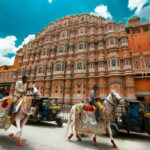
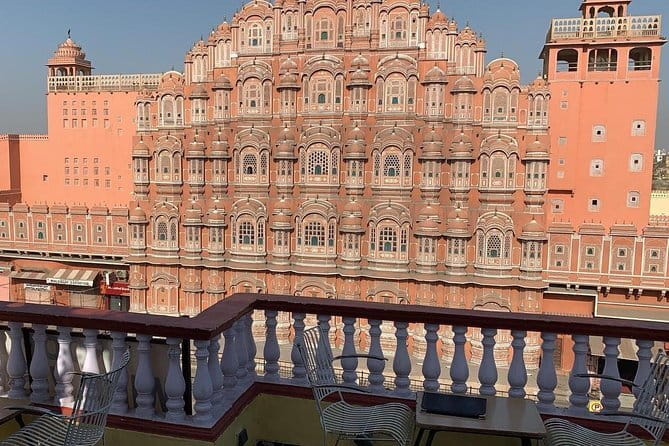
Hawa Mahal, the Palace of Winds, is built from a honeycomb-like façade with 953 small windows, designed so royal women could watch street life discreetly. It was built in 1799 by Maharaja Sawai Pratap Singh.
This is typically a 30-minute stop, and it’s usually best used for photography and a quick orientation of the building’s shape. Because your time here is limited, don’t waste it trying to read every detail at street level.
Practical approach: Choose one side for photos, then come back for a different angle. If the lighting is harsh, shift your position rather than waiting forever for the perfect shot.
Jaipur Blue Pottery Art Centre: A Short Demo With Real Craft Detail
The tour includes a hands-on-style moment at the Jaipur Blue Pottery Art Centre, with a 10–15 minute demo class. Blue pottery is famous for its vivid blue patterns and careful detailing, and the value here is watching artisans work instead of only seeing finished items behind glass.
What I think you’ll enjoy most:
- how repetitive patterns come together,
- how the design shows up in layers,
- and how the craft looks different in person than in photos.
This stop also gives your feet a break from market crowds, so it’s not just shopping—it’s learning what you’re buying. If you decide to purchase later, you’ll know what quality looks like.
Satguru’s the Textile World: Women’s Work, Block Printing, and Rug Craft
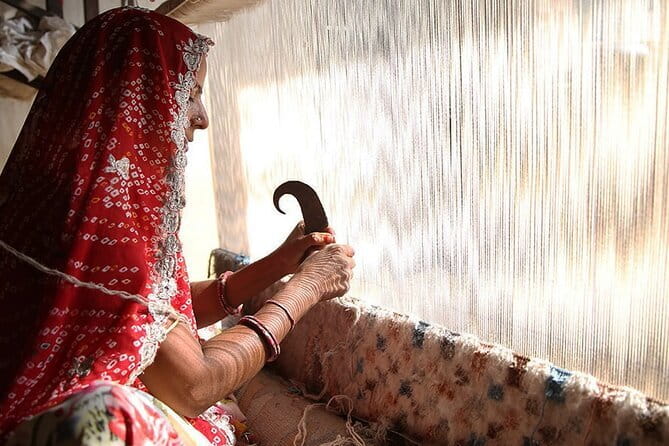
Next is Satguru’s the Textile World, a textile factory stop focused on craftsmanship. You’ll see women and artisans making carpets and rugs, and you’ll also experience traditional block printing—including how intricate patterns are made by hand on fabric.
The big reason this works on a shopping tour is simple: you see the process before you buy. That means your questions become smarter. Instead of only asking how much, you’ll start asking what makes one piece cleaner, sharper, or better.
Good to know: The demo and factory experience are time-limited (about 30 minutes for the stop), so you’re not signing up for a full-day workshop. But you still get a real taste of the craft logic.
Price and Logistics: Why This $16 Tour Feels Like More
Let’s talk value. For about $16 and 5 hours, you’re not just paying for a driver. You’re paying for:
- hotel pickup and drop-off, which saves you time and hassle,
- a private vehicle that keeps you moving between distinct districts,
- bottled water,
- and a local guide who can connect you to the right stalls and craft stops.
Also, the tour is private—only your group—so you won’t be squeezed into someone else’s pace. That matters in markets, where wandering slowly can feel impossible in group tours.
From the reviews, the most praised theme is safety and comfort. People liked feeling looked after and supported, and they also liked that Rauf Khan could tailor the day to their preferences. One review even highlights the difference between local shops and the tourist-heavy stops most tours bounce through.
That’s the real advantage: you’re not stuck in a scripted route that ignores what you actually want to shop for.
Shopping Smarts: How to Buy in Jaipur Without Getting Frustrated
Markets can be fun, but they can also turn into decision overload. Here’s how I suggest you handle it on a tour like this:
- Pick a shortlist before you go. Decide on 2 categories: for example, bangles and block-printed fabric.
- Use the craft demos as your quality baseline. When you see block printing or blue pottery up close, you get a sense for detail that helps you judge finished items.
- Bargain politely and compare fast. Spend a minute checking a few stalls in a row rather than sticking with the first shop that grabs you.
- Plan for weight. Marble décor and larger textiles can add up fast. If you’re buying fragile or heavy items, think about packaging immediately.
And one more thing: this tour includes monuments viewed from the outside and time mostly spent on markets plus brief heritage/photo moments. If you want deep museum hours and palace interiors, you may need a different plan alongside this one.
Who This Tour Is Best For (And Who Should Pass)
This Jaipur Heritage and Old Market Shopping Tour is a strong match if you want:
- a first-time-friendly day that mixes heritage landmarks with shopping,
- craft demos you can learn from quickly (blue pottery, block printing, jewelry making),
- a guide who helps you feel safe and supported while shopping,
- and good value for a private half-day.
It’s less ideal if:
- you’re mainly chasing spices and tea as a shopping priority,
- you want lots of museum interior time (entry isn’t included for some sites),
- or you want a slow, wandering cultural day without the structured stops.
Should You Book This Jaipur Heritage and Old Market Shopping Tour?
If your ideal Jaipur day looks like Pink City landmarks plus real market streets—and you want a guide to keep it safe and efficient—this is an easy yes. The price is low enough that you’re not forced to treat it like a splurge, yet the private pickup/vehicle and craft demos make it feel complete.
Book it when you want a well-paced overview and you plan to shop for handmade goods: textiles, blue pottery, jewelry, and small décor items. Skip it if your priority is food shopping (spices/tea first) or long museum interior visits.
If you’re flexible and you like learning as you buy, this tour is a solid way to spend a day in Jaipur.
FAQ
How long is the Jaipur Heritage and Old Market Shopping Tour?
The tour lasts about 5 hours.
What is included in the tour price?
Pickup and drop-off from your hotel, a private vehicle with a friendly local expert driver, bottled water, and the market and heritage stops with monuments viewed from the outside are included.
Are craft demo classes included?
Yes. You get short demo classes (about 10–15 minutes) covering block printing, blue pottery, and jewelry making.
Do I need to pay for entry to Isarlat Tower or Albert Hall Museum?
Admission tickets are not included for Isarlat (Tower) and Albert Hall Museum.
Which markets are part of the tour?
The tour includes Chandpole Bazaar, Khanjane Walon ka Rasta, Maniharo Ka Rasta, Tripolia Bazar area, and Johri Bazaar.
Is food included?
No. Food and drinks are not included.
Is this a private tour?
Yes. It’s private, and only your group participates.