REVIEW · HERITAGE & CULTURAL WALKING TOURS
Jaipur Heritage Walking Tour
Book on Viator →Operated by Backpack India · Bookable on Viator
One old street can teach you a city. This Jaipur walk is a small-group old-city experience with a Rajasthani breakfast and architecture-focused storytelling that helps you see beyond the postcards. You’ll move through key spots like Ajmeri Gate and Hawa Mahal with explanations you can actually use while you’re still standing there.
I love the intimate pacing—max 10 travelers means questions don’t get swallowed. I also like that the guides are trained through architecture study, so you get the how-and-why behind the buildings instead of just dates and legends. One real consideration: there have been reports of the guide not showing up and poor responsiveness if something goes wrong, so go in with a simple backup plan.
In This Review
- Key Highlights That Make This Walk Worth It
- A 2–4 Hour Old City Walk Run Like a Story, Not a Checklist
- Why Ajmeri Gate Is the Right First Stop for Understanding Jaipur
- Isarlat Sargasooli and Tripolia Bazar: Royals, Gates, and What the Stone Was Built to Do
- Hawa Mahal’s 900 Windows: The Engineering Story You’ll Actually Remember
- Jalebi Chowk Inside the City Palace Backyard Feel
- Govind Devji Temple and the Chai Q&A That Makes It Click
- Breakfast, Water Bottle, and Digital Photos: Real Value at $16
- Entry Fees, Timing, and What to Wear for a 3km Old City Route
- How This Jaipur Tour Fits Different Travelers
- Booking Checklist: A Simple Way to Avoid the Biggest Risk
- Should You Book the Jaipur Heritage Walking Tour?
- FAQ
- How long is the Jaipur Heritage Walking Tour?
- What’s included in the tour price?
- Is breakfast included?
- Is Hawa Mahal admission included?
- What’s the group size limit?
- Does the tour use a mobile ticket?
- Is free cancellation available?
- Are service animals allowed?
- When does the tour run?
Key Highlights That Make This Walk Worth It
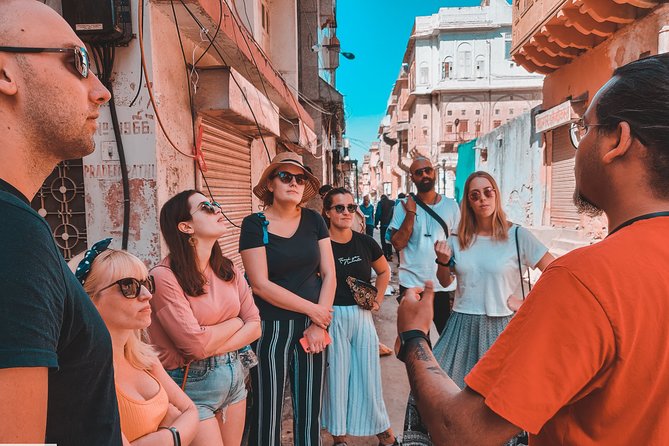
- Architecture-student style explanations that focus on design choices, not just sightseeing
- A small group capped at 10, so you can ask questions during the walk and at the end
- Rajasthani breakfast included, a practical start before the walking ramps up
- Complimentary digital photos from your guide, so you don’t have to rely only on your phone
- Iconic stops in the old city, from Ajmeri Gate to the 900-window Hawa Mahal
A 2–4 Hour Old City Walk Run Like a Story, Not a Checklist
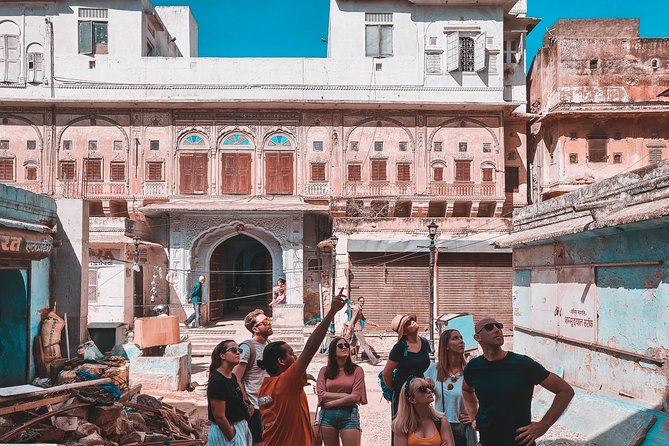
This tour is built for a short, satisfying walk—about 2 to 4 hours, with roughly a 3km route. You’ll get a local guide who tells Jaipur’s story as you pass real streets, real gates, and real buildings still doing their job today. For $16, the value is mostly in how much meaning you can cram into a half-day without paying for a big-ticket attraction.
The group size matters. With a cap of 10 travelers, you won’t feel herded, and you’ll likely get more personal answers. It also makes timing easier for stop-and-go moments like looking closely at carvings or understanding how old-city routes work.
What you’ll be doing isn’t just looking up at facades. You’ll be learning how architecture connects to religion, royalty, and daily movement through the city. That’s why this works well even if you’ve only got a day or two in Jaipur and want your time to count.
You can also read our reviews of more walking tours in Jaipur



Why Ajmeri Gate Is the Right First Stop for Understanding Jaipur
Ajmeri Gate is one of the busiest gates in the old city, and it’s a smart place to start because it forces you to notice the city’s “today” along with its “back then.” You’ll get the history and purpose of the gate, but the angle is practical: how the transport situation around the old city evolved and what that means for getting around now.
This first stop also helps you calibrate your brain. Jaipur can feel like a blur of pink stone and landmarks, but Ajmeri Gate gives you context for why the old city works the way it does. You’ll also be walking through a space where people actually pass through, not just a decorative zone.
Time is tight here—about 15 minutes—so don’t expect a full lecture. Do expect a useful framework that makes later stops easier to understand.
Isarlat Sargasooli and Tripolia Bazar: Royals, Gates, and What the Stone Was Built to Do
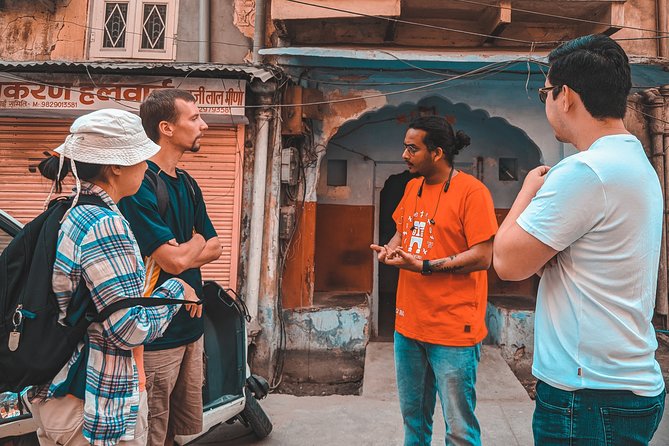
From Ajmeri Gate, you’ll head toward Isarlat Sargasooli, with another 15 minutes of architectural talk near Sarsa Suli. This stop is less about a single famous monument and more about why a place was constructed the way it was. You’ll hear the thoughts behind the building and what the architecture suggests about the city’s priorities.
Then comes Tripolia Bazar, a gate that once functioned as a more private entrance tied to the royal family. What’s interesting is the shift in access. You’ll be told that it opened to the general public only once, during a particular moment in royal life involving a former king.
The stop time is short—about 5 minutes—so treat it like a quick orientation point. If you like to linger, plan to do a little extra roaming on your own afterward. The tour gives you the story cue; you decide how long you want to stare at the painted details once you understand what they meant.
A practical note: some stops do not include admission tickets. Tripolia Bazar is one of those, so keep some cash or an easy way to pay on hand if you want to go inside or closer than the exterior view.
Hawa Mahal’s 900 Windows: The Engineering Story You’ll Actually Remember

Hawa Mahal, the Palace of Wind, is the big-name stop for good reason. You’ll spend about 20 minutes here, and it’s built for wonder: over 900 windows that aren’t just decorative. You’ll get the engineering logic behind them, and that’s where the tour earns its keep.
Many visitors see Hawa Mahal and snap a photo. You’ll be encouraged to slow down and think about why the windows matter. Even without going deep into math, you’ll understand how design can shape airflow, viewing, and daily life—turning a landmark into a system.
Also, this stop is a perfect photo moment, but don’t let it become the only moment. The tour’s strength is the surrounding explanation, which helps you look at the building with a different eye.
Admission isn’t included here based on the tour details, so if you want entry, budget extra time and money. If you don’t, the outdoor view still makes sense because the guide is teaching you what to notice.
Jalebi Chowk Inside the City Palace Backyard Feel
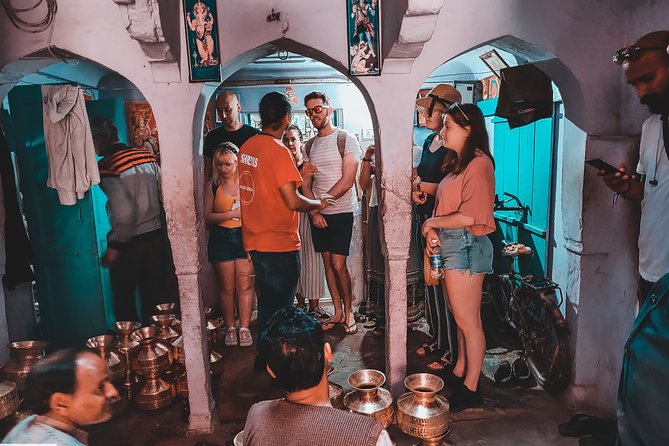
Jalebi Chowk is described as a square in the back yard of the City Palace area, and it has a specific story tied to the way streets connect. The name relates to a serpentine road linking it to the main road from east to west, so you’re learning how even street layout can become a nickname and a local identity marker.
You’ll get around 20 minutes at this stop, with the guide explaining the historic importance of the square. This is a good break in the route because it’s not another tower-and-gate moment. It’s a space that helps you understand Jaipur as a living city where planning and everyday movement are intertwined.
Two things to watch here:
- Give yourself a moment to orient your bearings before you move on.
- Expect the guide’s focus to be more interpretive than scenic, which is exactly what you want if you’re tired of surface-level photos.
Admission is listed as free for this stop, which makes it easier if you want to spend a bit more time without worrying about extra entry fees.
You can also read our reviews of more historical tours in Jaipur





Govind Devji Temple and the Chai Q&A That Makes It Click

The tour ends with Govind Devji Temple, about 30 minutes at the final stop. This is the most famous temple dedicated to Lord Krishna in the context of the tour’s description. The guide wraps the Jaipur story by connecting religious space to daily life and to the city’s wider cultural logic.
After that, you’ll shift gears to a chai shop for a Q&A session. This is one of the best parts of the format because it turns the walk into a conversation. If you’re the type who likes to ask follow-ups—how neighborhoods work, what to see next, what to avoid—this is where you get clearer answers.
Keep in mind that admission for Govind Devji Temple isn’t listed as included. The exterior experience might still be great, but if you want full access, you should plan for that cost.
Breakfast, Water Bottle, and Digital Photos: Real Value at $16
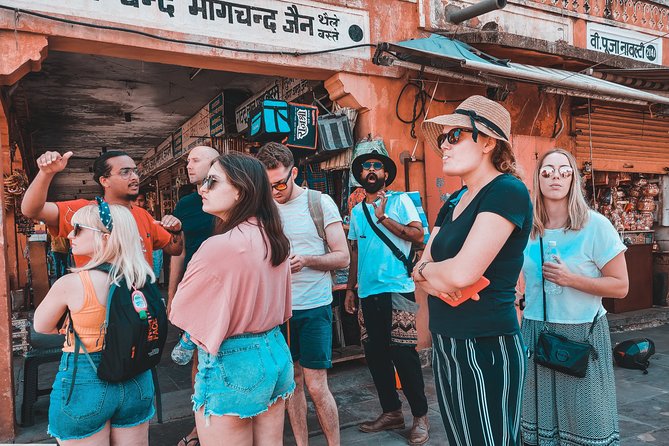
For a tour priced around $16, the included items are where the deal becomes more than a discount code. You get a Rajasthani breakfast, a water bottle, and a guide who brings a lot of structure to the walking route.
Breakfast matters because it changes how you experience the morning. Instead of spending your first hours hunting for food or waiting in line, you get fed and ready to walk. That turns the tour into a true half-day plan.
The complimentary digital photos are a surprisingly big practical perk. If you’ve ever missed a shot because you were busy trying to photograph and read at the same time, this helps. The guide shares pictures taken during the walk, so you can focus on learning rather than micromanaging your camera.
My biggest value read: you’re paying for time saved and understanding gained. Architecture explanations don’t sound thrilling until you realize they make your future Jaipur decisions easier.
Entry Fees, Timing, and What to Wear for a 3km Old City Route
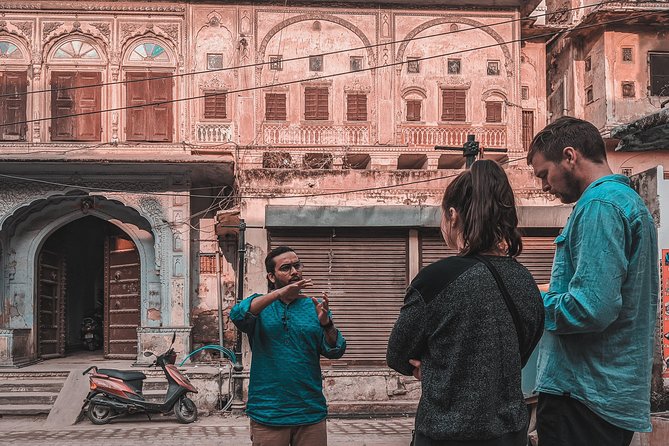
This walk is about 3km, with a mix of gate viewing and closer stops. That’s very doable for most people, but it’s still old-city walking. Uneven ground, crowded sidewalks, and short bursts of uphill or uneven pathways can make pace feel faster than you expect.
Some stops are marked free, like Ajmeri Gate and Jalebi Chowk. Others list admission as not included, including Isarlat Sargasooli, Tripolia Bazar, Hawa Mahal, and Govind Devji Temple. That means your total cost could creep up if you decide you want entry at multiple stops.
Plan your clothing for heat and sun. Even if the tour is short, you’ll spend plenty of minutes standing and looking. Light layers and comfortable shoes will save you.
And bring a little patience for timing. The tour uses short stop windows—5 to 30 minutes at each location—so the guide has to keep things moving while still giving you context.
How This Jaipur Tour Fits Different Travelers
This is a strong match if you:
- Like architecture and want the “why” behind building design
- Want an old-city orientation without committing to a full-day tour
- Prefer small groups and question time over big group herding
- Enjoy learning through stories that connect buildings to real life
It’s also a good fit if you’re budget-minded. At $16, you’re not paying for multiple paid attractions. You’re paying for a guided route that gives meaning to the iconic sites you’re probably already planning to see.
If you’re the kind of traveler who only wants interiors and ticketed attractions, you might find the pace a little too “story first.” The tour leans on explanation at each stop, not a long museum-style stay at any single location.
Also, keep an eye on weather. The tour requires good weather, so if conditions are poor, it may be moved or refunded.
Booking Checklist: A Simple Way to Avoid the Biggest Risk
I can’t ignore the darker note tied to this experience: there have been reports of the guide not showing up and not responding promptly. That doesn’t mean your tour will have the same problem, but it does mean you should show up ready to protect your time.
Here’s my practical checklist before you go:
- Save your confirmation details and the exact start time.
- Have a way to contact the operator listed for the booking.
- Arrive a few minutes early so you’re not already late when anything goes sideways.
- If you don’t see the guide by the start window, escalate quickly through the contact method you were given, rather than waiting.
This is one of those cases where a small amount of prep can make the difference between a great morning and a frustrating one.
Should You Book the Jaipur Heritage Walking Tour?
I’d book it if you want a smart, guided introduction to Jaipur’s old-city layout through architecture-minded storytelling, with breakfast and digital photos included. The design of the route makes sense: start with a busy gate for context, move through royal and architectural landmarks, then finish with temple meaning and a chai Q&A.
I would not treat it like a set-and-forget plan. The main downside I see from the available feedback is a reliability risk around guide attendance and responsiveness. If you’re flexible and you have a backup mindset, this tour can be a great use of a morning.
If your goal is to understand Jaipur beyond selfies, this one is built for you.
FAQ
How long is the Jaipur Heritage Walking Tour?
It runs for about 2 to 4 hours.
What’s included in the tour price?
You get a water bottle, breakfast, an English-speaking guide, stories and architecture/heritage facts, and digital photos from the tour guide.
Is breakfast included?
Yes. A Rajasthani breakfast is included.
Is Hawa Mahal admission included?
Admission tickets are listed as not included for Hawa Mahal.
What’s the group size limit?
The tour has a maximum of 10 travelers.
Does the tour use a mobile ticket?
The tour features a mobile ticket.
Is free cancellation available?
Yes. You can cancel up to 24 hours in advance for a full refund.
Are service animals allowed?
Yes, service animals are allowed.
When does the tour run?
It operates daily from 8:00 AM to 12:00 PM based on the listed opening hours.