REVIEW · 4-DAY EXPERIENCES
4 Days Private Golden Triangle Tour
Book on Viator →Operated by Travel Nice India · Bookable on Viator
Golden Triangle trips feel like speed-running India—this one tries to slow the pace. It strings together Jaipur, Agra, and New Delhi with guided monument time, plus door-to-door driving in a luxury air-conditioned vehicle. If you want the big-name sights without the stress of constant planning, this route is built for you.
I really like two things about how this tour runs: first, the pickup and drop-off style (hotel, airport, or railway station in Jaipur, then later drop-off in Delhi/Noida/Gurugram). Second, the package includes monument entrance tickets plus practical meals—breakfast twice and lunch twice—so you spend less time guessing costs.
One consideration: the schedule is tight, and while the overview mentions Udaipur, the 4-day route here focuses on Jaipur, Agra, and Delhi. You’ll want to confirm whether your exact departure adds Udaipur or keeps it strictly to the triangle.
In This Review
- Key things that make this tour worth a look
- How this 4-day Golden Triangle route works (and why it’s a good first India plan)
- Day 1 in Jaipur: Jal Mahal, Jantar Mantar, City Palace, and Hawa Mahal
- Jaipur city tour: get your bearings fast
- Jal Mahal: the palace floating over Man Sagar Lake
- Jantar Mantar: astronomy turned into architecture
- City Palace of Jaipur: where the royal court shaped the city
- Hawa Mahal: the Palace of Wind
- Day 2 from Jaipur toward Agra: Abhaneri stepwell and Fatehpur Sikri
- Chand Baori (Abhaneri stepwell): 3,500 steps and big geometry
- Fatehpur Sikri: a Mughal city in red sandstone
- Day 3: Sunrise Taj Mahal, then Agra Fort and the Baby Taj
- Why sunrise matters here
- Agra Fort: Mughal rule shown through fort walls
- Itimad-ud-Daulah (often called Baby Taj)
- End of Day 3 into Delhi
- Day 4 in New Delhi: Qutub Minar and the ceremonial axis landmarks
- Qutub Minar: a UNESCO complex with a famous minaret
- India Gate: a war memorial on Rajpath
- Parliament House and Rashtrapati Bhavan: the government end of the axis
- Agrasen Ki Baoli: a protected stepwell in the city
- Price and what you’re really paying for at $400 per person
- The driver and guide experience: safety, timing, and comfort that matter
- What I’d confirm before you book (important since Udaipur is mentioned)
- Who this 4-day private tour fits best
- Should you book this 4-day private Golden Triangle tour?
- FAQ
- What cities does the tour cover?
- Is pickup offered, and where does the tour start?
- Is this a private tour?
- What’s included in the price?
- Are the major monument tickets included?
- Does the itinerary include sunrise Taj Mahal?
- How does lunch and breakfast work?
- What monuments are visited in Delhi?
- What’s not included in the tour cost?
- Is there a cancellation window?
Key things that make this tour worth a look
- Door-to-door pickup and drop-off keeps you from fighting traffic and taxis between cities
- Sunrise Taj Mahal timing with a guided inside visit is the highlight most people remember
- Agra’s top trio (Taj Mahal, Agra Fort, Itimad-ud-Daulah) gives you Mughal scale in one sweep
- Strong “route planning” day in between cities with Abhaneri stepwell and Fatehpur Sikri
- Comfort-first driving with a luxury AC vehicle, parking, tolls, fuel, and road tax covered
- Private format means your group sets the pace instead of sharing a packed bus
How this 4-day Golden Triangle route works (and why it’s a good first India plan)
A Golden Triangle tour is popular for a reason: you get a high concentration of India’s royal and Mughal eras in one trip. Jaipur brings the Maharaja-era flair; Agra shows off Mughal power; Delhi adds the layered capital story. The value in this specific 4-day plan is that you’re not just hopping between places—you’re also getting guided time at the major sites, plus a private vehicle so you’re not stuck constantly organizing transport.
The itinerary is designed like a series of “anchor moments.” Jaipur gives you a visual orientation to Rajasthan’s architecture. The mid-route day turns the travel time into sightseeing by adding Abhaneri and Fatehpur Sikri on the way to Agra. Then Agra delivers the headline act at sunrise, followed by two more Mughal masterpieces. Finally, Delhi caps things with a half-day city tour anchored by Qutub Minar and the ceremonial/government core.
This format suits you if you:
- want classic sights without planning every ticket and commute
- prefer a private, paced experience rather than a crowded group van
- want sunrise Taj Mahal time without guessing bus schedules or hiring a separate driver
It’s less ideal if you crave a super relaxed trip with lots of free hours. The magic here is structure.
You can also read our reviews of more private tours in Jaipur


Day 1 in Jaipur: Jal Mahal, Jantar Mantar, City Palace, and Hawa Mahal
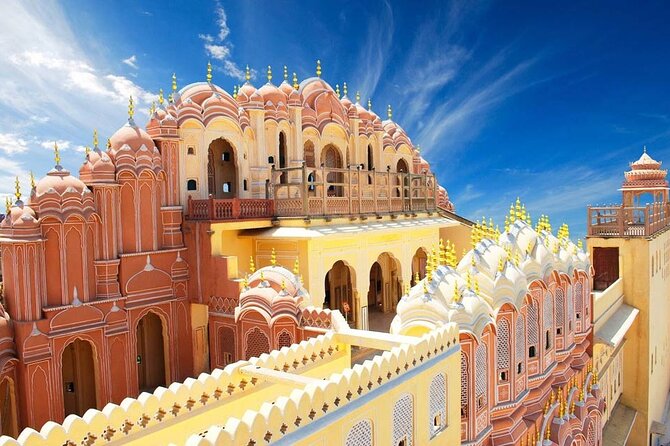
Day 1 is a straightforward Jaipur “greatest hits” loop, starting with pickup from your hotel, airport, railway station, or other desired spot in Jaipur. That matters more than it sounds. In cities like Jaipur, getting your first leg handled correctly means you start the trip calm, not already irritated.
Jaipur city tour: get your bearings fast
You’ll get a guided Jaipur city tour that touches multiple signature landmarks, with time allotted at each stop. The pacing is set up so you’re not rushing through everything in one long blur. If this is your first time in Rajasthan, it’s also a smart way to understand how the city’s royal footprint connects.
Jal Mahal: the palace floating over Man Sagar Lake
Jal Mahal is a palace in the middle of Man Sagar Lake. The listing notes the palace and lake area were renovated and enlarged in the 18th century by Maharaja Jai—so it isn’t just a pretty view; it’s part of an evolving royal landscape. Even if you’re not a die-hard history person, it’s a good visual reset after the drive into the city.
Practical note: plan for photos, but keep expectations realistic. Reflections and light change fast depending on the time of day.
Jantar Mantar: astronomy turned into architecture
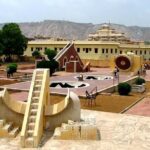
Jantar Mantar is a set of nineteen astronomical instruments built under Kachwaha Rajput king Sawai Jai Singh II, and it was completed in 1734. This is one of those places where you see science built in stone—then you step back and suddenly understand why it’s still famous.
You’ll get about an hour here. That’s enough time to walk, read the main points, and understand what you’re looking at instead of just snapping pics and moving on.
You can also read our reviews of more tours and experiences in Jaipur





City Palace of Jaipur: where the royal court shaped the city
City Palace was established around the same time as Jaipur itself and built by Maharaja Sawai Jai Singh II, who moved his court to Jaipur from Amber in 1727. It’s also listed as a guided, roughly one-hour stop, which is a good length for taking in major sections without feeling trapped inside.
If you like architecture and power displays—how rulers used space—this stop is one of the most satisfying in Jaipur.
Hawa Mahal: the Palace of Wind
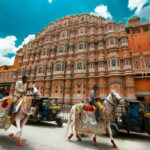
Hawa Mahal is built of red and pink sandstone and sits at the edge of the City Palace, extending into the women’s chambers (Zenana). It’s known for its façade and the idea of wind and light working through those openings. You’ll have around a half hour here.
This is a great stop for quick but memorable photos, especially when the façade catches the light well.
By the end of Day 1, you’re transferred back to your hotel in Jaipur for overnight.
Day 2 from Jaipur toward Agra: Abhaneri stepwell and Fatehpur Sikri
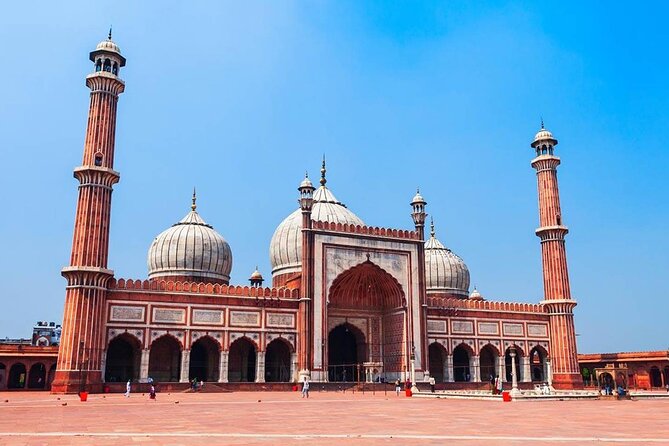
Day 2 is where the trip turns into more than just transport. You’ll travel from Jaipur to Agra, but you won’t waste the road. Instead you stop at Abhaneri and Fatehpur Sikri, two places that feel very different from Jaipur.
Chand Baori (Abhaneri stepwell): 3,500 steps and big geometry
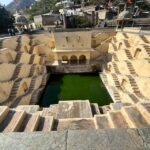
Chand Baori is an ornate stepwell from the 8th and 9th centuries reached by 3,500 steps. That number is part of the attraction—this is not a quick pit stop. The listing gives you a shorter window (about 30 minutes), so you’ll likely focus on key angles and the overall structure.
What to watch for: the way the steps create repeating patterns as you descend. Even from the top, the scale feels dramatic.
Fatehpur Sikri: a Mughal city in red sandstone
Fatehpur Sikri is described as a small city founded by a 16th-century Mughal emperor, with red sandstone buildings clustered at the center. The main gateway highlighted here is the Buland Darwaza, described as the entrance to the Jama Masjid.
You’ll have about two hours. That’s long enough to get a feel for how Fatehpur Sikri functions as a royal complex rather than a single monument.
Small consideration: because it’s outdoors and walking-focused, you’ll want to dress for heat and have water handy. The plan includes lunch once on the tour (across the full itinerary), but it doesn’t spell out water at every stop—so bring your own too.
After Fatehpur Sikri, you continue on to Agra and check in at your hotel for overnight.
Day 3: Sunrise Taj Mahal, then Agra Fort and the Baby Taj
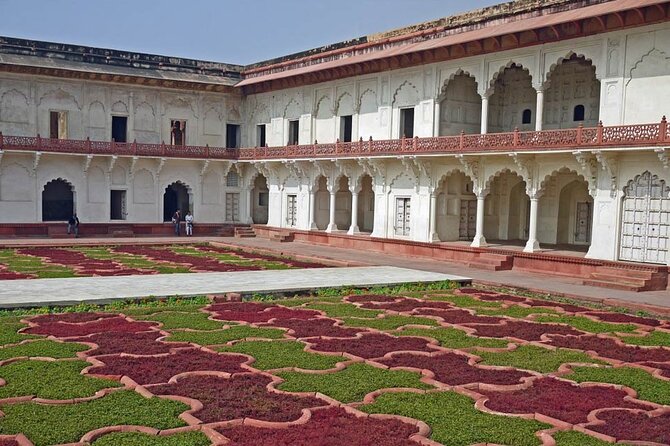
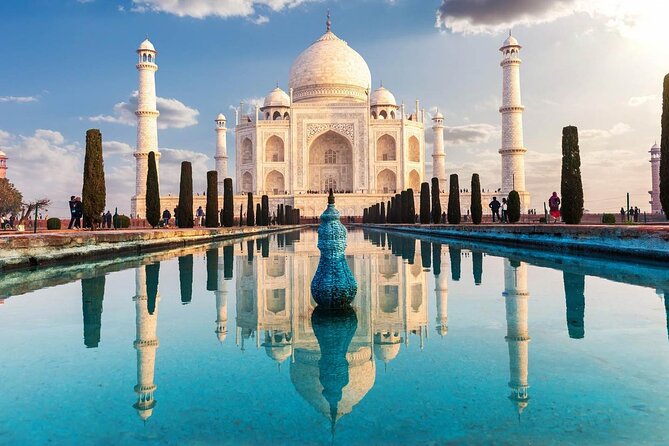
This is the day that sells itself. You’ll visit the Taj Mahal during sunrise and take a guided tour inside for about two hours. The listing also frames the Taj Mahal as the ivory-white marble mausoleum known as the Crown of the Palace.
Why sunrise matters here
Sunrise Taj Mahal isn’t just a marketing phrase. Morning light often makes the marble glow and helps the crowd situation feel more manageable. The real win is that you get a longer inside visit with guidance, which turns the Taj from a postcard into a place you understand.
What you’ll likely appreciate most: proportions, the layout, and the way the building reads from multiple angles.
Agra Fort: Mughal rule shown through fort walls
Next up is Agra Fort, described as the main residence of Mughal emperors until 1638, when the capital shifted to Delhi. Even though it’s a fort, the listing’s emphasis is on imperial residence—so your visit isn’t only about defensive walls; it’s about how power lived day to day.
You’ll get about two hours here, with tickets included.
Itimad-ud-Daulah (often called Baby Taj)
Then comes the Tomb of Itimad-ud-Daulah, described as a Mughal mausoleum sometimes called the Baby Taj, with the nickname jewel box showing up in the description. The visit is short (around 45 minutes), but it’s perfectly placed after the bigger Taj experience because you start noticing decorative precision in a different way.
End of Day 3 into Delhi
After Agra sightseeing, you head to New Delhi and check in at your hotel. That overnight in Delhi sets you up for a half-day city tour on Day 4.
Day 4 in New Delhi: Qutub Minar and the ceremonial axis landmarks
Day 4 is a half-day guided Delhi tour. Compared to Jaipur and Agra, Delhi can feel more spread out, so having a planned route helps. After breakfast, you’ll go straight into the sights.
Qutub Minar: a UNESCO complex with a famous minaret
Qutub Minar is a minaret and victory tower forming part of the Qutb complex, listed as a UNESCO World Heritage Site. The height is given as 72.5 meters, which is a helpful anchor when you’re looking up at it.
You’ll have about an hour, with entrance tickets included.
India Gate: a war memorial on Rajpath
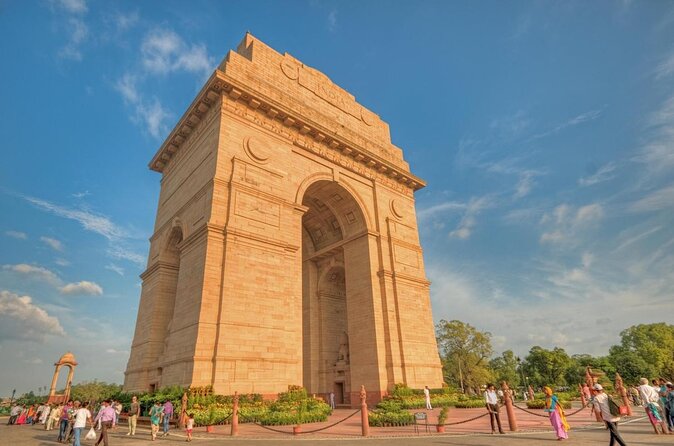
India Gate is described as a war memorial located on Rajpath, on the eastern edge of the ceremonial axis. This stop is short (about 15 minutes). It’s more about location and atmosphere than deep exploration.
Parliament House and Rashtrapati Bhavan: the government end of the axis
You’ll stop at Parliament House (Sansad Bhavan) for about 15 minutes, and then Rashtrapati Bhavan for another 15 minutes. The listing notes that Rashtrapati Bhavan is the official residence of the President of India at the western end of Rajpath.
These are quick sight stops. Still, they matter because they show you how modern India uses the same grand planning language that you saw in royal contexts earlier in the trip.
Agrasen Ki Baoli: a protected stepwell in the city
The tour includes Agrasen Ki Baoli (Leamigo). The description says it’s a protected monument under the Archaeological Survey of India, and it lists the structure as about 60 meters long and 15 meters wide.
This is a nice change from the grand monumental axis moments. You get a smaller, more atmospheric stop—especially if you like photographing stone textures.
After the Delhi city tour, you’re dropped off at your desired location in Delhi, Noida, or Gurugram.
Price and what you’re really paying for at $400 per person
At $400 per person for roughly four days private, the price looks mid-range for India, but what makes it feel fair is the package build.
You’re not just buying sightseeing. You’re buying:
- Luxury air-conditioned vehicle for the driving legs
- parking, tolls, fuel, and road tax included
- monument entrance tickets included (at least at the listed paid highlights like Taj Mahal, Agra Fort, and Itimad-ud-Daulah)
- Breakfast (2) and Lunch (2) included
- pickup and drop-off handling rather than DIY transport
In other words, you’re paying to reduce friction. That’s often the hidden cost of a DIY Golden Triangle: hiring drivers separately, paying for individual transfers, then tracking entrance fees and meal plans day by day. When those details stack up, the budget can drift fast.
One more value note: it’s private, so the cost per person can make sense when you travel as a couple, small family, or group that wants control.
What you still need to plan for: personal expenses and tips/gratuities are not included. That’s normal, but it’s good to keep in mind when you budget.
The driver and guide experience: safety, timing, and comfort that matter
Even a perfect itinerary can feel wrong if the driving is stressful. This tour’s format is built around a modern, comfortable vehicle and a driver who handles door-to-door movement.
In the feedback tied to this tour, I saw praise for drivers who were friendly, professional, and always on time—plus stories of specific named drivers like Manipal (praised for safety and the ability to adjust the plan) and Sudhir (praised for safe driving and comfort, including snacks and water in the car). Another name that came up was Shiv Narayan Pal, praised for safety and making the long drives more manageable.
You can’t control every driver, of course. But this tour clearly prioritizes vehicle quality and day-to-day coordination, which is exactly what you want on a Golden Triangle circuit where you’re changing cities quickly.
If you want an easy win before you go, do this: tell your driver up front what you want to do during free moments—short photo stops, a quick snack break, or time for restrooms. A private setup works best when you use it.
What I’d confirm before you book (important since Udaipur is mentioned)
The trip overview says the Golden Triangle packages can include Udaipur, the city of lakes. But the 4-day route described here is built around Jaipur, Agra, and New Delhi, with specific stops that don’t mention Udaipur.
So before you lock anything in, confirm whether your departure includes Udaipur or whether it’s strictly the classic triangle for this 4-day format. This is one of those cases where the schedule details matter more than the overall marketing promise.
Who this 4-day private tour fits best
This is a strong match if you:
- want the headline sights with guided time
- prefer private driving over public transport or constant taxis
- like structured itineraries that still give you clear sight windows
- travel as a couple or small group and want comfort on long road stretches
It may not fit if you:
- want lots of free time to wander at your own pace each day
- hate early mornings (sunrise Taj Mahal is a highlight, but it does start early)
- dislike tight schedules between major cities
Should you book this 4-day private Golden Triangle tour?
If your goal is a classic first Golden Triangle trip done neatly, I’d say yes—with one condition: confirm whether Udaipur is included in your specific 4-day version. If it is, great; if it isn’t, the core triangle still delivers the big visual payoffs: Jal Mahal and Hawa Mahal in Jaipur, Chand Baori and Fatehpur Sikri on the way, sunrise Taj Mahal plus Agra Fort, then Qutub Minar and the Delhi ceremonial landmarks.
For the price, you’re paying for less stress: private driving, included tickets at the main paid monuments, and meals that keep you moving. That’s the kind of value that actually changes your trip feel.
If you like, tell me your travel dates, group size, and whether you’re okay with very early mornings, and I’ll help you decide if this schedule matches your style.
FAQ
What cities does the tour cover?
The route includes Jaipur, Agra, and New Delhi. You’ll have an overnight in Jaipur on Day 1, an overnight in Agra after Day 2, and an overnight in New Delhi after Day 3.
Is pickup offered, and where does the tour start?
Yes. You can be picked up from your hotel, airport, railway station, or another desired location in Jaipur.
Is this a private tour?
Yes. It’s a private tour/activity, and only your group participates.
What’s included in the price?
Included items listed are a luxury air-conditioned vehicle, monument entrance tickets, parking, tolls, fuel, and road tax, plus 2 breakfasts and 2 lunches.
Are the major monument tickets included?
The schedule shows Taj Mahal (sunrise visit), Agra Fort, and Tomb of Itimad-ud-Daulah with admission ticket included. The overall package also states monument entrance tickets are included.
Does the itinerary include sunrise Taj Mahal?
Yes. Day 3 includes a sunrise visit to the Taj Mahal with a guided tour inside for about two hours.
How does lunch and breakfast work?
Breakfast is included twice and lunch is included twice during the 4 days, based on the inclusions listed for the full experience.
What monuments are visited in Delhi?
Delhi stops include a half-day guided city tour plus Qutub Minar, India Gate, Parliament House, Rashtrapati Bhavan, and Agrasen Ki Baoli.
What’s not included in the tour cost?
Personal costs and tips/gratuities are not included.
Is there a cancellation window?
Yes. Free cancellation is available up to 24 hours in advance for a full refund. If you cancel less than 24 hours before, the amount paid is not refunded.