REVIEW · HERITAGE & CULTURAL WALKING TOURS
Walking Tour Jaipur India
Book on Viator →Operated by pinkfoots travel · Bookable on Viator
Jaipur clicks into focus on this walk. This 2-hour old-town tour uses storytelling infotainment to help you get your bearings fast, and you get tea with snacks to keep the pace easy.
I like how the stops are short and focused, so even if you’re not hunting for every fact, you still leave with a clear sense of how the city works.
One possible drawback: most big landmarks here are photo-and-orientation stops, and monument entry is not included (plan for extra costs if you want to go inside).
In This Review
- Key highlights I’d plan around
- Walking Jaipur’s old town: the point of this 2-hour loop
- Starting at Hawa Mahal Road: your orientation hit
- City Palace: where Mughal meets Rajput power
- Jantar Mantar: turning “sights” into science
- Isarlat (Sargasuli): the tower that lives at the bazaar crossroads
- Sireh Deori Bazaar area: craft shopping with an included stop
- Giriraj Ji temple: color, route, and a change of pace
- Price and value: what $20 buys (and what costs extra)
- Logistics that matter: mobile ticket, timing, and weather
- Who this tour suits best
- Service style: comfort and responsiveness
- Should you book this Jaipur walking tour?
- FAQ
- How long is the Walking Tour Jaipur?
- Where does the tour start and end?
- What do I get with the $20 price?
- Are monument entry tickets included?
- What landmarks are included on the route?
- Is a mobile ticket used?
- What happens if the weather is bad?
Key highlights I’d plan around
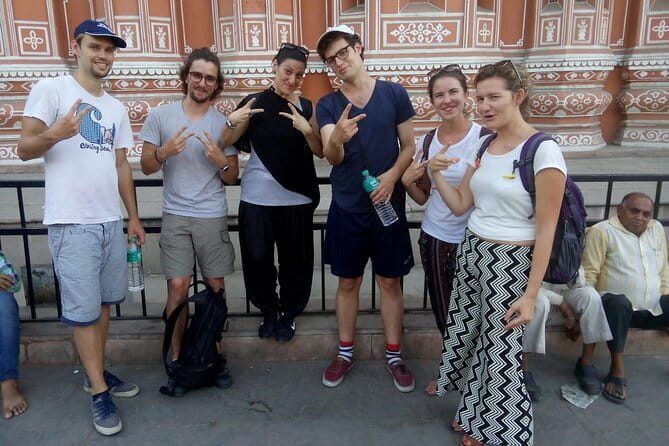
- Two hours, six stops: each stop runs about 20 minutes, so you see a lot without turning it into a day-long slog.
- Story-first guides: trained storytellers make the history feel like a living street conversation, not a lecture.
- Hawa Mahal views from the outside: you start with the iconic Palace of Wind and immediately understand why it matters.
- Astronomy in Jantar Mantar: you’ll get context for the Rajput-era astronomical instruments, not just photos.
- Sargasuli tower setting: the 140 ft Isarlat (Sargasuli) stop ties architecture to the bazaar crossroads near Tripolia.
- Craft bazaar time with included entry: you end up somewhere you can actually look, browse, and shop.
Walking Jaipur’s old town: the point of this 2-hour loop
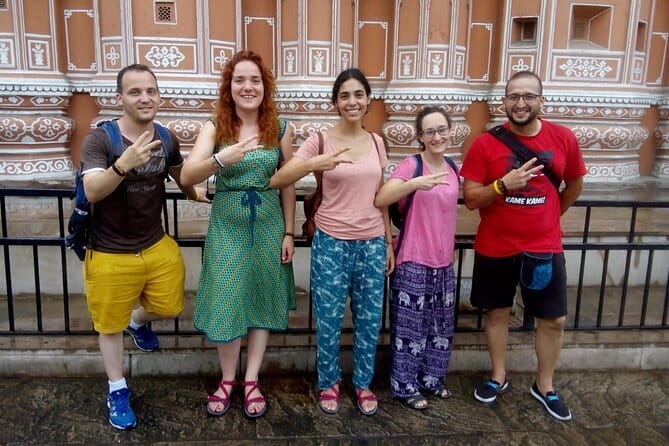
This is the kind of tour that works when you have limited time but still want your first day in Jaipur to feel meaningful. Instead of spending hours lining up or reading signs at random, you follow a tight route built around the big visual anchors of the Pink City: Hawa Mahal, City Palace, Jantar Mantar, and then a couple of stops that feel more local and everyday.
What makes it worth your attention is the format. The tour is described as “infotainment,” meaning it’s history packaged with stories and fun facts so you stay interested even if you’re more into people and streets than dates and dynasties. That matters in Jaipur, where the sights are impressive but can overwhelm you if you’re trying to process everything alone.
The duration is short (about 2 hours), the group size is limited (maximum 20 people), and you’ll walk between clustered sights. If you like tours that give you momentum—so you can explore on your own afterward—this fits that style.
You can also read our reviews of more walking tours in Jaipur



Starting at Hawa Mahal Road: your orientation hit
You meet at Hawa Mahal Rd, Badi Choupad, J.D.A. Market, Pink City, Jaipur. The location is practical because it’s right by the Hawa Mahal area, which is one of the best “first sight” landmarks in town. The tour also ends back at the meeting point, so you don’t get stuck figuring out a pickup or where to walk next.
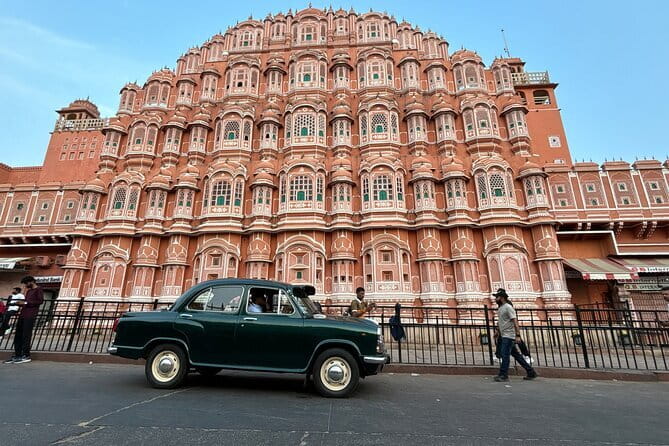
At the start, you’ll focus on the Hawa Mahal (Palace of Wind). This is the façade of red and pink sandstone that sits on the edge of the City Palace complex, stretching toward the zenana (the women’s chambers). Even without stepping inside, it’s an immediate visual lesson: Jaipur isn’t just temples and fort walls. It’s architecture designed for specific social life—where people could watch the street from behind a lattice-like façade.
Plan on about 20 minutes here. That’s enough time to understand the why behind the look and to get photos from the outside that make sense. Just remember: admission isn’t included for this stop, so if you’re hoping to tour interior spaces, you’ll need extra tickets.
City Palace: where Mughal meets Rajput power
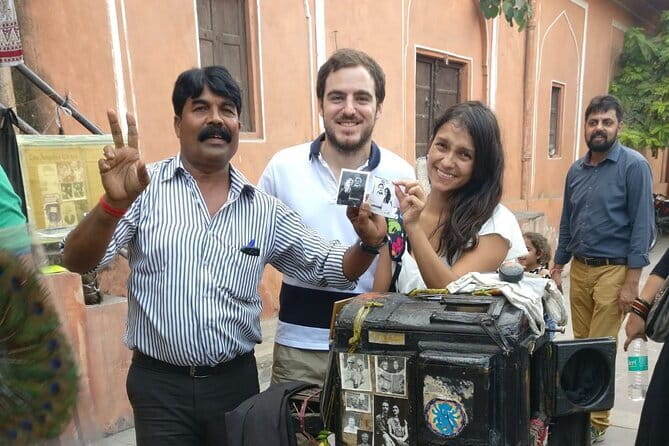
Next up is the City Palace complex, deep within Jaipur’s walled-city area. The complex is associated with Maharaja Sawai Jai Singh II, who conceived and built it. You’ll learn how the architecture reflects a meeting point of Mughal and Rajput styles, not two separate “eras” of design.
City Palace is also notable because it’s not just a museum set up for tourists. It’s still home to the last ruling royal family, which changes the vibe. Even on a walk where you’re not spending hours inside, the fact that royal life has a presence here gives you a different lens. You’re not only looking at old buildings; you’re seeing a place with ongoing identity.
Time is still tight—about 20 minutes—so what you’ll likely get is a guided overview and the main visual points you should notice. Admission isn’t included, so again: if you want the full interior experience, you’ll pay extra.
Jantar Mantar: turning “sights” into science
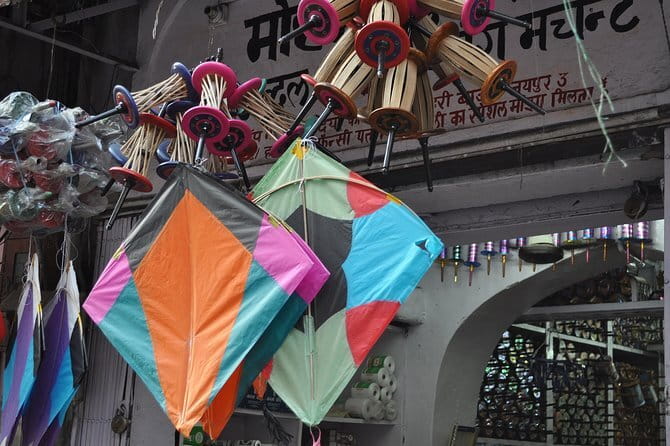
Then comes Jantar Mantar, built by Sawai Jai Singh II and completed in 1734. This stop is one of the best examples of why a guided walk beats wandering. Without explanation, it can look like a collection of stone structures. With guidance, you start to understand it as Rajput-era astronomical innovation—architecture built with purpose.
Jantar Mantar tends to reward curiosity. The guided storytelling approach helps you read the space. You’re not just seeing landmarks; you’re learning what the instruments were designed to measure and why that mattered in that era.
You’ll spend about 20 minutes here, so you shouldn’t expect a slow, detailed “museum day.” But it’s enough time to connect the dots and walk away knowing what you saw. Admission is not included for this stop either, so if you want full access, budget extra.
Isarlat (Sargasuli): the tower that lives at the bazaar crossroads

After the more famous palace-and-instruments stops, the tour moves toward Isarlat, popularly known as Sargasuli. The name is linked to a meaning often given as passage to heaven—and the structure itself is impressive: 140 ft tall.
What I like about this stop is the location. Isarlat is described as being at the meeting point of Tripolia Bazaar and Gangori Bazaar, near Chhoti Chaupar Chowk and Tripolia Gate. That’s a big deal because it shows how Jaipur’s iconic vertical landmarks aren’t isolated. They’re woven into shopping streets and everyday movement.
You’ll get about 20 minutes here. Admission isn’t included, so treat it like a guided “read the street” moment: use it to understand the neighborhood layout and where the main lanes pull people in.






Sireh Deori Bazaar area: craft shopping with an included stop

Then you shift gears into something more hands-on: a crafts bazaar stop in the area often connected with Sireh Deori Bazaar and textile exports. This is where the tour becomes useful even if you don’t care about architecture—because it’s the part that helps you understand what to look for when shopping in Jaipur.
The emphasis here is on street shopping where you can get a basic view of buying objects without feeling lost. The stop is listed as having admission ticket included, and it runs about 20 minutes.
Here’s how I’d use this time to make it pay off:
- Look first, ask second. Ask what something is made of and what it’s used for.
- If you’re buying textiles, check quality through feel and weave, not just color.
- If you’re not ready to purchase, still use the time to learn the local terms for what you’re seeing.
This is also the kind of stop where a guide can help you avoid the worst “tourist trap” rhythm—mostly by keeping you grounded in how local browsing works.
Giriraj Ji temple: color, route, and a change of pace
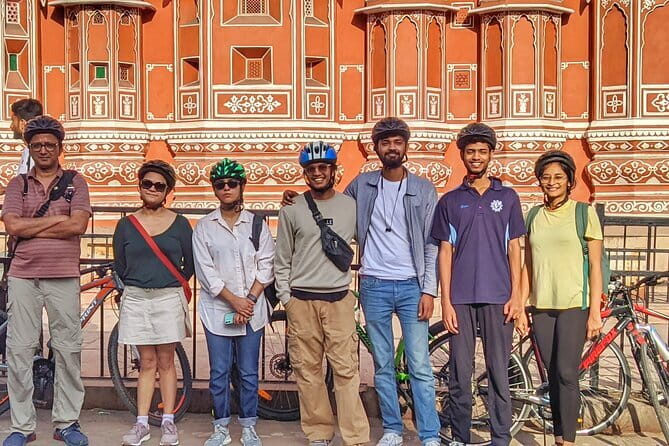
The last stop on the walking route is the Giriraj ji temple. It’s described as bright and colorful, and it’s located on the Agra–Jaipur Road, just east of Dausa.
That detail matters. Jaipur’s old center can feel like one continuous world of sandstone and lanes. A temple stop slightly outside the immediate center changes the rhythm. It becomes a breather at the end of a walk—still cultural, still Jaipur, but with a different energy than bazaar-and-palace.
This stop is listed as Admission Ticket Included. It also has about 20 minutes. If you want a final visual that’s more about devotional atmosphere than landmark sightseeing, this is a strong finish.
Price and value: what $20 buys (and what costs extra)
At $20 for about 2 hours, the tour is priced like a budget-friendly way to see major highlights with guidance. The included items help explain why the value is decent:
- Guide
- Bottled water
- Tea with snacks
That’s not a small thing in Jaipur’s heat and walking pace. Food-and-water breaks help you stay human and comfortable enough to enjoy the sights rather than just endure them.
The tradeoff is admissions. Monument entry tickets are not included for the first stops. The tour notes an extra cost (it mentions 10 USD extra if you want tickets) and also references an entrance fee of ₹100 per person. The lesson: think of the walking component as the main product, and treat monument entry as the optional add-on.
If you’re trying to do this on a tight budget, you can still get a lot from the outside views and guided orientation at the palace and astronomy sites. If you’re the type who wants to go inside everything, then you’ll want to pre-plan your total spend before you start.
Logistics that matter: mobile ticket, timing, and weather
This tour uses a mobile ticket, which is easy for day-of use. The meeting point is near public transportation, and that reduces the stress of getting there.
Timing is structured: each main stop is about 20 minutes, and the tour ends back at the meeting point. That’s helpful for making plans after—especially if you’re organizing a day around other reservations in Jaipur.
One practical note: the experience is described as requiring good weather. If skies turn messy, the operator may switch dates or offer a full refund. So keep an eye on the forecast and avoid booking this as the only plan if your schedule is inflexible.
Who this tour suits best
This works especially well if you:
- Have limited time in Jaipur and want a smart first-day orientation.
- Want story-driven context rather than just standing in front of buildings.
- Prefer a comfortable group pace (max 20 people) and a smooth rhythm of stops.
- Want a mix of “famous sights” plus one more local-focused shopping/culture moment.
It may be less ideal if you:
- Want long, slow visits inside multiple paid monuments.
- Plan to skip guidance and rely entirely on your own reading of signage (since the real value is in the storyteller framing).
Service style: comfort and responsiveness
From feedback about the broader Rajasthan planning experience with pinkfoots travel, the theme is that service feels organized and responsive, with people highlighting warmth and a sense of safety and comfort. One person specifically mentioned Varsha for responsiveness and handling small details well. That kind of operational care matters on a walking tour, where small issues—meeting timing, pace, how you handle questions—make the difference between a smooth day and a frustrating one.
Should you book this Jaipur walking tour?
I’d book it if you want your first look at Jaipur to come with context, not just photos. The stops hit the city’s biggest “mental map” points—Hawa Mahal, City Palace, Jantar Mantar—then add a bazaar setting at Sargasuli and finish at Giriraj Ji temple. With tea, snacks, and bottled water included, it’s also a practical deal for a short day.
I’d skip or upgrade your expectations if you’re mainly motivated by interior monument access. Since monument entry isn’t included for several major stops, you’ll likely pay extra if you want full indoor time. But if you treat this as an orientation + guided reading of Jaipur’s landmarks, it’s a strong value at the price.
FAQ
How long is the Walking Tour Jaipur?
It runs for about 2 hours (approx.).
Where does the tour start and end?
It starts at Hawa Mahal Road (Hawa Mahal Rd, Badi Choupad, J.D.A. Market, Pink City, Jaipur) and ends back at the same meeting point.
What do I get with the $20 price?
The tour includes a guide, bottled water, and tea with snacks.
Are monument entry tickets included?
No. Monument entry tickets are not included, and extra cost is mentioned if you want tickets. Note that the craft bazaar stop and Giriraj ji temple stop are listed as having admission ticket included.
What landmarks are included on the route?
The route includes Hawa Mahal, City Palace, Jantar Mantar, Isarlat (Sargasuli), a crafts bazaar stop, and Giriraj ji temple.
Is a mobile ticket used?
Yes. The tour uses a mobile ticket.
What happens if the weather is bad?
The experience requires good weather. If it’s canceled due to poor weather, you’ll be offered a different date or a full refund.