REVIEW · FOOD & DRINK
Jaipur: Guided History Walking Tour with Food Tasting
Book on GetYourGuide →Operated by Multi Tours India · Bookable on GetYourGuide
Pink streets and real food stories. A guided walk through Jaipur’s Pink City hits the old alleys, markets, and religious sights without turning into a boring lecture.
I especially like the way the guide connects what you see—havelis, stepwells, courtyards, and temple details—to daily life in Jaipur. I also enjoy the food pacing: you get handpicked tastings along the route, not just one stop and done.
One consideration: it’s a walking tour on uneven lanes, so plan for steady walking for the full 3 hours. And if you have food allergies, this isn’t the right fit.
Small-group feel with a private guide (your party stays together)
New Gate and central bazaars keep you oriented fast
Multiple food stops with chai, snacks, dessert, and sweets
Architecture + beliefs explained simply as you pass landmarks
Artisans you might meet (potters, jewelers, miniature painters, spice sellers)
Language options across English, Spanish, Russian, German, Japanese, Chinese, and French
In This Review
- New Gate To Chaura Rasta: Finding Jaipur’s Rhythm Fast
- Badi Chaupar: Squares, Stories, and A Quick Confidence Boost
- Tripolia Bazar And Choti Chaupar: Where Street Food Becomes The Tour’s Backbone
- Flower Market (Choti Chaupar): A Strong Finish With Sights And Sweet Notes
- What You’ll Taste In This Jaipur Food-Walk (So You’re Not Guessing)
- Havelis, Stepwells, Temples, Courtyards: The Architecture Lessons You’ll Actually Remember
- Your Guide, Your Language, Your Pace (Private Group on Foot)
- Price And Value: Why $13 Often Feels Like A Deal
- Who This Tour Suits Best (And Who Should Skip It)
- Should You Book This Jaipur Guided History Walking Tour With Food Tasting?
- FAQ
- How long is the Jaipur guided walking tour with food tasting?
- What does it cost?
- Where does the tour start?
- What food and drinks are included?
- Which languages are available for the live guide?
- Is this tour a private group?
- Can I cancel for a refund?
- Is the tour suitable for wheelchair users?
- What should I bring?
- Is the tour suitable for people with food allergies?
New Gate To Chaura Rasta: Finding Jaipur’s Rhythm Fast
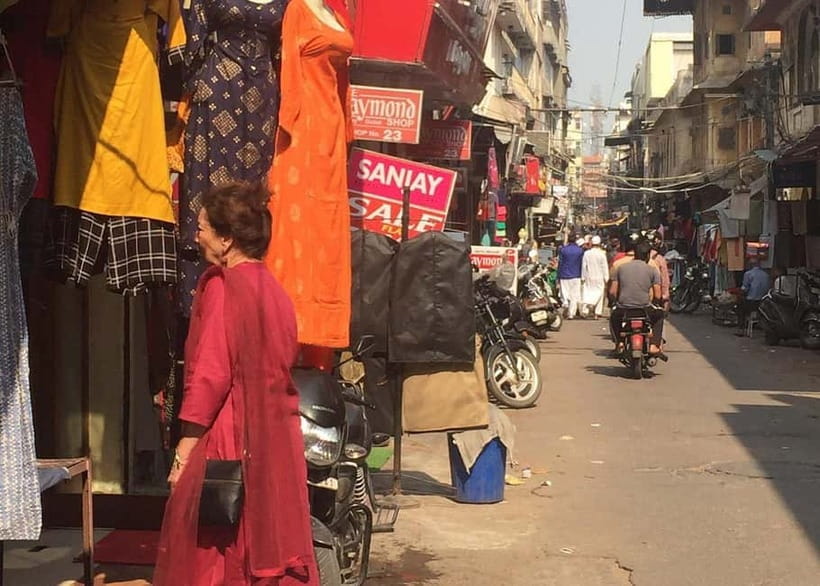
The tour starts at New Gate, which is a smart choice. You don’t begin with a big-ticket monument and then lose the thread—you start in the thick of the city’s everyday flow, where the stories make sense.
From there you head into Chaura Rasta for a photo stop and a tea break, plus street food along the way. This part is great if you want to get your bearings quickly. The guide will point out what matters as you walk: how streets are used, what people wear in different spots, and which corners feel like meeting places rather than just passageways.
Chaura Rasta also works as a warm-up. You’ll see markets close up, smell spices in the air, and pick up the small cues—shop styles, signage, and local rhythm—that help the rest of the walk click. If you’re arriving in Jaipur and feeling a little jet-lagged, this first segment is a good reset.
Tip: bring a hat and sunscreen. Sun hits these lanes hard, and the tour doesn’t slow down just because the day got warmer.
Badi Chaupar: Squares, Stories, and A Quick Confidence Boost

Next comes Badi Chaupar, where the pace feels a touch more open and your guide can frame the area. You’ll get a guided walk and pass-by views, plus local snacks and food tasting as you go.
I like this stop because it’s a natural bridge between “market chaos” and “historical meaning.” A lot of Jaipur feels like it’s built from layers—old layouts, royal-era priorities, and later changes in neighborhood life. Here, you start seeing how those layers connect without needing a map lecture.
You’ll also get scenic views on the way, which is a practical reminder: keep your camera ready. Jaipur rewards eye-level watching. Look up as you walk—facades and doorway designs often tell you who lived nearby and how communities organized themselves.
What you may notice: your guide talks about customs and how people approach temples and rituals, so the square doesn’t feel like a random stop. It feels like a place with a “why.”
You can also read our reviews of more walking tours in Jaipur



Tripolia Bazar And Choti Chaupar: Where Street Food Becomes The Tour’s Backbone
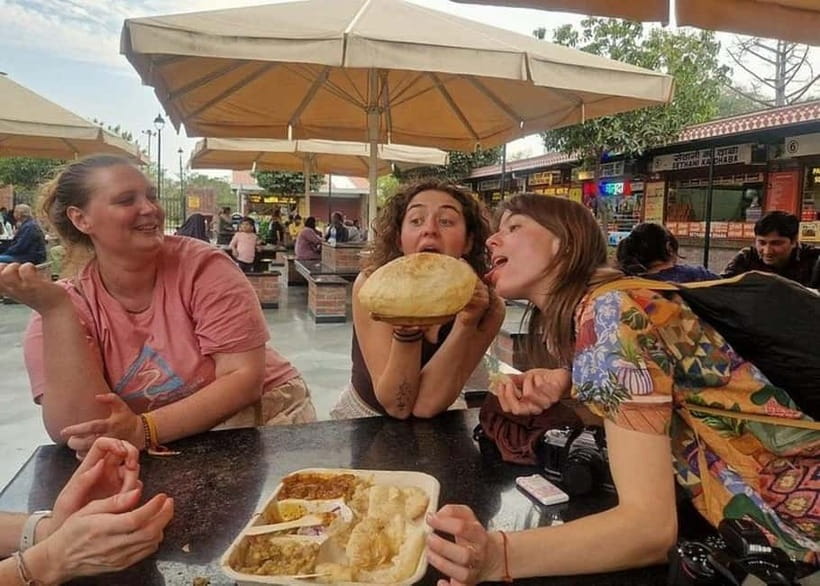
After Badi Chaupar, you move into Tripolia Bazar for a photo stop and continued guided walking. This is the kind of place where you see commerce and culture on the same street. You’ll pass shop fronts and watch how the market supports everyday needs.
Then the tour shifts to Choti Chaupar, and this is where the food energy ramps up. You’ll get street food, local snacks, and more food tasting in the middle of the action. It’s not just about eating; the guide uses the tastings as a way to explain what makes Jaipur flavors distinct.
One of the best parts of this route is that you don’t have to guess what to order. You’ll get handpicked Rajasthani and Jaipur-specific dishes, including standouts like Pyaaz Kachori, Aloo Tikki or Chaat, Samosa, and Mirchi Bada. Each one fits the street-food logic of small bites you can actually manage while walking.
If you get full easily, pace yourself. Take a bite, then pause for the story your guide is telling. The tour’s value is the connection between what’s in your hand and what you’re learning.
Flower Market (Choti Chaupar): A Strong Finish With Sights And Sweet Notes
Near the end, you’ll reach the Flower Market at Choti Chaupar. Expect a photo stop and a guided walk through the area, with the tour finishing back here.
This is a smart closing point. Jaipur’s markets don’t only sell food; they sell atmosphere—scents, color, and daily routines around picking, arranging, and trading. You’ll get that “full senses” payoff without having to rush to a far-off landmark at the end.
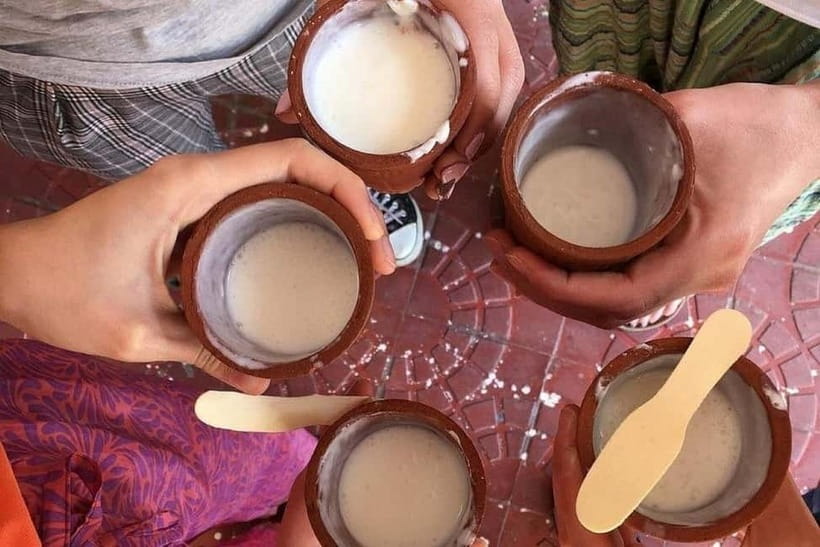
Also, you’ll have room to enjoy the sweeter part of the experience. The tour includes a traditional dessert, and you might see regional favorites such as Ghewar or Rabri, plus Kulfi or other regional sweets depending on what’s available. Even if you’re not a big dessert person, having a defined dessert moment is useful on a walking tour.
Practical note: the flower area can be warm and busy. Keep your water handy (bottled water is included), and don’t plan to carry extra purchases—your hands will be busy enough.
What You’ll Taste In This Jaipur Food-Walk (So You’re Not Guessing)
This tour is built around food tasting, with specific Jaipur and Rajasthani options. You’ll also get masala chai at local tea shops as part of the experience, plus bottled water and a traditional dessert.
Here’s what you can expect to sample, based on the dishes listed for the tour:
- Pyaaz Kachori (often a savory, crispy snack with spiced filling)
- Aloo Tikki or Chaat
- Samosa
- Mirchi Bada
- Lassi or Masala Chai
- Ghewar or Rabri (traditional sweets)
- Kulfi or other regional desserts
I like that the menu is varied. You’re not stuck on one “street snack theme.” You get crunchy, savory, and sweet, plus a drink. The chai slot matters too—warm spice tea is a real reset during a walking route in the sun.
A small but important detail: because the food is part of the guided plan, you can focus on learning instead of shopping for the best vendor. You’re also less likely to accidentally over-order at one spot. That pacing is what makes the tastings work on a 3-hour walk.
If you hate dairy-heavy items, you’ll want to think twice. The tour includes lassi and sweets like rabri and kulfi, which are usually dairy-based. (And if you have food allergies, this tour isn’t suitable.)
Havelis, Stepwells, Temples, Courtyards: The Architecture Lessons You’ll Actually Remember
One reason people love this kind of walking history is that architecture comes with context. As you move between stops, your guide explains how havelis (traditional houses), stepwells, and courtyards fit into life in Jaipur.
You won’t just see stonework—you’ll hear why those spaces mattered. Stepwells, for example, weren’t decorative. They were tied to water needs and how communities planned around heat and seasons. Courtyards show how households balanced privacy with social life.
The tour also touches spiritual beliefs and rituals, plus customs and attire. You’ll learn how locals interpret certain spaces—especially old temples and religious areas—and how that shapes movement through the neighborhood.
And yes, you might catch sight of people at work. Depending on the day and the route, you may meet artisans such as potters, jewelers, miniature painters, or spice vendors, and see them working. That’s one of those moments that makes Jaipur feel less like a backdrop and more like a living place.
In the guide pool, names that show up include Rajesh, Krishna, and Ali Irfan. Guides like these tend to handle both the stories and the food choices with an easy, local rhythm.
You can also read our reviews of more food & drink experiences in Jaipur






Your Guide, Your Language, Your Pace (Private Group on Foot)
This is a private group, and it stays useful throughout the tour. You get a live tour guide, and the route is designed for a 3-hour window—enough time for multiple food tastings and several story stops without dragging.
English is available, plus Spanish, Russian, German, Japanese, Chinese, and French. If your language preference matters for understanding local customs and spiritual beliefs, you’ll appreciate having it.
The pacing is walking-first. You’ll be stopping for photo moments and tastings, but you’re not standing still for long. If you’re traveling in hotter months, bring a hat and take advantage of the chai stop as your planned breather.
Also: comfortable shoes are non-negotiable. The tour includes old streets and traditional neighborhoods, which often means uneven pavement and tight turns. You’ll want grip, not fancy soles.
One more thing: no smoking during the tour. That’s a small rule, but it keeps the air more pleasant in market alleys.
Price And Value: Why $13 Often Feels Like A Deal
At $13 per person for about 3 hours, the value mostly comes from what’s included. You’re getting:
- multiple food tastings
- masala chai at local tea shops
- traditional dessert
- bottled water
- a live guided walk focused on history, architecture, customs, and daily life
Street food in Jaipur can be inexpensive, but the costs add up when you’re buying bits and drinks one-by-one. Here, you’re paying for structure: the guide helps you choose what to try and times it so you can handle the walk comfortably.
So the price isn’t just the food. It’s the explanation you get while you’re eating—how havelis, stepwells, temples, and market streets connect to everyday customs and the city’s layout.
If you like planning light—just enough direction to taste the city without overthinking—this price point is very reasonable.
Who This Tour Suits Best (And Who Should Skip It)
This tour fits you if you want:
- a walk-focused Jaipur experience in the old-city area
- history and architecture explained in plain language
- multiple tastings, including sweets and tea
- a guide who can connect street-level details to broader stories (royal dynasties, the city’s evolution, spiritual beliefs)
It’s also ideal for people who like artisans and markets. You might meet craftspeople at work—potters, jewelers, miniature painters, spice sellers—depending on what your guide can arrange along the route.
Skip it if:
- you need wheelchair-friendly access (it’s not suitable for wheelchair users)
- you have food allergies (it’s not suitable for people with food allergies)
- you prefer very minimal walking. This is 3 hours on foot, and the route includes lanes and market streets.
Should You Book This Jaipur Guided History Walking Tour With Food Tasting?
Yes, if you want Jaipur to feel like a real place, not a checklist. This format hits the best mix: old streets, architectural details like stepwells and havelis, and food tastings that carry the story forward.
Book it if you like structure. At $13, you’re paying for guided walking plus chai, multiple snacks, and dessert—so you don’t have to figure everything out on your own. And the “private group” setup makes it easier to ask questions about customs, clothing, rituals, and what you’re seeing at each stop.
Hold off if walking is an issue for you or if you need allergy-safe options. In those cases, the built-in tastings become a problem.
FAQ
How long is the Jaipur guided walking tour with food tasting?
The tour lasts 3 hours.
What does it cost?
It costs $13 per person.
Where does the tour start?
The tour starts at New Gate.
What food and drinks are included?
Food tasting is included, along with bottled water, a traditional dessert, and masala chai at local tea shops. The tastings may include dishes such as Pyaaz Kachori, Aloo Tikki or Chaat, Samosa, Mirchi Bada, Lassi or Masala Chai, and sweets like Ghewar or Rabri, plus Kulfi or other regional desserts.
Which languages are available for the live guide?
The guide is available in English, Spanish, Russian, German, Japanese, Chinese, and French.
Is this tour a private group?
Yes, it’s listed as a private group.
Can I cancel for a refund?
Yes. Free cancellation is available up to 24 hours in advance for a full refund.
Is the tour suitable for wheelchair users?
No, the tour is not suitable for wheelchair users.
What should I bring?
Bring comfortable shoes, a hat, a camera, sunscreen, and water.
Is the tour suitable for people with food allergies?
No, it’s not suitable for people with food allergies.